How to Care for Hoya Pachyclada Variegata in Hong Kong | Plantjai


Plantjai 植仔 · Care Encyclopedia
Hoya Pachyclada Variegata
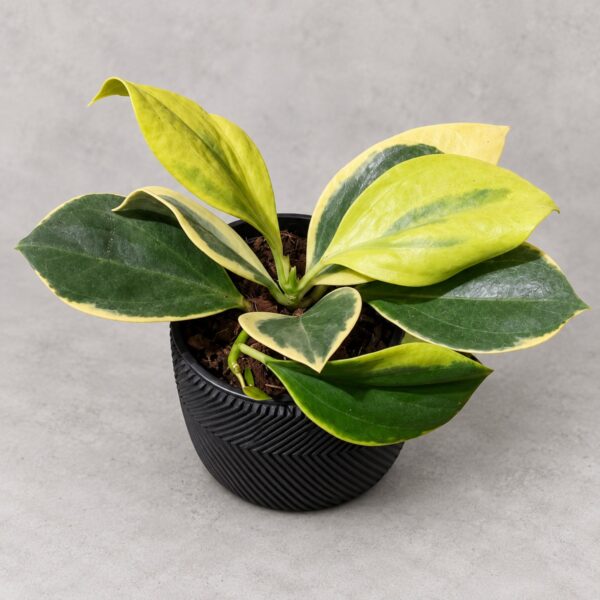
Hoya pachyclada variegata 黃金粗蔓毬蘭
Hong Kong care guide — useful before you buy and after it arrives.
Shop this plantThick succulent leaves with golden variegation on sturdy, textured stems, releasing a sweet fragrance when flowering — an advanced collector's piece combining foliage, flowers, and scent all in one.
Origin & characteristics
- Native range: northern Thailand and the border regions of Myanmar
- Growth habit: a climbing vine, with mature vines reaching 60–120 cm and thick, sturdy stems (the species name "pachyclada" means "thick branch")
- Leaf characteristics: round, thick, and succulent, with golden or creamy variegation on the leaf surface, and paler contrasting venation
- Flowers: globe-shaped clusters of small star-shaped flowers in creamy-white to pale pink, with an intense sweet fragrance
- Growth rate: slow to moderate
- Toxicity: non-toxic to pets — the Hoya genus is listed by the ASPCA as safe for cats and dogs
Plantjai tip: golden pachyclada is a great pick for Hoya beginners moving up to more advanced species — its thick, sturdy stems store water well and can handle the occasional missed watering.
Light
| Item | Recommendation |
|---|---|
| Ideal light | Bright indirect light, an east- or west-facing window is best |
| Acceptable range | 1–2 metres from a south-facing window, or filtered through a sheer curtain |
| Light intensity | 1,500–3,000 lux (measurable with a phone light meter) |
| Avoid | Harsh midday direct sun, which easily scorches the thick succulent leaves |
- Needs at least 4–6 hours of bright indirect light daily
- Insufficient light causes leggy stems, thinner leaves, fading variegation, and difficulty flowering
- More direct light is acceptable in winter; shade is needed in summer
Watering
- Frequency: water once the top 3–4 cm of soil is completely dry, roughly every 10–14 days during the growing season
- Method:
- Test soil moisture with a finger, or insert a bamboo skewer to check the base of the pot
- Water slowly around the rim until it drains from the base
- Let it drain for 15 minutes, then discard any runoff from the saucer
- Water quality: room-temperature tap water left to sit, filtered water, or rainwater all work; avoid using ice-cold water directly
- Winter adjustment: reduce to once every 3–4 weeks, keeping the soil on the drier side
- Key principle: better dry than wet! The thick, succulent stems and leaves store water well, and overwatering easily causes root rot
⚠️ Root rot warning sign: if leaves are wrinkled and soft but the soil is still moist, the roots may have already rotted and can't absorb water — check the root system immediately.
Soil & pot
Soil recipe
Golden pachyclada needs an extremely fast-draining, breathable mix:
| Material | Ratio | Function |
|---|---|---|
| Pine bark (medium grade) | 40% | Structure and aeration |
| Perlite | 25% | Improves drainage |
| Succulent soil | 20% | Provides base nutrients |
| Coco coir | 10% | Slow-release moisture retention |
| Bamboo charcoal/activated charcoal chips | 5% | Inhibits bacteria and odour |
- A dedicated Plantjai Hoya mix can also be used directly
Pot choice
- Material: terracotta (breathable) or plastic (moisture-retentive), depending on ambient humidity
- Size: smaller is better than larger — only consider repotting once roots fill the pot
- Drainage: drainage holes at the base are non-negotiable
- When to repot: roughly every 2–3 years, or when roots wrap around the base/the mix breaks down into powder
Temperature & humidity
| Item | Ideal range | Acceptable range |
|---|---|---|
| Temperature | 18–29°C | 15–32°C |
| Winter minimum | — | 15°C (never below 10°C) |
| Humidity | 50–60% | 40–70% |
- Typical Hong Kong indoor conditions suit it well; watch for direct AC airflow in summer
- Keep away from cold drafts near windows in winter — northern airflow can cause cold damage to the leaves
- Below 40% humidity, use a humidifier or pebble tray for assistance
- Avoid misting the leaves frequently, as residual water droplets easily cause fungal spotting
Common problems
1. Stem and leaf rot (the most common cause of death)
- Cause: watering too frequently, a non-breathable mix, or standing water in the saucer
- Fix: stop watering, remove from the pot to check the roots, trim rot, and repot in fresh soil
2. Won't flower
- Cause: insufficient light, or the peduncle was cut off too early (Hoyas reuse old peduncles to flower)
- Fix: move to a brighter spot, give it a slightly cooler autumn/winter temperature differential (warm days, cool nights), and never cut off the peduncle
3. Wrinkled, soft leaves
- Cause: underwatering, or root rot preventing water absorption
- Fix: check soil moisture — if dry, soak the pot for 15 minutes; if moist, check the root system
4. Variegation fading to green
- Cause: insufficient light, causing the plant to reduce variegation to boost photosynthesis
- Fix: gradually increase light intensity
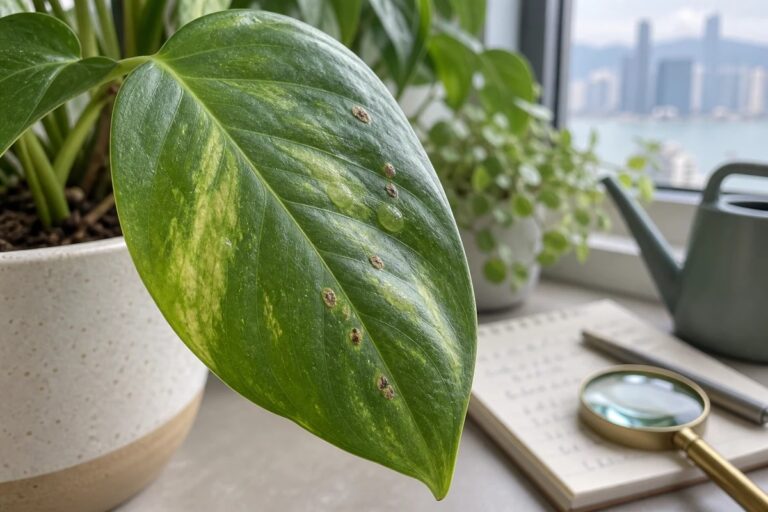
5. Pests (scale insects, whitefly)
- Cause: poor ventilation, or introduced with a new plant
- Fix: wipe with a 70% alcohol-soaked cotton swab, or spray with natural neem oil; isolate the plant if the infestation is severe
How to explain to customers
"Golden pachyclada Hoya is a foliage plant with real texture — the leaves are thick and succulent, with beautiful golden variegation, making it a real eye-catcher at home. When it flowers, it releases a wonderfully sweet fragrance, and the blooms look as delicate as porcelain. The three words to remember when caring for it are better dry than wet — let the soil dry out fully before watering, and don't rush it. An east- or west-facing window with indirect light is ideal. Water less in winter, and keep it well-ventilated in summer. Also remember, Hoyas are non-toxic to cats and dogs, so pet-owning households can grow it worry-free."
Quick reference for customer questions
| Customer asks | How to answer |
|---|---|
| "How often should I water?" | "Roughly every two weeks, but the most accurate way is to poke a finger 3cm into the soil — only water once it's completely dry." |
| "Is it hard to get it to flower?" | "It'll flower with enough light! Just remember not to cut off the peduncle — it reblooms from the same spot every year." |
| "Is it dangerous if my cat bites it?" | "Hoyas are ASPCA-certified non-toxic, so no need to worry. That said, eating too much of any plant can cause mild digestive upset, so it's best kept up high." |
| "What if the variegation turns green?" | "Move it somewhere brighter and gradually increase light — the variegation will come back." |
| "How big does it need to be before repotting?" | "Once you see roots poking out of the drainage holes, or the mix starts breaking down into powder — roughly every two to three years." |
Fun facts
- Decoding the name: "pachyclada" comes from Greek "pachys" (thick) + "klados" (branch), describing its sturdy stems
- Reusing peduncles: Hoyas are among the rare plants that rebloom repeatedly from old peduncles, so never cut them off after flowering!
- A long-lived companion: with proper care, golden pachyclada can live for decades — a plant you can pass down to the next generation
- The secret of succulence: its leaves and stems store water exceptionally well, allowing it to withstand seasonal drought in its native habitat
- The trigger for fragrance: the sweet scent of its flowers is strongest from evening into the night, used to attract nocturnal pollinating insects
Keywords
Hoya pachyclada variegata, golden pachyclada Hoya, thick-stemmed Hoya, variegated Hoya, Porcelain flower, Wax plant, Hoya care, foliage plant, climbing plant, drought-tolerant plant, pet-safe plant, indoor plant, flowering plant, native to Thailand, succulent-type Hoya, Plantjai, dedicated Hoya soil, bright indirect light, better dry than wet, retaining the peduncle, non-toxic plant
參考資料(想知來源可展開)
References
- Royal Botanic Gardens, Kew — Plants of the World Online: Hoya pachyclada, https://powo.science.kew.org/
- ASPCA — Toxic and Non-Toxic Plant List, https://www.aspca.org/pet-care/animal-poison-control/toxic-and-non-toxic-plants
⚠️ Non-toxic to cats and dogs; sap may cause mild skin irritation in sensitive individuals.
Plantjai · Causeway Bay collector indoor plants · WhatsApp +852 66807550
Plantjai shop · In stock online
Hoya pachyclada variegata
HK$238.00
Hong Kong delivery · Causeway Bay pickup
For Hong Kong homes and offices. Stock and pricing follow the product page.
IN STORE NOW
Plants for this guide
Related plants in stock now — live prices, delivery or Causeway Bay pickup.
FREE PLANT ADVICE
Send us a photo before you change anything
WhatsApp a photo of the plant and your window light. Our Causeway Bay team will suggest care steps or plants that suit your space.
STORE · CAUSEWAY BAY
4/F, 39 Yiu Wa Street, Causeway Bay
Daily 12:30–8:00pm · ~3 min walk from Times Square
Map & directionsPlant Care