Rows of brown marks under a fern: sori or pests?

In this guide (9)
- 01Ferns show reproduction differently
- 02Different ferns produce different patterns
- 03Four cross-checks before intervention
- 04Scraping is not the first identification test
- 05Lines on one fern and patches on another can both be normal
- 06Normal structures do not require a new care regime
- 07Sources and scope
- 08Further reading
- 09Related Plantjai plants
Updated: 2026-09-08
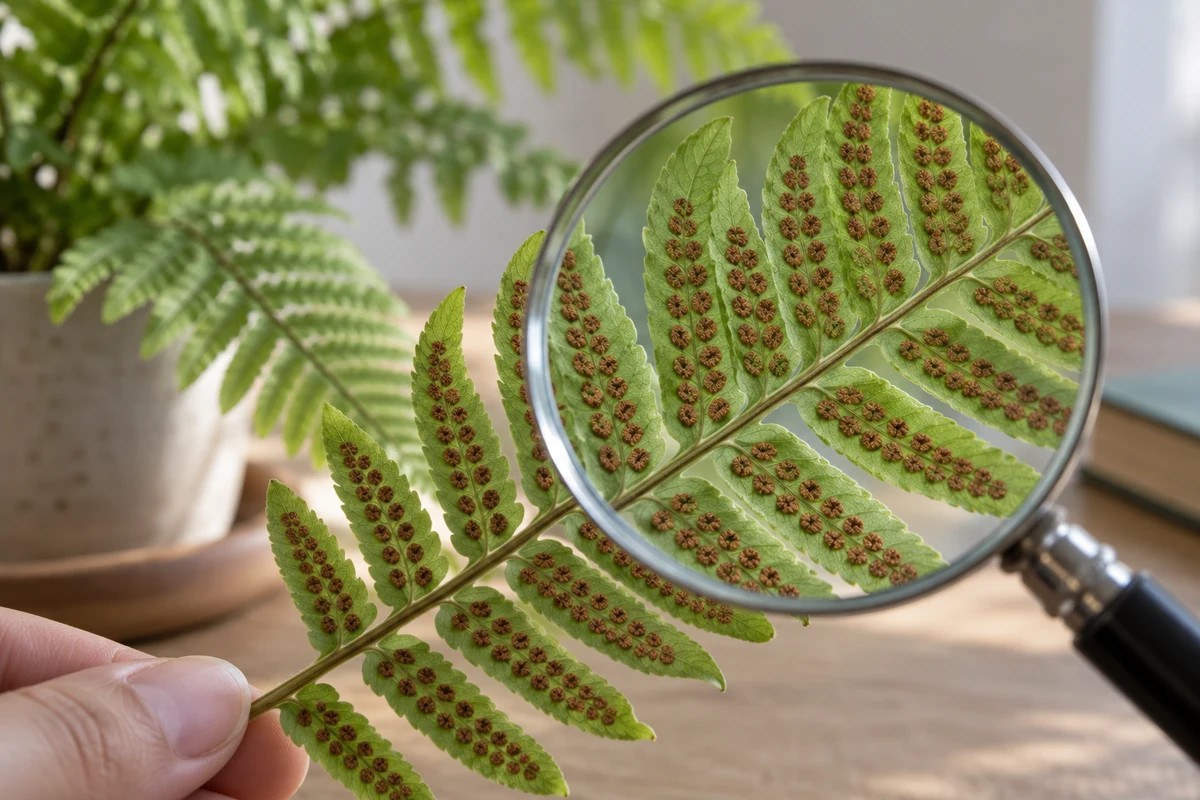
Regular brown dots or lines beneath a fern frond may be sori, normal reproductive structures that do not need wiping away. Underside location and brown colour alone are insufficient: also consider arrangement, frond maturity, stickiness, moving insects and tissue damage. Identify the structure before deciding on treatment.
Ferns show reproduction differently
Ferns reproduce through spores formed in sporangia, which may occur in visible groups. Different fern groups display dots, lines or broader reproductive areas. One online photograph of circular dots is not a pattern for every fern.
Not every frond on the same plant must carry sori; age and frond type also matter. Marks limited to several mature fronds do not necessarily indicate a local outbreak. Their absence from a young plant does not establish a nutrient deficiency or false identity. Reproductive structures alone are not a health score or authenticity test.
Reference: Mississippi State Extension — Bumps on Fern Leaves · Iowa State Extension — Is This Plant Sick?
Different ferns produce different patterns
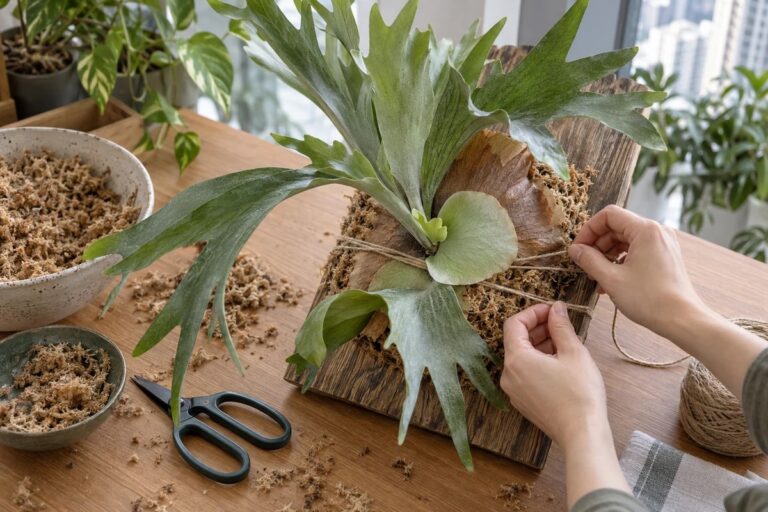
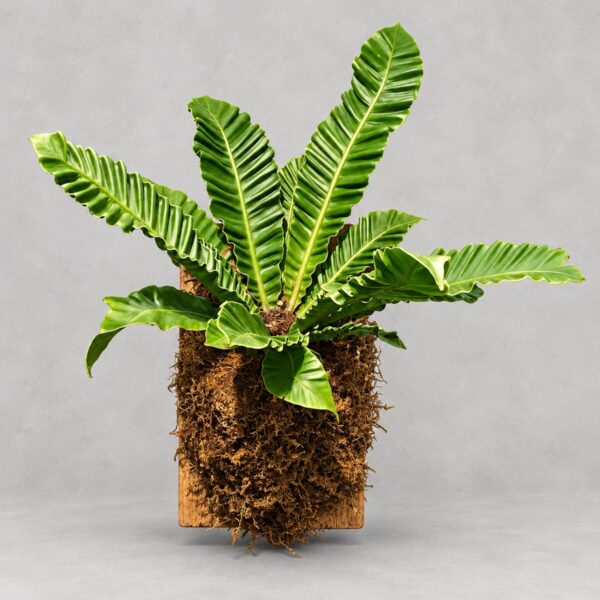
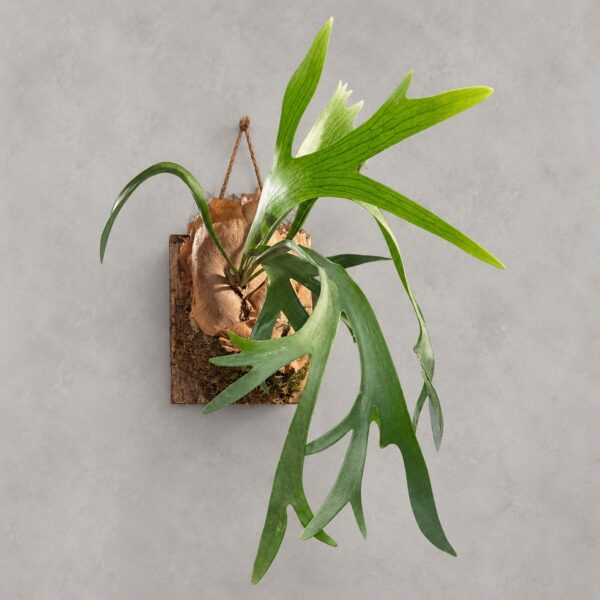
Bird’s-nest ferns commonly have elongated reproductive areas aligned with veins, resembling orderly brown lines. Staghorn ferns may develop broader brown, felt-like areas on parts of mature antler-frond undersides. Their brown basal shields are a separate structure and should not be confused with sori.
Compare fronds of similar maturity rather than demanding that a young frond match a mature fertile one. Lighting changes how conspicuous brown areas appear. Support the frond when turning it over and avoid bending the petiole sharply for a close-up.
Reference: University of Florida IFAS — Staghorn Fern
Four cross-checks before intervention
| Check | More consistent with normal reproduction | Investigate further |
|---|---|---|
| Arrangement | Matches veins or the fern’s typical fertile region | Irregular spread onto petioles, stems and pot edges |
| Surrounding tissue | Firm and broadly normal in colour | Soft, perforated or rapidly developing dead areas |
| Other signs | No fresh stickiness or obvious insects | Honeydew, cottony material or moving pests |
| Time pattern | Stable development on maturing fronds | Rapid spread to young fronds and neighbouring pots |
This narrows possibilities rather than providing a certain diagnosis. Pests can occur beside normal sori, so both observations may be valid.
Pair upper- and underside photographs of the same frond and state whether it is an outer mature frond or central new growth. An extreme close-up alone hides both arrangement and frond shape, removing useful identification clues.
Scraping is not the first identification test
Sori may release powdery spores, so material rubbing off does not prove it is a pest. Scale insects may remain immobile, so not moving does not prove a bump is part of the plant. Fingernails and stiff brushes can damage normal tissue while destroying useful diagnostic clues.
Use side lighting and magnification, then photograph the entire underside and a detail. If a moving organism is suspected, hold the camera steady for a close view rather than repeatedly shaking the whole fern. Avoid pesticides, bleach and household cleaners before identification; fern responses also vary by species and formulation.
Lines on one fern and patches on another can both be normal
Imagine orderly brown lines under mature bird’s-nest fronds beside a staghorn with a broad brown patch near the underside of a frond tip. Different patterns may each fit the fern’s reproductive anatomy. The staghorn is not automatically mouldy because its patch is not dotted. Cottony material elsewhere in an axil still deserves a separate pest check.
Write observations such as “regular brown lines, mature frond, firm tissue” beside the photograph instead of simply “diseased.” That record helps someone decide whether more views or a physical examination are needed.
Normal structures do not require a new care regime
Once normal reproductive structures are identified, keep the fronds and continue care based on light, root moisture and airflow. Do not suddenly increase feeding to support spores, or seal the plant to retain them. Suitability and maintainability still determine its position.
If brown areas accompany rapid decline, soft wet lesions or clear pests, seek help with complete photographs. An online guide can illustrate typical forms but cannot rule out every cause on an abnormal frond. That distinction is more useful than memorising a spraying recipe.
Sources and scope
- Mississippi State Extension — Bumps on Fern Leaves — Fern sori and their distinction from pest signs. A pattern is a clue; pests can occur on the same plant.
- Iowa State Extension — Is This Plant Sick? — Recognising natural sori on fern undersides. Not every brown patch is a normal reproductive structure.
- University of Florida IFAS — Staghorn Fern — Shield fronds, fertile fronds and natural surface hairs. Do not rub off hairs or assume identical sizes and moisture needs across species.
Further reading
Related Plantjai plants
- Asplenium nidus var plicatum
Bird’s-nest ferns illustrate reproductive structures arranged along veins. The delivered plant is not guaranteed to be mature or fertile; avoid water collecting in the crown.
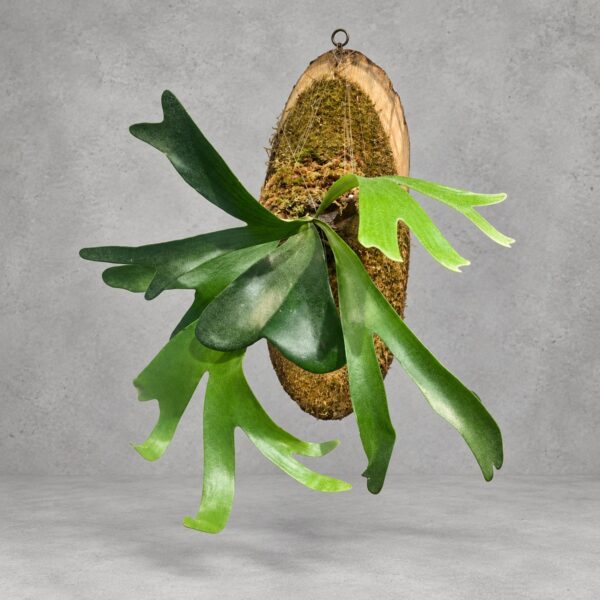
- Platycerium bifurcatum
Allows comparison between reproductive patches on antler fronds and basal shield fronds. Bright indirect light and a draining setup remain essential.
IN STORE NOW
Plants for this guide
Related plants in stock now — live prices, delivery or Causeway Bay pickup.
Asplenium nidus var plicatum
Original price was: HK$428.00.HK$180.00Current price is: HK$180.00.
In stock · store pickup
View plantPlatycerium alcicorne
Platycerium alcicorne (Willemet) Desv.
HK$580.00
In stock · store pickup
View plant
FREE PLANT ADVICE
Send us a photo before you change anything
WhatsApp a photo of the plant and your window light. Our Causeway Bay team will suggest care steps or plants that suit your space.
STORE · CAUSEWAY BAY
4/F, 39 Yiu Wa Street, Causeway Bay
Daily 12:30–8:00pm · ~3 min walk from Times Square
Map & directionsPlant Care