
How to Care for Platycerium Bifurcatum in Hong Kong | Plantjai

Plantjai 植仔 · Care Encyclopedia
Platycerium Bifurcatum
Hong Kong care guide — useful before you buy and after it arrives.
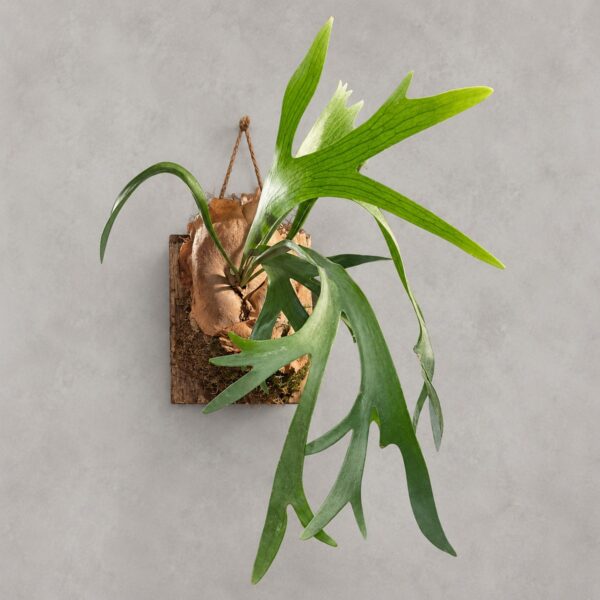
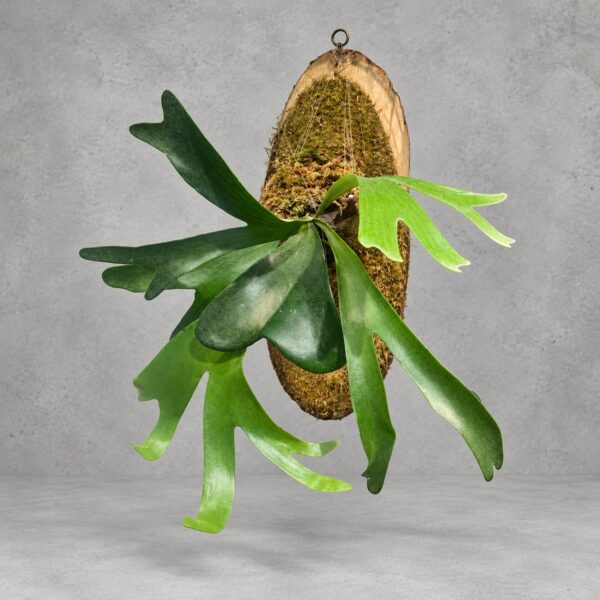
Shop this plantThe classic, easiest-to-grow entry point into staghorn ferns — deep green forked antler fronds over a natural round shield base, turning any wall into a living tropical mural once mounted.
Origin & characteristics
- Native range: Southeast Asia (Indonesia, New Guinea) and the tropical rainforests of eastern Australia
- Growth habit: an epiphytic fern, growing naturally at branch forks or on rocks
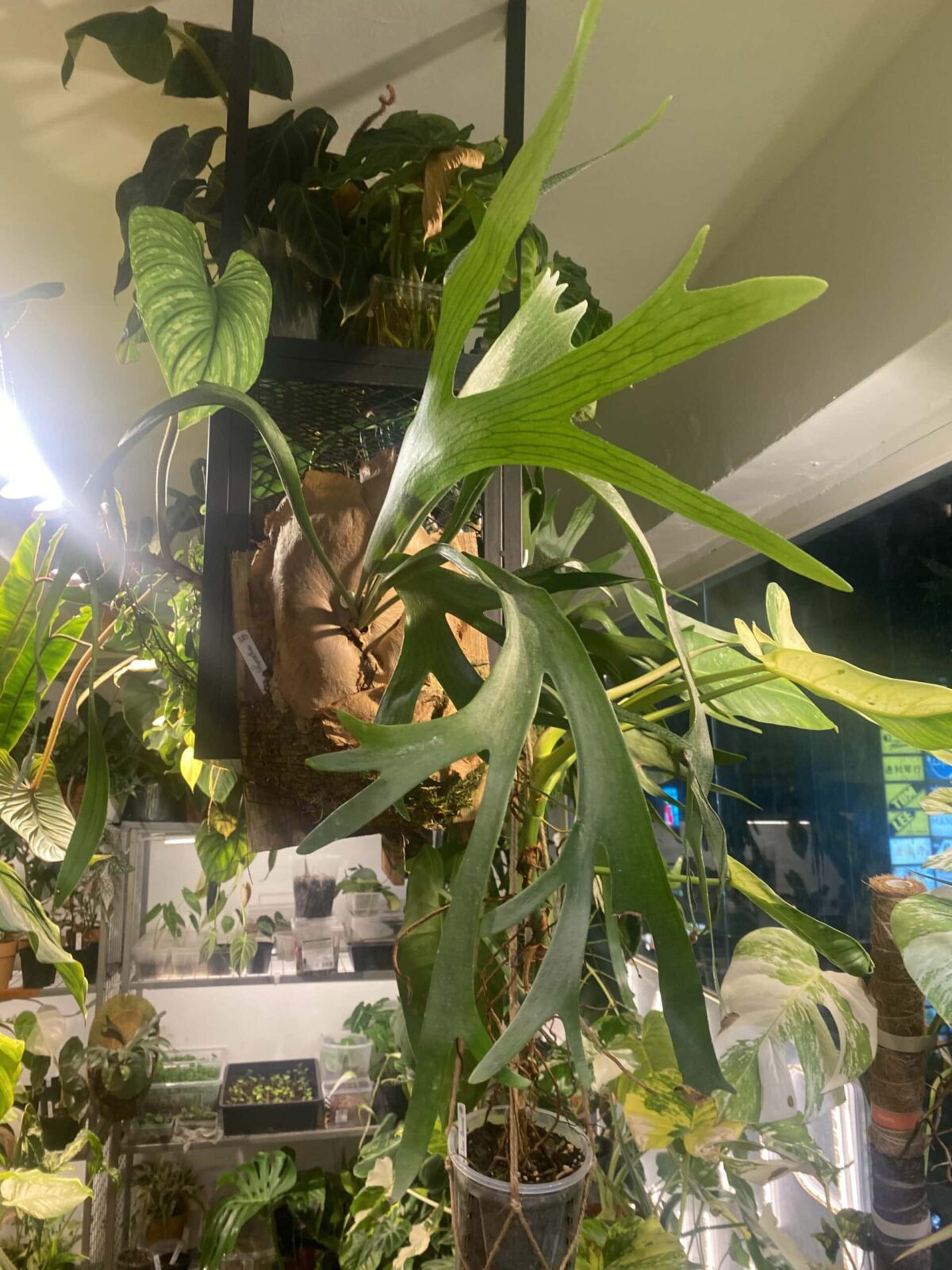
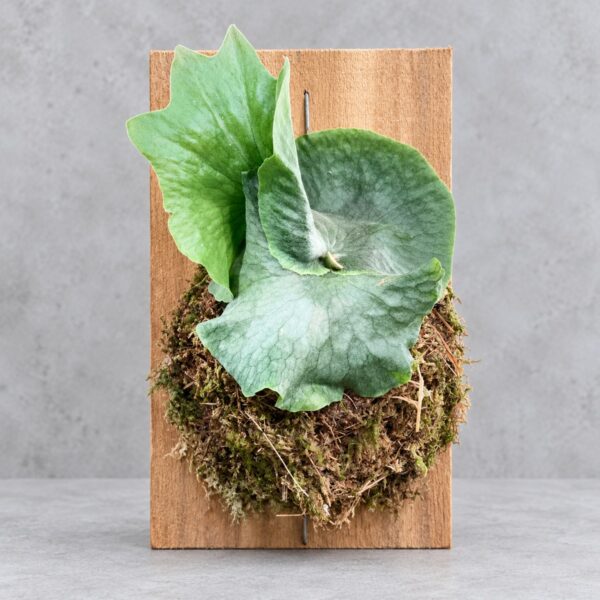
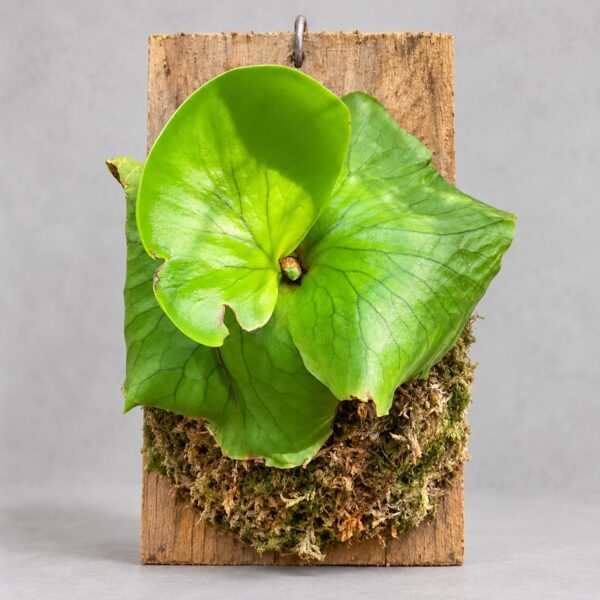
- Frond characteristics: it produces two distinct frond types — round shield fronds (basal fronds) hug the base, bright green when new and turning brown and dry with age; deep green fertile fronds are long and forked, resembling antlers and reaching up to 90 cm long
- Mature size: both height and spread can exceed 1 metre
- Growth rate: moderate — one of the faster-growing staghorn fern species
- Toxicity: ✅ Non-toxic. Safe for cats, dogs, and humans — can be placed anywhere in the home with peace of mind
Light
- Ideal environment: bright indirect light
- Placement: 1-2 metres from an east-, west-, or north-facing window
- Notes:
- Avoid intense direct sun — the fertile fronds develop yellow-white scorch spots
- Too little light causes reduced forking and thinner, more elongated fronds
- One of the more light-adaptable staghorn ferns, generally very forgiving
- A bathroom or kitchen with a window is often an ideal spot, given the higher humidity
Watering
- Principle: keep the substrate moist during the growing season, watering again once the surface has dried slightly
- Frequency reference:
- Spring/summer: roughly every 5-7 days
- Autumn/winter: roughly every 7-10 days, reducing during dormancy
- Method (potted):
- The soak method is recommended — submerge the entire pot in room-temperature water for 10-15 minutes, then drain and replace
- Watering from above easily causes water to pool at the base of the shield frond and rot
- Method (mounted):
- Submerge the board and plant in water for 10-15 minutes, or rinse the sphagnum moss portion under a tap, then drain and rehang
- Water quality: rainwater, distilled water, or water left standing is best
- Key tips:
- The shield frond surface has a natural protective layer — never mistake it for dust and wipe it off
- Cut watering frequency roughly in half during winter — keep the substrate only lightly moist
Soil & pot
- Substrate recipe: a dedicated epiphytic fern mix, loose and breathable
- Recommended ratio: 50% sphagnum moss + 30% orchid bark + 20% perlite
- Key point: the substrate should mimic a tree-bark environment — sphagnum moss is the ideal base material
- Planting method options:
- Board mounting (recommended): wrap the roots in sphagnum moss against a wooden board, secure with garden twine, fishing line, or a nylon stocking — hanging it on a wall gives it the most character
- Potted: use a wide, shallow pot or hanging basket with drainage holes
- Hanging basket: line with sphagnum moss, letting the shield frond naturally cover the basket surface
- Repotting/remounting timing: roughly every 2-3 years, or once the moss starts breaking down
Temperature & humidity
- Ideal temperature: 18-27°C
- Minimum temperature: can briefly tolerate around 10°C, but should not stay below 15°C long-term
- Humidity: 40-70%
- One of the most adaptable staghorn ferns — typical household humidity is usually sufficient
- Humidity too low causes fertile frond tips to crisp
- A bathroom or kitchen with a window is an ideal spot
- Can be misted periodically to boost humidity (mist the moss portion, not the frond surface)
- Environmental note: keep away from heaters and AC vents
Common problems
| Issue | Cause | Solution |
|---|---|---|
| Shield frond turning brown and dry | Natural aging | Never peel it off — it's protecting the roots |
| Fertile frond tips scorching | Humidity too low | Raise humidity, increase misting frequency (mist the moss) |
| Fertile fronds soft and yellowing | Overwatering | Reduce watering, check substrate drainage |
| Fewer forks in antler fronds | Insufficient light | Move to a brighter position |
| White powdery coating on fronds | Natural protective waxy layer | This is normal — don't wipe it off |
| Brown patches on frond undersides | Sporangia | A normal sign of reproduction, meaning the plant is mature |
| Scale insects | Poor airflow or low humidity | Check the frond undersides, scrub off with an alcohol-dipped toothbrush |
How to explain to customers
"The common staghorn fern is the classic, easiest-to-grow staghorn — a great starting point if you're new to the family. It grows two kinds of fronds: the round shield fronds at the base slowly turn from green to brown and dry out, but please don't peel them off, they're protecting the roots. The deep green forked fronds growing upward are the antler fronds — they can grow quite long, and mounted on a wall they give an instant tropical feel. The soak method is the most reliable way to water — submerge the whole pot for ten-odd minutes, then drain, rather than watering from the top. Humidity of 40-70% is enough, and a bathroom or kitchen with a window usually suits it well. It's completely non-toxic to cats and dogs, so you can grow it worry-free. For extra character, mount it on a board and hang it on the wall — it instantly becomes a living piece of art."
Fun facts
- Platycerium bifurcatum is the most common and widely cultivated staghorn fern species in the world, with a horticultural history spanning over 200 years
- "Bifurcatum" means "forked into two," describing how its fertile fronds repeatedly fork to create the antler shape
- Its shield fronds collect falling organic debris (dead leaves, insect remains), which decomposes into natural fertiliser — an automatic self-feeding system built into the plant
- In parts of its native Australia, it's sometimes considered a naturalised, near-wild species
- The brown patches on the underside of fertile fronds are sporangia, which many people mistake for pests or disease — they're actually a sign of a healthy, mature plant
- One of the few tropical ferns able to tolerate brief exposure to near-freezing temperatures, though prolonged cold still causes damage
Keywords
Common staghorn fern, Platycerium bifurcatum, staghorn fern, Polypodiaceae, epiphyte, shield frond, fertile frond, antler frond, board mounting, soak method, bright indirect light, non-toxic plant, pet-safe, fern, foliage plant, indoor plant, Plantjai
參考資料(想知來源可展開)
References
- Missouri Botanical Garden — Plant Finder: Platycerium bifurcatum, https://www.missouribotanicalgarden.org/PlantFinder/PlantFinderDetails.aspx
- Royal Botanic Gardens, Kew — Plants of the World Online: genus Platycerium, https://powo.science.kew.org/
Plantjai · Causeway Bay collector indoor plants · WhatsApp +852 66807550
Plantjai shop · In stock online
Platycerium bifurcatum
Platycerium bifurcatum
HK$380.00
Hong Kong delivery · Causeway Bay pickup
For Hong Kong homes and offices. Stock and pricing follow the product page.
IN STORE NOW
Plants for this guide
Related plants in stock now — live prices, delivery or Causeway Bay pickup.
Platycerium alcicorne
Platycerium alcicorne (Willemet) Desv.
HK$580.00
In stock · store pickup
View plant
FREE PLANT ADVICE
Send us a photo before you change anything
WhatsApp a photo of the plant and your window light. Our Causeway Bay team will suggest care steps or plants that suit your space.
STORE · CAUSEWAY BAY
4/F, 39 Yiu Wa Street, Causeway Bay
Daily 12:30–8:00pm · ~3 min walk from Times Square
Map & directionsPlant Care