Prayer-plant leaves rise at night: normal movement or wilting?

In this guide (9)
- 01Angle, rolling and firmness are different observations
- 02Make a day–night comparison
- 03When to check moisture rather than add water
- 04Record air-conditioning changes in a Hong Kong room
- 05When someone waters because the leaves look lower
- 06Describe the change precisely when asking for help
- 07Sources and scope
- 08Further reading
- 09Related Plantjai plants
Updated: 2026-09-08
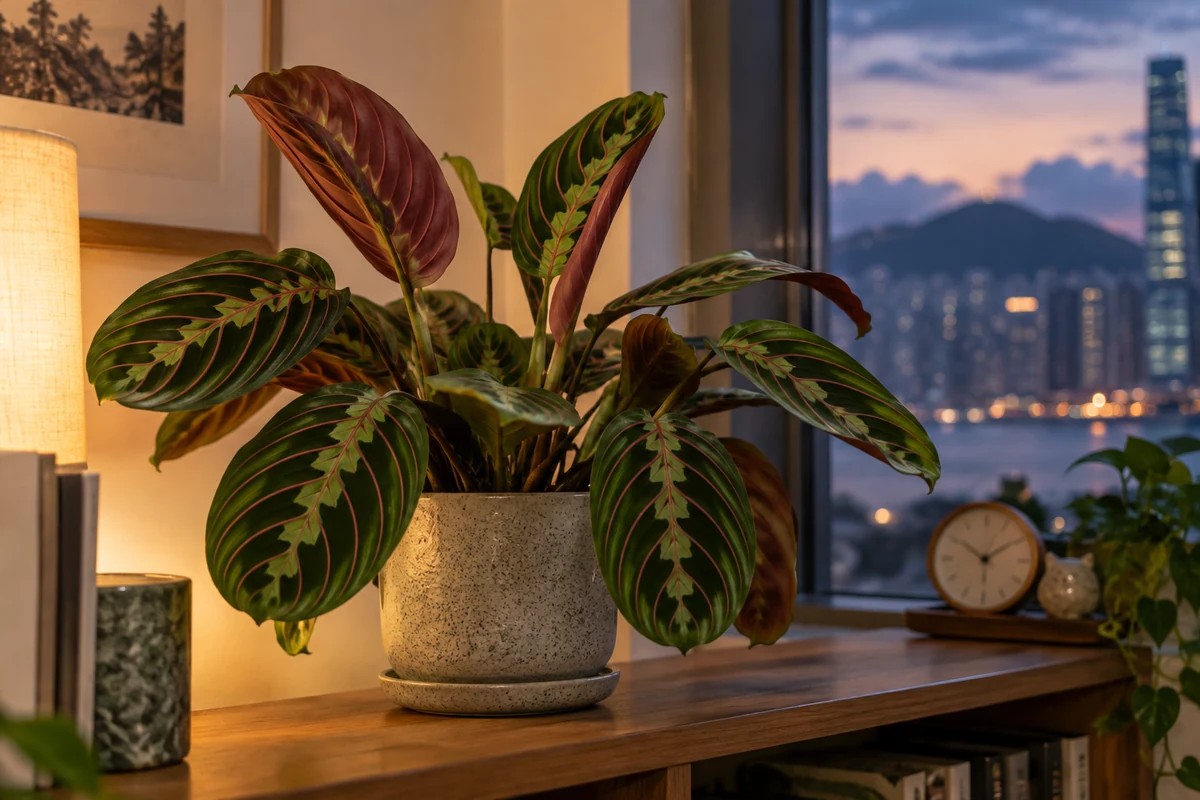
Many plants in the prayer-plant family change leaf angle through the day and night, often rising at night and spreading during the day. This is nyctinasty, not automatically thirst. Limp tissue, tightly rolled leaves or prolonged loss of firmness should not simply be dismissed as sleep. Compare the same leaf over time, then assess the root zone and environment.
Reference: RHS — How to grow calatheas · NC State Extension Plant Toolbox — Goeppertia orbifolia
Angle, rolling and firmness are different observations
A leaf rising or spreading changes its orientation. Margins rolling into a tube change the blade’s shape. Limp tissue or a petiole losing support is another observation again. Calling all three “drooping” invites inappropriate advice.
Do not force the leaf joint to test it. Look from the side at the petiole and check whether the blade retains its usual firmness. Different prayer plants have different leaf forms and movement amplitudes, and leaves of different ages need not move in perfect synchrony. One lower leaf is not a reason to pour in water.
Make a day–night comparison
Choose one mature, visibly undamaged leaf and photograph it from the side in the morning and evening from the same position. Note room-light and grow-light switching times. Keep the plant in its usual conditions rather than running lights overnight, repeatedly moving it into darkness or manually flattening leaves.
A broadly repeating daily posture with firm leaves and otherwise normal growth is more consistent with normal movement. It is a useful clue, not a guarantee of freedom from pests or disease. If soft stems, unusual odour or rapid wilting appear, investigate promptly instead of waiting to complete the next night photograph.
Keep the pot facing the same way and identify the selected leaf in the image. Comparing an outer mature leaf in the morning with central young growth at night does not measure one leaf’s movement.
When to check moisture rather than add water
| Appearance | Check first | Avoid |
|---|---|---|
| Rises at night, spreads by day, remains firm | A repeatable daily pattern | Treating every angle change as thirst |
| Rolled leaves with a light pot and dry roots | Insufficient moisture or strong airflow | Only misting foliage while roots stay dry |
| Limp leaves with a heavy wet pot | Drainage, roots and stem base | Adding water because the leaves look downcast |
| One-sided scorch or curling near a window or vent | Local light, heat and airflow | Sealing the whole plant as a quick fix |
The question is whether roots can supply water and whether foliage is under environmental stress, not how to fit every symptom into one watering formula.
Record air-conditioning changes in a Hong Kong room
Air conditioning switched on in the morning and off at night can change temperature and humidity together. These changes overlap with ordinary daily movement, so “it droops when the air conditioning starts” still requires a distinction between angle change and loss of tissue firmness.
Avoid direct vents and sudden harsh sun while retaining sufficient indirect light. No single room-humidity number is a treatment threshold for all prayer plants. Air moisture and root moisture are separate; a humidifier should not leave foliage continuously wet or water accumulating in a cachepot.
When someone waters because the leaves look lower
Suppose a colleague sees the leaves more spread each morning than the previous night and adds water. After several days, the pot stays heavy and the foliage genuinely becomes limp. Normal daily movement and later overwatering are two events in sequence, not evidence that the plant was thirsty all along.
A simple note beside the pot can say, “Check moisture and the record; do not water by leaf angle.” Give one person primary responsibility while others report changes. This prevents duplicate watering more effectively than asking everyone to memorise prayer-plant taxonomy.
Describe the change precisely when asking for help
Provide morning and evening views of the same leaf, plus the medium and stem base. Say “the leaf remains firm but sits lower” or “the margins roll and the blade feels limp,” and include the last watering. “It stopped praying” does not describe enough to assess the problem.
Enjoy normal movement while noticing unusual changes early. Leaf motion is not a watering sensor: the decision still depends on the root zone and overall condition.
Sources and scope
- RHS — How to grow calatheas — Calathea leaf movement and growing conditions. Daily leaf angle alone does not establish watering need.
- NC State Extension Plant Toolbox — Goeppertia orbifolia — Goeppertia orbifolia identity and foliage context. One species does not establish tolerance for the entire family.
Further reading
Related Plantjai plants
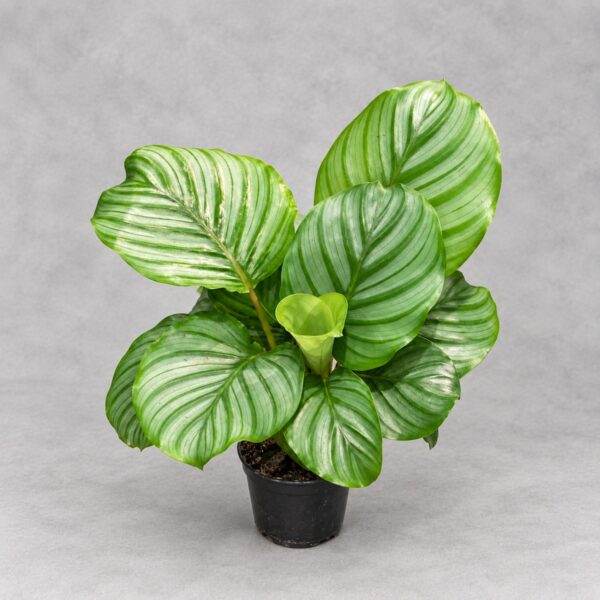
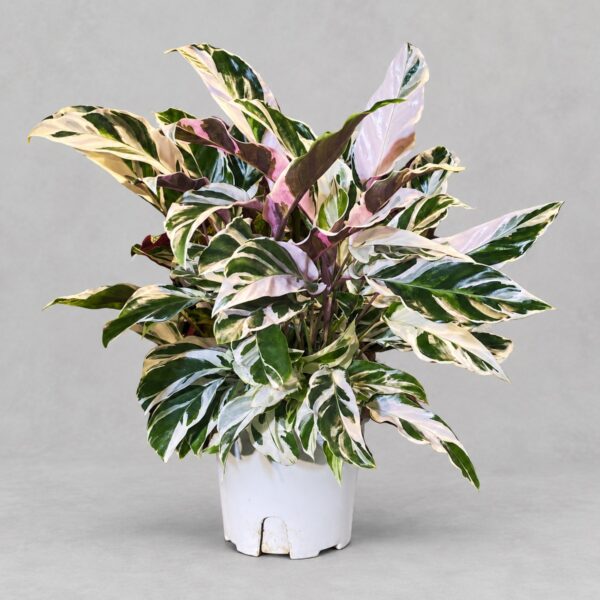
- Calathea orbifolia
Its broad leaves make petiole angle and leaf firmness easier to observe from the side. Provide bright indirect light, consistent moisture and protection from direct air-conditioning flow.
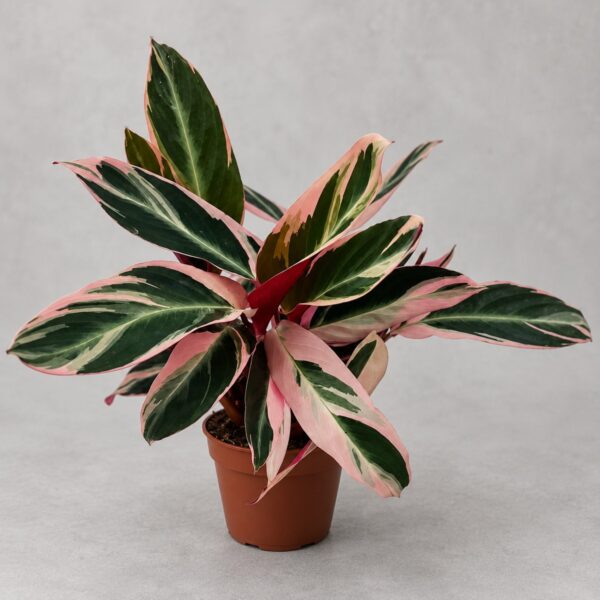
- Calathea triostar
Compare its daily posture with orbifolia without expecting identical movement amplitude. Base watering on this pot’s moisture rather than its neighbour’s routine.
IN STORE NOW
Plants for this guide
Related plants in stock now — live prices, delivery or Causeway Bay pickup.
FREE PLANT ADVICE
Send us a photo before you change anything
WhatsApp a photo of the plant and your window light. Our Causeway Bay team will suggest care steps or plants that suit your space.
STORE · CAUSEWAY BAY
4/F, 39 Yiu Wa Street, Causeway Bay
Daily 12:30–8:00pm · ~3 min walk from Times Square
Map & directionsPlant Care