
How to Care for Hoya Obovata Albomarginata in Hong Kong | Plantjai

Plantjai 植仔 · Care Encyclopedia
Hoya Obovata Albomarginata
Hoya obovata albomarginata 鏡葉外錦毬蘭
Hong Kong care guide — useful before you buy and after it arrives.
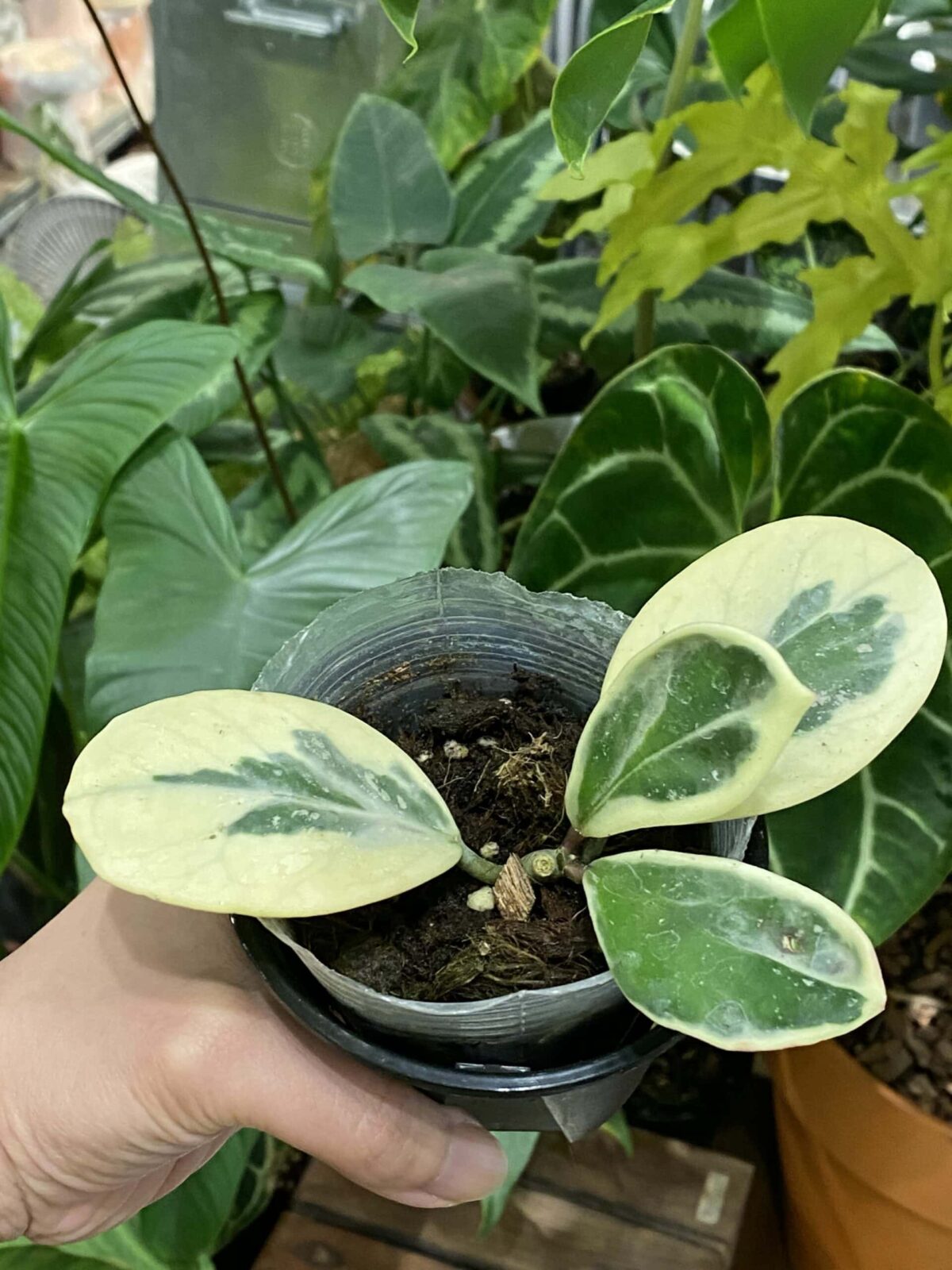
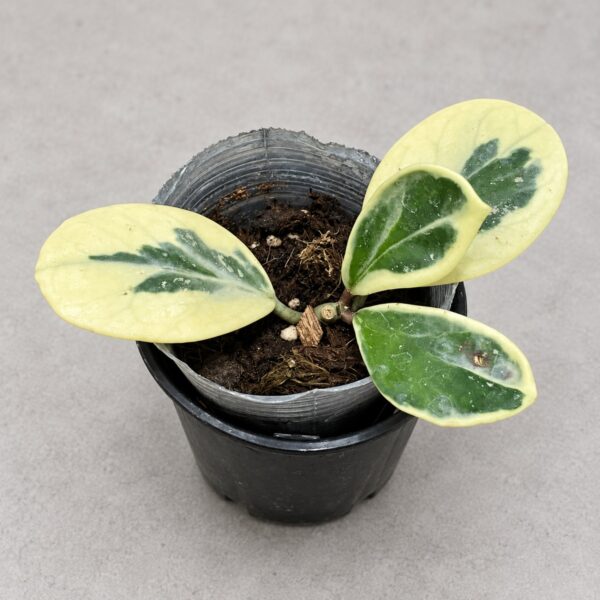
Shop this plantRound, thick, mirror-like leaves edged with a creamy-white border, like a natural oil-painting frame — a classic variegated species that every Hoya collector should own.
Origin & characteristics
- Native range: the species Hoya obovata is native to Southeast Asia, including Indonesia, Malaysia, and Thailand, growing in tropical rainforest
- Botanical name pending confirmation: 'Albomarginata' is a horticultural varietal name referring to white-margin variegation (albo- meaning white; marginata meaning margin); some sources label it Hoya obovata var. albomarginata or other spellings — use the Plantjai label as the reference
- Leaf characteristics:
- Obovate to round leaf shape, thick and succulent like a small mirror, with a silvery speckled texture on the surface
- Marginal variegation appears as a creamy-white to pale-yellow band around the leaf edge, with green retained in the centre, creating striking contrast
- Distinctive texture, thick and glossy to the touch
- Flowering characteristics: globe-shaped flower clusters, pink or pale purple with red centres, with a sweet fragrance and abundant blooms
- Growth habit: moderate growth rate with sturdy stems, suited to a moss pole or hanging pot; the thick leaves give it good drought tolerance
Light
- Ideal light: bright indirect light to half-day sun, with 5–7 hours of gentle daily light making the white margin more vivid
- Window placement: east- or southeast-facing windowsills are best; a west-facing window should avoid harsh late-afternoon sun
- Avoid: prolonged harsh direct sun, especially summer midday sun, which browns and scorches the white-margined variegation
- Tip: marginal variegation cultivars need ample light to maintain the white edge — insufficient light causes it to green over, narrow, or even disappear; but since the white margin lacks chlorophyll, it's more sensitive to strong light too, so balance is key
Watering
- Principle: "water when just dry" — water once the top 2–3 cm of soil dries out
- Frequency reference: roughly every 7–10 days in spring/summer; roughly every 10–14 days in autumn/winter
- Method: water evenly around the rim until it drains from the base, discarding runoff after 30 minutes
- Notes:
- Hoya obovata's thick leaves store water well, giving it better drought tolerance than thin-leaved species
- Variegated cultivars have slightly slower metabolism due to reduced chlorophyll — control watering more carefully in winter
- Avoid prolonged standing water at the base — root rot is harder to notice in thick-leaved species until it's advanced
Soil & pot
- Soil recipe: prioritise fast drainage and breathability, with a slightly higher proportion of coarse particles, for example:
- Coco coir + perlite + orchid bark + tree bark (roughly 4:3:2:1)
- Or use a dedicated Plantjai Hoya mix
- pH: slightly acidic (pH 5.5–6.5)
- Pot choice: terracotta is ideal, with breathability supporting root health; a moss pole works for climbing display, while a hanging pot showcases its trailing form
- When to repot: repot in spring every 1–2 years — Hoya obovata has a vigorous root system, so repot once roots wrap around the base or emerge from the drainage holes
Temperature & humidity
- Ideal temperature: 18–28°C for best growth
- Minimum tolerance: briefly tolerates 12°C, but prolonged temperatures below 15°C stall growth
- Humidity requirement: 50–70% relative humidity
- Ways to raise humidity: set on a pebble tray or mist the surrounding air occasionally
- Note: thick-leaved cultivars are relatively flexible about humidity and adapt to typical household conditions; but the white-margined variegation is more sensitive — watch that humidity doesn't drop too low during dry autumn/winter
Common problems
| Issue | Likely cause | What to do |
|---|---|---|
| White margin turning green or narrowing | Insufficient light | Move to a brighter spot, gradually increasing indirect light |
| White margin browning or scorched at the edges | Sunburn from strong light / humidity too low | Move away from direct light, raise ambient humidity |
| Wrinkled, soft leaves | Underwatering | Water promptly — wrinkling in thick leaves is a clear sign of thirst |
| Yellowing, mushy leaves | Overwatering / root rot | Stop watering immediately, check roots, trim and repot as needed |
| Fading silver speckles | Insufficient or excessive light | Adjust to a bright indirect light position |
| Leggy stems | Insufficient light | Increase light intensity |
| Won't flower | Insufficient temperature differential / insufficient light | Create a 5–10°C day-night temperature differential in autumn/winter, ensure adequate indirect light |
How to explain to customers
"This mirror-leaf variegated Hoya is a real classic — look how round and thick the leaves are, just like little mirrors, with a lovely creamy-white border around the edge, so pretty! Marginal variegation means the pattern appears at the leaf edge, unlike central variegation. Its thick leaves store water well and don't need constant watering — just water once the soil surface has dried out. Remember to give it plenty of indirect light, or that white border will turn back to green!"
Fun facts
- Where "mirror leaf" comes from: Hoya obovata's round, thick leaves have a smooth, glossy surface that resembles a small round mirror from a distance, giving rise to its common name "Mirror Leaf Hoya" — a very fitting description.
- The secret of the silver speckles: the silver speckles on the leaf surface of the mirror-leaf Hoya are actually "reflective layers" beneath the leaf epidermis, which help reflect excess light in understory conditions and protect leaf cells — a natural sun-protection mechanism.
- Marginal vs. central variegation: marginal variegation cultivars (like 'Albomarginata') are generally easier to care for than centrally-variegated ones, since the white border only occupies the leaf edge while the green centre retains enough chlorophyll for photosynthesis, resulting in relatively faster growth.
- Non-toxic to pets: Hoya obovata 'Albomarginata' is non-toxic to cats and dogs — its variegated leaves may look almost like artificial flowers, but they pose no danger if accidentally nibbled (though it's still best to discourage pets from chewing on them).
Keywords
Mirror Leaf Variegated Hoya, Hoya obovata Albomarginata, marginal variegation cultivar, white-margined Hoya, mirror leaf Hoya, thick-leaved Hoya, silver-speckled leaves, classic Hoya, indirect light, water when dry, non-toxic to pets, climbing Hoya
參考資料(想知來源可展開)
References
- Royal Botanic Gardens, Kew — Plants of the World Online: Hoya obovata, https://powo.science.kew.org/
- ASPCA — Toxic and Non-Toxic Plant List, https://www.aspca.org/pet-care/animal-poison-control/toxic-and-non-toxic-plants
⚠️ Non-toxic to cats and dogs; sap may cause mild skin irritation in sensitive individuals.
Plantjai · Causeway Bay collector indoor plants · WhatsApp +852 66807550
Plantjai shop · In stock online
Hoya obovata albomarginata
Original price was: HK$1,880.00.HK$380.00Current price is: HK$380.00.
Hong Kong delivery · Causeway Bay pickup
For Hong Kong homes and offices. Stock and pricing follow the product page.
IN STORE NOW
Plants for this guide
Related plants in stock now — live prices, delivery or Causeway Bay pickup.
FREE PLANT ADVICE
Send us a photo before you change anything
WhatsApp a photo of the plant and your window light. Our Causeway Bay team will suggest care steps or plants that suit your space.
STORE · CAUSEWAY BAY
4/F, 39 Yiu Wa Street, Causeway Bay
Daily 12:30–8:00pm · ~3 min walk from Times Square
Map & directionsPlant Care