
How to Care for Hoya Manipurensis in Hong Kong | Plantjai

Plantjai 植仔 · Care Encyclopedia
Hoya Manipurensis
Hong Kong care guide — useful before you buy and after it arrives.
Shop this plantMiniature fuzzy little leaves and fuzzy little flowers combine into an adorable "cute-factor" Hoya — a top choice for tabletop displays.
Origin & characteristics
- Native range: northeastern India (Manipur state) through western Myanmar's mountainous evergreen tropical forest, growing on tree trunks or rocks at 500–1,500 metres elevation
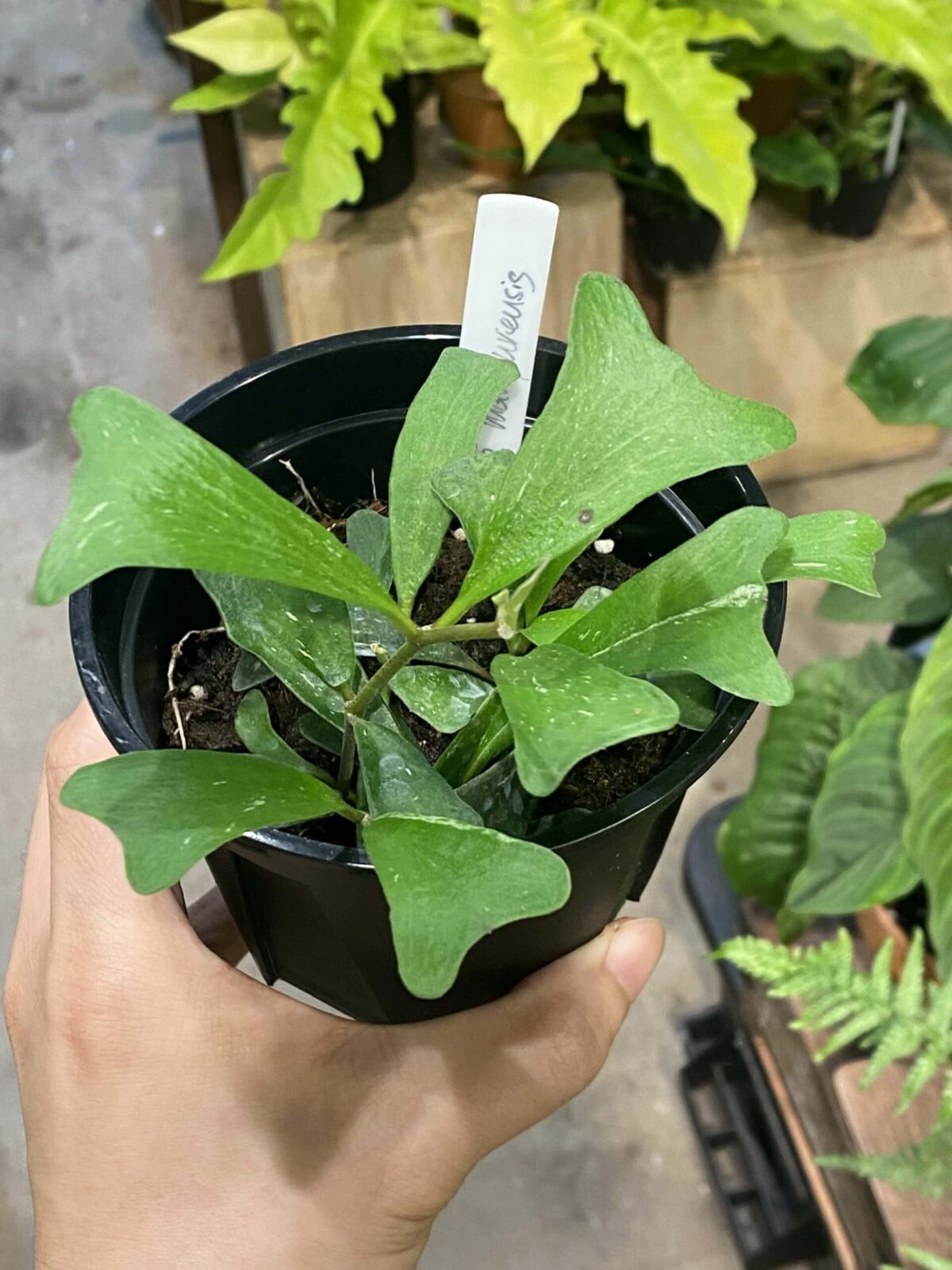
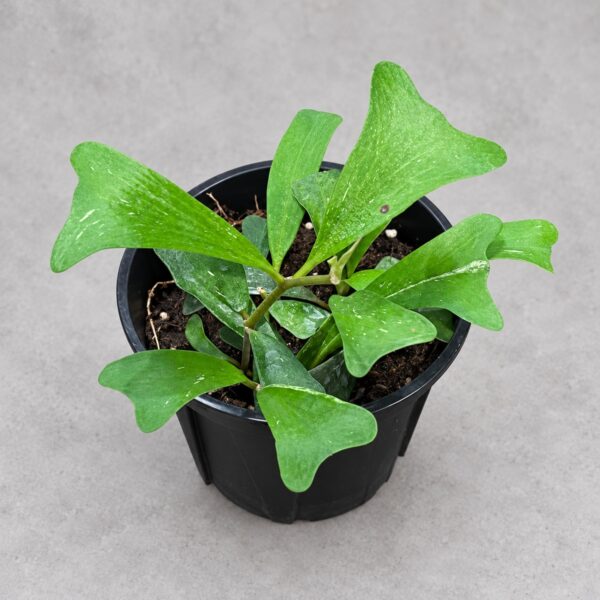
- Growth habit: a small vining Hoya with relatively slow growth and thin vines; leaves are opposite, small and leathery, round to broadly oval
- Leaf characteristics: deep green with a finely fuzzy texture on the surface, slightly upturned margins, overall compact and delicate, with a distinctive feel to the touch
- Flower characteristics: pale yellow to creamy corolla, about 1–1.5 cm across, the corolla and stamens are covered in fuzz, forming an adorable fuzzy ball shape; light fragrance
- Bloom time: mainly summer, with old peduncles able to rebloom
- Growth form: compact and small, typically 30–50 cm of vine, perfectly suited to tabletops, bookshelves, or small windowsills
Light
- Ideal intensity: medium indirect light, around 8,000–15,000 lux; native to semi-shaded forest floor, so it doesn't need very strong light
- Placement: north- or east-facing windowsill, 2–3 metres from a south-facing window, or a desk or shelf with adequate ambient light indoors
- Notes:
- As a small-leaved species, harsh direct sun easily causes sunburn
- Too little light slows growth further and reduces flowering
- Avoid frequent misting of the fuzzy leaf surface, as lingering moisture can cause leaf spots
Watering
- Frequency: water once the top 2–3 cm of soil is dry, roughly every 7–10 days in summer, every 10–14 days in winter
- Method: water in small amounts around the rim, letting water drain from the base, then discard any runoff
- Water quality: room-temperature tap water is fine
- Notes:
- As a small species, the mix may dry faster, but standing water should still be avoided
- Growth nearly stops in winter — significantly reduce watering, extending to every 14–21 days
- Avoid letting water sit on the leaf surface, as the fuzz easily traps water droplets
Soil & pot
- Soil recipe: lightweight and highly breathable, with a slightly higher ratio of coarse particles:
- Orchid mix (fine bark + sphagnum moss chips) 45%
- Coarse perlite or lava rock 30%
- Coco coir or peat 15%
- Coarse sand or activated charcoal 10%
- Pot choice:
- A small terracotta pot (10–12 cm diameter) suits its compact growth habit
- A mini hanging pot also works, creating an adorable trailing effect
- Avoid an oversized pot for a small plant, which risks standing water and root rot
- When to repot: roughly every 2 years, in spring; slow growth means it doesn't need frequent repotting
Temperature & humidity
- Ideal temperature: 20–28°C, growing most vigorously at 22–26°C
- Minimum tolerance: no lower than 15°C — despite growing at elevation, it's still a tropical species and fairly sensitive to cold
- Humidity requirement: 55–70% is ideal, as the fuzzy leaf surface adapts well to slightly higher humidity
- Ways to raise humidity:
- A humidity tray under the pot (not touching the pot base)
- Group with neighbouring plants to raise microclimate humidity
- Avoid spraying water directly on the leaf surface
Common problems
| Issue | Likely cause | What to do |
|---|---|---|
| Extremely slow growth | Normal trait / insufficient light / low temperature | Confirm the environment is warm with indirect light, and be patient |
| Yellowing leaves | Overwatering / cold temperatures | Check roots, move to a warmer spot |
| Brown spots on leaves | Water residue on leaves / poor ventilation | Avoid misting, improve air circulation |
| Soft, drooping vines | Underwatering or root rot | Check mix moisture and address accordingly |
| Won't flower | Plant too young / insufficient light | Mature plants (2+ years) will flower; increase light |
How to explain to customers
"Hoya manipurensis is such a miniature, adorable variety — the little leaves have a fuzzy texture that feels really special to the touch. When it flowers, you get clusters of fuzzy little blooms that look just like tiny pom-poms, perfect on a desk or small windowsill. It grows fairly slowly, so it won't get big quickly or take up much space. Watering follows the same 'dry before you water' rule as other Hoyas, just remember not to spray the leaves constantly. It's completely non-toxic to cats and dogs, so you can grow it worry-free."
Fun facts
- The secret of the fuzz: the fuzz covering Hoya manipurensis's flowers likely serves multiple functions — beyond potentially attracting specific pollinators, it may help wick away excess moisture in high-humidity conditions, preventing flower rot, a refined adaptation to its rainforest habitat.
- A treasure from Manipur: the species epithet manipurensis comes from Manipur state in northeastern India, a region of remarkably high biodiversity and one of the important centres of Hoya distribution in Southeast Asia.
- The feel of fuzzy leaves: its fuzzy leaf texture is uncommon within the Hoya genus, as most Hoyas have smooth, leathery leaves — this trait is similar to its close relative Hoya thomsonii, and both are prized targets for "texture-focused" collectors.
Keywords
Hoya Hoya manipurensis miniature Hoya small plant fuzzy leaves tabletop plant foliage plant flowering plant indoor plant trailing plant indirect light low maintenance pet safe non-toxic plant slow growing native to India Manipur fuzzy flowers cute factor Plantjai
參考資料(想知來源可展開)
References
- Royal Botanic Gardens, Kew — Plants of the World Online: Hoya manipurensis, https://powo.science.kew.org/
- ASPCA — Toxic and Non-Toxic Plant List, https://www.aspca.org/pet-care/animal-poison-control/toxic-and-non-toxic-plants
⚠️ Non-toxic to cats and dogs; sap may cause mild skin irritation in sensitive individuals.
Plantjai · Causeway Bay collector indoor plants · WhatsApp +852 66807550
Plantjai shop · In stock online
Hoya manipurensis
HK$188.00
Hong Kong delivery · Causeway Bay pickup
For Hong Kong homes and offices. Stock and pricing follow the product page.
IN STORE NOW
Plants for this guide
Related plants in stock now — live prices, delivery or Causeway Bay pickup.
FREE PLANT ADVICE
Send us a photo before you change anything
WhatsApp a photo of the plant and your window light. Our Causeway Bay team will suggest care steps or plants that suit your space.
STORE · CAUSEWAY BAY
4/F, 39 Yiu Wa Street, Causeway Bay
Daily 12:30–8:00pm · ~3 min walk from Times Square
Map & directionsPlant Care