
How to Care for Hoya Longicalyx in Hong Kong | Plantjai

Plantjai 植仔 · Care Encyclopedia
Hoya Longicalyx
Hong Kong care guide — useful before you buy and after it arrives.
Shop this plantElongated tubular calyxes and star-shaped flowers with a light nighttime sweetness — an advanced Hoya offering both attractive foliage and lovely blooms.
Origin & characteristics
- Native range: Southeast Asian tropical rainforest, primarily Myanmar and northern Thailand
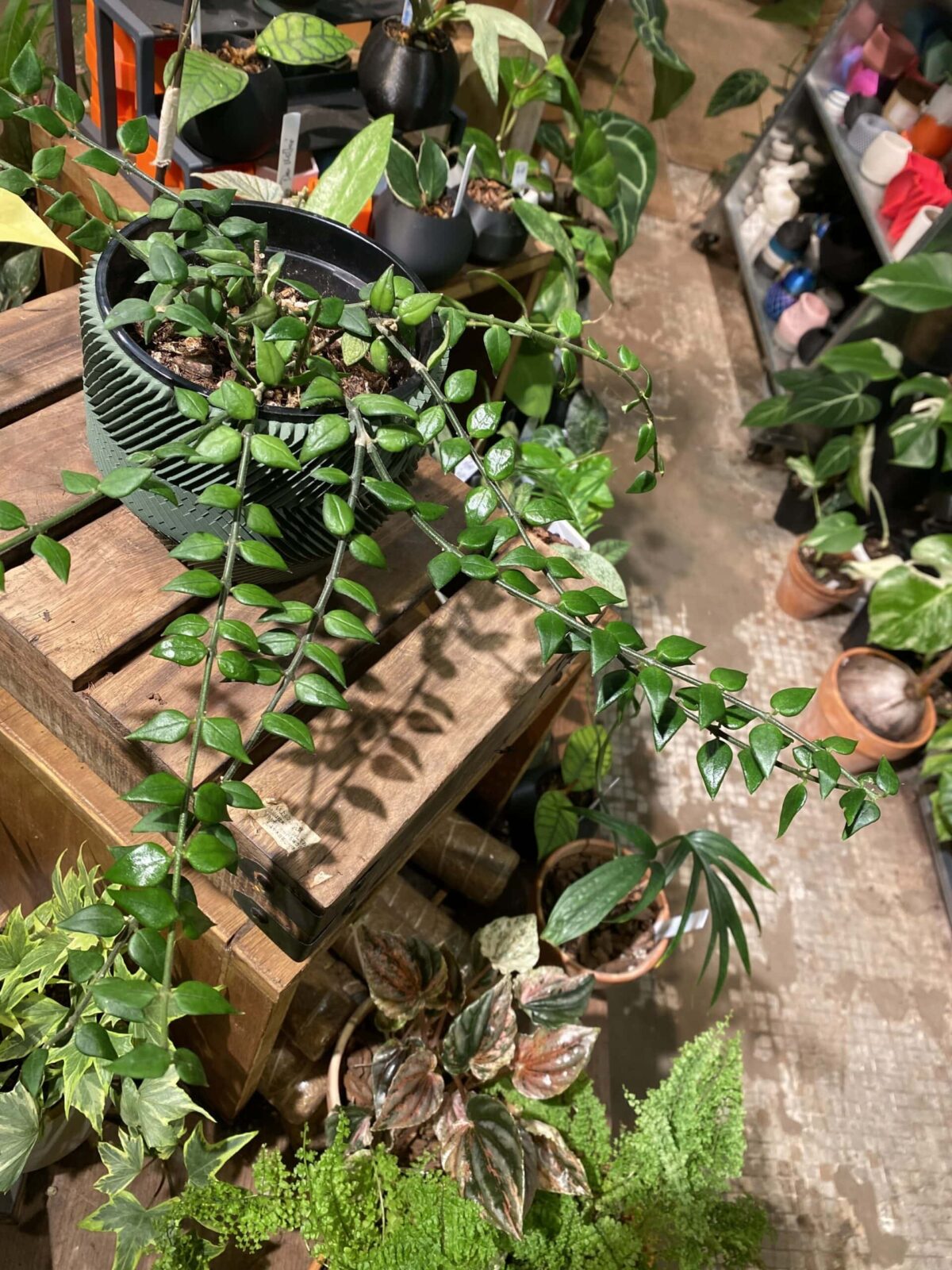
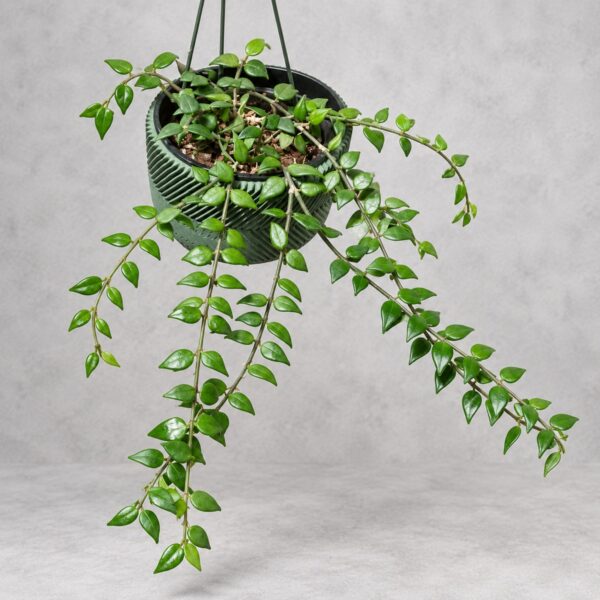
- Growth habit: climbing vine; young stems are slightly reddish-brown, maturing to deep green; leaves are opposite, leathery, long-oval, with clear, slightly raised venation
- Flower characteristics: white to pale pink, five-pointed star-shaped corolla; the corolla tube is exceptionally long (hence the species name longicalyx, meaning "long calyx"), with the nectary located deep within the tube; releases a light sweet fragrance at night
- Bloom time: late spring through summer, with old peduncles reblooming — never cut them off
- Growth form: a medium-length vine, suited to hanging or growing on a climbing pole
Light
- Ideal intensity: bright indirect light, around 8,000–15,000 lux
- Placement: near an east- or north-facing window, 1.5–2 metres from a south-facing window, or anywhere indoors with sheer-curtain-filtered light
- Notes:
- Pale leaf colour and stretched internodes = insufficient light — move closer to a light source
- Yellow spots or scorched edges on leaves = direct light too strong — provide some shade
- At least 6 hours of bright light daily is recommended for better flowering quality
Watering
- Frequency: water once the top 2–3 cm of soil is dry, roughly every 7–10 days in summer, every 10–14 days in winter
- Method: water slowly around the rim until it drains from the base, emptying the saucer after 30 minutes
- Water quality: room-temperature tap water left to sit is fine — cold water shocks the roots
- Notes:
- Better a bit dry than standing in water — prolonged root moisture easily leads to root rot
- Avoid moving the plant while buds are forming, and keep water supply consistent
Soil & pot
- Soil recipe: prioritise breathability, suggested ratio:
- Orchid mix (bark + sphagnum moss chips) 40%
- Coarse perlite or lava rock 30%
- Soil-free coco coir or peat 20%
- A little activated charcoal or coarse sand 10%
- Pot choice:
- Terracotta or unglazed clay pots are preferred for good breathability
- Plastic pots should have drainage holes
- Avoid an overly large pot — ideally sized so roots become slightly bound within 1–2 growing seasons
- When to repot: early spring (March–April), when roots emerge from the base or the mix clearly breaks down, roughly every 1–2 years
Temperature & humidity
- Ideal temperature: 18–28°C, growing most vigorously at 20–25°C
- Minimum tolerance: briefly no lower than 12°C; prolonged cold causes yellowing and leaf drop
- Humidity requirement: 50–70% is ideal
- Ways to raise humidity:
- A humidity tray under the pot (water level below the pot base, not touching it)
- Keep a glass of water nearby, or use a small humidifier
- Avoid direct AC airflow when running the air conditioner
Common problems
| Issue | Likely cause | What to do |
|---|---|---|
| Yellowing, dropping leaves | Overwatering / poor drainage | Check roots, trim any rot and repot in fresh soil if needed |
| Stretched internodes, widely spaced leaves | Insufficient light | Move closer to a light source or add supplemental grow lighting |
| Buds wilting before opening | Too frequent movement / sudden humidity change | Keep the plant in place during budding, avoid drastic temperature swings |
| Brown spots on leaves | Sunburn / fungal infection | Provide shade and improve ventilation; use an organic fungicide for severe cases |
| Stalled growth | Roots have filled the pot / nutrients depleted | Repot in spring and add slow-release fertiliser |
How to explain to customers
"Hoya longicalyx is a wonderful advanced pick that combines great foliage with lovely blooms — what makes it special is its exceptionally long flower tube, so when it flowers, it looks like little stars hanging in the air, with a light sweet scent at night too. Keep it by a window in the living room with some indirect light, and remember to let it dry out before watering — don't keep the roots wet all the time. It's non-toxic to pets, so cats and dogs are both safe around it. After it flowers, don't cut off the flower stalk — it'll bloom again from the same spot next time."
Fun facts
- The mystery of the flower tube: Hoya longicalyx's exceptionally long corolla tube evolved to match a specific pollinating insect (such as long-tongued moths) — the insect must reach deep into the tube to find nectar, incidentally pollinating the flower in the process.
- Reusing old peduncles: almost all Hoya species share the trait of "reblooming from old peduncles," known as a "persistent peduncle" — a clever energy-saving strategy.
- Decoding the name: longicalyx combines the Latin longus (long) and calyx (calyx), directly referencing its signature long tubular flower calyx.
Keywords
Hoya Hoya longicalyx long-calyx Hoya foliage plant flowering plant indoor plant trailing plant climbing plant indirect light low maintenance pet safe non-toxic plant night-blooming fragrant flowers drought tolerant terracotta pot reblooming peduncle advanced species Plantjai native to Southeast Asia
參考資料(想知來源可展開)
References
- Royal Botanic Gardens, Kew — Plants of the World Online: Hoya longicalyx, https://powo.science.kew.org/
- ASPCA — Toxic and Non-Toxic Plant List, https://www.aspca.org/pet-care/animal-poison-control/toxic-and-non-toxic-plants
⚠️ Non-toxic to cats and dogs; sap may cause mild skin irritation in sensitive individuals.
Plantjai · Causeway Bay collector indoor plants · WhatsApp +852 66807550
For Hong Kong homes and offices. Stock and pricing follow the product page.
IN STORE NOW
Plants for this guide
Related plants in stock now — live prices, delivery or Causeway Bay pickup.
FREE PLANT ADVICE
Send us a photo before you change anything
WhatsApp a photo of the plant and your window light. Our Causeway Bay team will suggest care steps or plants that suit your space.
STORE · CAUSEWAY BAY
4/F, 39 Yiu Wa Street, Causeway Bay
Daily 12:30–8:00pm · ~3 min walk from Times Square
Map & directionsPlant Care