
How to Care for Plerandra Elegantissima in Hong Kong | Plantjai


Plantjai 植仔 · Care Encyclopedia
Plerandra Elegantissima
Hong Kong care guide — useful before you buy and after it arrives.
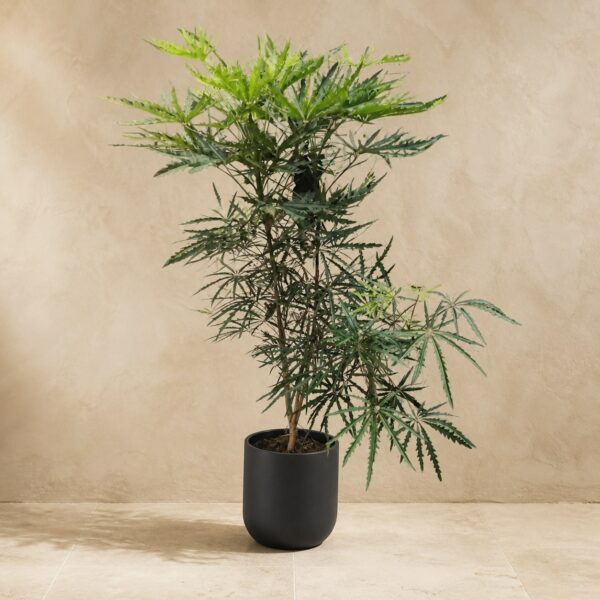
Shop this plantLeaves split layer upon layer like peacock feathers, bringing an instant sense of artistry and sculptural elegance — one of the most stylish foliage plants for upgrading a room's whole mood.
Origin & characteristics
Native to New Caledonia in the South Pacific, False Aralia is an evergreen shrub or small tree in the Araliaceae family, also known as Threadleaf Aralia. Its most distinctive feature is its deeply palmate, finely serrated leaves, which resemble a peacock's tail feathers when fully fanned out — hence the name. Leaves are deep green with a coppery-red tone and clear, delicate veining. Indoors it can reach 1.5-2 metres tall, but grows slowly, making it a good long-term feature for a room.
Interestingly, the foliage changes character as the plant ages: juvenile plants produce very narrow, dark, almost black-copper leaflets, while mature plants gradually develop broader, lighter green leaflets. This transformation can take several years, which makes growing False Aralia long-term a genuinely rewarding project.
Light
- Bright indirect light: place near a window filtered by a sheer curtain, or 1-2 metres from a south-facing window
- Avoid direct sun: intense sunlight scorches the leaves, causing browning at the edges
- Tolerates partial shade: growth slows in low light and leaf division may become less pronounced
- Rotate the pot periodically to ensure even light exposure on all sides, keeping the plant's form upright and balanced
- If natural light is insufficient, a full-spectrum LED grow light 20 cm from the foliage, run 10-12 hours a day, works well as a supplement
Watering
- Water once dry: let the top 2-3 cm of soil dry out before watering
- Spring/summer: roughly every 7-10 days during the growing season, keeping the soil lightly moist
- Autumn/winter: growth slows, extend to every 10-14 days
- Drainage above all: water thoroughly, but never let water pool at the base of the pot
- The foliage can be misted regularly to keep it clean and boost humidity
- Water quality: this species is notably sensitive to fluoride — use rainwater, distilled water, or filtered water where possible; untreated tap water containing fluoride can cause leaf-tip yellowing
- Water until it drains from the base, then always empty tray runoff
Soil & pot
- Soil: a loose, breathable peat-based mix; recommended ratio is peat : perlite : pine bark = 5:3:2, or 50% quality potting soil + 25% coco coir + 25% perlite/pumice
- pH: slightly acidic to neutral (pH 5.5-6.5)
- Pot: terracotta or cement pots are best for their breathability; drainage holes at the base are essential; a pot that's just slightly larger than the root ball is preferable to an oversized one
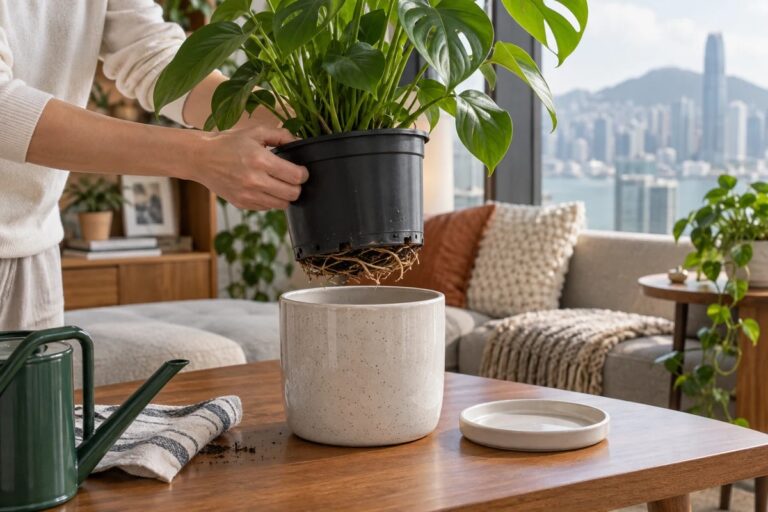
- Repotting: roughly every 2-3 years in spring, trimming old roots at the same time to encourage new root growth; only move up 1-2 inches (2.5-5 cm) in pot size at a time
- Because this species is sensitive to being moved, avoid repotting and relocating it at the same time — space these events at least a month apart
Temperature & humidity
- Ideal temperature: 18-25°C, the range where it grows most vigorously
- Minimum temperature: the 16°C mark is a warning line — leaf drop begins below this; prolonged exposure below 10°C causes serious damage or death
- Humidity: 50-65% is ideal — Hong Kong's natural summer humidity is usually sufficient, but winter heating or air conditioning can drop indoor humidity to 30-40%, causing crisp, dry leaf edges
- Humidifying methods: a humidifier is most effective (especially in winter); a pebble tray, grouping with other plants, and periodic misting all help
- Stability matters: False Aralia is extremely sensitive to environmental change, especially being moved — a sudden change often triggers significant leaf drop, followed by fresh growth once it settles. Find a good spot and try not to move it around.
Common problems
| Issue | Cause | What to do |
|---|---|---|
| Leaves drooping, losing shine | Overwatering causing root rot, or extreme dryness | Check soil moisture, adjust watering frequency accordingly |
| Leaf tips turning brown | Air too dry or water too hard | Switch to filtered water, increase surrounding humidity |
| Leaves getting smaller, less divided | Insufficient light | Move to a brighter position |
| Significant leaf drop | Temperature too low or sudden environmental change | Keep the environment stable, avoid moving the plant frequently |
| Powdery coating on leaves | Possible mealybug infestation | Wipe with alcohol-soaked cotton or spray with neem oil |
| New leaves stay furled a long time | Cold stress or recent relocation | Keep above 18°C, be patient — it can take 4-6 weeks to settle |
How to explain to customers
"False Aralia is a genuinely artistic plant — its leaves look just like peacock feathers, and placing one in your living room or study instantly elevates the whole space. It grows fairly slowly, so it won't outgrow its spot quickly, which makes it well suited to Hong Kong's typical indoor spaces. Just remember not to give it too much direct sun, and let the soil dry out before watering — it's genuinely easy to care for once settled. For the best look, mist the leaves occasionally to keep them glossy and lightly humid. One important thing: this plant really doesn't like being moved around, so once you find a good spot for it at home, try to leave it there — if it drops some leaves after a move, don't panic, it'll usually grow new ones back within a few weeks once it settles."
Fun facts
False Aralia is actually a close relative of Polyscias (Ming Aralia) — both belong to the Araliaceae family. Its species epithet "elegantissima" is Latin for "most elegant," and it's often referred to in horticultural circles as "the sculpture of the houseplant world." In European interior design magazines, False Aralia is a popular choice for upscale interiors, frequently paired with Mid-Century Modern furniture. Its leaves change dramatically as the plant matures — young plants have very narrow, near-black leaflets, which broaden and lighten to green over several years, making long-term ownership genuinely interesting to watch unfold. In autumn it may produce small pale green flowers, followed by inedible black berries — ornamental only.
Keywords
False Aralia, Plerandra elegantissima, Threadleaf Aralia, New Caledonia, Araliaceae, foliage plant, indoor plant, indirect light, high humidity, artistic plant, slow-growing plant, terracotta pot, peat soil, sculptural plant, fluoride-sensitive, Plantjai
參考資料(想知來源可展開)
References
- Missouri Botanical Garden — Plant Finder: Plerandra elegantissima, https://www.missouribotanicalgarden.org/PlantFinder/PlantFinderDetails.aspx
- The Plant Daddies. "How to Care for Your Plerandra elegantissima (False Aralia)." https://www.theplantdaddies.com/blogs/plant-care/how-to-care-for-your-plerandra-elegantissima-false-aralia
- Bloomscape. "Plerandra Care Guide." https://bloomscape.com/plant-care-guide/plerandra/
⚠️ Mildly toxic to humans and pets if ingested; may cause stomach upset. Keep out of reach of children and pets.
Plantjai · Causeway Bay collector indoor plants · WhatsApp +852 66807550
In-depth care guide
Introduction
If you're looking for a houseplant with genuine sculptural presence — something that looks intentional and designed rather than simply "green" — False Aralia (Plerandra elegantissima) is one of the best options in the Araliaceae family. Its deeply divided, narrow, serrated leaflets fan out from slender stems in a way that genuinely resembles peacock plumage, and the deep copper-to-near-black colouring of young foliage gives it a moody, editorial quality that few other houseplants can match. It has long been a favourite in European and North American interior design circles, frequently styled alongside Mid-Century Modern furniture, but it remains a comparatively under-appreciated choice in Hong Kong homes — which is part of its appeal for collectors who want something a little different from the usual Monstera or Sansevieria lineup.
Native habitat and growth habit
False Aralia is native to New Caledonia, a French island territory in the South Pacific east of Australia with a warm, humid, subtropical climate and rich rainforest ecosystems. In the wild, it grows as an understory-to-mid-canopy tree, reaching heights of up to 15 metres, accustomed to bright but filtered light, high ambient humidity, stable temperatures, and good air movement. Indoors, growth is far more modest — typically topping out at 1-2 metres — and notably slow, which actually works in its favour as a long-term houseplant that won't quickly outgrow a room.
One of the most interesting aspects of owning this plant long-term is watching its foliage transform. Young plants have extremely narrow, deeply serrated leaflets in near-black copper tones, giving them an almost gothic, lacy appearance. As the plant matures over several years, the leaflets broaden, the serration becomes less extreme, and the colour lightens toward a more standard green. This means a False Aralia you buy as a young plant will look quite different — arguably even more striking — several years down the line.
Light requirements in detail
False Aralia needs bright indirect light to thrive; as an understory plant in its native habitat, it receives canopy-filtered light rather than harsh direct sun, so bringing it indoors under intense unfiltered sunlight causes real damage. Suitable positions include a south- or east-facing window with a sheer curtain to diffuse the light, a spot 1-2 metres back from a bright window, or under a grow light for 6-10 hours daily.
Too much direct sun causes the narrow leaflets to fade, yellow, and eventually scorch — the dark-coloured leaflets are especially prone to visible "bleaching" under strong light. On the other end, prolonged low light causes the plant to become sparse and leggy, with leaflets narrowing further and losing their rich copper sheen, taking on a dull, washed-out yellow-green appearance instead. If natural light indoors is limited, a CFL or LED grow light positioned about 20 cm from the foliage, run for around 12 hours daily (a timer makes this effortless), is a very effective supplement.
Humidity management
The ideal humidity range for False Aralia is 50-65%. While it can tolerate typical household humidity around 40-50%, it will look noticeably better — glossier, more vibrant — if kept above 50%. Low humidity causes a cluster of related problems: leaflet edges drying and browning, a dull, lacklustre leaf surface, and in more severe cases, significant leaf drop, since this species is genuinely quite sensitive to dry air.
Effective ways to raise humidity include running a humidifier (the most effective option, especially useful in winter), using a humidity tray with water and pebbles under the pot (without the pot base touching the water), grouping it with other plants to take advantage of their combined transpiration, and misting periodically — though the effect of misting alone is short-lived and best used as a supplementary measure rather than a primary strategy.
Watering technique
False Aralia prefers moderately moist soil — neither too wet nor too dry. Water once the top 1-2 inches (roughly 3-5 cm) of soil has dried out; you can check by inserting a finger into the soil to that depth and feeling for dryness. During the spring/summer growing season this typically works out to about once every 7-10 days, while autumn/winter slows to roughly every 10-14 days, adjusted for your specific environment.
This species is notably sensitive to water quality, particularly fluoride content. Where possible, use rainwater, distilled water, or filtered water; untreated tap water high in fluoride is a common, often-overlooked cause of yellowing or browning leaf tips that persists even when watering frequency seems correct. Always water thoroughly until it runs from the drainage holes, then empty any runoff from the saucer — standing water at the base is a fast track to root rot, which shows up as yellowing leaves with consistently wet soil, as opposed to drooping leaves with dry soil, which simply indicates underwatering.
Soil, pot, and repotting
False Aralia needs soil that is rich in organic matter, well-draining, yet able to retain some moisture. A good baseline recipe is 50% quality potting soil, 25% coco coir, and 25% perlite or pumice — this combination holds adequate moisture while still allowing excess water to drain away quickly. A pot with drainage holes is non-negotiable, and there's no need to size up dramatically; this plant doesn't require an unusually large pot relative to its root system.
Repot roughly every 2 years, ideally in spring, moving up just 1-2 inches (2.5-5 cm) in diameter each time. Because False Aralia reacts strongly to being disturbed, it's best practice to avoid repotting and relocating the plant to a new spot in the same session — space these two disruptions at least a month apart to give the plant a chance to recover from one stress before introducing another.
Temperature requirements
The ideal temperature range is 18-29°C. Treat 16°C as a genuine warning line: below this, leaf drop typically begins, and prolonged exposure below 10°C can cause serious, potentially fatal damage. Above 30°C, increase both humidity and watering frequency to help the plant cope with the heat.
Perhaps more important than the absolute temperature is stability. False Aralia is extremely sensitive to environmental change, and moving it — even just to a different room — often triggers a wave of leaf drop, followed by a recovery period of fresh growth once it acclimates to its new spot. The single most important piece of advice for this species is to find it a good position early on and resist the urge to move it around.
Feeding, pruning, and propagation
Feed monthly during the spring/summer growing season with a balanced liquid fertiliser (such as 10-10-10) diluted to half the recommended strength; stop feeding entirely in autumn and winter when growth slows. Pruning needs are minimal — simply remove dead or weak branches as needed, and light pruning can encourage branching for a fuller shape. Wipe the foliage periodically with a slightly damp soft cloth to remove dust, which both keeps the deep-coloured leaves looking their best and supports healthier photosynthesis.
Propagation is done via stem cuttings: select a healthy stem 4-6 inches (10-15 cm) long with 3-4 nodes, take a clean cut with sterilised scissors, remove the bottom two leaves, optionally dip the cut end in rooting hormone, then insert it into moist potting soil. Cover with a clear plastic bag to maintain humidity, and place in a warm, bright spot — rooting typically takes 4-6 weeks. Seed propagation is rare in cultivation, since indoor plants seldom flower or fruit.
Common problems in more detail
The most frequent issue by far is significant leaf drop. This is almost always caused by one of: being moved to a new location (a normal, temporary reaction — new growth typically follows once the plant settles), sudden temperature swings from AC, heating, or drafty doors and windows, humidity dropping too low (especially common in winter with heating running), or overwatering leading to root rot. The fix in each case is to identify the underlying cause, correct the environment, and then simply be patient — recovery is not instant.
Browning, yellowing leaf tips are most often linked to hard water (high fluoride/chlorine content) or humidity that's too low; switching to filtered water or rainwater and raising ambient humidity usually resolves this over a few weeks. Leggy growth with smaller, sparser leaves points to insufficient light — move it to a brighter spot or add supplemental grow lighting. Spider mites tend to appear in dry conditions, so raising humidity is the best prevention; if found, rinse the leaf undersides with water and use a miticide only if the infestation is severe. Mealybugs, which favour leaf axils and stem joints, can usually be managed by wiping them off with alcohol-soaked cotton swabs as soon as they're spotted.
Toxicity note
False Aralia is classified as mildly toxic to both humans and pets. Ingestion of leaf or stem material may cause gastrointestinal upset, including vomiting or diarrhoea in dogs and cats. It is not considered a severe toxin on the scale of, say, aroid family plants with calcium oxalate crystals, but it is still sensible to keep it out of reach of curious pets and small children, and to seek veterinary or medical advice if a significant quantity has been ingested.
References
- The Plant Daddies. "How to Care for Your Plerandra elegantissima (False Aralia)." https://www.theplantdaddies.com/blogs/plant-care/how-to-care-for-your-plerandra-elegantissima-false-aralia
- Bloomscape. "Plerandra Care Guide." https://bloomscape.com/plant-care-guide/plerandra/
- Tula House. "Plerandra elegantissima Plant Care." https://tula.house/blogs/tulas-plant-library/plerandra-elegantissima
- Guide to Houseplants. "False Aralia Plant Care." https://www.guide-to-houseplants.com/false-aralia.html
- Missouri Botanical Garden — Plant Finder: Plerandra elegantissima, https://www.missouribotanicalgarden.org/PlantFinder/PlantFinderDetails.aspx
Plantjai · Causeway Bay collector indoor plants · WhatsApp +852 66807550
Plantjai shop · In stock online
False aralia
Plerandra elegantissima
HK$1,280.00
Hong Kong delivery · Causeway Bay pickup
For Hong Kong homes and offices. Stock and pricing follow the product page.
IN STORE NOW
Plants for this guide
Related plants in stock now — live prices, delivery or Causeway Bay pickup.
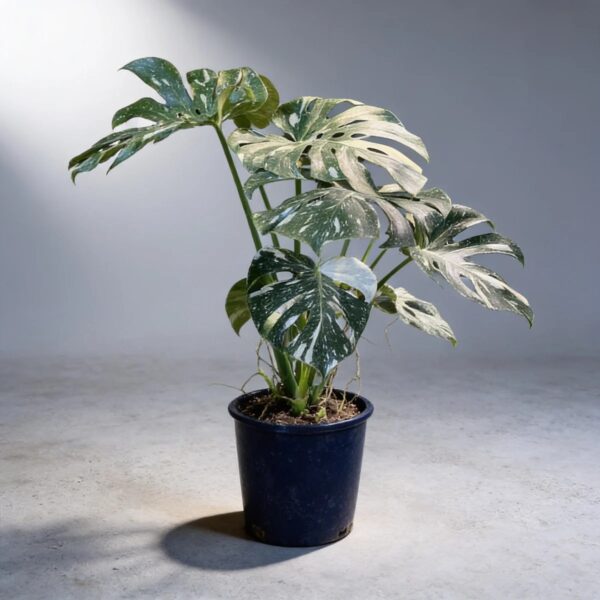
Monstera 'Thai Constellation'
Monstera 'Thai Constellation'
from HK$280.00
In stock · store pickup
View plant
FREE PLANT ADVICE
Send us a photo before you change anything
WhatsApp a photo of the plant and your window light. Our Causeway Bay team will suggest care steps or plants that suit your space.
STORE · CAUSEWAY BAY
4/F, 39 Yiu Wa Street, Causeway Bay
Daily 12:30–8:00pm · ~3 min walk from Times Square
Map & directionsPlant Care