How to Care for Olive Tree in Hong Kong | Plantjai


Plantjai 植仔 · Care Encyclopedia
Olive Tree
Hong Kong care guide — useful before you buy and after it arrives.
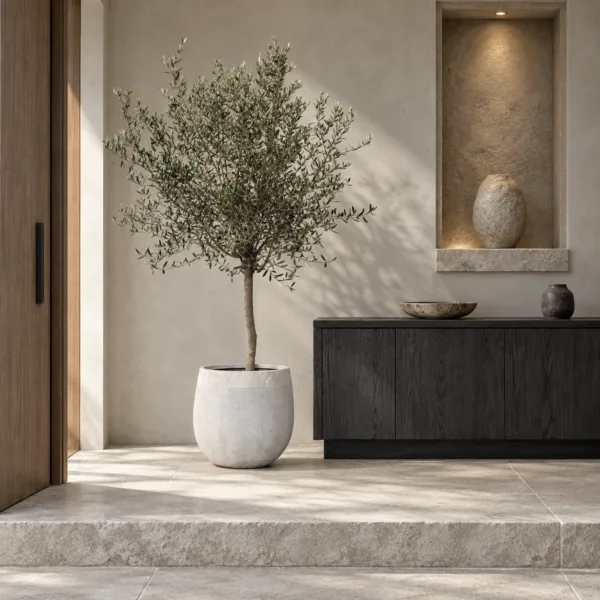
Shop this plantSilvery-green leaves carrying a subtle fragrance, bringing Mediterranean holiday vibes into your home — the moment you place it in a room, the whole space feels more refined, and it only gets more charming as it grows…
Origin & characteristics
| Item | Details |
|---|---|
| Botanical name | Olea europaea |
| Family | Oleaceae |
| Native range | Mediterranean coast (Greece, Italy, Spain, Turkey, and surrounding regions) |
| Growth habit | An evergreen tree or shrub, slow growing but exceptionally long-lived |
| Mature size | Roughly 1-2 metres tall as an indoor potted plant; can exceed 10 metres when planted in the ground |
| Display period | Evergreen year-round, with small white flowers in spring/summer and fruit in autumn |
| Toxicity | Non-toxic ✓ the fruit (olives) is edible, though fresh olives are very bitter and astringent |
The olive tree is a symbol of Mediterranean culture, closely associated with the goddess Athena in Greek mythology, representing peace and wisdom. Its leaves have a distinctive silvery grey-green colour, with fine hairs on the underside that catch the light beautifully. It adapts well to Hong Kong's indoor environment — with enough sun and good drainage, you can grow a beautiful, Mediterranean-style potted olive tree.
Special note: while the olive tree itself is non-toxic, if the cultivar you grow produces fruit, fresh olives contain a high concentration of oleuropein and taste extremely bitter — they need to be cured before eating. Households with young children or pets should be careful to prevent them from eating fallen fruit.
Light
The olive tree is a full-sun plant, needing as much sunlight as possible to grow healthily.
| Setting | Recommendation |
|---|---|
| Ideal placement | A south- or west-facing windowsill, with at least 6 hours of direct sun daily |
| Acceptable | An east-facing windowsill (ample morning sun) |
| Avoid | A permanently dark indoor spot or poorly lit corridor |
| Outdoor growing | A rooftop, balcony, or garden with full sun is most ideal |
Tip: the more light it gets, the more pronounced its silvery-green colour and the more compact its shape. Insufficient light causes branches to become leggy (stretched internodes, sparse leaves), reducing its display appeal. During prolonged overcast weather in Hong Kong winters, consider using a grow light.
Watering
The olive tree is a Mediterranean plant, highly drought-tolerant, and most afraid of overwatering leading to root rot. The care motto is "better dry than wet."
| Season | Frequency | Notes |
|---|---|---|
| Spring/summer (growing season) | Roughly every 5-7 days | Water once the top 3-5 cm of soil dries out |
| Autumn/winter (dormant season) | Roughly every 10-14 days | Substantially reduce watering, waiting for the soil to dry out completely |
Watering technique:
- Always wait until most of the soil has dried out before watering again — insert a finger 3 cm into the soil, and water only once it feels dry
- Water thoroughly when you do water, until it drains from the base — don't just wet the surface
- Empty tray runoff after half an hour
- Reducing water in winter is key — cold, wet soil easily leads to root rot
- For outdoor growing, ensure proper drainage on rainy days to avoid standing water in the pot
Soil & pot
The olive tree isn't fussy about soil, but drainage must be excellent — standing water is never acceptable.
Soil recipe:
| Material | Ratio | Function |
|---|---|---|
| Cactus/succulent potting mix | 60% | Primarily for drainage and aeration |
| Perlite or coarse sand | 20% | Further improves drainage |
| Garden soil or potting compost | 20% | Provides base nutrients |
Pot choice:
- Material: a terracotta (red clay) pot is most ideal, allowing air and water to pass through, supporting healthy roots
- Drainage: drainage holes are essential — this is completely non-negotiable
- Size: 3-5 cm larger than the current pot is sufficient — olive trees prefer being slightly root-bound
- Repotting: repot every 2-3 years, or when roots emerge from the drainage holes
Advanced tip: layering 2-3 cm of clay pellets or gravel at the base of the pot further ensures smooth drainage.
Temperature & humidity
| Item | Ideal range | Tolerance range |
|---|---|---|
| Temperature | 15-30°C | Can briefly tolerate 5°C, but not below 10°C long-term |
| Humidity | 40-60% | Highly adaptable, typical Hong Kong humidity is generally fine |
Temperature notes:
- The olive tree has moderate cold tolerance — Hong Kong winters outdoors are usually fine, but during cold snaps (temperatures approaching 5°C), bring it indoors or cover it for protection
- Above 35°C in summer, watch how quickly the soil dries out, and increase watering frequency if needed
- It's fine in an air-conditioned room, but avoid direct AC airflow
Humidity notes:
- The olive tree adapts well to a range of humidity levels, and typical Hong Kong indoor humidity is generally suitable
- In high-humidity environments, pay extra attention to ventilation to prevent fungal disease
- If placed in a consistently humid spot like a bathroom, ensure it also gets enough light
Common problems
Q1: Why are the leaves turning yellow and dropping?
The most likely cause is overwatering leading to root rot. Olive trees prefer to be on the dry side rather than wet — check whether the soil has stayed persistently moist, and if so, stop watering immediately and check the roots. Another possibility is insufficient light, requiring a move to a brighter spot.
Q2: Why has the silvery-green colour turned dull green?
This indicates insufficient light. The silvery-green colour only develops with ample sunlight — move to a brighter position, and the colour will gradually return.
Q3: Why are branches leggy with sparse leaves?
This is also a sign of insufficient light. Olive trees need abundant sun — indoors, place it at the brightest windowsill available. You can also trim back leggy branches to encourage branching and a more compact shape.
Q4: What's the white powdery substance on the leaf undersides?
This may be powdery mildew (a fungal infection), usually caused by poor ventilation combined with excess humidity. Improve air circulation, reduce leaf-surface misting, and use a fungicide if severe.
Q5: There are small black dots or sticky residue on the leaves?
This may be sooty mould or scale insects. Check the leaf undersides and branches for small brown raised bumps (scale insects), wipe with a damp cloth or an alcohol-soaked cotton swab, and use insecticide for severe infestations.
Q6: Why isn't it growing, or growing very slowly?
Olive trees are naturally slow growing, especially indoors. To speed up growth, ensure ample sunlight and apply diluted liquid fertiliser every 2-3 weeks during the growing season (spring/summer).
Q7: Will it flower and fruit?
Indoor potted plants generally have difficulty fruiting, since this requires ample sunlight, appropriate temperature differentials, and pollination. Outdoor-grown trees of sufficient age (typically 3-5 years or older) have a chance of flowering and fruiting. Choose a fruiting cultivar, as ornamental cultivars may not fruit at all.
How to explain to customers
"This is our olive tree, botanically Olea europaea, a classic plant from the Mediterranean. Look at those silvery-green leaves — they catch the light beautifully, giving your home a real Greek-island feel and instant sophistication! For care, remember one key point — it's a Mediterranean plant that really hates being wet! Make sure the soil is completely dry before watering again; it's much better to err on the dry side. But sunlight, it needs plenty — put it in the brightest windowsill spot you have. In short: lots of sun, minimal watering, and you're all set! Don't worry, the olive tree isn't toxic, though if it fruits, don't eat fresh olives raw, as they're very bitter. Just make sure children or pets don't eat any fallen fruit. It also grows fairly slowly, so you won't need to repot it often — a really low-maintenance plant! Once you bring it home, find it a bright spot and remember to let the soil dry out before watering. It's a very adaptable plant — as long as you don't keep it constantly wet, it'll grow happily. Feel free to reach out to us at Plantjai anytime with questions!"
Fun facts
- A champion of longevity: the olive tree is one of the longest-living fruit trees in the world — the Mediterranean region has many ancient olive trees over 1,000 years old, with the oldest exceeding 3,000 years!
- An Olympic symbol: in ancient Greek Olympic games, champions wore a crown woven from olive branches, symbolising peace and honour. The olive branch in the modern Olympic emblem comes from this tradition.
- Noah's Ark: according to the Bible, Noah released a dove that returned with an olive leaf, signalling the floodwaters had receded and the earth was returning to life — which is how the olive leaf became a symbol of peace and hope.
- Liquid gold: Extra Virgin Olive Oil is often called "liquid gold," rich in monounsaturated fats and antioxidants, forming the cornerstone of the Mediterranean diet.
- It grows well in Hong Kong too: though the olive tree is native to the dry Mediterranean climate, it's highly adaptable — with enough sunlight and good drainage indoors, it can grow beautifully in Hong Kong as well!
Keywords
Plantjai, olive tree, Olea europaea, Oleaceae, Mediterranean plant, indoor potted plant, foliage plant, non-toxic plant, silver-leaf plant, full-sun plant, drought-tolerant plant, beginner-friendly, greenery decor, Nordic-style plant, minimalist plant, Hong Kong indoor plant, air purification, long-lived plant, symbol of peace
參考資料(想知來源可展開)
References
- Royal Botanic Gardens, Kew — Plants of the World Online: Olea europaea, https://powo.science.kew.org/
- Missouri Botanical Garden — Plant Finder: Olea europaea, https://www.missouribotanicalgarden.org/PlantFinder/PlantFinderDetails.aspx?kempercode=277263
- ASPCA — Toxic and Non-Toxic Plant List, https://www.aspca.org/pet-care/animal-poison-control/toxic-and-non-toxic-plants
Non-toxic — the plant is safe for pets and children, though unripe fruit is very bitter and shouldn't be eaten raw.
Plantjai · Causeway Bay collector indoor plants · WhatsApp +852 66807550
Plantjai shop · In stock online
Olive tree
Olive tree
from HK$380.00
Hong Kong delivery · Causeway Bay pickup
For Hong Kong homes and offices. Stock and pricing follow the product page.
IN STORE NOW
Plants for this guide
Related plants in stock now — live prices, delivery or Causeway Bay pickup.
FREE PLANT ADVICE
Send us a photo before you change anything
WhatsApp a photo of the plant and your window light. Our Causeway Bay team will suggest care steps or plants that suit your space.
STORE · CAUSEWAY BAY
4/F, 39 Yiu Wa Street, Causeway Bay
Daily 12:30–8:00pm · ~3 min walk from Times Square
Map & directionsPlant Care