
How to Care for Kalanchoe Orgyalis in Hong Kong | Plantjai

Hong Kong care guide for Kalanchoe Orgyalis.
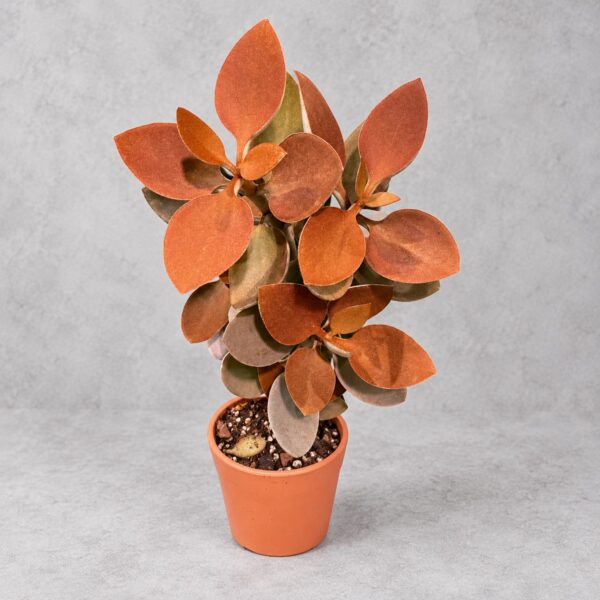
Fuzzy leaves with a copper-red metallic sheen, velvety soft to the touch, gorgeous even in a tiny terracotta pot.
Origin & characteristics
- Native range: arid regions of southwestern Madagascar
- Family/genus: Crassulaceae, genus Kalanchoe
- Growth habit: a shrub-like succulent with an upright stem, reaching 1-1.8 metres (potted specimens typically stay at 30-60 cm)
- Leaf characteristics: oval leaves, with a copper-brown upper surface covered in fine fuzz, and a silvery-grey underside, with a texture resembling felt
- Flowering: produces small yellow-green or pale orange flowers in autumn/winter, with short-day conditions favouring flowering
- Growth rate: slow
- Toxicity: ⚠️ toxic — toxic to cats, dogs, and other pets, containing cardiac-active compounds; avoid letting pets or children ingest it, and wash your hands after contact with the sap
Light
- Full sun to half-day sun: at least 4-6 hours of bright indirect light daily
- South-, east-, or west-facing windowsills all work well
- Avoid harsh direct summer sun, since the leaves hold plenty of moisture and scorch easily; gentle sun in autumn, winter, and early spring is harmless
- With ample light, the leaf colour becomes a more vivid copper-red; prolonged light deficiency causes legginess, leaves turning green, and fuzz becoming sparse
Watering
- The "soak until dry" rule: water again only once the soil is completely dry, avoiding standing water and root rot
- Growing season (spring/summer): water roughly once every 2-3 weeks, adjusted for ambient humidity
- Dormant season (autumn/winter): reduce watering frequency to roughly once every 3-4 weeks
- Notes:
- Better slightly dry than too wet
- Avoid pooling water on the leaves — the fuzz traps moisture easily, leading to rot
- Drainage holes at the base are essential; discard saucer runoff after watering
Soil & pot
- Soil recipe: prioritise fast drainage and breathability — use cactus/succulent soil, or make your own: peat soil + perlite + coarse sand (roughly 2:1:1)
- pH: 6.0-6.5 is ideal
- Pot choice:
- A terracotta (unglazed) pot is recommended for the best breathability, supporting root health
- A pot that's not too large is better — a smaller pot actually favours growth and flowering
- Drainage holes at the base are essential, and small pebbles can be layered in to improve drainage
- Repotting: repot once a year or every two years in spring, adding fresh soil
Temperature & humidity
- Ideal temperature: 18-30°C, with the optimal growing range around 20-25°C
- Cold tolerance: weak — growth stalls below 10°C, with risk of freezing near 4°C
- Winter care: must be moved indoors in winter, away from AC vents and cold window drafts
- Humidity: no special requirement — typical indoor humidity is sufficient, no special humidification needed
Common problems
| Symptom | Likely cause | What to do |
|---|---|---|
| Soft, wrinkled leaves | Prolonged underwatering | Water an appropriate amount, allow it to recover its plumpness |
| Yellowing leaves, blackened, rotting stem | Overwatering / root rot | Stop watering immediately, check roots, trim rot and repot if necessary |
| Leaf colour turning green, legginess | Insufficient light | Move to a brighter position |
| Scorched spots on leaves | Sunburn from harsh summer sun | Move to an indirect light position, avoid midday direct sun |
| Sparse leaf fuzz | Prolonged high humidity or poor ventilation | Improve ventilation, reduce misting the leaf surface |
| Side shoots growing at the base | A natural phenomenon, a survival response | Can be retained or divided for propagation |
Common pests: aphids, scale insects, and spider mites occasionally appear on outdoor plants. Use low-toxicity control methods, since the plant is sensitive to certain pesticide ingredients.
How to explain to customers
"Kalanchoe orgyalis is a really easy-to-care-for succulent — what's great is the layer of fuzz on the leaves, that copper-red colour looks so premium, and it feels just like felt to the touch! Remember not to water too frequently — wait until the soil is completely dry before watering again. Keep it by a window in summer but avoid direct sun, and bring it indoors for winter. Also note, this plant is toxic to pets, so if you have cats or dogs at home, keep it further away. Even in a small pot it looks lovely — perfect for Hong Kong's compact living spaces!"
Fun facts
- Kalanchoe orgyalis is also known as "Copper Spoons," since its leaf shape and colour resemble little copper spoons
- The leaf fuzz is an adaptation to arid environments, reducing water evaporation while reflecting harsh sunlight
- It's a "short-day plant," meaning it flowers when daylight hours are shorter than nighttime hours, which is why it blooms more in autumn and winter
- Growing it in a small, snug pot actually stimulates side shoot growth for propagation — a survival instinct
Keywords
Kalanchoe orgyalis, Copper Spoons, Crassulaceae, succulent, fuzzy leaves, copper-red, fast-draining, short-day flowering, toxic plant, unsuitable for pets, terracotta pot, soak-until-dry watering, indoor plant, easy to care for, slow-growing, Madagascar
參考資料(想知來源可展開)
References
- Missouri Botanical Garden — Plant Finder: Kalanchoe orgyalis, https://www.missouribotanicalgarden.org/PlantFinder/PlantFinderDetails.aspx?kempercode=e872
- ASPCA — Toxic and Non-Toxic Plant List, https://www.aspca.org/pet-care/animal-poison-control/toxic-and-non-toxic-plants
⚠️ Toxic to cats, dogs, and other pets; contains cardiac-active compounds. Keep out of reach of pets and children.
Plantjai · Causeway Bay collector indoor plants · WhatsApp +852 66807550
Plantjai shop · In stock online
Kalanchoe orgyalis Baker
HK$248.00
Hong Kong delivery · Causeway Bay pickup
For Hong Kong homes and offices. Stock and pricing follow the product page.
IN STORE NOW
Plants for this guide
Related plants in stock now — live prices, delivery or Causeway Bay pickup.
FREE PLANT ADVICE
Send us a photo before you change anything
WhatsApp a photo of the plant and your window light. Our Causeway Bay team will suggest care steps or plants that suit your space.
STORE · CAUSEWAY BAY
4/F, 39 Yiu Wa Street, Causeway Bay
Daily 12:30–8:00pm · ~3 min walk from Times Square
Map & directionsPlant Care