
How to Care for Hoya Rotundiflora in Hong Kong | Plantjai

Plantjai 植仔 · Care Encyclopedia
Hoya Rotundiflora
Hong Kong care guide — useful before you buy and after it arrives.
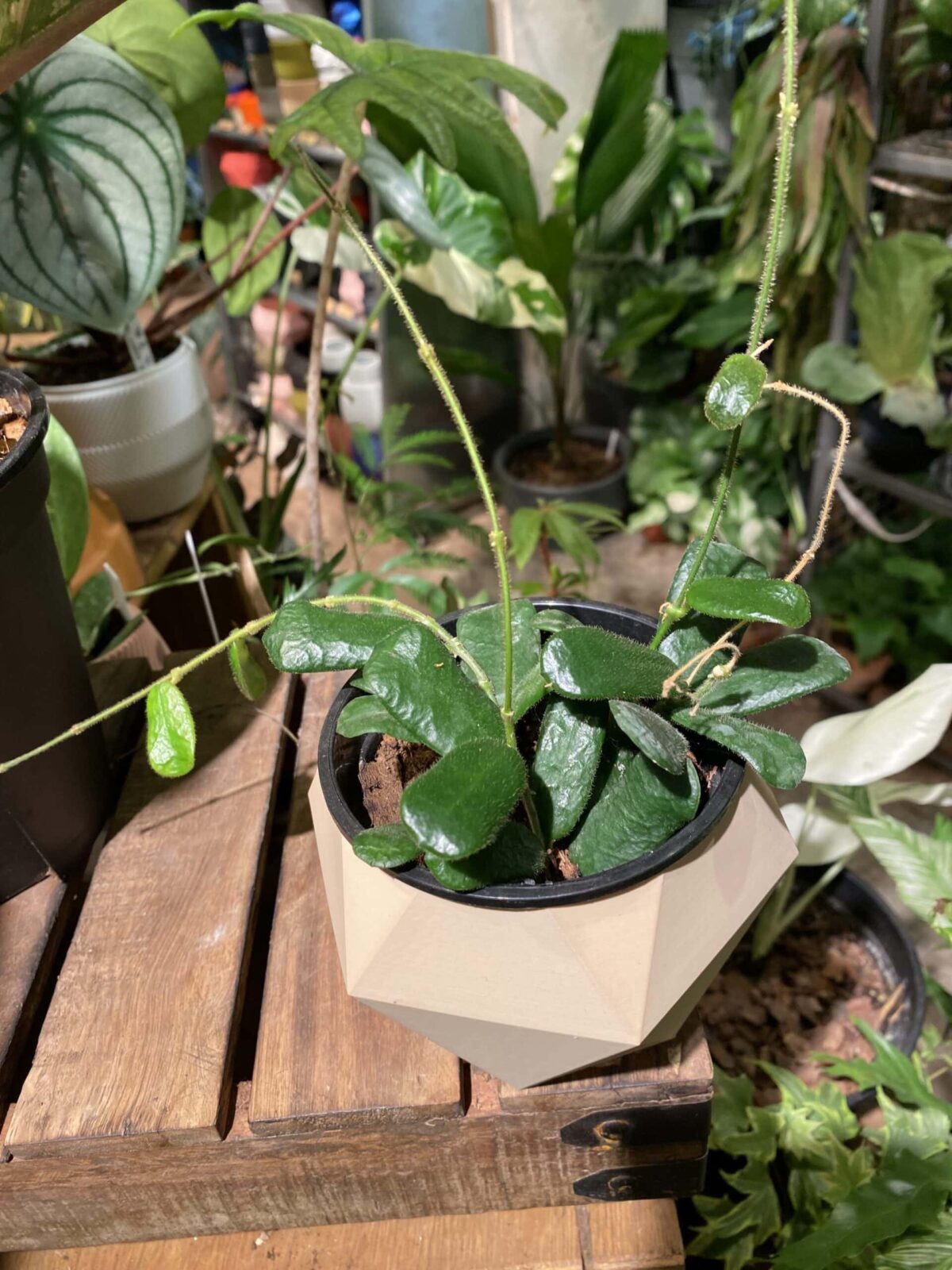
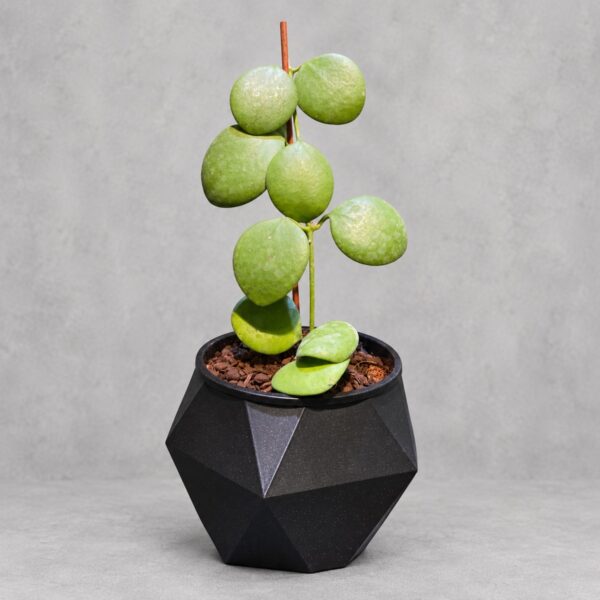
Shop this plantIts leaves are actually square! One of the true geometric oddities of the entire Hoya genus, with plump, tile-shaped little leaves growing in neat pairs — absolutely charming, and guaranteed to be the standout piece o…
Origin & characteristics
- Native range: Thailand
- Growth habit: a lightly climbing or trailing vine with thin stems, leaves arranged in neat opposite pairs along the stem, creating a tidy, geometric visual effect
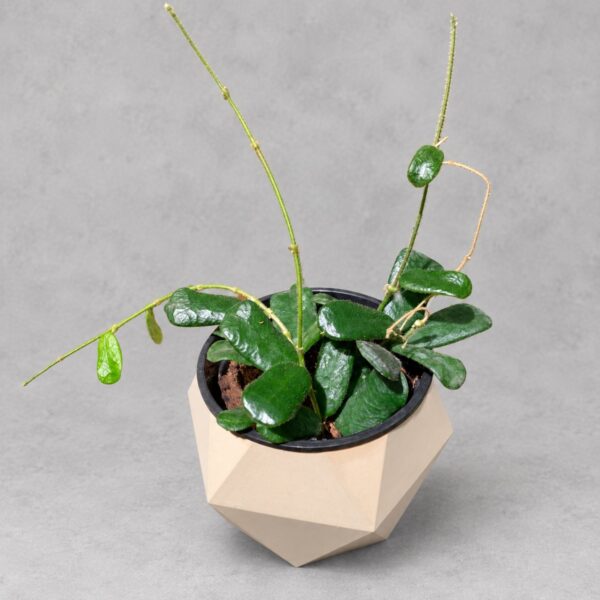
- Leaf characteristics: plump, distinctively rectangular to near-square leaves with flat edges and a slightly notched tip, deep green and glossy, with a texture like small jade tiles; leaf length about 2–3 cm
- Flowering characteristics: white to creamy flowers with a pale pink tint, umbel-shaped flower clusters with a light sweet fragrance, typically blooming during warm seasons
- Toxicity: non-toxic to pets — households with cats and dogs can enjoy it worry-free
- Mature size: vines can reach 1.5–2 metres, though growth is slow, maintaining a compact form for a long time
Light
- Ideal light: bright indirect light is best, whether an east-facing window or a west/south-facing window filtered with a sheer curtain
- Acceptable range: adapts to semi-shade, though insufficient light causes slower growth, thinner leaves, and less pronounced square shape
- Notes: avoid harsh direct sun, especially at midday, or the leaves easily scorch and yellow; rotate the pot every few weeks for even light exposure on all sides
Watering
- Watering frequency: roughly every 7–10 days in spring/summer; roughly every 10–14 days in autumn/winter
- Checking method: insert a finger about 2–3 cm into the soil, and only water once it feels dry; slight leaf wrinkling is a warning sign of thirst
- Watering method: water thoroughly until it drains from the base, avoiding a half-wet, half-dry state
- Notes: the thick leaves store water well and are very drought-tolerant; better dry than wet is the golden rule for growing this species — standing water at the base is absolutely to be avoided
Soil & pot
- Soil recipe: prioritise excellent drainage and aeration, try — 2 parts peat soil + 2 parts perlite + 2 parts pine bark + a little coco coir (1 part), with a high proportion of coarse particles
- pH: 6.0–7.0 (slightly acidic to neutral)
- Pot choice: must have drainage holes, with a more breathable terracotta pot recommended; the plant likes being slightly pot-bound, so an oversized pot isn't needed
- When to repot: roughly every 2–3 years, once roots wrap around the base or emerge from the drainage holes; avoid jumping to a much larger pot when repotting
Temperature & humidity
- Ideal temperature: 18–28°C, never below 15°C in winter
- Humidity requirement: 40–60% is sufficient; although tropical in origin, its thick leaves make it quite drought-tolerant
- Winter tips: reduce watering frequency to roughly every 2–3 weeks in winter; avoid placing near AC vents, heater outlets, or drafty windows
- Humidity methods: if indoor air is too dry, occasionally mist around the plant, or place the pot on a tray of damp pebbles (keeping the pot base clear of the water)
Common problems
| Issue | Likely cause | What to do |
|---|---|---|
| Leaves turning round or elongated instead of square | Insufficient light, leaves becoming leggy | Move to a brighter spot, increase indirect light intensity |
| Wrinkled, soft leaves | Underwatering | Water promptly, then water a bit earlier next time |
| Yellowing, soft, dropping leaves | Overwatering / root rot | Stop watering, trim and check roots, repot if necessary |
| Brown spots on leaves | Sunburn or standing water after watering | Adjust position to avoid direct light; ensure no standing water at the base after watering |
| Extremely slow growth | Too cold or insufficient light | Ensure temperature stays above 18°C, increase indirect light |
How to explain to customers
"Hoya rotundiflora is such a charming Hoya — its leaves are actually square, like tiny jade tiles, growing in such neat pairs! It's native to Thailand, and its thick leaves store water well, so it's very drought-tolerant — remember not to water it constantly, just water once the soil has dried out. It's completely harmless to pets, and you can keep it indoors somewhere with indirect light — it's guaranteed to be the standout piece on any plant shelf!"
Fun facts
- A geometric wonder: square leaves are exceedingly rare in nature, making Hoya rotundiflora one of the most easily recognisable species in the entire genus thanks to its unique geometric leaf shape.
- The secret of its origin: native to Thailand's forests, where in the wild it grows attached to tree trunks — its roots therefore need excellent aeration, which is why a high proportion of chunky material is essential when potting it.
- Beautiful in flower too: although many people grow it primarily for its charming square leaves, when it flowers, the white-and-pink blooms paired with the square green leaves create a truly dreamlike scene.
Keywords
Plantjai Hoya Hoya rotundiflora square leaves geometric leaves non-toxic to pets non-toxic plant native to Thailand indoor plant foliage plant flowering plant hanging plant low maintenance Hong Kong plants
參考資料(想知來源可展開)
References
- Royal Botanic Gardens, Kew — Plants of the World Online: Hoya rotundiflora, https://powo.science.kew.org/
- ASPCA — Toxic and Non-Toxic Plant List, https://www.aspca.org/pet-care/animal-poison-control/toxic-and-non-toxic-plants
⚠️ Non-toxic to cats and dogs.
Plantjai · Causeway Bay collector indoor plants · WhatsApp +852 66807550
Plantjai shop · In stock online
Hoya rotundiflora
HK$138.00
Hong Kong delivery · Causeway Bay pickup
For Hong Kong homes and offices. Stock and pricing follow the product page.
IN STORE NOW
Plants for this guide
Related plants in stock now — live prices, delivery or Causeway Bay pickup.
FREE PLANT ADVICE
Send us a photo before you change anything
WhatsApp a photo of the plant and your window light. Our Causeway Bay team will suggest care steps or plants that suit your space.
STORE · CAUSEWAY BAY
4/F, 39 Yiu Wa Street, Causeway Bay
Daily 12:30–8:00pm · ~3 min walk from Times Square
Map & directionsPlant Care