
How to Care for Hoya Retusa in Hong Kong | Plantjai

Plantjai 植仔 · Care Encyclopedia
Hoya Retusa
Hong Kong care guide — useful before you buy and after it arrives.
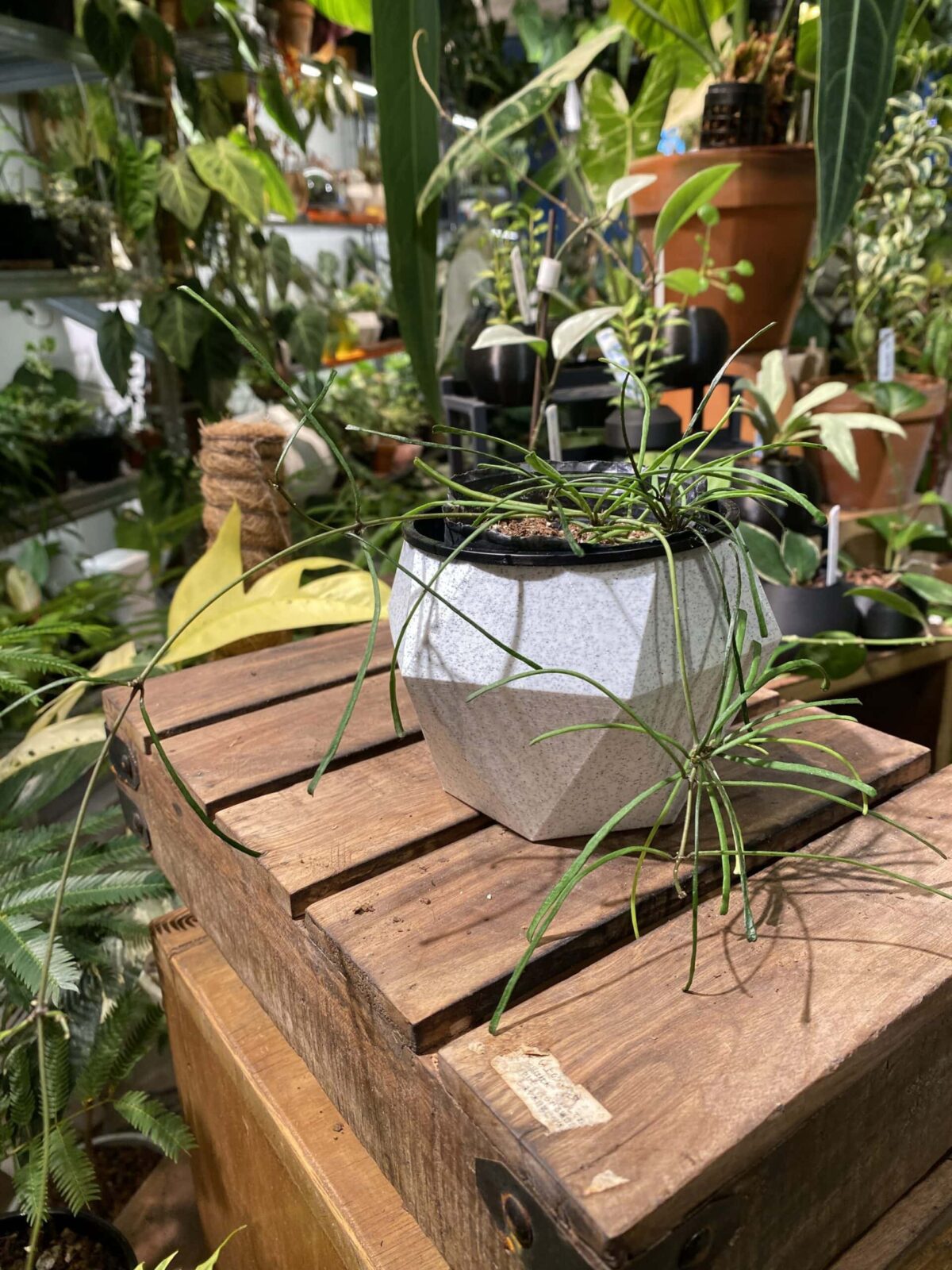
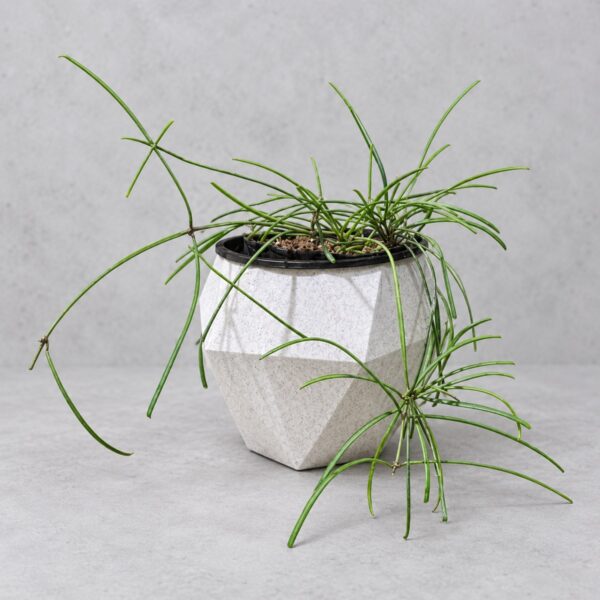
Shop this plantLeaves that look like blades of grass cut clean off at the tip — instantly recognisable, with a lovely sweet fragrance when flowering, making it a must-have quirky species for any Hoya collector.
Origin & characteristics
- Native range: northeastern India and the foothills of the Himalayas
- Growth habit: a trailing, grass-like Hoya with thin, cascading stems, ideal for hanging pots or displaying somewhere elevated to let it drape naturally
- Leaf characteristics: linear, flattened leaves with a notched or split tip, giving the appearance of blades of grass "cut short"; succulent texture with a smooth surface
- Flowering characteristics: white to pale pink corolla, star-shaped flowers with a sweet fragrance, typically blooming in spring and summer
- Toxicity: non-toxic to pets — no worries if cats or dogs happen to nibble it
- Mature size: vines can reach 1–2 metres, though growth is moderate to slow
Light
- Ideal light: bright indirect light, an east- or west-facing window is best
- Acceptable range: adapts to semi-shade, though insufficient light causes slower growth and sparser leaves
- Notes: avoid harsh midday direct sun, or the leaves easily scorch and yellow; if placed near a north-facing window, rotate the pot periodically for even light exposure
Watering
- Watering frequency: roughly every 7–10 days in spring/summer; roughly every 10–14 days in autumn/winter
- Checking method: insert a finger about 2–3 cm into the soil, and only water once it feels dry
- Watering method: water slowly around the rim until it drains from the base, avoiding standing water
- Notes: better slightly underwatered than overwatered; slight wrinkling of the leaves signals thirst and should be addressed promptly; standing water easily causes root rot
Soil & pot
- Soil recipe: use a well-draining, breathable mix, such as — 3 parts peat soil + 2 parts perlite + 1 part pine bark
- pH: 6.0–7.0 (slightly acidic to neutral)
- Pot choice: either terracotta or a plastic pot with multiple drainage holes works; since the root system isn't extensive, a shallow pot is sufficient
- When to repot: roughly every 2 years, once roots emerge from the drainage holes; Hoyas like being slightly pot-bound, so avoid an oversized pot
Temperature & humidity
- Ideal temperature: 18–28°C, never below 12°C in winter
- Humidity requirement: 40–60% is sufficient — typical Hong Kong indoor conditions suit it well
- Winter tips: reduce watering frequency in winter, avoid placing near AC vents or cold window drafts; if running a heater, occasional misting helps raise humidity
Common problems
| Issue | Likely cause | What to do |
|---|---|---|
| Wrinkled, soft leaves | Underwatering or root damage | Check soil moisture, water promptly if too dry; if soil is moist but leaves are wrinkled, check for root rot |
| Yellowing, dropping leaves | Overwatering causing root rot | Stop watering immediately, check root health, repot and trim rot if necessary |
| Thinner leaves, fading colour | Insufficient light | Move to a brighter spot, avoiding sudden intense exposure |
| Stalled growth | Too cold or in dormancy | Normal in winter; if it persists into spring/summer, check light and fertiliser |
| Won't flower | Immature plant or insufficient light | Increase indirect light, switch to a bloom fertiliser higher in phosphorus and potassium before the flowering season |
How to explain to customers
"Hoya retusa is a really special variety — its leaves look like blades of grass that have been cut clean off at the tip, but that's actually its natural shape, so interesting! It's completely harmless to pets, so cats and dogs are totally safe even if they nibble it. Care is simple — just remember to let the soil dry out before watering, and keep it somewhere with indirect light. When it flowers, there's a lovely sweet fragrance, really delightful!"
Fun facts
- Where the name comes from: the species epithet "retusa" comes from Latin, meaning "notched" or "indented," describing the distinctive split shape at the tip of its leaves.
- A grass-like Hoya: most Hoyas have thick, oval, succulent leaves, but Hoya retusa's leaves are flat and slender — remarkably rare within the genus.
- Night-scented flowers: its flowers typically release their strongest fragrance from evening into the night, attracting nocturnal pollinating insects.
Keywords
Plantjai Hoya Hoya retusa non-toxic to pets non-toxic plant hanging plant indoor plant foliage plant flowering plant fragrant plant low maintenance air purifying Hong Kong plants
參考資料(想知來源可展開)
References
- Royal Botanic Gardens, Kew — Plants of the World Online: Hoya retusa, https://powo.science.kew.org/
- ASPCA — Toxic and Non-Toxic Plant List, https://www.aspca.org/pet-care/animal-poison-control/toxic-and-non-toxic-plants
⚠️ Non-toxic to cats and dogs.
Plantjai · Causeway Bay collector indoor plants · WhatsApp +852 66807550
For Hong Kong homes and offices. Stock and pricing follow the product page.
IN STORE NOW
Plants for this guide
Related plants in stock now — live prices, delivery or Causeway Bay pickup.
FREE PLANT ADVICE
Send us a photo before you change anything
WhatsApp a photo of the plant and your window light. Our Causeway Bay team will suggest care steps or plants that suit your space.
STORE · CAUSEWAY BAY
4/F, 39 Yiu Wa Street, Causeway Bay
Daily 12:30–8:00pm · ~3 min walk from Times Square
Map & directionsPlant Care