
How to Care for Hoya Praetorii in Hong Kong | Plantjai

Plantjai 植仔 · Care Encyclopedia
Hoya Praetorii
Hong Kong care guide — useful before you buy and after it arrives.
Shop this plantA rare treasure from Southeast Asia's rainforests, with fuzzy orange flowers resembling a monkey's furry face, and an upright, shrub-like form quite unlike typical climbing Hoyas — full of striking presence.
Origin & characteristics
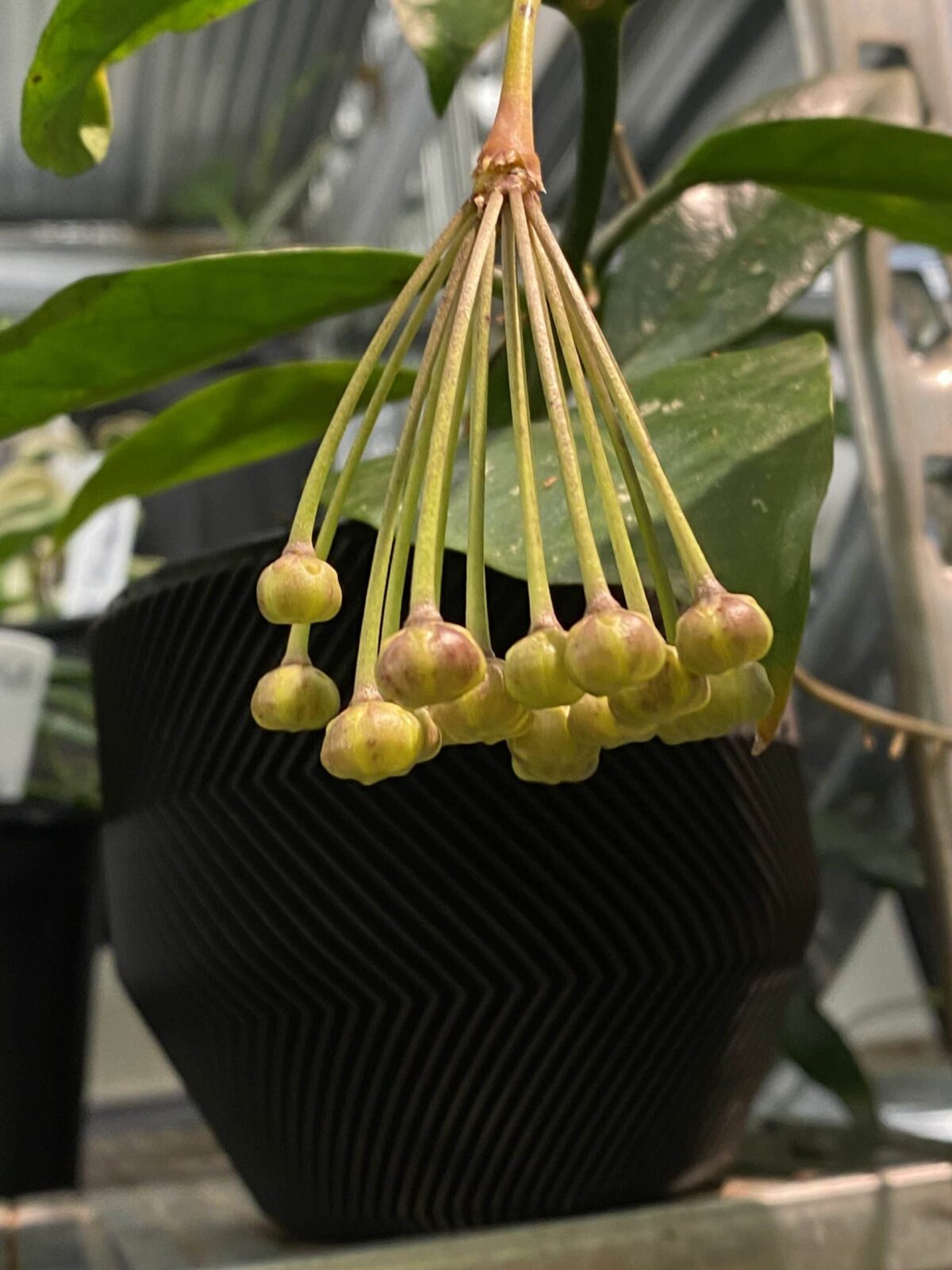
The Monkey King Hoya is native to Southeast Asian tropical rainforest, primarily distributed across Sumatra, Borneo, and the surrounding regions in Indonesia. Unlike the climbing or trailing habit of most Hoyas, this species tends to grow upright, with vines that don't strongly twine, giving it an overall shrub-like form with a distinctive habit. Its leaves are relatively thin, deep green, with distinctly recessed venation, sometimes with silver spots, and can reach 12–18 cm long by 5–9 cm wide, classifying it as a medium-to-large-leaved species. Its flowers are particularly distinctive: umbel clusters of 10–20 blooms, with corollas in a vivid orange covered in dense white fuzz, giving them a velvety texture; the corona at the centre is cream-coloured or wine-red, creating an eye-catching overall visual effect. The flowers carry a subtle sweetness with a hint of citrus, and a single bloom cycle can last around two weeks. Thanks to its distinctive upright growth habit and fuzzy orange flowers, it has earned the charming Chinese nickname "Monkey King" in horticultural circles.
Botanical note: Hoya praetorii Miq., published by Dutch botanist Friedrich Anton Wilhelm Miquel — the botanical name is confirmed. The species epithet "praetorii" is presumed to commemorate a specific individual, though the exact origin remains debated.
Light
- Ideal light: bright indirect light, an east- or north-facing window is best. It can tolerate some gentle morning sun, but avoid harsh midday direct sun.
- Notes: its leaves are thinner and more sensitive to strong light, easily developing scorch marks under harsh sun. Insufficient light reduces flowering chances, and new leaves will also come in smaller and weaker.
- Flowering tip: a stable, warm environment combined with ample bright light helps bud formation. The peduncle (flower spur) may look fragile, but this is normal — never cut it off.
Watering
- Watering principle: the Monkey King Hoya needs more water than many other Hoya species, but still follow the principle of "water thoroughly, then let it dry a bit before watering again." Water again once the top 1–2 inches of soil dries out — no need to wait for it to be completely dry.
- Seasonal adjustment:
- Spring/summer (growing season): water roughly every 5–8 days, depending on ambient humidity and ventilation
- Autumn/winter (slower growth): water roughly every 10–14 days, only once the soil is fully dry
- Watering method: water slowly and evenly over the entire pot until it drains from the base, discarding saucer runoff within 15 minutes. Never let water sit at the base for long periods.
- Important reminder: although it "drinks more" than other Hoyas, its roots still cannot tolerate prolonged submersion — root rot is still the biggest risk. Better slightly underwatered than overwatered.
Soil & pot
- Soil recipe: needs a mix that's breathable and well-draining but slightly more moisture-retentive than for other Hoyas. Recommended recipe (by volume):
- 30% orchid bark (medium grade, 6–12mm) — aeration and structure
- 30% quality indoor plant soil — basic nutrients
- 20% perlite (medium-coarse grade) — drainage
- 10% coco coir — gentle moisture retention
- 10% horticultural charcoal — antibacterial and filtration
- Pot choice: plastic or glazed ceramic pots are recommended for better moisture retention; terracotta dries too quickly and isn't ideal. Drainage holes at the base are essential.
- Repotting: repot every 2–3 years, in spring. Choose a new pot 1–2 inches larger than the current one.
- Checking roots: healthy roots are plump, pale-coloured, and springy; brown, mushy roots should be trimmed away.
Temperature & humidity
- Ideal temperature: 20–28°C.
- Minimum temperature: never below 14°C (57°F); sustained low temperatures cause stalled growth or even cold damage and leaf drop.
- Humidity: 70–85% is ideal. Native to tropical rainforest, high humidity is critical for both growth and flowering.
- Ways to raise humidity: strongly recommend using an ultrasonic humidifier (avoid spraying directly onto leaves), or group plants together to create a microclimate. A pebble tray under the pot also helps.
- Notes: avoid placing near AC vents, heaters, or doors/windows. Unstable temperatures easily cause bud drop.
Common problems
| Issue | Likely cause | What to do |
|---|---|---|
| Yellowing, soft leaves | Overwatering / root rot | Check roots, trim rot, repot in fresh soil, significantly reduce watering |
| Dry, curling leaves | Underwatering or humidity too low | Increase watering frequency, raise ambient humidity above 70% |
| Stalled growth | Too cold or insufficient light | Ensure temperature stays above 20°C, move to a brighter spot |
| Buds form but won't open | Humidity too low or temperature fluctuations | Raise humidity, avoid dramatic temperature swings, keep the environment stable during flowering |
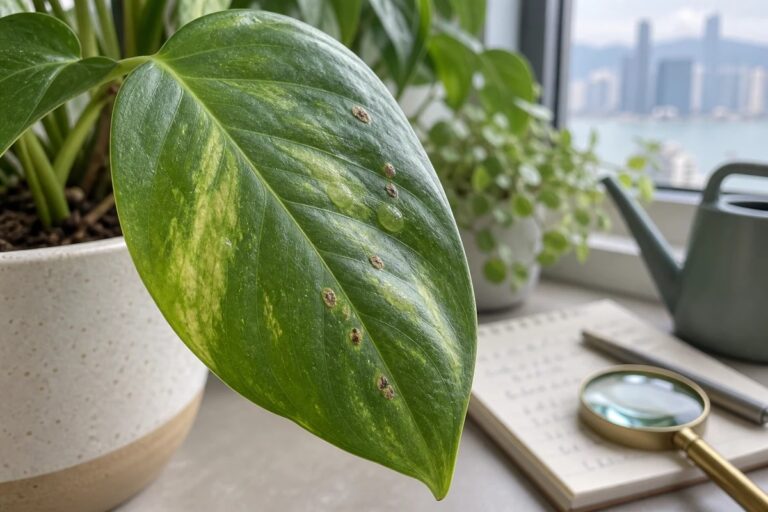
| Brown spots on leaves | Fungal infection or sunburn | Improve ventilation, avoid wetting the leaf surface; if sunburn, move away from strong light |
| Leaves becoming thinner and smaller | Severe light deficiency | Gradually increase light |
| Leaf drop | Sudden temperature change / cold drafts / severe root rot | Check ambient temperature and root health, move away from vents |
Pet safety: Hoyas are non-toxic to cats and dogs. However, the sap of all Hoya species may cause mild digestive irritation in pets, so it's best to discourage pets from chewing on the leaves.
How to explain to customers
"The Monkey King Hoya is a relatively rare species, native to Southeast Asian rainforests. Two things make it special: first, unlike typical Hoyas that climb all over the place, it grows upright like a proper little bush, giving it real presence; second, its flowers are orange with white fuzz on the surface, looking fluffy and adorable, resembling a monkey's face — hence the name Monkey King. For care, remember it needs high humidity, ideally 70-80% or above, so a humidifier is best. It drinks more water than most, but still needs the soil surface to dry out a bit before watering again — never let it sit in standing water. Keep it in bright indirect light, never direct sun. Once it flowers, keep the environment stable and don't move it around, or the buds might drop."
Fun facts
- The Monkey King Hoya's fuzzy orange flowers are extremely rare in the Hoya world — most Hoyas bloom in white, pink, or red, making the combination of orange with white fuzz a highly unusual pairing that's made it a dream species for collectors.
- Its upright growth habit is also a minority trait within the genus, since most Hoyas are climbing or trailing types — the Monkey King Hoya is therefore better suited as a "standing" potted plant, with no need for a special climbing structure.
- Individual flowers are about 1 cm across, with a 2 cm corolla tube — though not large, 10–20 blooms cluster together into a ball, and the striking orange-against-wine-red contrast creates a truly dramatic visual effect.
- The Monkey King Hoya's fragrance carries a subtle citrus note, with some collectors describing it as "orange blossom honey," though the scent is fairly faint and requires close observation to fully appreciate.
- Sumatra's tropical rainforest is one of the most biodiverse regions on Earth, but it faces severe deforestation threats, and the wild habitat of the Monkey King Hoya continues to shrink.
Keywords
Hoya praetorii, Monkey King Hoya, orange fuzzy flowers, upright growth, Sumatra, Borneo, tropical rainforest, high humidity, bright indirect light, well-draining moisture-retentive soil, Hoya care, rare species, non-toxic to pets, Plantjai
參考資料(想知來源可展開)
References
- Royal Botanic Gardens, Kew — Plants of the World Online: Hoya praetorii, https://powo.science.kew.org/
- ASPCA — Toxic and Non-Toxic Plant List, https://www.aspca.org/pet-care/animal-poison-control/toxic-and-non-toxic-plants
⚠️ Non-toxic to cats and dogs; sap may cause mild digestive irritation if ingested in quantity.
Plantjai · Causeway Bay collector indoor plants · WhatsApp +852 66807550
For Hong Kong homes and offices. Stock and pricing follow the product page.
IN STORE NOW
Plants for this guide
Related plants in stock now — live prices, delivery or Causeway Bay pickup.
FREE PLANT ADVICE
Send us a photo before you change anything
WhatsApp a photo of the plant and your window light. Our Causeway Bay team will suggest care steps or plants that suit your space.
STORE · CAUSEWAY BAY
4/F, 39 Yiu Wa Street, Causeway Bay
Daily 12:30–8:00pm · ~3 min walk from Times Square
Map & directionsPlant Care