
How to Care for Hoya Pandurata in Hong Kong | Plantjai

Plantjai 植仔 · Care Encyclopedia
Hoya Pandurata
Hong Kong care guide — useful before you buy and after it arrives.
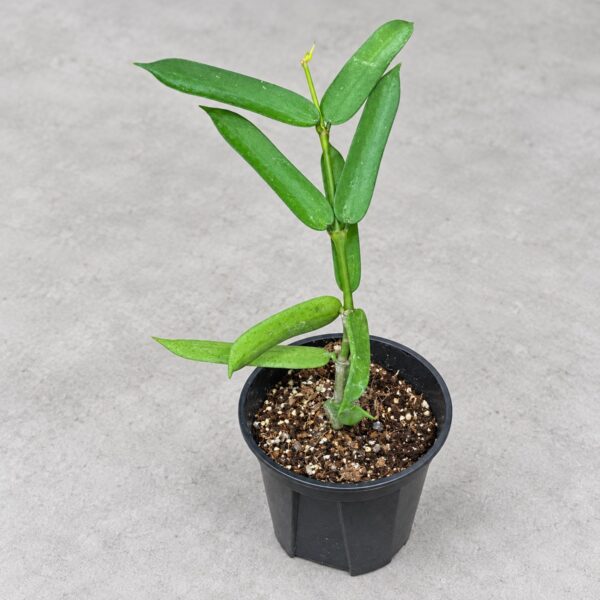
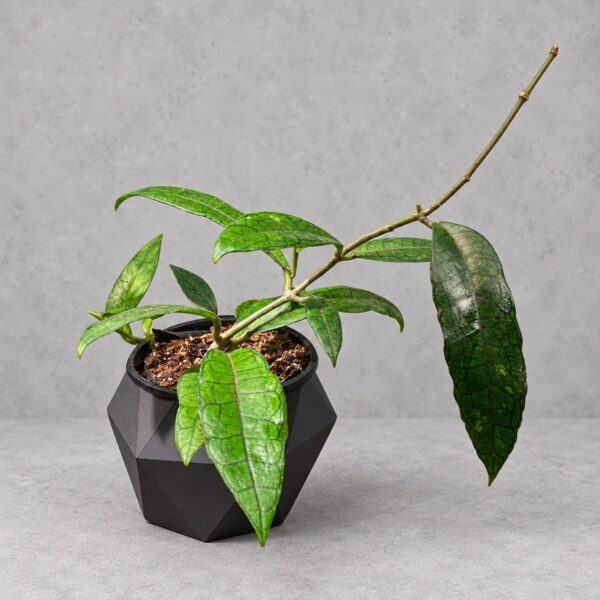
Shop this plantElegant fiddle-shaped leaves with delicate veining bring instant artistic flair to any space — the violinist of the plant world, graceful yet easy to grow.
Origin & characteristics
- Native range: Southeast Asian tropical rainforest (Thailand, Myanmar, and the Malay Peninsula)
- Growth habit: a climbing vine, reaching 1–2 metres at maturity, with moderate growth
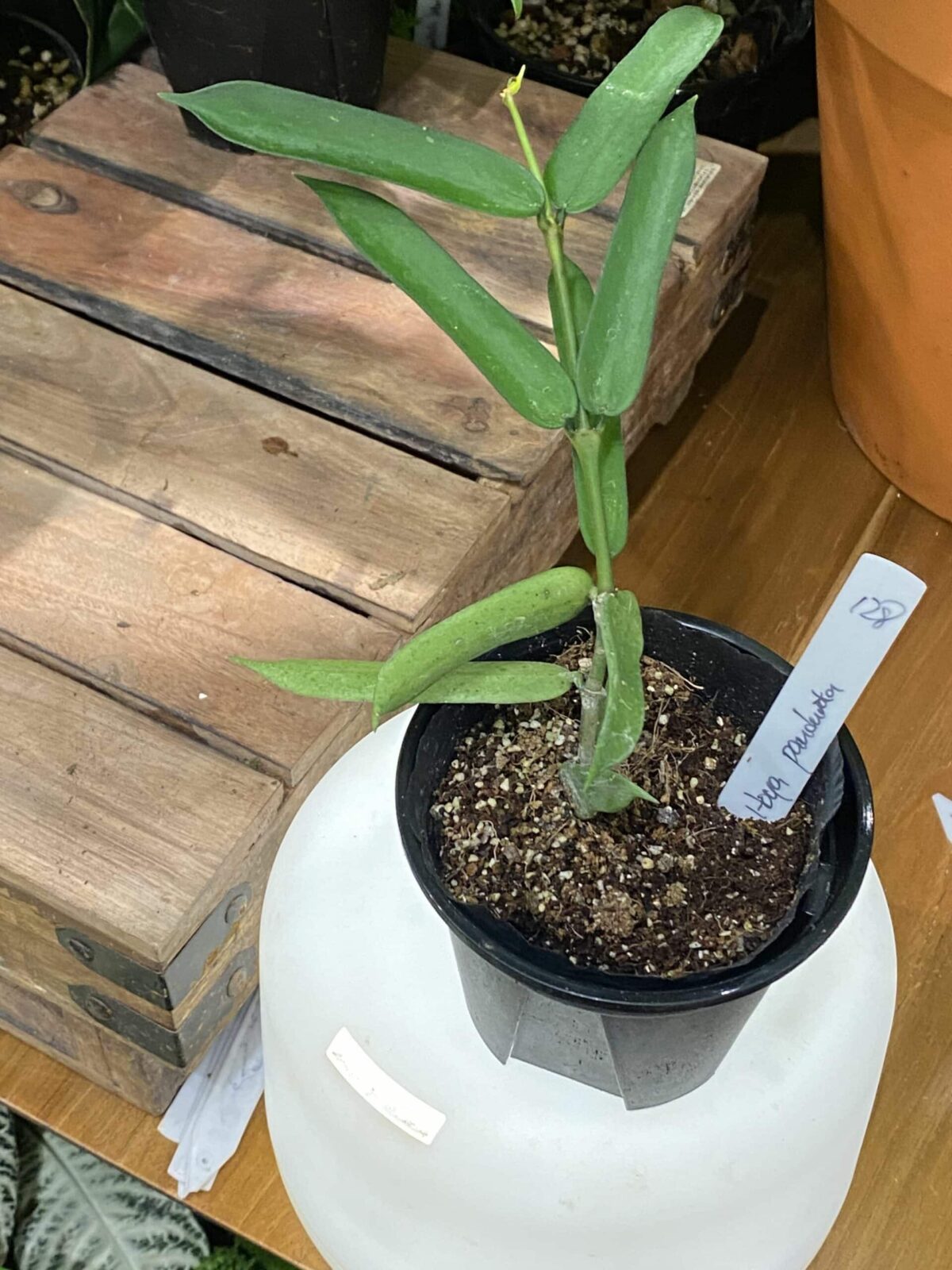
- Leaf characteristics: fiddle/violin-shaped leaves (the species name "pandurata" means "fiddle-shaped"), deep green with distinctly recessed veins, a thick, glossy texture
- Flowers: globe-shaped clusters of small star-shaped flowers in white to pale pink, with a red corolla tube at the centre, releasing a subtle sweet fragrance
- Growth rate: moderate
- Toxicity: non-toxic to pets — the Hoya genus is listed by the ASPCA as safe for cats and dogs
Plantjai tip: the fiddle-leaf Hoya has such a uniquely elegant leaf shape that it's one of the rare Hoya species valued more for its foliage than its flowers — perfect as an indoor greenery focal point.
Light
| Item | Recommendation |
|---|---|
| Ideal light | Bright indirect light, an east- or west-facing window is best |
| Acceptable range | 1–2 metres from a south-facing window, or filtered through a sheer curtain |
| Light intensity | 1,500–2,500 lux |
| Avoid | Harsh midday direct sun, which can scorch the delicate leaves |
- Needs 5–7 hours of bright indirect light daily
- Gentle direct light in early morning or evening helps maintain leaf shape and vein clarity
- Insufficient light causes smaller leaves, faded veining, and loss of the fiddle shape
- Rotate the pot periodically for even light exposure and an attractive overall form
Watering
- Frequency: water once the top 2–3 cm of soil is dry, roughly every 7–10 days during the growing season
- Method:
- Test soil moisture with a finger or bamboo skewer
- Water slowly around the rim until it drains from the base
- Let it drain for 10–15 minutes, then discard any runoff from the saucer
- Water quality: room-temperature tap water left to sit, filtered water, or rainwater
- Winter adjustment: reduce to every 10–14 days
- Key principle: let the middle layer of soil dry out slightly before watering — avoid standing water
💡 Watering tip: the fiddle-leaf Hoya's leaves are thick, so you can gently pinch a leaf to test — firm means well-hydrated, and once it starts feeling soft, it's time to water.
Soil & pot
Soil recipe
The fiddle-leaf Hoya needs a mix that's well-draining and breathable, but with a slight moisture-retentive quality:
| Material | Ratio | Function |
|---|---|---|
| Pine bark (medium grade) | 35% | Aeration and drainage |
| Perlite | 25% | Improves drainage |
| Coco coir | 20% | Retains moisture and nutrients |
| Succulent soil | 15% | Basic structure |
| Bamboo charcoal chips | 5% | Inhibits bacteria and pests |
- A simpler recipe of 3 parts orchid mix + 2 parts perlite + 1 part coco coir also works
- A dedicated Plantjai Hoya mix can also be used directly
Pot choice
- Material: terracotta (better breathability, suited to humid environments) or plastic (suited to drier environments)
- Size: choose based on plant size, leaving just 1–2 cm of growing room
- Drainage: drainage holes at the base are essential
- When to repot: roughly every 1–2 years, or once roots emerge from the base
Climbing support
- The fiddle-leaf Hoya is a climbing plant — provide a moss pole, trellis, or lattice support for it to climb
- Leaves become larger and more distinctively shaped once the plant is climbing
Temperature & humidity
| Item | Ideal range | Acceptable range |
|---|---|---|
| Temperature | 18–27°C | 15–30°C |
| Winter minimum | — | 12°C (never below 10°C) |
| Humidity | 50–70% | 40–70% |
- Typical Hong Kong indoor conditions suit it well
- Humidity above 60% supports smoother new leaf development
- Keep away from direct AC airflow and cold window drafts in winter
- Overly dry air causes leaf edges to dry out and curl
- Use a humidifier, pebble tray, or group with other plants to raise humidity
Common problems
1. Smaller leaves, losing their fiddle shape
- Cause: insufficient light or lack of climbing support
- Fix: move to a brighter spot, add a climbing structure to encourage upward growth
2. Faded veining, paler leaf colour
- Cause: excessive light or insufficient nutrients
- Fix: adjust to an indirect light position, apply half-strength liquid fertiliser monthly during the growing season
3. Dry, browning leaf tips or edges
- Cause: overly dry air, insufficient watering, or fertiliser damage
- Fix: raise ambient humidity, check watering frequency, flush the soil to remove excess salts
4. Yellowing, dropping leaves
- Cause: overwatering causing root rot, or natural ageing
- Fix: reduce watering, check root health; occasional loss of 1–2 lower, older leaves is normal
5. Won't flower
- Cause: immature plant, insufficient light, or insufficient temperature differential
- Fix: ensure adequate daily light, create a 5–8°C day-night temperature differential in autumn/winter to stimulate bud formation
6. Spider mites (tiny yellow dots and webbing on leaves)
- Cause: dry air, poor ventilation
- Fix: raise humidity, rinse leaf undersides with soapy water, use neem oil for severe infestations
How to explain to customers
"What's special about the fiddle-leaf Hoya is the shape of its leaves — elegant like a small violin, adding real artistic flair to your home. The veining is really distinct, and it looks lovely under sunlight. It's not particularly hard to care for — just keep it in bright indirect light, an east- or west-facing window works well; for watering, let the soil dry out fully before watering again, no need to rush. As for humidity, typical Hong Kong conditions are generally fine, and if you run the AC a lot, you could place a pebble tray with water nearby. It's a climbing plant, so give it a support to climb, and the leaves will grow larger and more shapely. It's also non-toxic to cats and dogs, so you can grow it worry-free."
Quick reference for customer questions
| Customer asks | How to answer |
|---|---|
| "Why does the leaf look like a violin?" | "That's just this species' characteristic — the name pandurata literally means 'fiddle-shaped,' so elegant." |
| "How often should I water?" | "Roughly once a week, depending on conditions. Poke a finger 2-3cm into the soil, and only water once it's dry." |
| "Does it need a climbing support?" | "Yes, I'd recommend it — once it's climbing, the leaves get bigger and more shapely, much more ornamental." |
| "Is it hard to get it to flower?" | "It needs to mature and get enough light to flower, but the leaves are already so lovely that flowers are just a bonus." |
| "Is it safe for cats and dogs?" | "Yes, safe — the entire Hoya genus is ASPCA-certified non-toxic." |
| "What if the leaf tips are dry?" | "Usually the air is too dry — use a humidifier or pebble tray, and avoid misting the leaves directly." |
Fun facts
- Decoding the name: "pandurata" comes from Latin, meaning "fiddle-shaped," a perfect description of its elegant leaf outline
- A family of fiddles: besides the fiddle-leaf Hoya, the plant world also has the fiddle-leaf fig (Ficus lyrata), which has a similarly fiddle-shaped leaf, though the Hoya's leaves are much more delicate
- Recessed veining: the recessed veins on the fiddle-leaf Hoya's leaves are an adaptation to its rainforest environment, helping quickly drain water off the leaf surface
- A climbing instinct: in its native environment, it climbs up tree trunks, with leaves growing larger the higher it climbs, as it competes for more sunlight
- The secret of the fragrance: although the flowers aren't large, their scent is elegant and long-lasting, released mainly at night to attract nocturnal pollinators
Keywords
Hoya pandurata, fiddle-leaf Hoya, Fiddle leaf hoya, climbing plant, foliage plant, indoor decorative plant, native to Southeast Asia, rainforest plant, pet-safe plant, non-toxic plant, flowering plant, moderate-humidity plant, bright indirect light, well-draining breathable soil, climbing vine, Plantjai, dedicated Hoya soil, distinct veining, elegant leaf shape, day-night temperature differential for flowering
參考資料(想知來源可展開)
References
- Royal Botanic Gardens, Kew — Plants of the World Online: Hoya pandurata, https://powo.science.kew.org/
- ASPCA — Toxic and Non-Toxic Plant List, https://www.aspca.org/pet-care/animal-poison-control/toxic-and-non-toxic-plants
⚠️ Non-toxic to cats and dogs; sap may cause mild skin irritation in sensitive individuals.
Plantjai · Causeway Bay collector indoor plants · WhatsApp +852 66807550
For Hong Kong homes and offices. Stock and pricing follow the product page.
IN STORE NOW
Plants for this guide
Related plants in stock now — live prices, delivery or Causeway Bay pickup.
FREE PLANT ADVICE
Send us a photo before you change anything
WhatsApp a photo of the plant and your window light. Our Causeway Bay team will suggest care steps or plants that suit your space.
STORE · CAUSEWAY BAY
4/F, 39 Yiu Wa Street, Causeway Bay
Daily 12:30–8:00pm · ~3 min walk from Times Square
Map & directionsPlant Care