
How to Care for Hoya Pallilimba in Hong Kong | Plantjai

Plantjai 植仔 · Care Encyclopedia
Hoya Pallilimba
Hong Kong care guide — useful before you buy and after it arrives.
Shop this plantA mini tabletop treasure with glossy leaves veined in silver, blooming pale pink to creamy flowers with a honeyed sweetness — perfect for anyone with a small space who still wants to grow a Hoya.
Origin & characteristics
- Native range: limestone karst forest in northern Vietnam
- Growth habit: a small vining plant, usually staying under 1.5 metres indoors, with slow growth
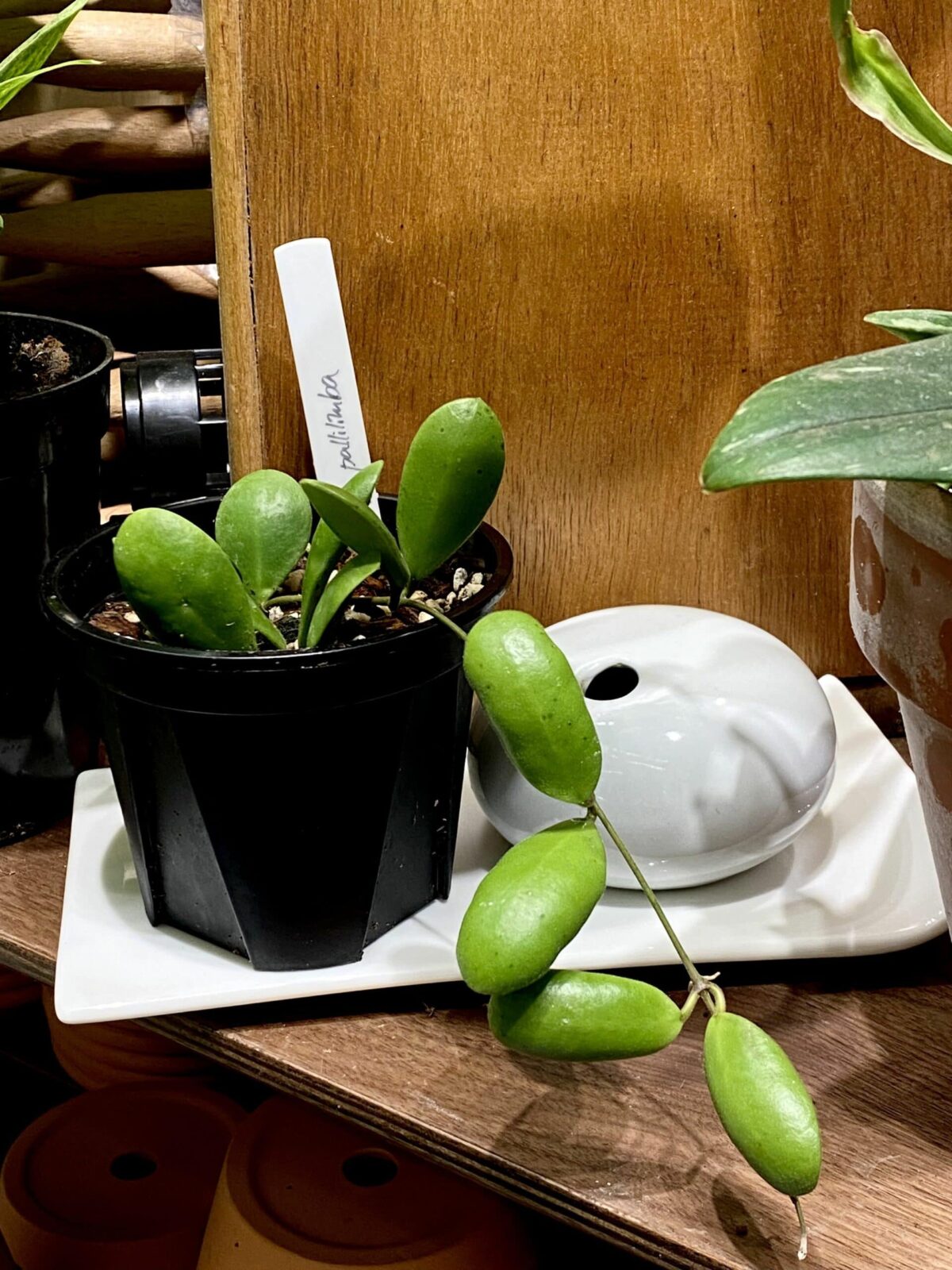
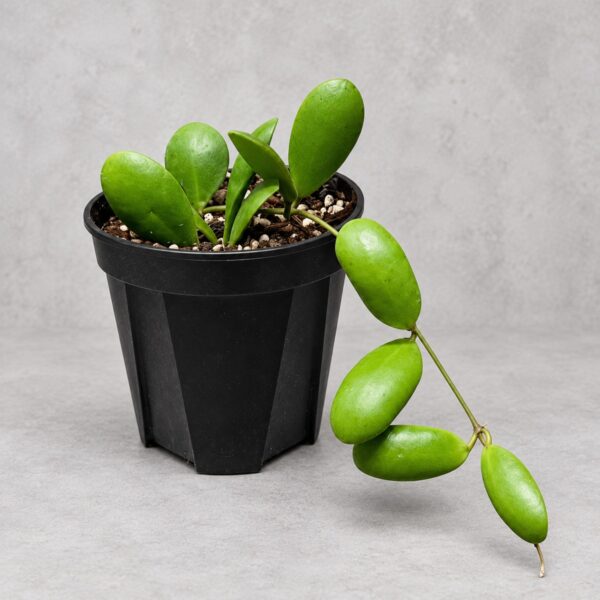
- Leaf characteristics: glossy oval leaves with distinct silver or milky-white veining, with a texture resembling polished jade
- Flowers: globe-shaped clusters of small star-shaped flowers in pale pink to creamy-white, with a honey-vanilla sweetness, blooming mainly in spring and summer
- Growth rate: extremely slow, roughly 10–20 cm per year
- Toxicity: non-toxic to pets — the Hoya genus is listed by the ASPCA as safe for cats and dogs
Plantjai tip: Hoya pallilimba is one of the more delicate advanced species — the two key principles are "precise watering" and "ample light."
Light
| Item | Recommendation |
|---|---|
| Ideal light | High-intensity bright indirect light, 8–10 hours daily |
| Best placement | A south-facing window with a white sheer curtain (2,800–3,500 lux) |
| Acceptable range | East- or west-facing windowsills, ensuring sufficient light |
| Light intensity | Minimum 2,500 lux, measurable with a phone light meter |
| Avoid | North-facing windows (too little light), harsh midday direct sun |
- Insufficient light causes elongated internodes (over 2 cm), leaf colour shifting from deep green to yellow-green, fading silver veining, and reduced flowering
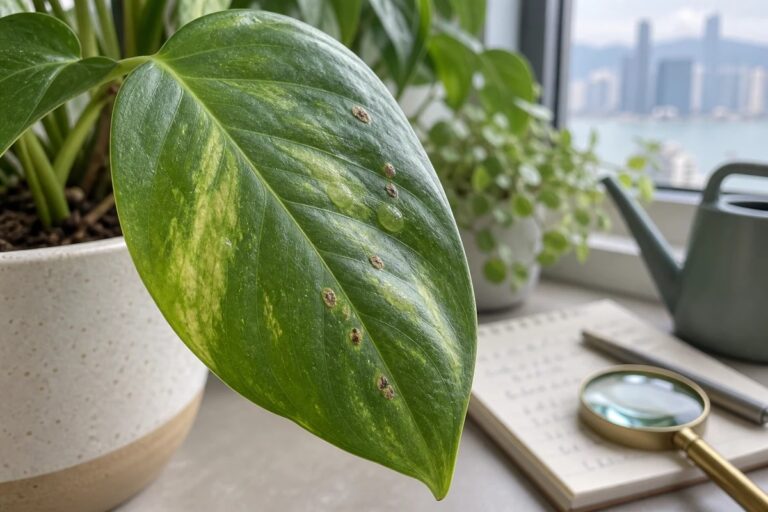
- Excessive light causes bleached leaf edges and translucent brown spots
- In winter when natural light is insufficient, use a full-spectrum LED grow light (3,000–4,000K) for 4–6 hours daily
Watering
- Frequency: use a soak method, watering only once the mix is completely dry, roughly every 7–10 days during the growing season
- Method (soaking recommended):
- Insert a bamboo skewer into the centre of the mix to test moisture — proceed only once it's completely dry
- Submerge the whole pot in room-temperature filtered water/rainwater for 10–15 minutes
- Remove and let drain on a rack for at least 15 minutes
- Ensure no standing water at the base before returning it to its spot
- Water quality: TDS below 100 ppm is ideal; for Hong Kong tap water, let it sit for 24 hours or use filtered water
- Winter adjustment: extend to every 14–21 days
- Key principle: the delicate root system dislikes stuffiness — better a bit dry than staying wet
⚠️ Note: never mist the leaves with a spray bottle! Residual water droplets easily cause fungal disease. To raise humidity, use a pebble tray or humidifier instead.
Soil & pot
Soil recipe
Native to cracks in limestone rock, this species needs an extremely breathable mix:
| Material | Ratio | Function |
|---|---|---|
| Coarse pine bark (6–12 mm) | 40% | Main structure, mimicking its native environment |
| Perlite (medium grade) | 30% | Drainage and aeration |
| Bamboo/activated charcoal chips | 15% | Inhibits bacteria, regulates moisture |
| Sphagnum moss (Chilean or New Zealand) | 10% | Light moisture retention |
| Coco coir | 5% | Basic organic matter |
- Aim for an air porosity of 75–80% or above
- A dedicated Plantjai Hoya mix with an extra 10% perlite added also works
Pot choice
- Material: plastic or fibre pots are more suitable than terracotta (to avoid excessive moisture loss)
- Size: a shallow pot is better than a deep one, since roots grow primarily outward
- Drainage: drainage holes at the base are essential, ideally with supplementary side holes too
- When to repot: roughly every 2–3 years, once roots wrap around the base or the mix breaks down into powder
Temperature & humidity
| Item | Ideal range | Acceptable range |
|---|---|---|
| Temperature | 20–26°C | 16–29°C |
| Winter minimum | — | 15°C (never below 12°C) |
| Humidity | 50–65% | 45–70% |
| Day-night differential | Day 22–26°C / night 18–20°C | — |
- Typical Hong Kong conditions in spring, summer, and autumn suit it well
- Keep away from AC vents, cold window drafts, and direct heater airflow in winter
- Leaves may curl inward below 45% humidity — use a humidifier or pebble tray
- Maintaining good air circulation is more important than simply raising humidity
Tips for encouraging flowering
- Provide slightly cooler nights (18–20°C) combined with ample light for 4 weeks before flowering
- Never move the plant once a flower stalk appears, or the buds may drop (bud blast)
- Mature plants being slightly pot-bound (roots filling the pot) actually helps trigger flowering
Common problems
1. Yellow leaf drop (more than 2–3 leaves per month)
- Cause: overwatering, poor drainage, or natural ageing
- Fix: check base drainage and reduce watering frequency; occasional lower leaf drop from natural ageing is normal
2. Leaves curling inward
- Cause: humidity too low (<45%) combined with dry, hot airflow (e.g. AC vents)
- Fix: move away from vents, use a humidifier to maintain 55–60% humidity
3. Buds form but won't open
- Cause: unstable nighttime temperature, the plant was moved, or ripening fruit nearby (ethylene effect)
- Fix: stabilise the environment, don't move the plant, and remove any nearby fruit
4. Elongated internodes, thinner leaves
- Cause: severe light deficiency
- Fix: gradually move to a brighter spot, avoiding sudden intense light exposure
5. Sticky residue on leaves
- Cause: honeydew secreted by scale insects or aphids
- Fix: spray with a 1:3 neem oil and soap solution for 3 consecutive nights, then wipe clean with a damp cloth
6. No new growth for over 4 months
- Cause: insufficient light, incorrect temperature, or a root system issue
- Fix: gently remove from the pot to check roots — healthy roots are firm and white/cream-coloured, while rotten roots turn black and mushy
How to explain to customers
"Hoya pallilimba is a really refined miniature Hoya — the leaves are small but wonderfully glossy, with silver veining that gives it a premium look. When it flowers, you get pale pink to creamy star-shaped blooms with a honey-vanilla scent, really sweet. A few things to remember when caring for it: first, it needs plenty of light — ideally a south- or west-facing window with a sheer curtain; second, watering needs to be precise — let it dry out fully, better a bit dry than wet; third, please don't move it around too much, especially once buds have formed. It grows slowly, but when it flowers, it's absolutely worth the wait!"
Quick reference for customer questions
| Customer asks | How to answer |
|---|---|
| "How often should I water?" | "It depends on the environment, roughly every 7–10 days. The most accurate method is to test with a bamboo skewer — only water once it's completely dry." |
| "Will it get really big?" | "No, it's a small variety, great for a desk, windowsill, or shelf — generally staying under 1.5 metres." |
| "When will it flower?" | "It flowers in spring and summer once mature, with enough light and slightly cooler nights. Don't move it once it flowers." |
| "Is it safe for cats and dogs?" | "Yes, it's safe — Hoyas are ASPCA-certified non-toxic, no need to worry." |
| "Does it grow quickly?" | "Fairly slowly, roughly 10–20 cm a year, so you'll need patience. But the leaves are so refined, it's lovely even without flowers." |
| "Can I grow it in sphagnum moss?" | "Yes, but don't pack it too tightly — good air circulation is essential." |
Fun facts
- Decoding the name: "palli" may refer to "pale," while "limba" describes the leaf form, together reflecting its distinctive pale veining
- A limestone native: originating from cracks in limestone rock in northern Vietnam, it has extremely high requirements for a breathable mix — regular garden soil will easily kill it
- The function of silver veins: the silver veining on the leaf surface is actually a reflective structure that helps the plant maximise light absorption in the dim understory environment
- Good things take time: it can take 3–4 years from cutting to first flower, but that's exactly what makes flowering so rewarding
- Nighttime fragrance: the flower scent is strongest after dusk, a strategy to attract nocturnal moth pollinators
Keywords
Hoya pallilimba, miniature Hoya, mini Hoya, silver-veined Hoya, native to Vietnam, limestone Hoya, foliage plant, small potted plant, tabletop plant, flowering plant, indoor plant, pet-safe plant, non-toxic plant, slow-growing Hoya, advanced Hoya, soak watering method, high-humidity plant, Plantjai, dedicated Hoya soil, ample indirect light, flowering tips, nighttime fragrance
參考資料(想知來源可展開)
References
- Royal Botanic Gardens, Kew — Plants of the World Online: genus Hoya, https://powo.science.kew.org/
- ASPCA — Toxic and Non-Toxic Plant List, https://www.aspca.org/pet-care/animal-poison-control/toxic-and-non-toxic-plants
⚠️ Non-toxic to cats and dogs; sap may cause mild skin irritation in sensitive individuals.
Plantjai · Causeway Bay collector indoor plants · WhatsApp +852 66807550
For Hong Kong homes and offices. Stock and pricing follow the product page.
IN STORE NOW
Plants for this guide
Related plants in stock now — live prices, delivery or Causeway Bay pickup.
FREE PLANT ADVICE
Send us a photo before you change anything
WhatsApp a photo of the plant and your window light. Our Causeway Bay team will suggest care steps or plants that suit your space.
STORE · CAUSEWAY BAY
4/F, 39 Yiu Wa Street, Causeway Bay
Daily 12:30–8:00pm · ~3 min walk from Times Square
Map & directionsPlant Care