
How to Care for Hoya Multiflora Variegata in Hong Kong | Plantjai

Plantjai 植仔 · Care Encyclopedia
Hoya Multiflora Variegata
Hoya multiflora variegata 流星內錦毬蘭
Hong Kong care guide — useful before you buy and after it arrives.
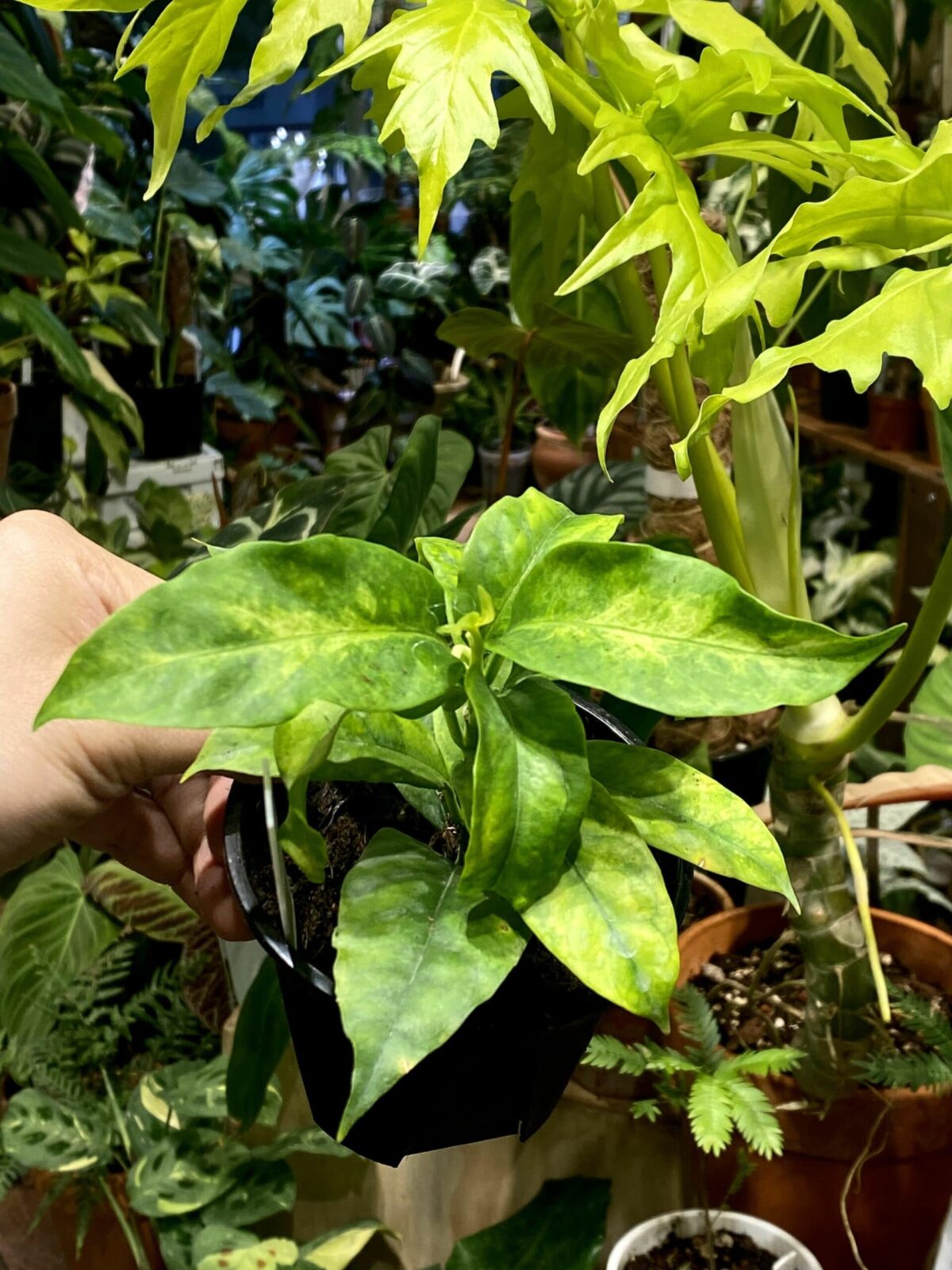
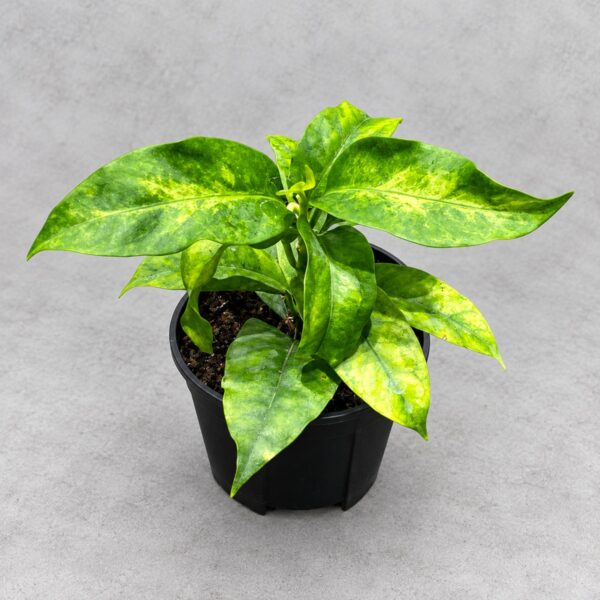
Shop this plantLeaves centrally variegated in yellow-white streaks like a shooting star's trail, with strings of star-shaped flowers cascading downward when it blooms — a perfect combination of foliage and floral appeal.
Origin & characteristics
- Native range: the species Hoya multiflora is native to Southeast Asian tropical regions, including Malaysia, Indonesia, and the Philippines, typically growing along low-elevation forest edges
- Botanical name pending confirmation: the variegated form ('Variegata') is a horticultural cultivar, and naming conventions may vary by source — use the Plantjai label as the reference
- Leaf characteristics: long-oval, thick, leathery leaves; the central variegation appears as yellow or creamy-white patterning in the middle of the leaf, with the margins remaining green, like a trailing comet; the extent of variegation varies with environmental conditions
- Flowering characteristics: produces abundant, star-shaped flowers in drooping clusters that cascade like a small waterfall, in white or pale yellow with red centres — hence the nickname "Shooting Star"
- Growth habit: a vining plant with soft, easily trailing stems, well-suited to hanging pots; moderate to fast growth rate
Light
- Ideal light: bright indirect light to half-day sun, with 5–7 hours of gentle daily light making the variegation more vivid
- Window placement: east- or southeast-facing windowsills are best; a north-facing window also works, though variegation may be less pronounced
- Avoid: prolonged harsh direct sun, especially summer midday sun, which browns and scorches the variegated portions
- Tip: variegated cultivars need more light to maintain their colour patterning — insufficient light causes variegation to fade or even revert to green, though it's somewhat more shade-tolerant than solid green forms
Watering
- Principle: "better dry than wet" — let the top 2–3 cm of soil dry out before watering
- Frequency reference: roughly every 7–10 days in spring/summer; roughly every 10–14 days in autumn/winter
- Method: water evenly around the rim until it drains from the base, then discard any runoff
- Notes:
- Variegated cultivars have less chlorophyll and relatively weaker transpiration, making them more prone to waterlogging than solid green forms
- Reduce watering further in cold winter weather, keeping the soil slightly dry
Soil & pot
- Soil recipe: prioritise high breathability and fast drainage, for example:
- Coco coir + perlite + orchid bark + tree bark (roughly 4:3:2:1)
- Or use a dedicated Plantjai Hoya mix
- pH: slightly acidic (pH 5.5–6.5)
- Pot choice: a hanging pot or terracotta pot is ideal, letting the stems trail naturally; if using a plastic pot, ensure good drainage
- When to repot: repot in spring every 1–2 years, once you see roots filling the base of the pot
Temperature & humidity
- Ideal temperature: 20–30°C for best growth
- Minimum tolerance: briefly no lower than 15°C; prolonged temperatures below 18°C slow growth
- Humidity requirement: 50–70% relative humidity is ideal
- Ways to raise humidity: occasional misting of the surrounding air (avoid spraying directly on leaves to prevent water spots), or set on a humidity tray
- Note: variegated cultivars are more sensitive to temperature fluctuations — keep it warm as autumn/winter turns cooler; ensure good ventilation during Hong Kong's humid summers
Common problems
| Issue | Likely cause | What to do |
|---|---|---|
| Variegation fading to green | Insufficient light | Move to a brighter spot, gradually increasing indirect light |
| Variegation turning brown and dry | Sunburn from strong light | Move away from direct light, filter with a sheer curtain |
| Yellowing, mushy leaves | Overwatering / root rot | Stop watering immediately, check roots, trim and repot as needed |
| Leggy stems, elongated internodes | Insufficient light | Increase light intensity or exposure time |
| Reduced flowering | Insufficient temperature differential / lacking nutrients | Create a day-night temperature differential in autumn/winter, apply phosphorus-potassium fertiliser before the flowering season |
| Small black spots on leaf undersides | Possible scale insects or sooty mould | Check for pests, wipe with alcohol-soaked cotton or spray with neem oil |
How to explain to customers
"This variegated multiflora Hoya is gorgeous — look at the yellow-white variegation running through the middle of the leaves, just like a shooting star! It's a centrally-variegated cultivar, meaning the pattern appears in the middle of the leaf rather than the edges like other types. Remember it needs plenty of light to keep that variegation looking its best, but don't let it get scorched by direct sun. When it flowers, you get strings of star-shaped blooms cascading down — really beautiful — so hanging it near a window is perfect!"
Fun facts
- A double meaning behind "shooting star": Hoya multiflora itself produces an abundance of flowers (multiflora means "many-flowered"), with star-shaped blooms cascading in clusters that look like a shooting star from a distance — making the English nickname wonderfully fitting.
- Central vs. marginal variegation: central variegation refers to patterning in the middle of the leaf, while marginal variegation appears at the edges. Central variegation is typically more delicate, since less of the leaf retains chlorophyll for photosynthesis, resulting in somewhat slower growth.
- Non-toxic to pets: Hoya multiflora 'Variegata' is non-toxic to cats and dogs, making it a safe choice for pet-owning households.
Keywords
Shooting Star Hoya, Hoya multiflora Variegata, variegated cultivar, variegated Hoya, hanging Hoya, star-shaped flowers, multi-flowered Hoya, indirect light, non-toxic to pets, high humidity, well-draining soil
參考資料(想知來源可展開)
References
- Royal Botanic Gardens, Kew — Plants of the World Online: Hoya multiflora, https://powo.science.kew.org/
- ASPCA — Toxic and Non-Toxic Plant List, https://www.aspca.org/pet-care/animal-poison-control/toxic-and-non-toxic-plants
⚠️ Non-toxic to cats and dogs; sap may cause mild skin irritation in sensitive individuals.
Plantjai · Causeway Bay collector indoor plants · WhatsApp +852 66807550
Plantjai shop · In stock online
Hoya multiflora variegata
HK$280.00
Hong Kong delivery · Causeway Bay pickup
For Hong Kong homes and offices. Stock and pricing follow the product page.
IN STORE NOW
Plants for this guide
Related plants in stock now — live prices, delivery or Causeway Bay pickup.
FREE PLANT ADVICE
Send us a photo before you change anything
WhatsApp a photo of the plant and your window light. Our Causeway Bay team will suggest care steps or plants that suit your space.
STORE · CAUSEWAY BAY
4/F, 39 Yiu Wa Street, Causeway Bay
Daily 12:30–8:00pm · ~3 min walk from Times Square
Map & directionsPlant Care