Variegation Loss and All-White Leaves: What Can You Change?

In this guide (7)
- 01Distinguish colour change from a change in shoot behaviour
- 02All-green and all-white growth have different implications
- 03Four situations, four starting decisions
- 04Lighting can improve conditions, not prescribe the next pattern
- 05Pruning changes a growth opportunity, not a guaranteed outcome
- 06Replace “stable variegation” claims with a growth record
- 07Further reading and next steps
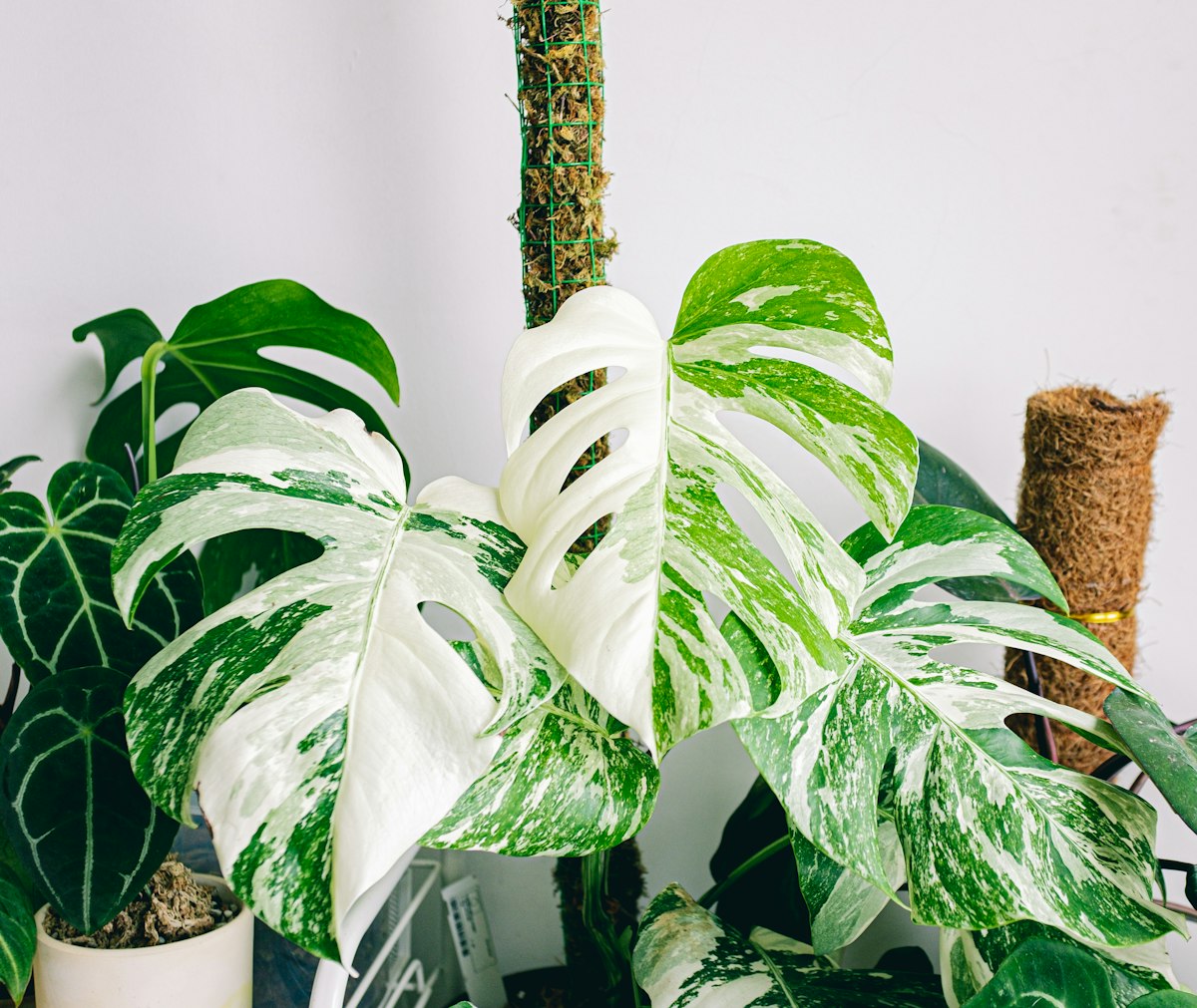
One green leaf does not prove permanent reversion, and an all-white leaf does not mean better cultivation. Establish the plant’s identity and type of variegation, then examine successive growth from the same growing point, remaining green tissue and the environment. Better lighting can correct inadequate light; pruning can influence which bud grows next. Neither guarantees a preferred pattern.
This guide focuses on white-and-green collector plants, particularly the decisions commonly faced with variegated Monstera. Silver veins, reflective markings, seasonal colour and other pigment patterns should not automatically be treated as chlorophyll-deficient white variegation.
Distinguish colour change from a change in shoot behaviour
Leaf colour has different biological explanations. Some variegation involves a chimera with different cell populations; other patterns have different genetic or structural backgrounds. RHS information on plant mutations introduces chimeral phenomena, but “all variegation works alike” is not a sound care assumption.
First compare a leaf as it matures, then compare successive leaves from the same shoot. An immature leaf changing colour is different from a shoot persistently producing a different pattern. Exclude general yellowing, bleaching and injury rather than naming damaged tissue a new variegation.
Write what you actually observe: “the most recent leaf is green”, “successive growth on this shoot is greener”, or “new growth is almost white and little green foliage remains”. These observations are more useful than immediately labelling the plant genetically unstable.
All-green and all-white growth have different implications
The RHS reversion guide explains that green shoots on many variegated plants can be more vigorous, while white or very pale shoots tend to be weaker. Its main context is woody plants. That helps explain the principle, but does not transfer its seasonal pruning advice or outcomes unchanged to Monstera.
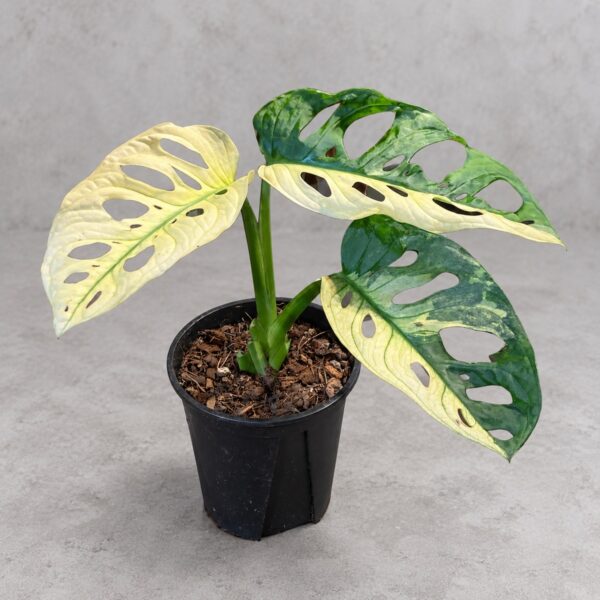
White tissue that genuinely lacks chlorophyll cannot provide the same photosynthetic capacity as normal green tissue. An all-white leaf attached to a plant with green foliage is not equivalent to a detached cutting with almost no green tissue. Temporary support from a mother plant does not demonstrate long-term independence for an all-white cutting.
Prioritise a plant capable of sustained growth, then its pattern. All-green growth may be healthy but aesthetically unwanted. All-white growth with little green tissue remaining creates a different question about continued viability.
Four situations, four starting decisions
| Situation | Start here | Avoid for now |
|---|---|---|
| One greener new leaf | Allow maturity and record subsequent growth on the same shoot | Immediate heavy pruning or declaring permanent reversion |
| Progressively greener growth with evidence of inadequate light | Improve light gradually and inspect the root zone | Treating better light as a pattern guarantee |
| Persistent green growth with healthy roots and growth | Choose whether to accept it or assess an informed pruning option | Repeatedly increasing light and fertiliser to force whiteness |
| Persistent white growth with diminishing green tissue | Identify green foliage, roots and alternative growing points worth retaining | Removing the only green portion or assuming an all-white cutting is independent |
If root decay, severe pests or rapid decline is also present, address plant health first. Leaf pattern is not a setting that can be prioritised ahead of viability.
Lighting can improve conditions, not prescribe the next pattern
Insufficient light can affect growth and the appearance of some plants, but “reversion equals low light” is too simple. Observe or measure light at the foliage and its duration before deciding an increase is needed. Window direction alone and one unverified phone reading are not precise growth prescriptions.
Increase exposure gradually, avoiding an abrupt move from shade into strong sun. The RHS leaf-damage guide discusses light, root-zone problems and colour changes in a multi-cause context. Damage to white areas is not an instruction to keep increasing light.
Assess steadier growth, additional injury and subsequent leaves. Better lighting does not promise to repaint an already formed green leaf with white sectors or predict the next leaf’s pattern from a percentage.
Pruning changes a growth opportunity, not a guaranteed outcome
The RHS explanation of apical dominance describes how removing a shoot tip can allow lower buds to grow. This explains why pruning can change the subsequent shoot. It does not establish that the selected bud will produce a desired pattern.
- Confirm that functioning roots and green tissue are sufficient to support the intervention.
- Identify the live node or growing point you intend to retain and review that shoot’s leaf history.
- Before cutting, identify the retained section and the bud that might continue growth. If you cannot, pause.
- Use clean, suitable tools, protect yourself from sap and avoid injuring the retained bud.
- Observe the actual new growth rather than immediately repeating the cut after an unwanted result.
A stem stripe is a clue, not a complete inspection of the cells inside a bud. Cutting beside a particular white line should not be presented as a hundred-percent-success method.
Replace “stable variegation” claims with a growth record
| Field | Record |
|---|---|
| Identity and shoot | Label, shoot ID and which claims are documented |
| Each leaf | Emergence and maturity dates; photographs under consistent light |
| Whole-plant green tissue | Other healthy foliage and stems, not only the whitest leaf |
| Environment | Light, roots and recent moves, repotting or injury |
| Intervention and result | Any pruning, the retained bud and the growth that actually followed |
You do not need an artificially precise white-area percentage for each leaf. Consistent images and a clear connection to the same shoot are usually more informative. Keep green and damaged stages in the record rather than preserving only attractive photographs.
An informed collector distinguishes conditions that can be adjusted from outcomes that must be observed. Accepting healthy green growth, stopping unsupported repeated pruning or choosing a plant better suited to your environment may be more useful than pursuing one dramatic but unsustainable white leaf.
Further reading and next steps
IN STORE NOW
Plants for this guide
Related plants in stock now — live prices, delivery or Causeway Bay pickup.
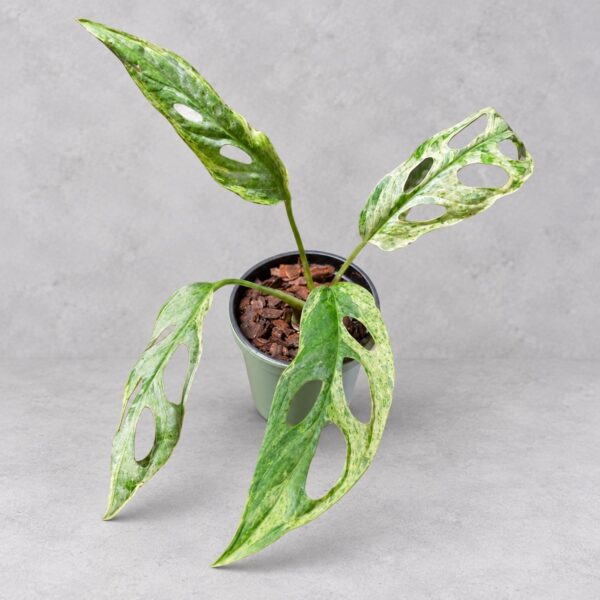
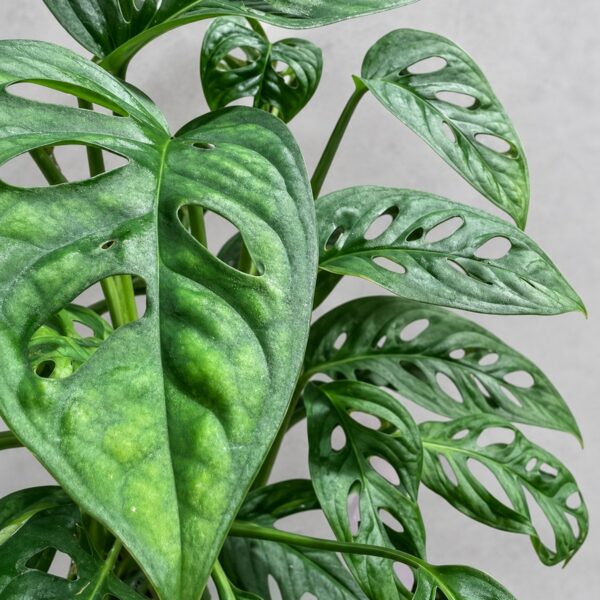
Monstera obliqua Peru
Original price was: HK$480.00.HK$280.00Current price is: HK$280.00.
In stock · store pickup
View plant
FREE PLANT ADVICE
Send us a photo before you change anything
WhatsApp a photo of the plant and your window light. Our Causeway Bay team will suggest care steps or plants that suit your space.
STORE · CAUSEWAY BAY
4/F, 39 Yiu Wa Street, Causeway Bay
Daily 12:30–8:00pm · ~3 min walk from Times Square
Map & directionsPlant Care