
How to Care for Hoya Michelle in Hong Kong | Plantjai

Hong Kong care guide for Hoya Michelle.
Thick, large leaves with bold, raised veining, growing fast and flowering readily — a great value entry point into hybrid Hoyas!
Brand: Plantjai
>
Botanical note: Hoya cv. 'Michelle' (also known as 'Michele', registration MB1255) is a horticultural hybrid cultivar bred by Mark Bernardo, named in honour of Italian botanist Michele Rodda.
Origin & characteristics
- Parentage: Hoya verticillata (from Laos) × variegated Hoya acuta (Hoya acuta albomarginata)
- Bred by: Mark Bernardo (registration MB1255)
- Growth habit: climbing vine, fast-growing, with vines reaching up to 2 metres, suited to climbing or trailing
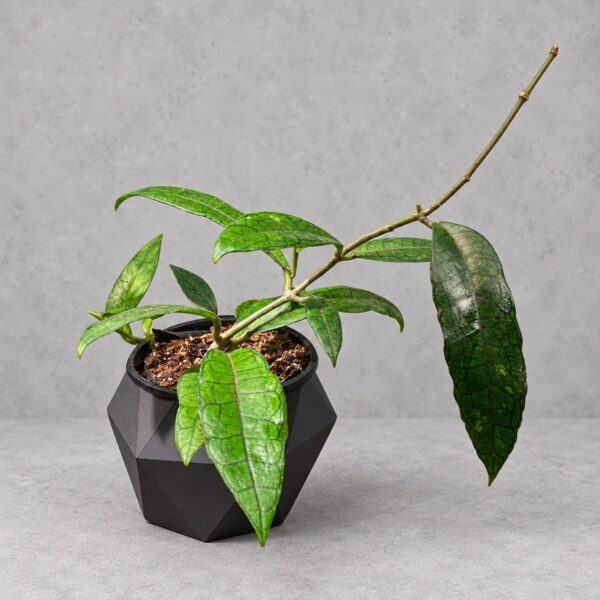
- Leaf characteristics: large, thick, and glossy, deep green with prominently raised, network-like venation; some leaves carry silvery splash patterning; leaf colour deepens under medium light
- Flowering characteristics: white globe-shaped umbel clusters with a distinctive, memorable light fragrance; flower colour tends toward pink or creamy-white
- Growth rate: fast (more vigorous than most Hoyas)
- Pet safety: ✅ non-toxic to cats and dogs (though the sap is a latex substance and may cause skin irritation on contact — it's best to discourage pets from chewing it)
Light
- Ideal light: bright indirect light, around 10,000–20,000 lux
- Best placement: 1–2 metres from an east- or north-facing window, or a west-facing window filtered by a sheer curtain
- Notes:
- Avoid harsh afternoon direct sun — strong light combined with heat easily scorches the leaves
- A small amount of gentle morning direct sun, or filtered sunlight, is acceptable
- Leaf colour deepening and vein contrast becoming more pronounced under medium light is a normal response
- Maintaining a certain light intensity is needed to preserve the silvery markings
Watering
- Frequency: water once the soil is 60–80% dry, roughly every 7–10 days in summer, every 10–14 days in winter
- Method: water slowly around the rim until it drains completely from the base
- Signs of underwatering: slightly soft leaves, noticeably lighter pot weight
- Signs of overwatering: yellowing leaves, black water-stain spots (oedema)
- Seasonal adjustment: extend the watering interval further as growth slows in winter
- Important reminder: water once the soil surface is slightly dry, but avoid prolonged wetness; oedema spots are a cosmetic issue only and can be improved by reducing watering and increasing ventilation
Soil & pot
- Soil recipe:
- Recipe 1 (recommended): orchid mix or bark as a base + perlite + a little peat, lightweight and medium-grained
- Recipe 2: 1 part cactus soil + 1 part orchid mix + 1 part perlite
- Recipe 3 (advanced/semi-hydroponic): a semi-hydroponic system also works well for this cultivar
- Key point: must be well-draining and breathable while retaining slight moisture buffering — a bark-based mix is best
- Pot choice:
- Drainage holes are essential; plastic or terracotta both work
- Pair with a trellis, ring support, or moss pole to let the large leaves show off their veining in a climbing display
- A hanging basket also works, though a climbing display looks even better
- When to repot: every 2–3 years
- Repotting tip: size up by just one pot size each time (roughly 2 inches larger), avoiding an oversized pot that leads to standing water
Temperature & humidity
- Ideal temperature: 16–24°C (slightly warmer by day, slightly cooler at night is ideal)
- Minimum tolerance: 10°C, with cold damage risk below this
- Humidity requirement: 50–60% is ideal
- Ways to raise humidity:
- Adapts to typical household humidity, though higher humidity gives thicker, glossier leaves
- Use a humidifier, humidity tray, or place in a well-ventilated bathroom
- Flowering tips:
- Being slightly pot-bound helps trigger flowering
- Slightly cooler nights (around 15–18°C) combined with adequate light help stimulate bud formation
- A 4–5 week slightly drier rest period in winter can be beneficial
Common problems
| Issue | Likely cause | What to do |
|---|---|---|
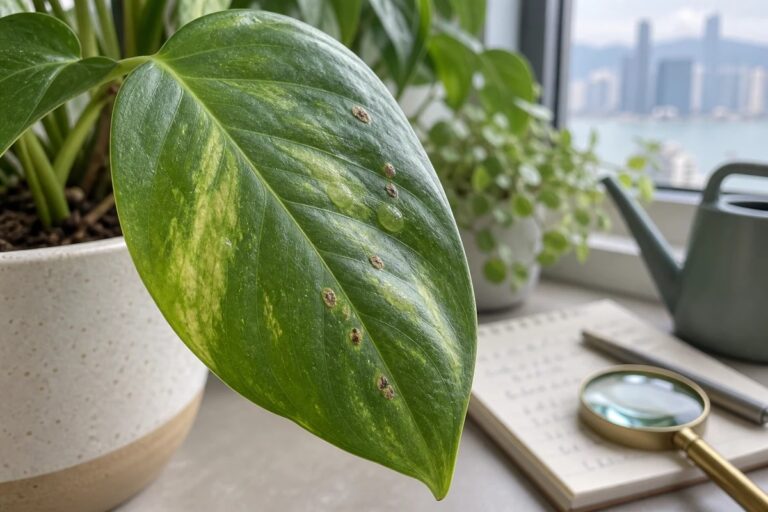
| Black spots on leaves | Oedema, from water uptake outpacing transpiration | Purely cosmetic and harmless — reduce watering and increase ventilation |
| Yellowing, soft leaves | Overwatering / poor drainage | Check roots, trim rot, repot in a well-draining mix |
| Leggy stems, widely spaced leaves | Insufficient light | Move closer to a light source or add supplemental grow lighting |
| Won't flower | Insufficient light / immature plant / repotted too often | Increase light, allow slight pot-binding, maintain a stable environment |
| Deeper green leaves, reduced silver markings | Light on the weaker side | A normal response — increasing light can restore the markings |
| Fungus gnats | Soil too wet | Reduce watering, use yellow sticky traps |
| Mealybugs / spider mites | Poor ventilation / overly dry conditions | Spray with neem oil or soapy water, improve ventilation |
How to explain to customers
"The Michelle Hoya is a relatively new hybrid cultivar that grows fast, with big, thick leaves and bold, raised veining that gives it real presence! It's a cross between verticillata and variegated acuta, so it's both attractive and easy to care for. Just remember to use a well-draining mix and keep it out of harsh midday sun. When it flowers, there's a distinctive fragrance, though you may need to wait for the plant to mature first. It's non-toxic to cats and dogs, though the sap is a latex substance, so it's best to discourage pets from chewing on it."
Fun facts
- The correct pronunciation of Michelle Hoya's name is "Mi-Kel-le" (the Italian pronunciation), honouring Italian Hoya expert Michele Rodda, though many people simply call it "Michelle."
- Its breeding registration number MB1255 represents breeder Mark Bernardo's 1,255th cultivar creation.
- One parent, Hoya verticillata, contributes its vigorous growth habit, while the variegated Hoya acuta parent brings the attractive silver marking genetics.
- Oedema spotting is a common "feature" of this cultivar rather than a disease — it's a cosmetic phenomenon caused by leaves absorbing water faster than they can transpire it.
Keywords
Plantjai Michelle Hoya Hoya Michelle Hoya Michele MB1255 hybrid Hoya horticultural cultivar thick-leaved Hoya raised venation climbing plant indoor plant non-toxic plant pet safe flowering plant well-draining mix bright indirect light fast growing silver markings
參考資料(想知來源可展開)
References
- Royal Botanic Gardens, Kew — Plants of the World Online: genus Hoya, https://powo.science.kew.org/
- ASPCA — Toxic and Non-Toxic Plant List, https://www.aspca.org/pet-care/animal-poison-control/toxic-and-non-toxic-plants
⚠️ Non-toxic to cats and dogs; sap is a latex substance and may cause skin irritation — best to discourage pets from chewing on it.
Plantjai · Causeway Bay collector indoor plants · WhatsApp +852 66807550
For Hong Kong homes and offices. Stock and pricing follow the product page.
IN STORE NOW
Plants for this guide
Related plants in stock now — live prices, delivery or Causeway Bay pickup.
FREE PLANT ADVICE
Send us a photo before you change anything
WhatsApp a photo of the plant and your window light. Our Causeway Bay team will suggest care steps or plants that suit your space.
STORE · CAUSEWAY BAY
4/F, 39 Yiu Wa Street, Causeway Bay
Daily 12:30–8:00pm · ~3 min walk from Times Square
Map & directionsPlant Care