
How to Care for Hoya Lyi Prism in Hong Kong | Plantjai

Plantjai 植仔 · Care Encyclopedia
Hoya Lyi Prism
Hong Kong care guide — useful before you buy and after it arrives.
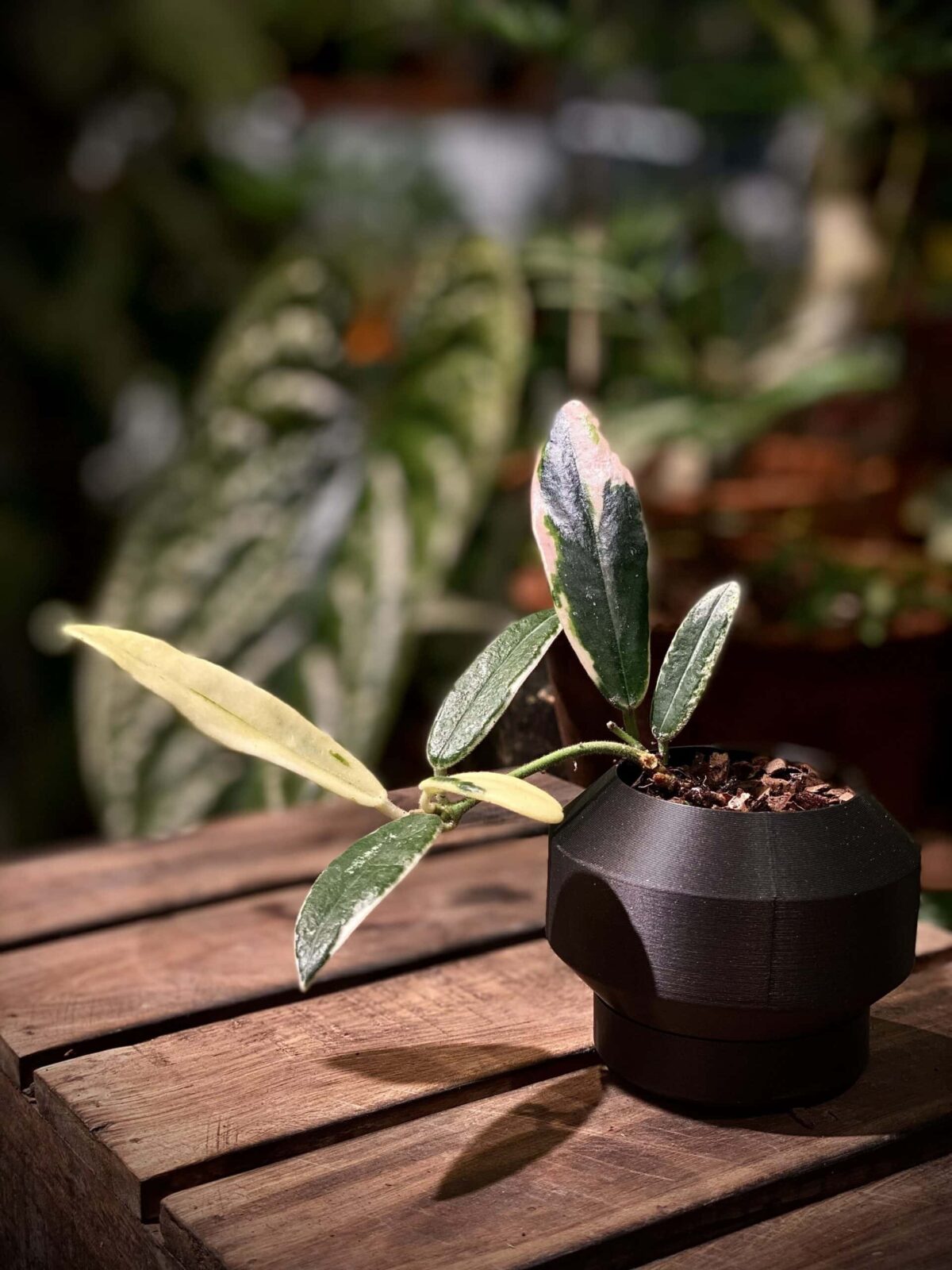
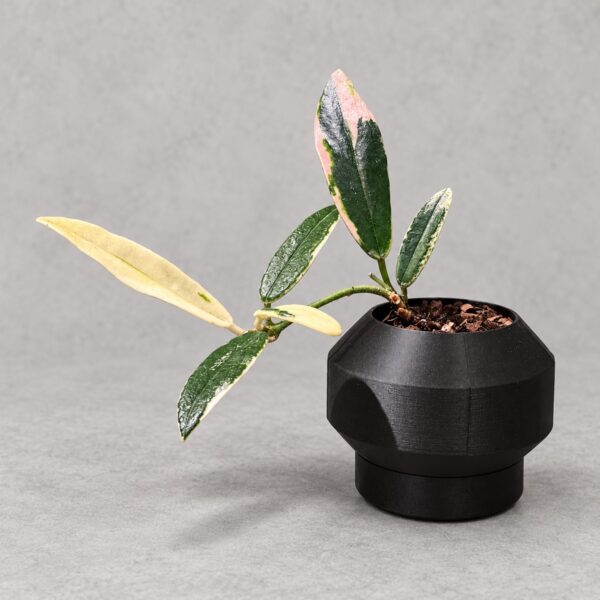
Shop this plantStar-shaped fragrant blooms paired with prism-like variegated leaves — a double star of the Hoya world, combining floral scent with foliage artistry.
Origin & characteristics
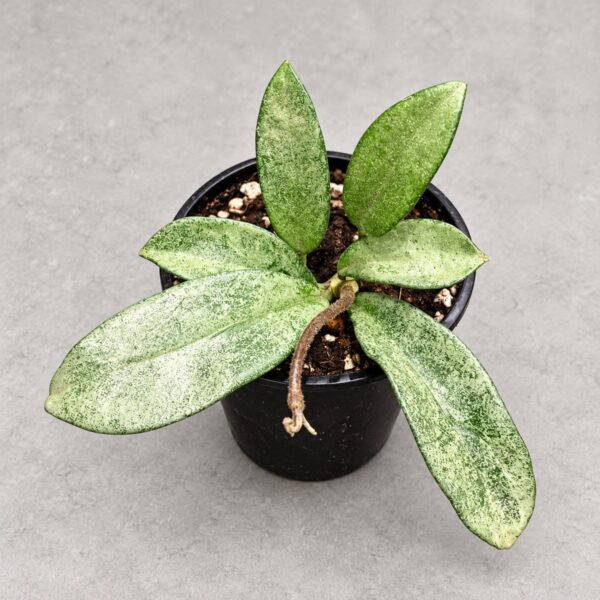
This Hoya belongs to the Apocynaceae family, genus Hoya. The species Hoya lyi is native to subtropical mountain forests in southern China, Thailand, and Vietnam, growing on tree trunks or rocks as a succulent epiphytic vine. 'Prism' is a variegated horticultural cultivar of Hoya lyi, adding white, cream, and even pink markings to the original bright green succulent leaves — as though light were being refracted through a prism into a spectrum of colours.
One of the Hoya's greatest charms is its flowers — Hoya lyi produces star-shaped flower clusters in pale pink to white, releasing a fresh, delicate sweetness, most noticeable at night. The waxy petals form long-lasting blooms that can persist for weeks. Leaves are thick, succulent, oval to oblong, with variegation appearing as irregular patterning or an edged border effect.
It has a vining growth habit, suited to hanging or trellis growing, with moderate growth speed. Mature, flowering specimens are highly ornamental and a coveted collector piece for Hoya enthusiasts.
⚠️ Toxicity note: as a member of the Apocynaceae family, Hoya lyi 'Prism' contains a white milky sap (latex) and is considered toxic. Ingestion can cause digestive upset, vomiting, and diarrhoea, and skin contact with the sap may cause irritation or an allergic reaction. Keep it out of reach of children and pets, and wear gloves when pruning to avoid contact with skin or eyes.
Light
Hoya lyi 'Prism' needs bright indirect light to gentle direct light, with ample light encouraging both flowering and vivid variegation.
- Ideal placement: near an east- or south-facing window, tolerating gentle morning or evening sun
- Daily light exposure: at least 4–6 hours of bright light
- Signs of sufficient light: thick, plump leaves, vivid variegation, a compact plant with flowering potential
- Signs of insufficient light: thinner, elongated leaves, dull colouring, fading variegation, no flowering
- Avoid: harsh midday summer sun — despite the succulent leaves storing water, they can still get sunburned
- Flowering tip: ample light is key to flowering; more direct light is acceptable in winter
Watering
Follow the "dry before you water" principle. As a succulent Hoya, its leaves and stems store water, making it very drought-tolerant but intolerant of standing water.
- Checking method: insert a finger at least 3–4 cm into the soil to confirm it's completely dry before watering; or watch for leaves becoming slightly soft as a sign of underwatering
- Growing season (spring–autumn): roughly every 7–10 days, adjusted for ambient humidity and ventilation
- Dormant season (winter): roughly every 14–21 days, significantly reduced
- Watering method: water slowly around the rim until it drains from the base
- Saucer water: must be emptied within 30 minutes
- Water quality: room-temperature tap water is fine; sensitive plants can use filtered water
- Important reminder: better slightly underwatered than overwatered — excess moisture is the number one killer of Hoyas
Soil & pot
Soil recipe
This species needs an extremely loose, fast-draining mix, as the succulent root system hates standing water:
- Cactus/succulent mix 40%
- Perlite or pumice 25%
- Coconut husk chips or bark 20%
- Coco coir 10%
- A little activated charcoal 5%
Goal: water should drain away quickly after watering, with no prolonged moisture retention in the pot.
Pot choice
- Terracotta: most recommended, offering the best breathability and drainage, helping the soil dry out faster
- Plastic pots: lightweight but retain more moisture, requiring stricter watering control
- Hanging pots: the Hoya's vining habit suits hanging display beautifully, with flowers cascading for a striking display
- Drainage holes: absolutely essential
- Size recommendation: Hoyas prefer being "on the snug side" — a pot slightly tighter than the root system actually benefits growth and flowering; an oversized pot risks standing water and root rot
- When to repot: every 2–3 years, or once roots have filled the pot. Avoid repotting during the flowering season
Temperature & humidity
Temperature
- Ideal growing temperature: 20–30°C
- Minimum tolerance: 15°C — prolonged temperatures below this cause growth to stall
- Flowering temperature: a day-night differential of 5–8°C helps trigger bud formation
- Winter note: avoid below 12°C, and keep away from AC vents and cold drafts near windows
Humidity
- Ideal humidity: 50–70%
- Hong Kong conditions: typically sufficient in spring and summer
- Raising humidity:
- Mist the surrounding air (avoid spraying directly on leaves, especially variegated areas)
- Use a humidity tray
- Group with other plants
- Air-conditioned rooms: prolonged AC use dries the air, potentially affecting flowering — a humidifier is recommended
Common problems
| Issue | Likely cause | What to do |
|---|---|---|
| Soft, wrinkled leaves | Underwatering | Water thoroughly right away — leaves typically recover within 1–2 days |
| Yellowing, dropping leaves | Overwatering causing root rot | Stop watering, check roots, trim rot and repot in fresh, dry soil |
| Fading or disappearing variegation | Insufficient light | Move to a brighter spot |
| Brown spots on leaves | Sunburn or water residue | Avoid direct light, keep misting away from the leaf surface |
| Leggy vines, widely spaced leaves | Severe light deficiency | Increase light immediately |
| Persistently won't flower | Insufficient light / immature plant / no temperature differential | Increase light, ensure a day-night temperature differential, and be patient as the plant matures |
| Bud drop | Environmental change / pot moved / sudden humidity shift | Avoid moving the pot during flowering, keep conditions stable |
| Black, mushy patches on leaves | Fungal infection (from excess moisture) | Trim affected leaves, reduce watering, improve ventilation |
How to explain to customers
"This Hoya lyi 'Prism' is a particularly special variety! Its succulent leaves carry variegated patterning that looks just like light refracting through a prism, so pretty. The best part is when it flowers — you get clusters of star-shaped blooms with a light fragrance, especially noticeable at night. For care, remember it's a succulent-type plant, so please don't water it constantly — let the soil dry out fully before watering, better a bit dry than too wet. Keep it somewhere with plenty of light, since that's what gives it the best chance of flowering. Just note that it is toxic — it has a milky sap, so wear gloves when pruning and keep it up high, away from children and pets."
Fun facts
- The genus Hoya is named in honour of British horticulturist Thomas Hoy (1750–1822), who served for many years as head gardener for the 9th Duke of Devonshire's botanical collection, contributing significantly to horticulture.
- Hoya flowers' waxy petals can last for weeks or even months without wilting, giving rise to the English nickname "Wax Flower." After the flowers fade, never cut off the peduncle, since Hoyas rebloom repeatedly from the same peduncle, year after year.
- Hoya lyi's fragrance is "night-scented" — the scent intensifies as temperatures drop in the evening, an evolutionary trait designed to attract nocturnal pollinators (especially moths).
- 'Prism''s variegation intensity varies with the season — it's typically more vivid during the active growing months of spring and summer, and may temporarily fade during the slower growth of autumn and winter, which is entirely normal.
Keywords
Hoya lyi Prism, variegated Hoya, Hoya variegated cultivar, Apocynaceae, succulent vine, fragrant flowers, night-scented flowers, indoor flowering plant, Hoya care, Hong Kong plant shop, foliage and flowering plant, trailing plant, climbing plant, collector plant, Plantjai
參考資料(想知來源可展開)
References
- Royal Botanic Gardens, Kew — Plants of the World Online: Hoya lyi, https://powo.science.kew.org/
- ASPCA — Toxic and Non-Toxic Plant List, https://www.aspca.org/pet-care/animal-poison-control/toxic-and-non-toxic-plants
⚠️ Toxic if ingested (contains milky latex sap); may cause vomiting and diarrhoea in pets and skin irritation on contact. Keep out of reach of children and pets, and wear gloves when pruning.
Plantjai · Causeway Bay collector indoor plants · WhatsApp +852 66807550
For Hong Kong homes and offices. Stock and pricing follow the product page.
IN STORE NOW
Plants for this guide
Related plants in stock now — live prices, delivery or Causeway Bay pickup.
FREE PLANT ADVICE
Send us a photo before you change anything
WhatsApp a photo of the plant and your window light. Our Causeway Bay team will suggest care steps or plants that suit your space.
STORE · CAUSEWAY BAY
4/F, 39 Yiu Wa Street, Causeway Bay
Daily 12:30–8:00pm · ~3 min walk from Times Square
Map & directionsPlant Care