
How to Care for Hoya Kenejiana Variegata in Hong Kong | Plantjai

Plantjai 植仔 · Care Encyclopedia
Hoya Kenejiana Variegata
Hoya kenejiana variegata 肯尼內錦毬蘭
Hong Kong care guide — useful before you buy and after it arrives.
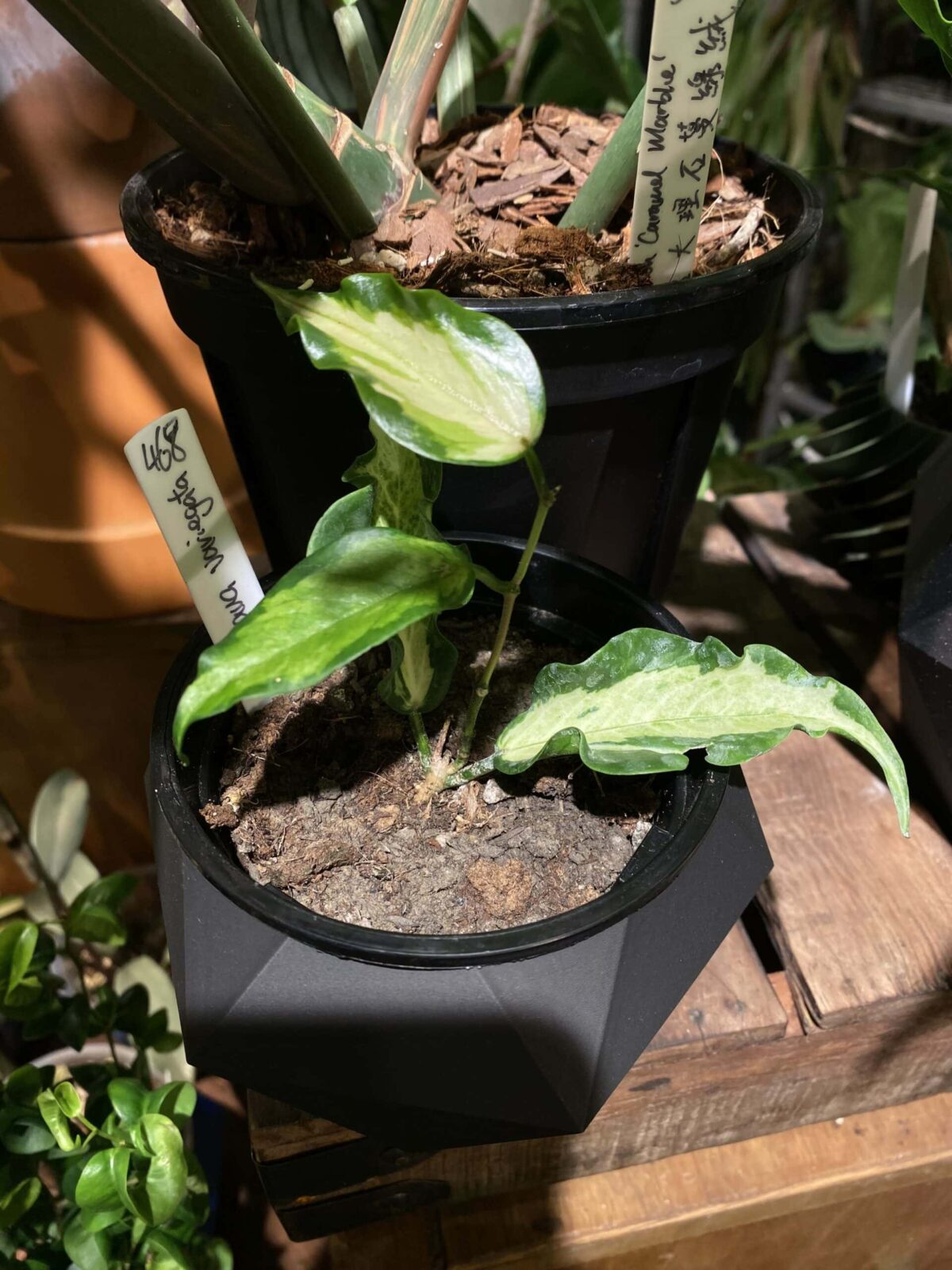
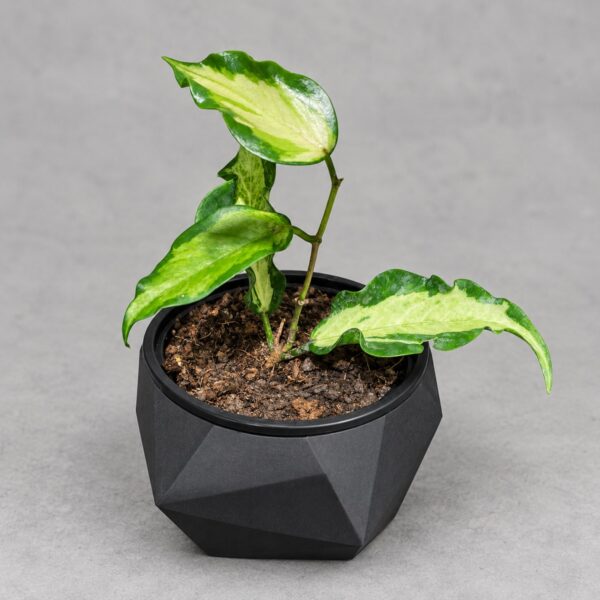
Shop this plantCentrally-variegated leaves as beautiful as a painting, with every leaf carrying its own unique marbled pattern — hang it by a window and it instantly elevates the whole space.
⚠️ Botanical name pending confirmation: "Hoya kenejiana variegata" appears infrequently in horticultural literature and may overlap taxonomically with, or be a spelling variant of, the Hoya kentiana group — please verify the source of your plant's label.
Origin & characteristics
- Native range: Southeast Asian tropical and subtropical regions (exact provenance pending further confirmation)
- Classification: Apocynaceae, genus Hoya
- Growth habit: epiphytic climbing vine with thin, flexible stems, suited to hanging or a small trellis
- Leaf characteristics: long-oval, succulent leaves; this centrally-variegated form has cream-white to pale yellow patches in the centre of the leaf, creating a marble-like gradient effect when the variegation is stable
- Flower characteristics: mature plants produce small star-shaped flowers in umbel clusters, mostly pale yellow to cream-coloured, with a light fragrance
- Growth rate: moderate — variegated forms with less chlorophyll grow slightly slower than solid green types
- Size: vines can reach 1–1.5 metres, typically kept at 30–50 cm as a potted plant
Light
| Item | Recommendation |
|---|---|
| Ideal light | Bright indirect light, east- or north-facing windowsills are best |
| Acceptable range | 4–6 hours daily of gentle direct light (e.g. morning sun) |
| Avoid | Harsh midday direct sun, which scorches the white portion of the variegated leaves |
| Tip | Ample light makes the variegation more vivid; too little light causes leaves to revert to green, with legginess and sparser growth |
💡 Plantjai tip: if you notice new leaves getting greener over time, that's a sign of insufficient light — try moving it closer to a window.
Watering
| Season | Frequency | Notes |
|---|---|---|
| Spring/summer (growing) | Water thoroughly once the topsoil dries out, roughly every 7–10 days | Confirm dryness by inserting a finger 2–3 cm into the soil before watering |
| Autumn/winter (dormant) | Reduce to every 10–14 days | Keep the soil slightly dry, avoid standing water |
Watering principles:
- Better dry than wet — Hoyas' succulent roots hate standing water and root rot
- Water slowly around the rim until it drains from the pot's base
- Empty the saucer after 30 minutes
- Room-temperature tap water or filtered water is best — avoid cold water, which shocks the roots
⚠️ Root rot warning: variegated cultivars grow more slowly and transpire less, making them even more prone to root rot from excess moisture than solid green forms — remember to "water sparingly and check often"!
Soil & pot
Recommended soil recipe:
- Orchid mix (bark/coconut husk chips): 40%
- Perlite or pumice: 25%
- Coco coir or peat: 25%
- Charcoal chips: 10%
Key point: the mix needs to be well-draining and breathable, mimicking its natural epiphytic environment.
Pot choice:
- Terracotta pots are ideal, offering good drainage and breathability
- Plastic pots work too, but ensure ample drainage holes at the base
- Hoyas like being "a bit snug" — there's no need to rush into repotting
When to repot: roughly once every 2 years — repot when roots emerge from the drainage holes, typically in spring.
Temperature & humidity
| Item | Ideal range | Minimum tolerance |
|---|---|---|
| Temperature | 18–27°C | 10°C |
| Humidity | 50–70% | 40% |
- Typical Hong Kong indoor conditions suit it well
- When running heaters in autumn/winter, keep it away from direct heat vents to avoid leaves drying and curling
- If the air is dry, occasional misting of the surrounding area helps (avoid spraying directly on the leaves, which leaves water droplets behind)
- Placing it on a humidity tray also helps raise local humidity
Common problems
| Issue | Likely cause | What to do |
|---|---|---|
| Soft, wrinkled leaves | Underwatering or root rot (roots may be dead and unable to absorb water even in moist soil) | Check soil moisture; if root rot is present, repot promptly and trim affected roots |
| Variegated portions turning green | Insufficient light, causing the plant to reduce variegation to boost photosynthesis | Move closer to a window or extend supplemental lighting time |
| Leggy stems, widely spaced leaves | Severe light deficiency | Gradually increase light — don't move it into harsh sun suddenly |
| Brown spots on leaves | Sunburn or cold damage | Move away from direct light / provide warmth; damaged leaves won't recover |
| Leaf drop | Cold damage, root rot from excess moisture, or severe drought | Check environmental and soil conditions, and address the specific cause |
| Won't flower | Immature plant, insufficient light, or insufficient temperature differential | Mature plants (generally 2+ years) flower more readily; a slight autumn/winter temperature differential helps encourage blooming |
How to explain to customers
"What makes this variegated kenejiana Hoya so special is the marbled pattern in the centre of every leaf — no two are exactly alike! Keep it by a window with some indirect light and it'll look its best. For watering, better a bit dry than wet — you really don't want the roots sitting in moisture. Just remember these eight words: 'let the soil dry, then water thoroughly,' and you'll be fine. It's non-toxic to cats and dogs, so it's perfect for customers with pets too!"
Fun facts
- A Hoya's flowers don't just bloom once and disappear! They rebloom repeatedly from the same "peduncle" — so never cut off the flower stalk after it blooms!
- Variegation actually results from certain leaf cells lacking chlorophyll, meaning the white portions can't photosynthesize at all — this is exactly why variegated cultivars grow more slowly.
- The Hoya genus has over 500 species, making it one of the largest genera in the Apocynaceae family, and new species are still being discovered!
Keywords
Plantjai, Hoya kenejiana variegata, botanical name pending confirmation, Hoya, central variegation, variegated leaves, climbing plant, trailing plant, fragrant flowers, non-toxic to pets, indoor plant, Hong Kong potted plant, foliage plant, epiphyte, succulent leaves
參考資料(想知來源可展開)
References
- Royal Botanic Gardens, Kew — Plants of the World Online: genus Hoya, https://powo.science.kew.org/
- ASPCA — Toxic and Non-Toxic Plant List, https://www.aspca.org/pet-care/animal-poison-control/toxic-and-non-toxic-plants
⚠️ Non-toxic to cats and dogs; sap may cause mild skin irritation in sensitive individuals.
Plantjai · Causeway Bay collector indoor plants · WhatsApp +852 66807550
Plantjai shop · In stock online
Hoya kenejiana variegata
HK$468.00
Hong Kong delivery · Causeway Bay pickup
For Hong Kong homes and offices. Stock and pricing follow the product page.
IN STORE NOW
Plants for this guide
Related plants in stock now — live prices, delivery or Causeway Bay pickup.
FREE PLANT ADVICE
Send us a photo before you change anything
WhatsApp a photo of the plant and your window light. Our Causeway Bay team will suggest care steps or plants that suit your space.
STORE · CAUSEWAY BAY
4/F, 39 Yiu Wa Street, Causeway Bay
Daily 12:30–8:00pm · ~3 min walk from Times Square
Map & directionsPlant Care