
How to Care for Hoya Kastbergii in Hong Kong | Plantjai


Plantjai 植仔 · Care Encyclopedia
Hoya Kastbergii
Hong Kong care guide — useful before you buy and after it arrives.
Shop this plantThick, deep green leaves paired with delicate star-shaped flowers and a captivating light fragrance — an elegant climber that combines great foliage with lovely blooms.
Brand: Plantjai 植仔 | Classification: Apocynaceae, genus Hoya | Difficulty: intermediate
Origin & characteristics
Hoya kastbergii is an epiphytic climbing plant native to Southeast Asian tropical rainforest, primarily found in the Philippines. It grows in humid, lower-elevation forests, naturally climbing up tree trunks or rock surfaces.
Physical characteristics:
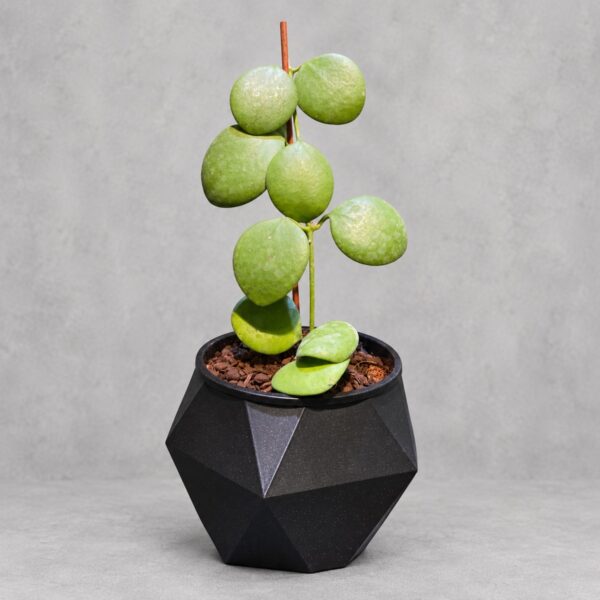
- Leaves: thick, succulent, glossy deep green, lance-shaped to long-oval with slightly raised veins — a substantial, sturdy texture
- Vines: strong climber, moderate growth rate, mature vines can exceed 1 metre
- Flowers: umbel clusters made up of numerous delicate star-shaped blooms; white, cream, or pale pink with a purple-pink or yellow corona, releasing a pleasant light fragrance
- Peduncle: the flower spur persists after blooming, reflowering from the same spot the following year
Light
Bright indirect light is the ideal choice.
Hoya kastbergii is native to the forest understory beneath a rainforest canopy, receiving light filtered through leaves. Overly harsh direct sun scorches its thick leaves, while too little light causes legginess and reduced flowering.
- Ideal placement: 50 cm to 1 metre from an east- or west-facing window
- Ideal light: 12,000–20,000 lux
- Daily light exposure: at least 6–8 hours
- Acceptable: a little gentle direct light in early morning or evening
- Avoid: harsh midday direct sun, prolonged deep shade
Watering
Let it dry out fully before watering, and strictly avoid standing water.
The thick leaves of Hoya kastbergii have good water storage capacity, and it tolerates brief drought better than excess moisture. Overwatering is the number one cause of plant decline.
Key watering points:
- Spring/summer (growing season): roughly every 10–14 days
- Autumn/winter (semi-dormant): roughly every 14–21 days
- Checking method: insert a finger 2–3 cm into the soil, and only water once it feels completely dry
- Method: water slowly around the rim until it drains from the base, and be sure to empty the saucer after 30 minutes
- Winter note: reduce watering frequency further once temperatures drop below 18°C
- Golden rule: when in doubt, wait another couple of days before watering
Soil & pot
An extremely fast-draining, coarse-grained, breathable mix is key.
Recommended mix ratio:
- Pine bark or coconut husk chips (medium grade): 40%
- Perlite or pumice: 25%
- Sphagnum moss: 20%
- Coco coir or quality potting soil: 15%
Pot choice:
- A terracotta pot or dedicated orchid pot with drainage holes is recommended
- A clear pot helps monitor root health and moisture levels
- Avoid an oversized pot — being slightly pot-bound helps encourage flowering
- Provide a small trellis, ring support, or moss pole for climbing
Fertilising:
- Growing season (March to October): dilute balanced liquid fertiliser every 2–3 weeks
- Near the end of the growing season: switch to a high phosphorus/potassium formula to encourage bud formation
- Winter (November to February): halve fertilising frequency or pause entirely
- Note: always ensure the soil is slightly moist before fertilising to avoid root burn from feeding dry soil
Temperature & humidity
| Item | Ideal range | Notes |
|---|---|---|
| Daytime temperature | 18–28°C | most comfortable range |
| Nighttime temperature | 16–22°C | avoid dramatic swings |
| Minimum tolerance | 15°C | cold damage risk below 12°C |
| Humidity | 50–70% | medium-high humidity is ideal |
Temperature note: Hoya kastbergii doesn't tolerate cold well and must stay above 15°C in winter. Direct cold drafts cause leaf drop, so keep it away from AC vents and gaps around doors/windows.
Humidity note: while it adapts to typical household humidity (40–50%), maintaining above 60% gives leaves a glossier sheen and encourages flowering. Raise humidity with a humidifier, by grouping plants together, or with a humidity tray.
Common problems
Q1: The plant won't flower?
The most common cause is insufficient light or an immature plant. Hoya kastbergii typically needs 1–2 years of growth and a certain vine length before flowering. A slightly drier winter period (reduced watering) combined with ample spring light effectively stimulates bud formation.
Q2: Leaves turning yellow and soft?
A classic sign of overwatering. Stop watering immediately, check the roots for rot, trim any rotten sections, and repot in fresh, dry mix.
Q3: Leaves wrinkling and losing their plumpness?
A sign of underwatering. Check whether the soil is fully dry, and water thoroughly — leaves should gradually recover. If the soil is moist but leaves remain wrinkled, there may be a root problem.
Q4: Elongated internodes and thinner leaves?
Legginess from insufficient light. Move closer to a window or add supplemental lighting, and prune overly long stems if needed to encourage branching.
Q5: Should I cut off the peduncle after flowering?
Never cut it off! Hoyas rebloom repeatedly from the same peduncle — cutting it means losing the chance for future flowers.
How to explain to customers
"Hoya kastbergii is a really elegant species — the thick, deep green leaves have a lovely texture, and when it flowers you get clusters of delicate star-shaped blooms with a light, pleasant fragrance, adding real character to any home. For care, the most important thing is not overwatering — the thick leaves store plenty of water, so let the soil dry out fully before watering to stay safe. After it flowers, remember don't cut off the flower stalk, since it reblooms from the same spot, saving you the trouble of waiting for new growth! It's non-toxic to cats and dogs, so you can place it anywhere in your home worry-free."
Fun facts
- Hoya kastbergii was named after Swedish Hoya collector Kastberg, honouring his contributions to Hoya research and collecting.
- Individual flowers last about 5–7 days, but the peduncle can persist for years, reblooming from the same spot annually.
- Beyond storing water, the thick leaves can reflect excess light under bright conditions, protecting chlorophyll from photo-oxidative damage.
- Native to lowland rainforest in the Philippines, where warm and humid conditions persist year-round, making it fairly sensitive to environmental temperature shifts.
- Hoya genus plants (including Hoya kastbergii) are non-toxic to cats and dogs, one of the rare ornamental plants safe to keep in pet households.
Keywords
Hoya kastbergii thick-leaved Hoya star-shaped flowers light fragrance climbing vine intermediate difficulty flowering plant Plantjai native to the Philippines well-draining mix non-toxic to pets epiphyte foliage and flowers
參考資料(想知來源可展開)
References
- Royal Botanic Gardens, Kew — Plants of the World Online: Hoya kastbergii, https://powo.science.kew.org/
- ASPCA — Toxic and Non-Toxic Plant List, https://www.aspca.org/pet-care/animal-poison-control/toxic-and-non-toxic-plants
⚠️ Non-toxic to cats and dogs; sap may cause mild skin irritation in sensitive individuals.
Plantjai · Causeway Bay collector indoor plants · WhatsApp +852 66807550
For Hong Kong homes and offices. Stock and pricing follow the product page.
IN STORE NOW
Plants for this guide
Related plants in stock now — live prices, delivery or Causeway Bay pickup.
FREE PLANT ADVICE
Send us a photo before you change anything
WhatsApp a photo of the plant and your window light. Our Causeway Bay team will suggest care steps or plants that suit your space.
STORE · CAUSEWAY BAY
4/F, 39 Yiu Wa Street, Causeway Bay
Daily 12:30–8:00pm · ~3 min walk from Times Square
Map & directionsPlant Care