
How to Care for Hoya Insularis in Hong Kong | Plantjai

Plantjai 植仔 · Care Encyclopedia
Hoya Insularis
Hong Kong care guide — useful before you buy and after it arrives.
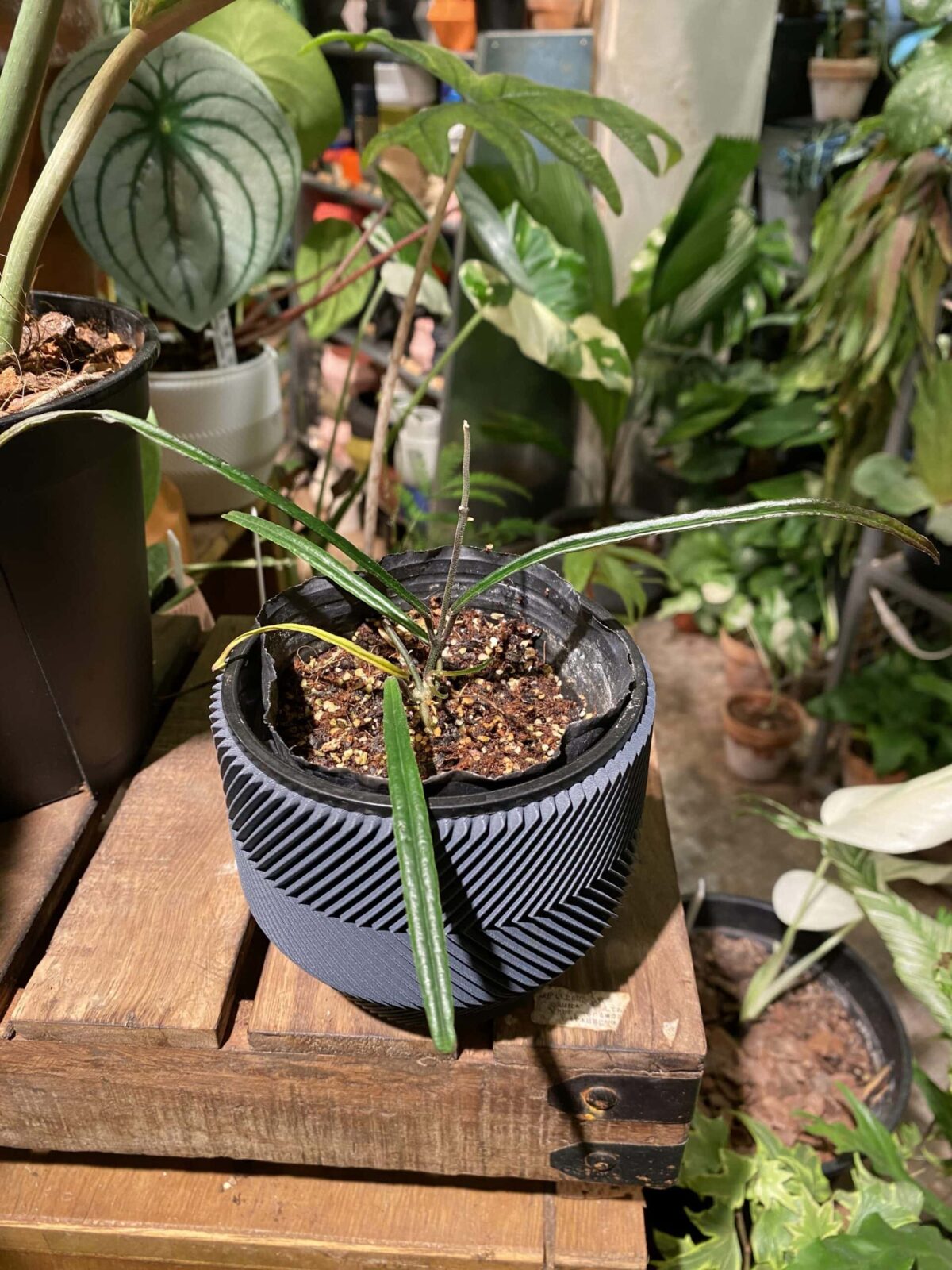
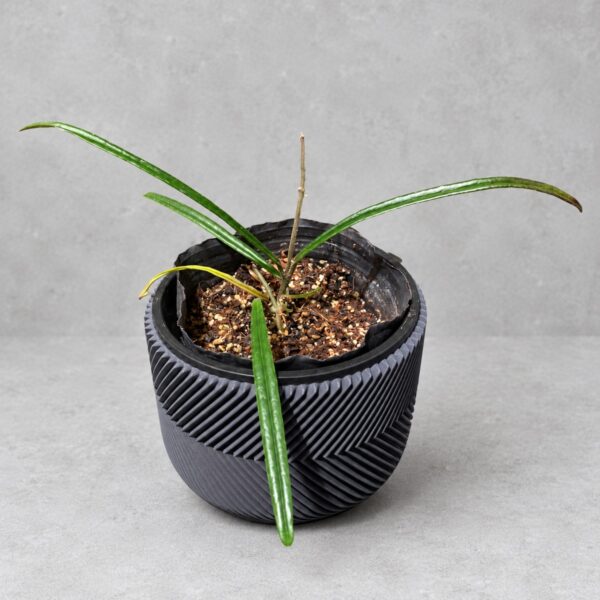
Shop this plantSlender, grass-like leaves that shatter every stereotype of Hoyas as "thick, succulent plants" — paired with dreamy pink flowers, this is a truly distinctive collector-grade species.
Brand: Plantjai 植仔 | Classification: Apocynaceae, genus Hoya | Difficulty: intermediate
Origin & characteristics
Hoya insularis is native to Pacific islands and Southeast Asian tropical regions, commonly found in island forest ecosystems in the Philippines and Indonesia. Its species epithet "insularis" literally means "of islands," reflecting its island-adapted origin.
Physical characteristics:
- Leaves: highly distinctive — slender like blades of grass or straw, succulent but delicate, 10–15 cm long and only 0.5–1 cm wide; a soft, vivid green colour that creates a striking contrast with typical thick-leaved Hoyas
- Vines: a trailing vine with soft, slender stems, well-suited to hanging planters
- Flowers: umbel clusters of delicate pink or pale purple blooms with a waxy sheen; small individual flowers but numerous, with high ornamental value
- Growth habit: moderate growth rate, prefers a stable environment, and is fairly sensitive to environmental changes
Light
Bright indirect light, tolerating a small amount of gentle direct light.
Hoya insularis is native to the edges of island forests, accustomed to filtered bright light. Since its leaves are thinner, it has lower tolerance for harsh light than thick-leaved species.
- Ideal placement: an east- or north-facing window, or 1–2 metres from a south-facing window
- Ideal light: 12,000–20,000 lux
- Daily light exposure: at least 6 hours
- Acceptable: 1–2 hours of gentle morning sun
- Avoid: harsh midday direct sun, prolonged deep shade
Watering
Slightly more frequent than typical thick-leaved Hoyas, but still let it dry out before watering.
Although its leaves are slender, they still have some succulent water-storage capacity. Compared to thick-leaved species, it has somewhat lower drought tolerance — too dry causes wrinkling, too wet causes root rot.
Key watering points:
- Spring/summer (growing season): roughly every 7–10 days
- Autumn/winter (slower growth): roughly every 10–14 days
- Judging method: watch the leaves — slight wrinkling means it needs water; plump, upright leaves mean you can wait a couple more days
- Checking method: insert a finger 2–3 cm into the soil to feel for dryness before watering
- Method: water slowly around the rim, emptying the saucer after 30 minutes
- Important: Hoya insularis is very sensitive to overwatering — better to underwater slightly than overwater
Soil & pot
A highly breathable, extremely fast-draining, coarse-grained mix.
Recommended mix ratio:
- Pine bark or coconut husk chips (medium grade): 45%
- Perlite: 25%
- Sphagnum moss: 20%
- Coco coir: 10%
Pot choice:
- A small terracotta pot or clear orchid pot is recommended, for easy monitoring of the root system
- Drainage holes are essential
- Avoid an oversized pot — a smaller pot helps control moisture and reduce root rot risk
- Best suited to hanging planters or placement somewhere elevated, allowing it to trail naturally
Fertilising:
- Growing season (spring to autumn): dilute balanced liquid fertiliser (half strength) every 3–4 weeks
- Winter: stop fertilising
- Avoid concentrated fertiliser — the delicate roots are easily burned
Temperature & humidity
| Item | Ideal range | Notes |
|---|---|---|
| Daytime temperature | 18–27°C | most comfortable range |
| Nighttime temperature | 16–22°C | avoid below 15°C |
| Minimum tolerance | 12°C | damage risk below 10°C |
| Humidity | 50–70% | medium-high humidity is ideal |
Special note: Hoya insularis is fairly sensitive to sudden environmental changes — abruptly moving locations or sudden temperature shifts can cause leaf drop or stalled growth. It's best to find it a permanent spot after purchase and avoid moving it around too much.
Raising humidity: group with other plants, use a humidifier, or place in a bathroom (provided there's enough light).
Common problems
Q1: Leaves wrinkling and losing their sheen?
Most commonly a sign of underwatering. Check if the soil is fully dry, and leaves should gradually plump back up after watering. If the soil is moist but leaves are still wrinkled, this may indicate root rot preventing water uptake — check the roots.
Q2: Sparse stems and leaf drop?
Could be an unsuitable environment — too cold, too dry, too wet, or too little light can all cause leaf drop. Check that temperature stays above 15°C and humidity is adequate. Hoya insularis is sensitive to environmental change, so try to avoid moving it around.
Q3: Leaves turning yellow and mushy?
Almost certainly overwatering or poor drainage causing root rot. Stop watering immediately, remove the plant to check roots, trim any brown, mushy roots, and repot in fresh, fast-draining mix.
Q4: Stalled growth, no new leaves?
Could be too cold, insufficient light, or roots that have filled the pot. Consider a slightly larger pot in spring/summer and ensure adequate light.
Q5: What should I do with the peduncle after flowering?
Never cut it off! Hoyas rebloom repeatedly from the same peduncle — cutting it means losing the next round of flowers.
How to explain to customers
"Hoya insularis is really different from typical Hoyas — its leaves are long and slender, like blades of grass, which completely overturns what you'd expect from a Hoya! When it flowers, you get clusters of dreamy pink blooms, really enchanting. For care, the most important thing is controlling how much you water — its roots really dislike sitting wet, so let the soil dry out fully before watering to stay safe. It's also a bit sensitive, so once you find it a good spot after bringing it home, try not to move it around too much. It looks its best in a hanging pot, with those long leaves cascading elegantly! It's non-toxic to cats and dogs, so you can display it at home worry-free."
Fun facts
- The species epithet "insularis" comes from the Latin "insula" (island), reflecting its native distribution across multiple Pacific islands.
- The slender leaves of Hoya insularis are an adaptive trait — in windy island environments, narrow leaves reduce wind resistance and help avoid being torn off by strong gusts.
- Despite looking delicate and thin, the leaves actually contain succulent water-storage tissue, giving it more drought tolerance than you might expect.
- The pink flowers carry a light sweet fragrance when blooming, attracting bees and butterflies for pollination.
- Hoya insularis is sometimes mistaken for Hoya linearis (linear-leaf Hoya), though the two differ in leaf shape and flower colour.
Keywords
Hoya insularis slender leaves grass-leaved Hoya pink flowers trailing plant intermediate difficulty island plant Plantjai sensitive species well-draining mix non-toxic to pets collector-grade miniature flowers
參考資料(想知來源可展開)
References
- Royal Botanic Gardens, Kew — Plants of the World Online: Hoya insularis, https://powo.science.kew.org/
- ASPCA — Toxic and Non-Toxic Plant List, https://www.aspca.org/pet-care/animal-poison-control/toxic-and-non-toxic-plants
⚠️ Non-toxic to cats and dogs; sap may cause mild skin irritation in sensitive individuals.
Plantjai · Causeway Bay collector indoor plants · WhatsApp +852 66807550
For Hong Kong homes and offices. Stock and pricing follow the product page.
IN STORE NOW
Plants for this guide
Related plants in stock now — live prices, delivery or Causeway Bay pickup.
FREE PLANT ADVICE
Send us a photo before you change anything
WhatsApp a photo of the plant and your window light. Our Causeway Bay team will suggest care steps or plants that suit your space.
STORE · CAUSEWAY BAY
4/F, 39 Yiu Wa Street, Causeway Bay
Daily 12:30–8:00pm · ~3 min walk from Times Square
Map & directionsPlant Care