
How to Care for Hoya Compacta Albomarginata in Hong Kong | Plantjai

Plantjai 植仔 · Care Encyclopedia
Hoya Compacta Albomarginata
Hoya compacta albomarginata 捲葉外錦毬蘭
Hong Kong care guide — useful before you buy and after it arrives.
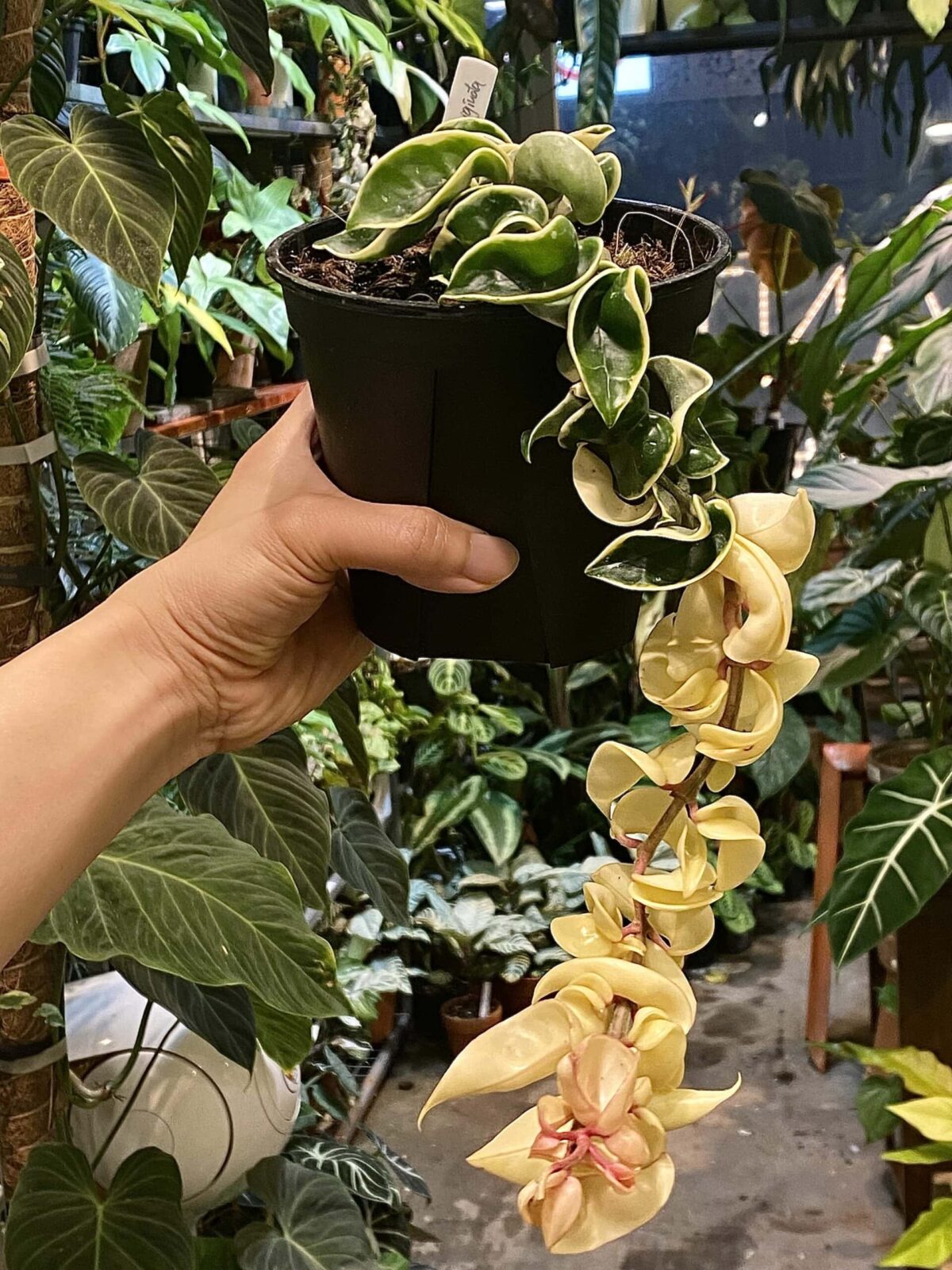
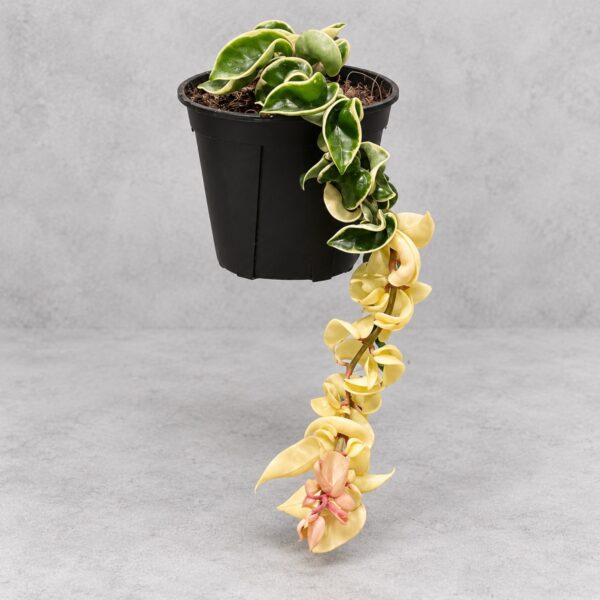
Shop this plantTwisted, curled leaves forming a distinctive rope-like vine, edged with creamy-white variegation — every strand looks like a piece of woven art, utterly unforgettable at first glance.
Brand: Plantjai
Origin & characteristics
'Compacta Albomarginata' is a variegated form of Hoya carnosa 'Compacta' (also known as the Hindu Rope Plant), belonging to the Apocynaceae family, genus Hoya. The parent species is native to Southeast Asia and Australia, where in the wild it grows epiphytically on large rainforest trees.
"Albomarginata" is Latin for "white margin," referring to variegation distributed along the outer edge of the leaf while the centre stays deep green, creating a striking contrast. The counterpart with central variegation is called "Mauna Loa." This cultivar's leaves are thick, waxy, tightly curled, and densely arranged along the stem, forming a distinctive twisted, rope-like vine of real ornamental value. Mature plants produce pink to lavender, star-shaped, waxy flowers with a deep red centre and a sweet honey-like fragrance, especially strong at night. Growth is slow to moderate, with vines reaching several feet in length. This variegated Hindu Rope Hoya is non-toxic to pets, so households with furry family members can grow it worry-free.
Light
This variegated cultivar needs 6–8 hours of bright indirect light daily to look its best. It tolerates gentle morning direct sun, but midday and afternoon strong sun must be avoided, or leaves will scorch — the white variegated portions are especially fragile. An east- or north-facing window is ideal; keep about 1 metre from a south-facing window or use a sheer curtain to filter light. Insufficient light causes the variegation to fade back to green, and growth becomes sparser.
Watering
Follow the "dry before you water" principle. During the growing season (spring/summer), water once the top 5 cm of soil dries out, roughly every 10–14 days; during dormancy (autumn/winter), this can extend to every 3–4 weeks. Use room-temperature water, watering slowly until it drains completely from the base, waiting 15 minutes and discarding excess runoff — never let it sit in standing water. The white variegated portion lacks chlorophyll and is more sensitive to excess moisture, prone to rot in leaves or roots — better dry than wet is the golden rule.
Soil & pot
Needs a mix with excellent drainage and breathability. Suggested recipe:
- 30% coarse orchid bark chunks
- 30% perlite or pumice
- 25% coco coir or sphagnum moss
- 15% horticultural charcoal
You can also add extra perlite, sphagnum moss, and orchid bark to a base of regular potting soil to boost drainage. Pots must have drainage holes — plastic or glazed ceramic pots both work. Note in particular: this variegated Hindu Rope Hoya prefers being slightly pot-bound, as an oversized pot tends to stay wet too long and cause root rot — when repotting, size up by just one pot size. Repot roughly every 2–3 years, ideally in spring at the start of the growing season. Never repot while it's flowering, or you risk losing the buds.
Temperature & humidity
The ideal temperature range is 18–26°C, with a daytime target above 21°C and nights that can drop to 15–18°C. It shouldn't stay below 10°C long-term in winter, as cold damage may result. The ideal humidity range is 40–60%, and typical household humidity is usually fine. If the air is too dry, leaf edges may crisp — placing the plant in a bathroom or other higher-humidity spot, or using a humidifier, helps. Avoid placing it near AC or heater vents.
Common problems
Q: Why is the variegation fading or disappearing?
A: Usually due to insufficient light. The white portions lack chlorophyll, and when light is scarce, the plant automatically produces more chlorophyll to compensate, causing the variegation to turn green. Moving the plant to a brighter spot should improve this.
Q: Why are the leaves curled so tightly, and how long until they uncurl?
A: This curled form is a natural trait of the cultivar. New leaves typically take several weeks to months to gradually unfurl, and full unfurling can take years. This slow process is exactly part of its charm.
Q: Why won't it flower?
A: This variegated Hindu Rope Hoya needs to be mature (usually 2–3+ years old) and receive enough light before flowering. Being slightly pot-bound actually helps encourage blooms. After flowering, never cut off the peduncle (flower spur), since it will bloom again from the same spot every year.
Q: The flower buds fell off before opening?
A: Most likely the plant was moved. Hoyas are very sensitive to environmental changes, so once buds start forming, avoid moving the pot. Overwatering or underwatering can also cause bud drop.
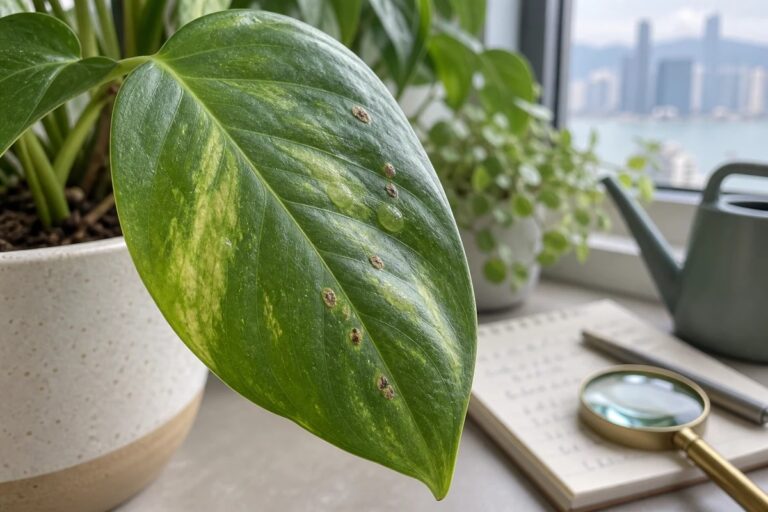
Q: Why are there brown spots on the leaves?
A: Usually sunburn, especially affecting the white variegated portions, which scorch most easily. Move the plant to an indirect light spot, avoiding direct midday sun.
Q: Is there any pest risk?
A: The curled leaves can harbor mealybugs, spider mites, and aphids in their folds. Check the leaf crevices regularly; if pests are found, wipe with a 70% isopropyl alcohol swab, or spray with insecticidal soap.
How to explain to customers
"This variegated Hindu Rope Hoya is a real classic — the leaves curl up like a rope, plus that white edge, it's genuinely gorgeous and distinctive! Just remember not to give it too much direct sun, especially since the white part scorches easily. Water sparingly, letting the soil dry out fully before watering again, and it prefers being a bit snug in its pot, so don't repot into something too big too soon. When it flowers, you get a lovely honey scent — really nice! It's non-toxic to cats and dogs, so bring it home with confidence!"
Fun facts
This variegated Hindu Rope Hoya is also known as the "Hindu Rope Plant," named for the way its twisted, curled leaves resemble a thick rope or braid. This unique curled form actually results from abnormal leaf development — normal Hoya leaves flatten out, but the 'Compacta' cultivar's leaves fail to fully unfurl during development, resulting in a permanently curled appearance. Like other Hoya carnosa cultivars, its flower spur (peduncle) is perennial — kept intact, it will bloom year after year, and some say the flowers look so precise they resemble artificial wax models, earning it the nickname "Wax Plant"!
Keywords
Hoya, variegated Hindu Rope Hoya, Hoya carnosa Compacta Albomarginata, Hindu Rope Plant, variegated plant, white margin, indoor plant, hanging plant, climbing plant, fragrant flowers, wax plant, pet safe, non-toxic plant, beginner-to-intermediate plant, curly-leaf plant, variegated cultivar
參考資料(想知來源可展開)
References
- Royal Botanic Gardens, Kew — Plants of the World Online: Hoya carnosa, https://powo.science.kew.org/
- ASPCA — Toxic and Non-Toxic Plant List, https://www.aspca.org/pet-care/animal-poison-control/toxic-and-non-toxic-plants
⚠️ Non-toxic to cats and dogs; sap may cause mild skin irritation in sensitive individuals.
Plantjai · Causeway Bay collector indoor plants · WhatsApp +852 66807550
Plantjai shop · In stock online
Hoya compacta albomarginata
HK$528.00
Hong Kong delivery · Causeway Bay pickup
For Hong Kong homes and offices. Stock and pricing follow the product page.
IN STORE NOW
Plants for this guide
Related plants in stock now — live prices, delivery or Causeway Bay pickup.
FREE PLANT ADVICE
Send us a photo before you change anything
WhatsApp a photo of the plant and your window light. Our Causeway Bay team will suggest care steps or plants that suit your space.
STORE · CAUSEWAY BAY
4/F, 39 Yiu Wa Street, Causeway Bay
Daily 12:30–8:00pm · ~3 min walk from Times Square
Map & directionsPlant Care