Yellow Leaves Are Not Always Thirst


In this guide (7)
- 01Describe the pattern before naming the cause
- 02A symptom table for choosing the next check
- 03Before watering, check the root ball rather than the calendar
- 04Why feeding is not the default response
- 05A symptom record beats changing treatments every day
- 06Should you remove yellow leaves, and when should you seek help?
- 07Further reading and next steps
A yellow leaf is a symptom, not an instruction to water or fertilise. Start with three questions: which leaves are affected, how is the pattern progressing, and is the root zone currently dry or wet? Both insufficient water and excessively wet roots can be associated with yellowing and wilting. Getting that distinction wrong can make the next watering harmful.
This guide provides an order of investigation, not a list of diagnoses to assign from a photograph. Its purpose is to identify the next useful check, avoid unnecessary disturbance and recognise when better diagnostic help is needed.
The lead image shows a nursery, not a yellow-leaf diagnostic case. Use the process below with the symptoms on your own plant.
Describe the pattern before naming the cause
“The plant is yellow” is too broad. Replace it with an observation: “One lower, older leaf is gradually yellowing while the two upper leaves remain normal,” or “Leaves in several positions have started yellowing over the past few days and the mix has stayed wet.” These descriptions help you choose a branch of investigation without pretending to be a final diagnosis.
The University of Maryland notes that several environmental stresses can cause yellowing and that the pattern and progression help diagnosis. Do not assume infection from every yellow leaf, or dismiss every recent arrival problem as acclimatisation.
Take a whole-plant photograph, then details of the leaf underside, the boundary of discolouration and the stem base. Use even light without filters. Close-ups need the whole-plant context to preserve information about leaf age and position.
A symptom table for choosing the next check
| Observation | Check first | Do not assume |
|---|---|---|
| One older leaf slowly yellows while growth stays stable | Whether the change remains isolated | Neither immediate disease nor indefinite reassurance is justified |
| Yellowing and wilt with a dry, lighter root ball | Actual root-ball dryness and whether it rewets evenly | Drooping alone does not establish thirst |
| Yellowing and wilt while the root zone is wet | Standing water, roots, recent watering and light | Do not add another watering as a test |
| Fading or scorch mainly on the window-facing side | Direct sun, heat beside glass and recent moves | It is not automatically a nutrient shortage |
| Spots, silvery marks, stickiness or webbing | Leaf undersides and growing points for identifiable pests | Spots alone do not select a pesticide |
| Yellow tissue between veins on young leaves | Roots, medium and feeding history; testing where useful | Colour alone does not confirm iron deficiency |
This is not a one-symptom–one-disease dictionary. Root damage, inadequate light and pests may coexist. Establish direct evidence first, then narrow the remaining possibilities.
Before watering, check the root ball rather than the calendar
Remove the inner pot and check for a submerged base. Combine pot weight, accessible moisture below the surface and changes since the last watering. If the root ball is genuinely dry and the plant needs water, rewet it evenly and let excess water drain. If it is still wet, do not respond with “just a small top-up”.
Wet roots can leave a plant looking thirsty when damaged roots cannot supply the foliage properly. The RHS houseplant diagnostic guide specifically warns that wilting from overwatering is easily mistaken for insufficient water.
Before unpotting, state what you need to establish: disintegrating roots, perhaps, or a completely congested root ball. Repeated root disturbance should not be an experiment to see whether something improves.
Why feeding is not the default response
Nutrient shortage can cause yellowing, but damaged roots, unsuitable light and excessive fertiliser can also affect foliage. Penn State’s diagnostic guidance distinguishes young-leaf, old-leaf and general yellowing while listing multiple possible causes. That is a reason to investigate, not to choose a fertiliser from colour alone.
Check the product, dilution, actual amount and application dates, including any slow-release fertiliser already in the mix. If the history is unknown, record that before adding another product. Persistent saturation, a soft stem base or recent root injury takes priority.
When other conditions are suitable and the growth and feeding history still support a nutritional problem, consider an appropriate adjustment. Medium or water testing can help where precision matters. An old leaf remaining yellow is not a reason to keep increasing the dose.
A symptom record beats changing treatments every day
Record these six items today and compare photographs from the same angle. If the condition is stable, a check a few days later may be useful. Rapid decline should be addressed immediately, not held until a recording interval ends.
- Plant identity, with any uncertainty stated.
- The positions and number of affected leaves, including any newly affected ones.
- Root-zone moisture, free-standing water and stem-base firmness.
- Recent relocation, repotting, air-conditioning, sunlight or fertiliser changes.
- The particular adjustment made, its date and its reason.
- Whether symptoms continue spreading and whether new growth is normal—not merely whether old yellow leaves turn green.
“Empty the retained water, keep other conditions stable, and track additional yellowing” is a traceable action. Changing mix, pruning roots, moving the plant, feeding and spraying on the same day makes useful interpretation difficult.
Should you remove yellow leaves, and when should you seek help?
Fully dead leaves can be removed with clean tools. A leaf retaining substantial green tissue does not automatically need removal because it is imperfect. Photograph symptoms before clearing them away. Pruning foliage does not solve standing water or unsuitable light.
Seek help for rapidly spreading yellowing, collapse, a rotting stem base, expanding lesions or similar symptoms appearing across several plants. Separate affected plants. Whole-plant images, underside close-ups, the condition of the medium and a care history are more useful than asking which nutrient one leaf is missing.
Reasonable recovery indicators are fewer new injuries, a suitable root environment and subsequent healthy growth. They are not a promise that every yellow leaf will regain its colour or that every plant must produce a leaf within seven days.
Further reading and next steps
IN STORE NOW
Plants for this guide
Related plants in stock now — live prices, delivery or Causeway Bay pickup.
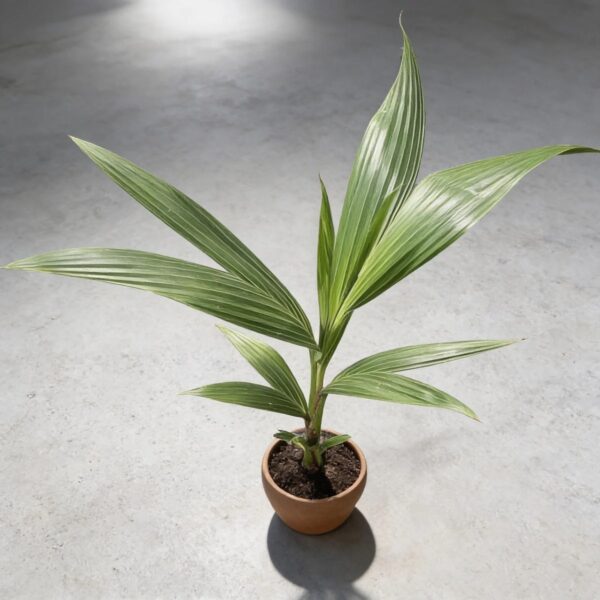
Cocos nucifera
Cocos nucifera
Original price was: HK$398.00.HK$298.00Current price is: HK$298.00.
In stock · store pickup
View plant
FREE PLANT ADVICE
Send us a photo before you change anything
WhatsApp a photo of the plant and your window light. Our Causeway Bay team will suggest care steps or plants that suit your space.
STORE · CAUSEWAY BAY
4/F, 39 Yiu Wa Street, Causeway Bay
Daily 12:30–8:00pm · ~3 min walk from Times Square
Map & directionsPlant Care