
How to Care for Semi Hydroponic Calathea in Hong Kong | Plantjai


Plantjai 植仔 · Care Encyclopedia
Semi Hydroponic Calathea
半水培竹芋 Semi-hydroponic Calathea
Hong Kong care guide — useful before you buy and after it arrives.
Shop this plantSay goodbye to watering worries — semi-hydroponic technique turns the notoriously fussy "princess of the plant world" into a genuinely easy houseplant!
Origin & characteristics
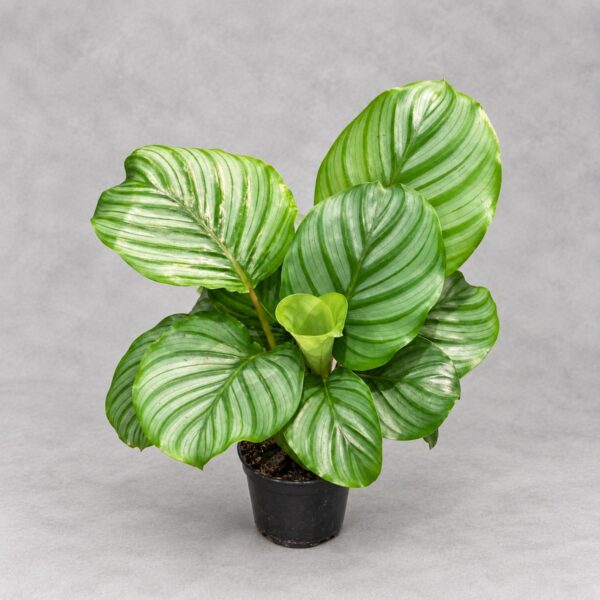
Plants in the family Marantaceae are native to the tropical rainforest understory of South America, Central America, and Africa, growing in the wild beneath tall tree canopies — which is why they've evolved such strict requirements for humidity and water quality. The commonly seen genus Calathea (now largely reclassified as Goeppertia) includes many popular species, such as the Calathea orbifolia, Peacock Calathea, and Rattlesnake Calathea, all famous for their gorgeous patterned foliage.
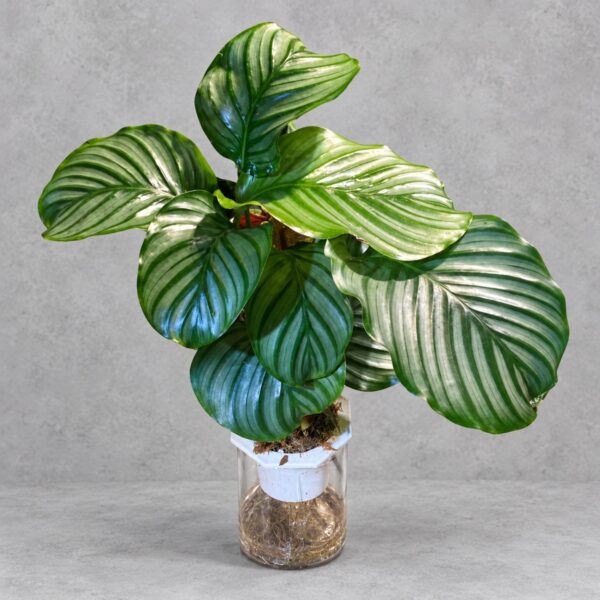
Calathea has long been jokingly called the "princess of the plant world," because it's so sensitive to environmental changes — traditional soil growing often leads to problems like crispy leaf edges and curling from improper watering. Semi-hydroponics is a growing technique that has gained popularity in recent years, using LECA (lightweight expanded clay aggregate) instead of soil, with a water reservoir at the base providing a steady water supply — dramatically simplifying Calathea care and making the "princess" far more approachable.
💡 Plantjai's pick: we've set up a dedicated semi-hydroponic system for our Calatheas, already acclimated and ready to go — take it home and enjoy genuinely easy care from day one.
Light
Calathea is native to the rainforest understory and is accustomed to soft light, so bright indirect light is the best choice.
- Ideal placement: 1-2 metres from an east- or north-facing window; a south- or west-facing window needs a sheer curtain to filter the light
- Light intensity: 800-1,500 lux is ideal
- Signs of adequate light: leaves lie flat, patterning is crisp, and colours are vivid
- Signs of insufficient light: leaf colour fades, patterning blurs, new leaves come in small
- Avoid: any intense direct sun — Calathea leaves scorch very easily, leaving permanent brown scarring
- Semi-hydro advantage: since the roots can draw water steadily, growth issues are less likely even with slightly lower light
Watering (semi-hydroponic system management)
The core of semi-hydroponics is a "dual water level" system, using LECA as the growing medium with a water reservoir layer at the base.
Daily water level management
- Reservoir height: maintain a water level of roughly 1/4 to 1/3 of the pot's height at the base
- Water change frequency: completely change the water every 2-3 weeks to prevent mineral buildup
- Water quality requirements:
- Best: filtered water, distilled water, or rainwater (Calathea is very sensitive to chlorine and fluoride)
- Second choice: tap water left standing for over 24 hours to let the chlorine dissipate
- Water temperature: use room-temperature water — avoid water that's too cold or too hot, which can shock the roots
Water-change steps
- Lift the inner pot out and empty all the old water from the outer pot
- Rinse the surface of the LECA balls with clean water, washing away any accumulated debris
- Pour in fresh filtered water up to the recommended level
- If feeding is due, add diluted nutrient solution at this point
Water quality warning signs
- Cloudy or foul-smelling water: change it immediately and check root health
- An oily film on the water surface: this may be root exudate or fertiliser residue — change the water and reduce fertiliser concentration
Soil & pot (semi-hydroponic system)
Medium: LECA (lightweight expanded clay aggregate)
- Material: fired, expanded clay pellets, 8-16 mm in diameter
- Advantages: sterile, breathable, reusable, and won't compact over time
- Cleaning: rinse new LECA thoroughly with clean water before use to remove surface dust
Pot structure
Semi-hydroponics requires a dual-pot system:
- Inner pot: a mesh net pot or a regular pot with drainage holes, holding the LECA and the plant
- Outer pot: a solid container without drainage holes, serving as the water reservoir base
- Water level visibility: ideally, the outer pot should be transparent or have a viewing window to easily monitor water level
Nutrient supply
- Fertiliser choice: use a dedicated hydroponic nutrient solution
- Feeding frequency: add at every water change, diluted to 1/4 to 1/2 of the recommended package concentration ("weak fertiliser, frequently applied")
- Winter adjustment: reduce feeding frequency to once a month when growth slows
Temperature & humidity
Temperature
- Ideal range: 20-28°C
- Minimum tolerance: 15°C — growth stalls below this
- Note: Calathea is extremely sensitive to temperature fluctuations — large swings from air conditioning can easily cause leaf curling
- Water-change temperature: always use room-temperature water — cold water shocks the roots
Humidity
- Ideal humidity: 60-80% — Calathea is a high-humidity plant
- Semi-hydro advantage: moisture evaporating from the LECA surface naturally raises the surrounding microclimate humidity
- Extra humidifying (dry season):
- Mist the surrounding air (avoid spraying directly onto the foliage)
- Use a humidifier
- Group with other plants
- Air-conditioned rooms: running the AC long-term dries out the air — a humidifier is recommended
Common problems
| Issue | Likely cause | What to do |
|---|---|---|
| Crispy, yellowing leaf edges | Humidity too low / water too hard / fertiliser too concentrated | Increase humidity, switch to filtered water, dilute fertiliser |
| Leaves open by day, curl at night | A normal "prayer plant" behaviour, though excessive curling may indicate too dry an environment | Slight curling is normal; significant curling means increase humidity |
| New leaves tearing as they unfurl | Insufficient humidity or unstable water supply | Ensure a stable water level, increase ambient humidity |
| Whole leaf turning yellow | Water quality issue / oxygen-starved roots / temperature too low | Check water quality, ensure the water level isn't too high, move to a warmer spot |
| Roots turning black and smelling foul | Root rot (water level too high or water quality has degraded) | Trim away rotten roots, thoroughly clean the system, lower the water level |
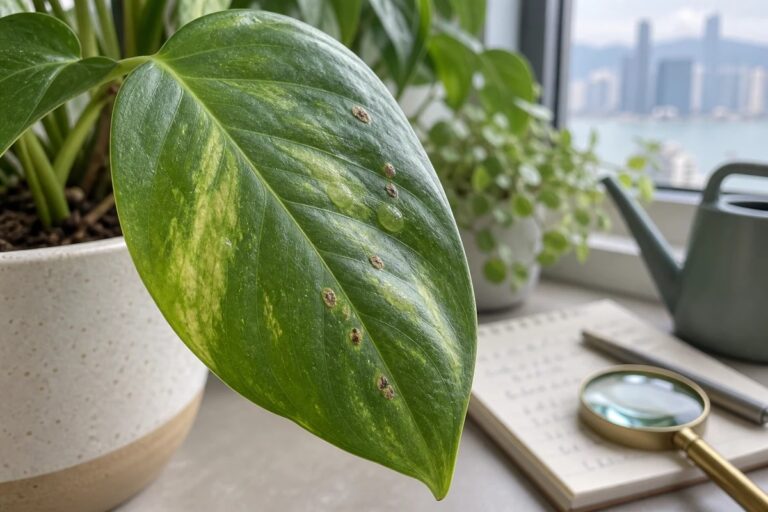
| Brown spots on leaves | Sunburn or fungal infection | Avoid direct light, improve airflow, avoid water pooling on foliage |
| Growth stalled | Temperature too low or insufficient nutrients | Keep above 20°C, apply an appropriate amount of hydroponic nutrient solution |
How to explain to customers
"Calathea has always had a reputation for being hard to grow, but our semi-hydroponic version solves all that hassle for you! You no longer need to think about when to water — just keep the water level at about 1/4 of the pot's height at the base, and change the water every two to three weeks. Remember to use filtered water, since Calathea is quite sensitive to the chlorine in tap water. Keep it somewhere indoors with soft light, avoid direct sun, and it'll grow beautifully. This semi-hydroponic system has already been set up for you in advance — take it home and it'll just work, genuinely a low-maintenance-lover's dream!"
Fun facts
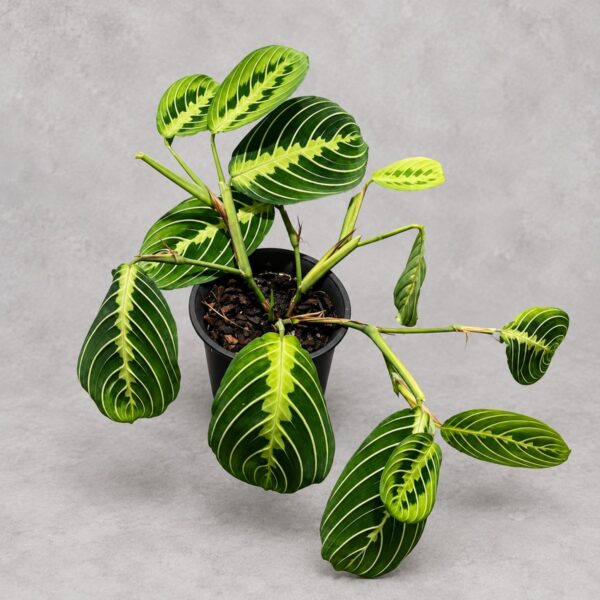
- Calathea has an endearing trait called "nyctinasty" (sleep movement): leaves lie flat during the day to absorb sunlight, then fold upward at night as if praying — which is why it's also known as the "Prayer Plant" in English. This is controlled by a specialised structure at the base of the leaf stalk called the pulvinus, which responds to the light-dark cycle.
- Semi-hydroponic technique originated in Dutch commercial greenhouses, initially used for large-scale foliage plant production, and has been adapted by plant enthusiasts in recent years for home growing, particularly well-suited to water-sensitive species like Calathea and Alocasia.
- Calathea's leaf undersides are typically deep purple-red, a colour that comes from anthocyanins, which help protect the lower leaf surface from intense light — an evolutionary adaptation to life in the rainforest understory.
Keywords
Semi-hydroponic Calathea, LECA growing, hydroponic Calathea, Calathea care, Prayer Plant, Calathea orbifolia, Peacock Calathea, painted Calathea, indoor foliage plant, low-maintenance plant, hydroponic nutrient solution, Plantjai
參考資料(想知來源可展開)
References
- Missouri Botanical Garden — Plant Finder: Calathea/Goeppertia, https://www.missouribotanicalgarden.org/PlantFinder/PlantFinderDetails.aspx
- Royal Botanic Gardens, Kew — Plants of the World Online: genus Goeppertia, https://powo.science.kew.org/
Plantjai · Causeway Bay collector indoor plants · WhatsApp +852 66807550
Plantjai shop · In stock online
Semi-hydroponic Calathea
Calathea
HK$138.00
Hong Kong delivery · Causeway Bay pickup
For Hong Kong homes and offices. Stock and pricing follow the product page.
IN STORE NOW
Plants for this guide
Related plants in stock now — live prices, delivery or Causeway Bay pickup.
FREE PLANT ADVICE
Send us a photo before you change anything
WhatsApp a photo of the plant and your window light. Our Causeway Bay team will suggest care steps or plants that suit your space.
STORE · CAUSEWAY BAY
4/F, 39 Yiu Wa Street, Causeway Bay
Daily 12:30–8:00pm · ~3 min walk from Times Square
Map & directionsPlant Care