
Plant Care

How to Care for Reynoutria Japonica Variegata in Hong Kong | Plantjai

Hong Kong care guide for Reynoutria Japonica Variegata.

Green-and-white splashed leaves that look like an ink-wash painting, paired with weed-level toughness — a striking, effortlessly easy foliage plant with real Eastern aesthetic appeal.

Origin & characteristics

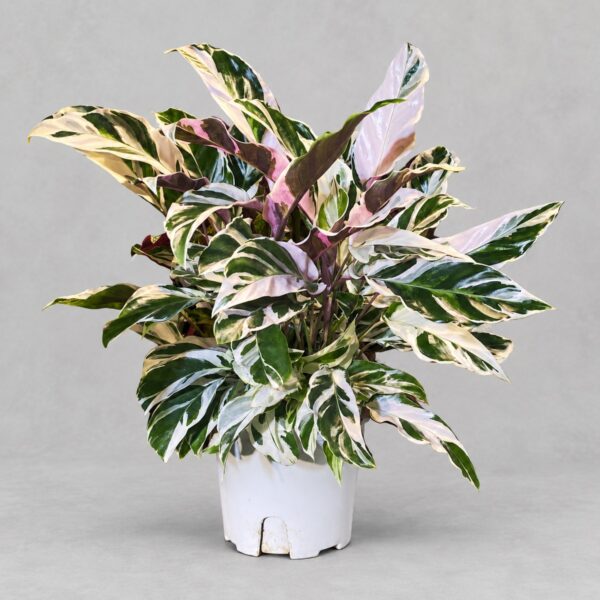
The species Reynoutria japonica is native to East Asia, including China, Japan, and Korea, a perennial herbaceous plant in the family Polygonaceae, genus Reynoutria, commonly found growing vigorously along roadsides and hillsides in the wild. 'Variegata' is its variegated horticultural cultivar, with leaves showing green interspersed with milky-white or cream patterning, and every leaf's variegation pattern is unique, giving it real ornamental value. Leaves are broadly ovate to heart-shaped with clear veining; the stem is reddish-brown and jointed, and the plant can reach 1-2 metres tall. Variegated knotweed grows somewhat slower than the plain green species, but its variegation greatly enhances its ornamental appeal, making it well suited to large indoor foliage displays or as a garden accent.

Light

  • Bright indirect light to partial sun: an east- or west-facing window is ideal
  • Protecting the variegation: intense direct light causes the white variegated portions to scorch and brown, so some shading is needed
  • Ample light aids variegation: too little light causes new leaves to come in fully green, losing the variegated effect
  • Indoor placement: 1-2 metres from a south-facing window, or beside a north-facing window

Watering

  • Water once the topsoil dries: insert a finger 2-3 cm into the soil — water once it feels dry
  • Spring/summer growing season: roughly every 5-7 days, keeping the soil lightly moist
  • Autumn/winter, reduce: roughly every 7-10 days, reducing further in cold weather
  • Drainage matters: though knotweed tolerates moisture well, potted plants must still have good drainage
  • The root system is vigorous and uses more water during the growing season

Soil & pot

  • Soil: a loose, fertile garden mix, recommended ratio peat soil : perlite : compost = 5:3:2
  • pH: neutral to slightly acidic (pH 6.0-7.0), quite adaptable
  • Pot: a larger, deep pot is recommended, since the root system develops quickly and vigorously
  • Repotting: once a year in spring, moving up one pot size and trimming any overly dense roots at the same time
  • Feeding: a balanced liquid fertiliser every 2-3 weeks during the growing season promotes lush foliage

Temperature & humidity

  • Ideal temperature: 15-28°C — a wide adaptable range
  • Cold tolerance: can briefly tolerate temperatures around 0°C, though prolonged cold causes the above-ground parts to die back
  • Humidity: 40-70% is fine — highly adaptable, and typical Hong Kong indoor humidity is generally sufficient
  • Winter care: after leaf drop, dead stems above ground can be trimmed away — new shoots will emerge in spring
  • Outdoors, the above-ground growth may die back in winter, but the roots usually survive

Common problems

IssueCauseWhat to do
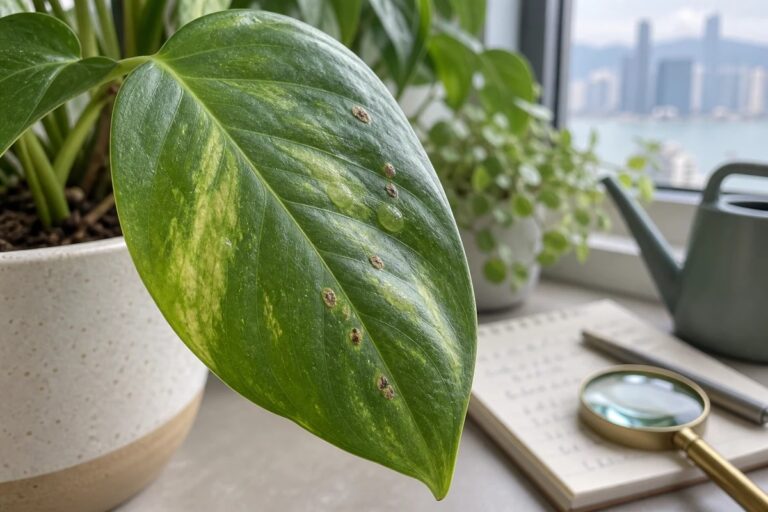
New leaves coming in fully green, variegation lostInsufficient lightMove to a brighter position
White variegated areas turning brownSunburnProvide some shading, avoid harsh midday sun
Growth too fast, becoming unrulyOverfeeding or lack of spacePrune to control shape, or move to a larger pot
Leaves yellowingOverwatering / root rot, or fertiliser deficiencyCheck drainage, fertilise appropriately
Leggy, weak stemsInsufficient lightIncrease light, prune leggy stems
Plant wiltingProlonged lack of water or root issuesWater promptly, check root health if needed

How to explain to customers

"Variegated knotweed has a wonderful Eastern aesthetic — its leaves come in green and white, like an ink-wash painting, and no two leaves are the same. What's really great about it is that it's extremely easy to grow and vigorous — you barely need to fuss over it and it'll grow beautifully on its own. It looks great in a living room or on a balcony, and it grows quickly, soon becoming a large statement plant. Just remember to give it enough indirect light, since that's what keeps the variegation looking its best on new leaves. It may drop some leaves in autumn/winter — don't worry, it'll sprout fresh growth again in spring."

Fun facts

In Japan, knotweed is called "Toranoo" (tiger's cane), because the patterning on its stem resembles tiger stripes. In traditional Chinese medicine, the rhizome of knotweed is a commonly used herbal remedy, believed to clear heat and invigorate blood circulation — though medicinal use requires proper professional preparation, since fresh knotweed contains anthraquinone compounds that can irritate the digestive system if consumed in large quantities. The variegation in this cultivar results from a loss of chlorophyll, and since the white portions can't photosynthesise, the plant actually grows more slowly in full sun than you might expect. In Europe and North America, the plain green species is classified as an invasive species due to its extraordinary vigour — capable of growing through concrete — but this variegated horticultural cultivar has been considerably tamed and is far more manageable.

Keywords

Variegated Japanese knotweed, Reynoutria japonica Variegata, Polygonaceae, knotweed, variegated plant, herbaceous foliage plant, ink-wash leaf, Eastern aesthetic, easy-care plant, indirect light, fast-growing plant, deep root system, perennial herb, cold-hardy plant

參考資料(想知來源可展開)

References

  • Missouri Botanical Garden — Plant Finder: Reynoutria japonica, https://www.missouribotanicalgarden.org/PlantFinder/PlantFinderDetails.aspx
  • Royal Botanic Gardens, Kew — Plants of the World Online: genus Reynoutria, https://powo.science.kew.org/

Plantjai · Causeway Bay collector indoor plants · WhatsApp +852 66807550

For Hong Kong homes and offices. Stock and pricing follow the product page.