
How to Care for Platycerium Coronarium in Hong Kong | Plantjai

Plantjai 植仔 · Care Encyclopedia
Platycerium Coronarium
Hong Kong care guide — useful before you buy and after it arrives.
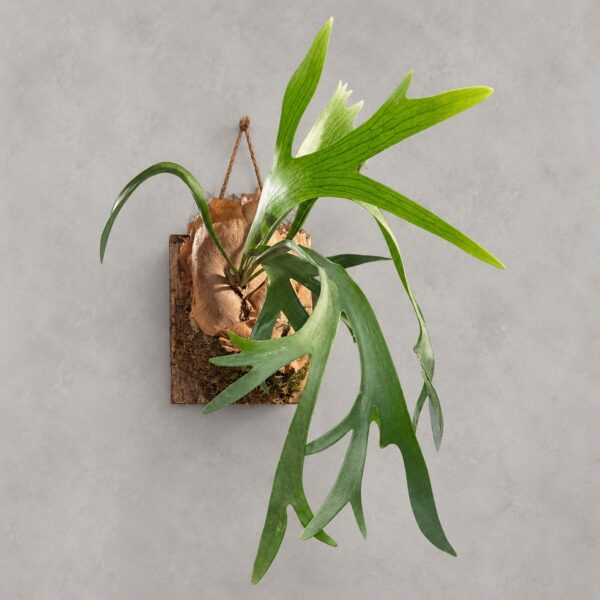
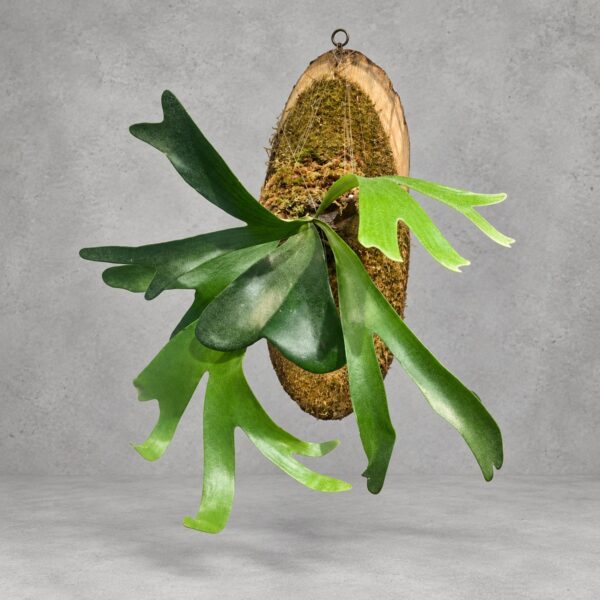
Shop this plantLong, drooping, forked fronds cascade like the fringe of a crown — mounted on a wall, it becomes a living, three-dimensional sculpture that grows more magnificent every year.
Origin & characteristics
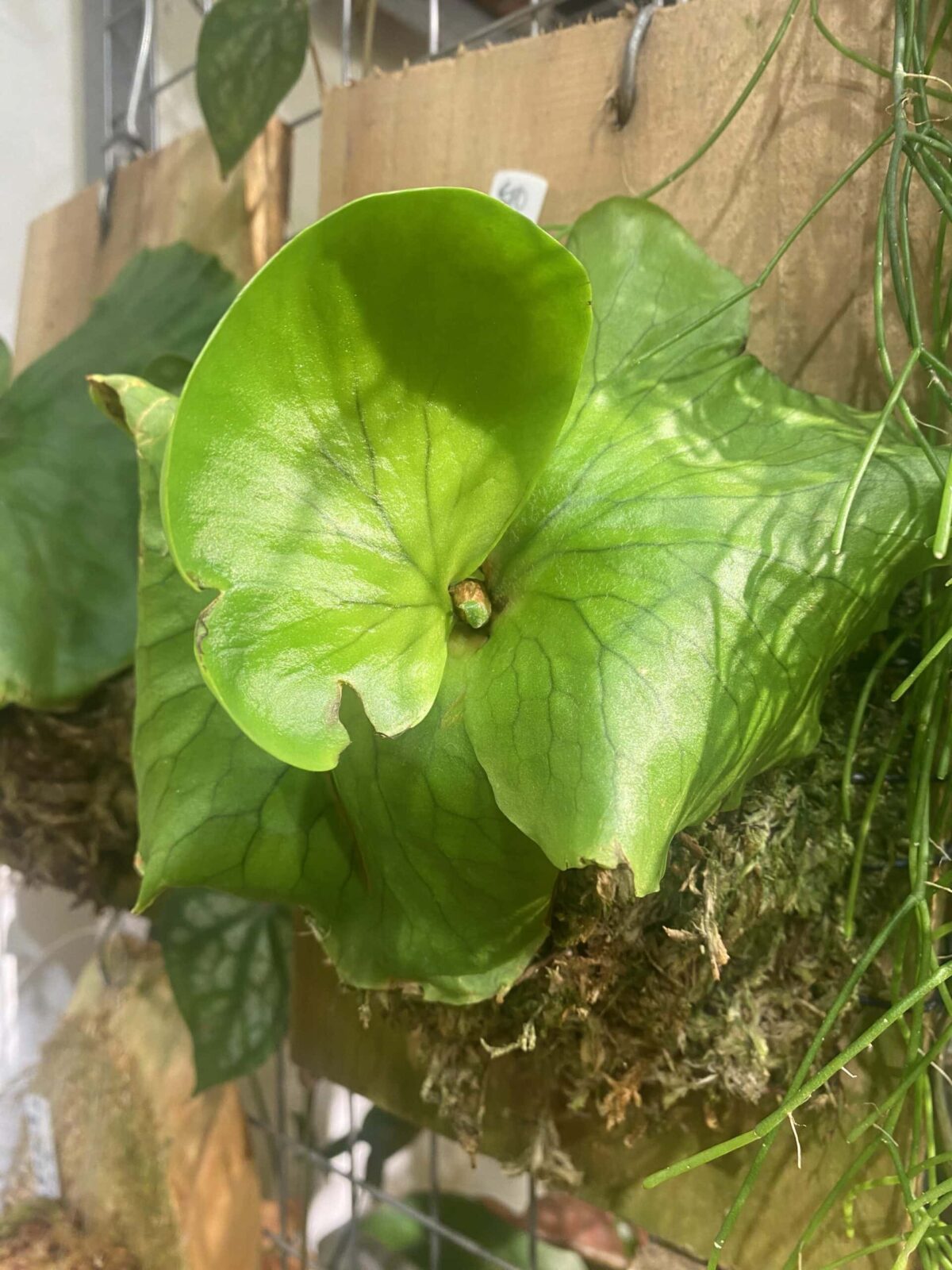
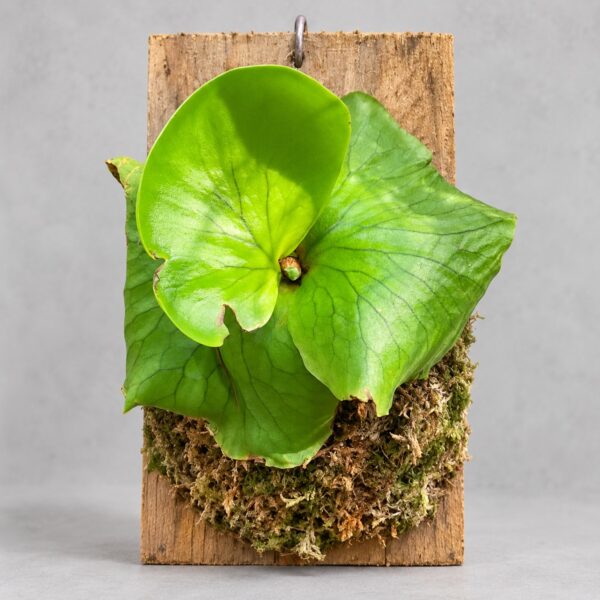
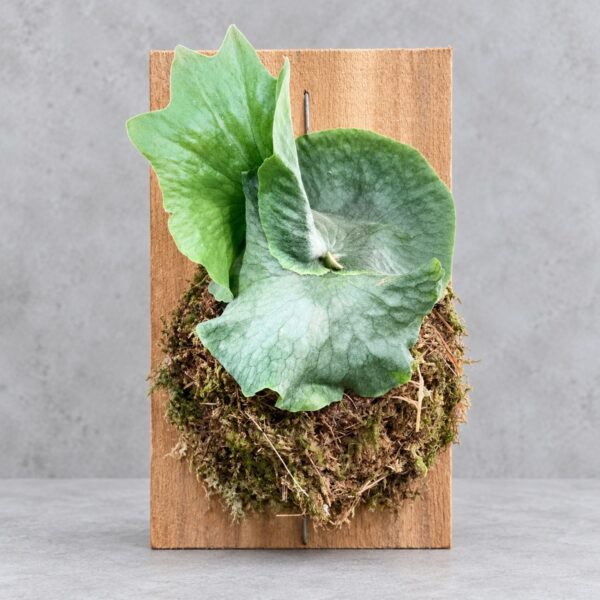
The crown staghorn fern is native to the tropical rainforests of Southeast Asia, widely distributed across Malaysia, Indonesia, southern Thailand, and the Philippines, and belongs to the epiphytic fern genus Platycerium in the family Polypodiaceae. Its defining feature is two completely distinct frond types: round, shield-shaped "basal fronds" that hug whatever it's mounted on, protecting the roots and gathering nutrients; and long, forked "fertile fronds" that hang elegantly downward, their form resembling the fringed tassels of a crown. A mature plant can reach 1-2 metres across, making a genuinely impressive statement. Growth is moderate, and the plant becomes more spectacular with age, making it one of the larger species in the Platycerium genus. The entire plant is non-toxic, safe for pets and children.
Light
- Ideal placement: bright indirect light beside an east- or north-facing window, or 2 metres or more from a south-facing window
- Tolerance range: soft indirect light of roughly 500-1,200 foot-candles
- Native environment: grows on large rainforest tree trunks, accustomed to soft light filtered through the canopy
- Avoid: direct sun — the thin, delicate fronds scorch easily
- Signs of insufficient light: basal fronds fade and thin, fertile fronds grow slowly with reduced forking
Watering
- Principle: keep the base of the basal fronds and the roots lightly moist, but never waterlogged
- Seasonal frequency:
- Spring/summer (growing season): soak or spray the roots roughly every 4-6 days
- Autumn/winter (slower growth): roughly every 7-10 days
- Recommended methods (staghorn fern-specific):
- Soak method: submerge the whole fern in room-temperature water for 10-15 minutes, letting the roots fully absorb water, then drain
- Spray method: spray directly at the base of the basal fronds and the roots, avoiding prolonged pooling
- Water quality tip: filtered water, rainwater, or tap water left standing overnight is ideal
- Key point: the centre of the basal (round) frond can be lightly moist but should never stay waterlogged long-term
Substrate & mounting
- Substrate choice: as an epiphyte, it doesn't need soil; common planting methods include:
- Board mounting: nailed to a wooden or bark board, with roots wrapped in sphagnum moss for support
- Hanging basket: placed in a loose, breathable hanging basket filled with sphagnum moss, coco coir, or bark chips
- Potted alternative: if a pot must be used, choose an extremely loose, breathable substrate such as pure bark chips or coconut husk
- Mounting materials: fishing line, nylon line, or soft wire (avoid copper wire, which damages ferns)
- Remounting timing: roughly every 1-2 years, or once the moss starts breaking down and drainage worsens
Temperature & humidity
- Ideal temperature: 20-28°C
- Minimum tolerance: around 13°C — growth stalls below this, and prolonged cold causes frost damage
- Humidity requirements: 60-80% — higher humidity helps fertile fronds stay vividly green and fork healthily
- Humidifying methods:
- Mist the surrounding air periodically (avoid prolonged direct spraying into the frond crown)
- Group with other plants to raise local humidity
- Use a humidifier to maintain stable humidity
- Ventilation: maintain gentle air circulation to avoid stuffy conditions that trigger fungal problems
Common problems
| Symptom | Likely cause | What to do |
|---|---|---|
| Basal fronds yellowing and blackening | Overwatering or waterlogging | Reduce watering frequency, ensure the substrate drains quickly |
| Fertile frond tips turning brown | Humidity too low or water too hard | Increase surrounding humidity, switch to filtered water or rainwater |
| New fronds growing slowly | Insufficient light or temperature too low | Move closer to a light source, keep the environment above 20°C |
| Basal frond not hugging the substrate | Insufficient humidity or loose mounting | Increase humidity, resecure with fishing line |
| Brown spots on frond undersides | Sunburn or fungal infection | Move away from strong light, improve air circulation |
| Sphagnum moss smelling foul and blackening | Overly wet and rotting | Replace with fresh moss, reduce watering frequency |
How to explain to customers
"The crown staghorn fern is one of the more dramatic staghorn ferns — its fronds hang down long and gracefully forked, and mounted on a wall it looks like a three-dimensional green relief sculpture. It doesn't need soil — we'll mount it on a board for you, and remember to water or spray the base and roots, keeping the centre of the round basal frond from staying waterlogged long-term. It'll be happier with higher humidity, so a bathroom or a kitchen window is a great spot. It's completely non-toxic, and the bigger it grows, the more impressive it becomes."
Fun facts
- The species epithet "coronarium" in Platycerium coronarium comes from the Latin "corona" (crown), describing how its drooping, forked fertile fronds resemble the fringed decoration of a crown
- The two frond types of a staghorn fern (basal and fertile) are known botanically as "dimorphic fronds" — a specialised adaptation to epiphytic life, where the basal frond gathers fallen leaves and rainwater and converts them into nutrients, while the fertile frond handles reproduction
- In Malaysia and Indonesia, large staghorn ferns are sometimes considered auspicious plants believed to bring good fortune and natural energy to a home
- Staghorn ferns as a genus have existed for tens of millions of years, with fossil records showing their ancestors were already evolving during the age of dinosaurs
Keywords
Staghorn fern, Platycerium, coronarium, crown staghorn fern, Polypodiaceae, fern, epiphyte, foliage plant, board mounting, indoor plant, indirect light, high humidity, non-toxic plant, hanging plant, dimorphic fronds, sphagnum moss cultivation, rainforest plant
參考資料(想知來源可展開)
References
- Missouri Botanical Garden — Plant Finder: Platycerium, https://www.missouribotanicalgarden.org/PlantFinder/PlantFinderDetails.aspx
- Royal Botanic Gardens, Kew — Plants of the World Online: genus Platycerium, https://powo.science.kew.org/
Plantjai · Causeway Bay collector indoor plants · WhatsApp +852 66807550
Plantjai shop · In stock online
Platycerium coronarium
Platycerium coronarium
HK$580.00
Hong Kong delivery · Causeway Bay pickup
For Hong Kong homes and offices. Stock and pricing follow the product page.
IN STORE NOW
Plants for this guide
Related plants in stock now — live prices, delivery or Causeway Bay pickup.
Platycerium alcicorne
Platycerium alcicorne (Willemet) Desv.
HK$580.00
In stock · store pickup
View plant
FREE PLANT ADVICE
Send us a photo before you change anything
WhatsApp a photo of the plant and your window light. Our Causeway Bay team will suggest care steps or plants that suit your space.
STORE · CAUSEWAY BAY
4/F, 39 Yiu Wa Street, Causeway Bay
Daily 12:30–8:00pm · ~3 min walk from Times Square
Map & directionsPlant Care