
New Home Plant Feng Shui Guide: A Dual Perspective from Science and Tradition


Introduction
Last month, a customer who had just moved into a new flat in Quarry Bay walked into the Specimen Archive, looking thoroughly confused. “Chief, my mum says I must put a money tree in the new place, my wife says no plants in the bedroom, and the internet says green plants purify formaldehyde — whose advice should I follow?” I smiled. This is the classic dilemma every Hong Kong new homeowner faces.
Welcome back to the PLANTJAI Specimen Archive. In this article, I want to use my dual perspective as archive chief — respecting the wisdom of traditional feng shui culture while keeping modern science close at hand — to give you a practical framework for plant placement in your new home. Whether you’re a devoted feng shui practitioner or a pure science believer, this guide will give you actionable answers.
Traditional Feng Shui Principles for Plant Placement
Feng shui treats plants as “living feng shui objects,” believing they can regulate energy flow, dissolve negative qi, and enhance fortune. Let’s go room by room.
Entryway: The First Impression of Energy
The entryway is the “qi mouth” of the home, and traditional feng shui places great importance on this space. Broad-leaf plants are believed to have the power to “block sha and gather qi,” filtering external negative energy and transforming it into harmonious flow. Money tree (Pachira aquatica) and lucky bamboo (Dracaena sanderiana) are classic choices here — their names alone carry auspicious meanings. But remember, entryway plants shouldn’t be too tall or dense, as this can obstruct qi flow. I recommend medium-sized potted plants no taller than chest height, placed to the side of the entrance rather than directly in the center.
Living Room: The Core Space for Gathering Energy
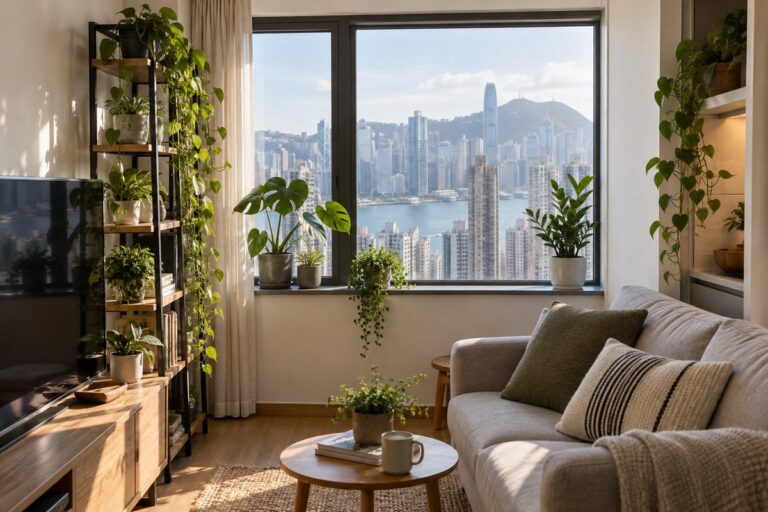
The living room is where family activity concentrates most, and feng shui emphasizes “gathering wind and accumulating qi” here. Large-leaf foliage plants like rubber plant (Ficus elastica) and monstera (Monstera deliciosa) are considered “wealth-gathering leaves,” symbolising abundant prosperity. Good positions include beside the TV cabinet, next to the sofa, or by windows. One detail: feng shui masters often say living room plants should be placed in pairs. From a visual psychology perspective, this also makes sense — symmetrical arrangements do create a sense of stability.
Bedroom: A Space Where Tranquillity Reigns Supreme
This is where feng shui and science most commonly clash. Traditional feng shui advises against too many plants in the bedroom, especially spiky varieties like cacti, which are believed to cause disputes. From a scientific angle, this advice also holds water — at night, plants respire, consuming oxygen and releasing carbon dioxide. While the effect of a single plant is negligible, placing ten or more in a small, sealed bedroom can indeed affect sleep quality. My recommendation: keep bedroom plants to one or two small specimens. Peace lily (Spathiphyllum) or snake plant (Sansevieria) are excellent choices — the latter is one of the few plants that releases oxygen at night.
Study: Green Support for Academic Success
Asparagus fern (Asparagus setaceus) has long been regarded as a “scholarship plant,” symbolising progress in studies and career. In feng shui, it’s placed at the front left of the desk (the green dragon position), representing steady advancement. Practically speaking, the delicate form of asparagus fern does help relieve visual fatigue during reading, and it takes up minimal desk space. Actually, any small, finely-leaved foliage plant works well in a study — the key is not to block the light.
Kitchen: A Herb Garden to Balance Fire Energy
The kitchen belongs to the “fire” element in feng shui, and placing “wood” element plants creates five-element balance. Herb varieties like mint, rosemary, and thyme are excellent choices — they tolerate heat and humidity, are handy for cooking, and add flavour to dishes. By the window is the best position, with diffused light and easy watering access.
The Scientific Perspective: Real Benefits of Plants in New Homes
Having covered tradition, let’s look at what modern science says.
Air Purification: What Did NASA’s Research Tell Us?
NASA’s landmark 1989 study confirmed that certain plants can absorb indoor volatile organic compounds like formaldehyde, benzene, and trichloroethylene. Newly renovated Hong Kong homes often have elevated formaldehyde levels, and this is where “air purification champions” like snake plant, pothos (Epipremnum aureum), and peace lily genuinely help. However, let’s be realistic — plant air purification is far less efficient than opening windows and mechanical ventilation systems. They are “supporting actors,” not the “main force.”
Stress Relief: The Healing Power of Green
Multiple psychology studies show that indoor plants lower levels of the stress hormone cortisol, while improving focus and creativity. Moving into a new home is already an intensely stressful period — renovation, packing, adapting to a new environment. Having a few green companions around, that feeling of “being surrounded by nature,” genuinely brings calm. In my view, this is the most real value plants offer.
Visual Buffering: Softening Hard Edges
New development flats typically feature hard lines and cool tones. The curves and green colour of plants soften these hard edges, injecting life into the space. This isn’t mysticism — it’s solid visual design principles at work.
Five Lucky and Practical Plants for Your New Home
Money Tree Pachira aquatica
The braided trunk symbolises rolling wealth. Tolerant of shade and drought, it’s perfectly suited to Hong Kong homes. It’s one of the few large plants I actively recommend to “plant beginners.”
Monstera Monstera deliciosa
Its broad leaves with龟甲-like splits carry the symbolism of longevity from the “turtle.” Its vigorous growth represents a thriving career. Placed in a living room corner, it immediately transforms the energy of the space.
Rubber Plant Ficus elastica
Its deep green, thick leaves exude stability. Dark colours in feng shui are believed to have a “home-protecting” effect. Particularly suitable for high-rise flats, balancing excessive yang energy.
Peace Lily Spathiphyllum
The white spathe resembles a raised sail, symbolising smooth sailing. Its remarkable tolerance for dark environments makes it ideal for entryways and corridors. It also effectively purifies formaldehyde and benzene from the air.
Snake Plant Sansevieria trifasciata
Its sword-like leaves grow upward, representing “rising steadily.” Even more valuable is that it’s one of the few plants performing CAM photosynthesis at night, making it suitable for bedrooms. Nearly impossible to kill — a lazy person’s blessing.
Timing and Considerations for Buying New Home Plants
When Is the Best Time to Buy Plants?
My recommendation: only bring in plants after renovation is complete and thorough cleaning has been done. Construction dust and chemicals aren’t friendly to plants either. If you’re in a hurry to move in, start with a few strong air-purifying varieties like snake plant and pothos, then gradually add more once you’re settled.
Important Considerations
– Understand your light conditions first: The difference between south-facing and north-facing windows is enormous. Placing a plant in the wrong spot will cause it to slowly decline.
– Less is more: It’s easy to impulse-buy too many plants when moving in. Start with three to five pots.
– Choose mature, healthy specimens: For feng shui “energy effects,” weak or sickly young plants cannot fulfil this role.
– Regular care: Withered plants are considered a major taboo in feng shui — either revive them or remove them promptly.
Conclusion
Feng shui and science may seem like parallel lines, but when it comes to plants, they often arrive at the same destination by different paths. Traditional wisdom tells us where to place what plants, while modern science explains why doing so benefits us. Whether you believe in one, the other, or both, what matters is that these green living beings bring vitality and warmth to your new home.
If you’re preparing to move in, you’re welcome to visit the PLANTJAI Specimen Archive. We’re on the 4th floor of Nam Hing Fong, 39 Yiu Wa Street, Causeway Bay, with over a hundred varieties of auspicious plants suitable for new homes. I’ll help you select the perfect green companions based on your flat’s orientation and light conditions. You can also browse our online plant catalogue at plantjai.com first.
May your new home be lush with greenery and abundant with blessings.
IN STORE NOW
Plants for this guide
Related plants in stock now — live prices, delivery or Causeway Bay pickup.
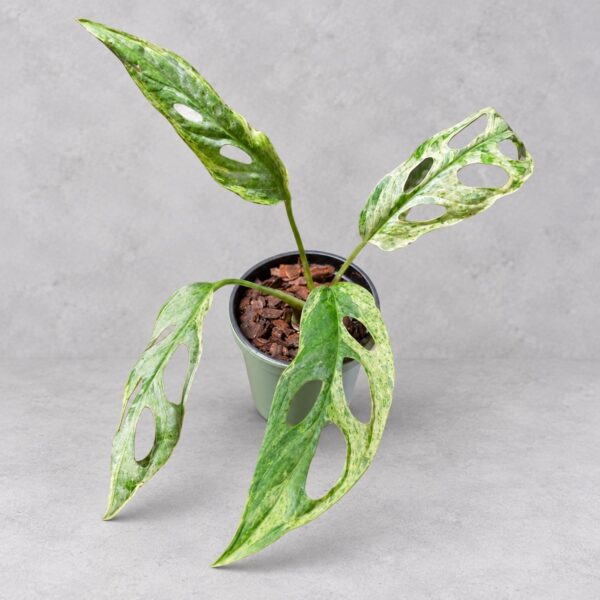
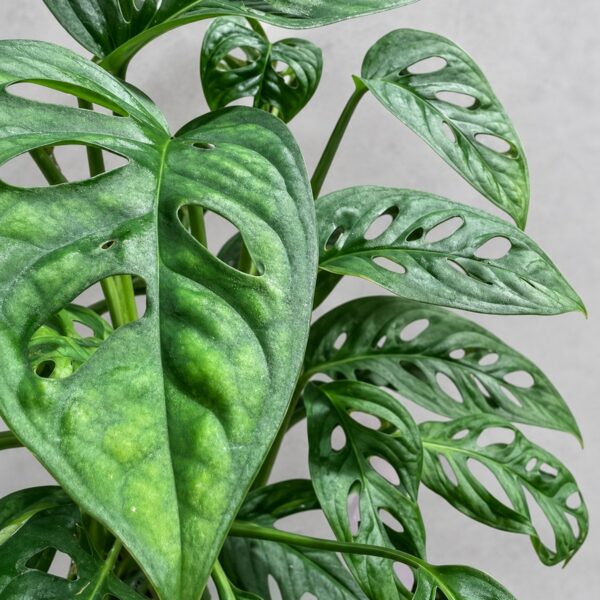
Monstera obliqua Peru
Original price was: HK$480.00.HK$280.00Current price is: HK$280.00.
In stock · store pickup
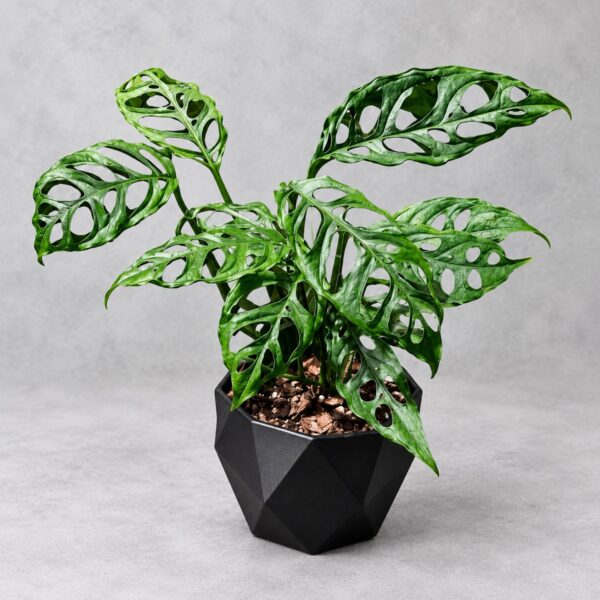
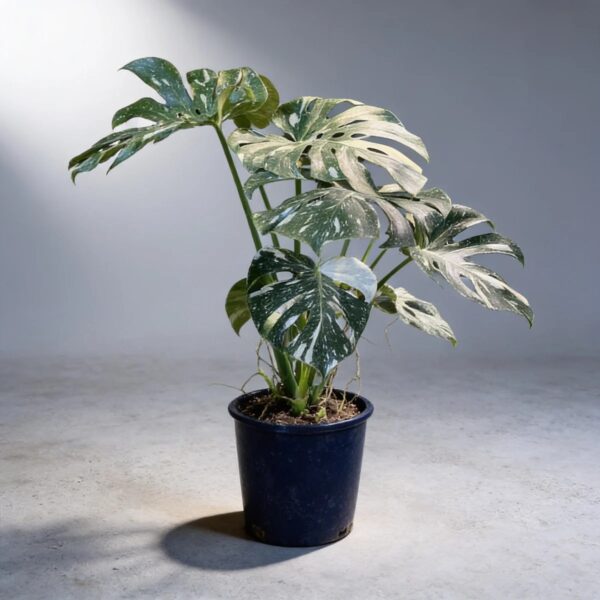
View plantMonstera 'Thai Constellation'
Monstera 'Thai Constellation'
from HK$280.00
In stock · store pickup
View plant
FREE PLANT ADVICE
Send us a photo before you change anything
WhatsApp a photo of the plant and your window light. Our Causeway Bay team will suggest care steps or plants that suit your space.
STORE · CAUSEWAY BAY
4/F, 39 Yiu Wa Street, Causeway Bay
Daily 12:30–8:00pm · ~3 min walk from Times Square
Map & directionsHK Plant Living