

Complete Pet-Friendly Plant Directory: Safe Green Choices for Cats and Dogs

The Hidden Danger in Foliage Plants: Why Some Are Toxic to Pets

Calcium Oxalate Crystals: Pain Like Needles
Many common foliage plants contain insoluble calcium oxalate crystals — a plant self-defence mechanism. When pets chew leaves, these needle-like crystals pierce oral and digestive tract mucous membranes, causing pain, excessive drooling, vomiting, and in severe cases, swelling that can obstruct breathing.
High-risk plants containing calcium oxalate crystals include:
– Monstera (Monstera deliciosa)
– Pothos (Epipremnum aureum)
– Alocasia / Taro (Alocasia / Colocasia spp.)
– Arrowhead vine (Syngonium podophyllum)
– Philodendron (Philodendron spp.)
– Dumb cane (Dieffenbachia spp.)
Reading this list, your heart may sink — aren’t these our bestselling varieties at the Archive? Yes. So the key isn’t giving up these plants, but learning “zoning management”.
Other Toxicity Mechanisms
Beyond calcium oxalate crystals, plants may contain saponins (like the mild toxicity in spider plants), alkaloids (like in azaleas), or cardiac glycosides (like in oleander). However, among common foliage plants, calcium oxalate crystals are the most prevalent toxic compound.
Pet-Friendly Plant Recommendations
The Fern Family: The Safest Group
Ferns are arguably the top choice for pet friendly plants. They lack calcium oxalate crystals, and even if pets nibble small amounts, no serious harm results.
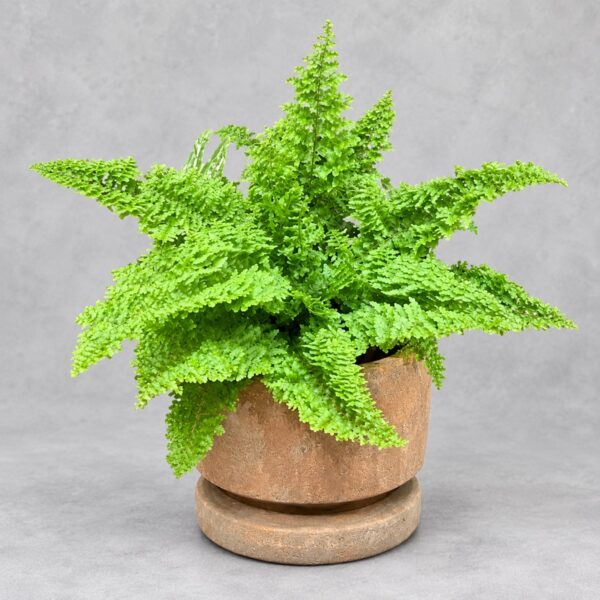
Boston fern (Nephrolepis exaltata ‘Bostoniensis’): The classic cascading fern with soft, elegant fronds. Cats may occasionally chew a leaf or two — it’s non-toxic, and usually tastes unpleasant enough to deter them. Boston ferns love humid environments, making them perfect for Hong Kong bathrooms or kitchens.
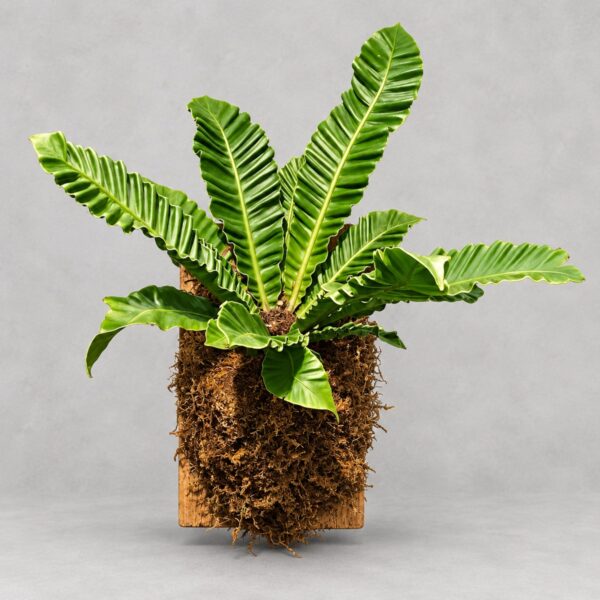
Bird’s nest fern (Asplenium nidus): Leaves radiate outward like a green bird’s nest. Without dangling fronds to swat at, it holds less appeal for cats. Strong shade tolerance makes it ideal for shelves or cabinet tops.
Staghorn fern (Platycerium spp.): Mounted on walls, staghorn ferns sit completely out of reach of cats and dogs — inherently the safest placement. And even if nibbled, they’re non-toxic.
Lady Palm (Rhapis excelsa) — An Upright Safety Barrier
The lady palm is one of the few beautiful, completely non-toxic upright foliage plants. Its vertical growth habit makes it difficult for cats to climb, and the stiffer leaf texture usually discourages interest. A tall lady palm in a living room corner is both safe and stately.
Spider Plant (Chlorophytum comosum) — Mildly Toxic but Usually Harmless
Strictly speaking, spider plants contain mild saponins and appear on some toxicity lists. But in practical experience, the vast majority of cats who chew a few leaves experience either mild vomiting or no symptoms at all. Spider plant stolons do attract cats to play — if concerned, trim the stolons or hang the plant where cats can’t reach.
Peperomia (Peperomia spp.) — Mini and Safe
Nearly all peperomias (watermelon peperomia, round leaf peperomia, silver peperomia) are non-toxic to pets. Their compact size suits placement on higher shelves, inherently out of pets’ reach. Shade-tolerant and drought-tolerant, they’re a win-win for beginners and pet owners.
Select Begonias (Begonia spp.) — Choose Carefully
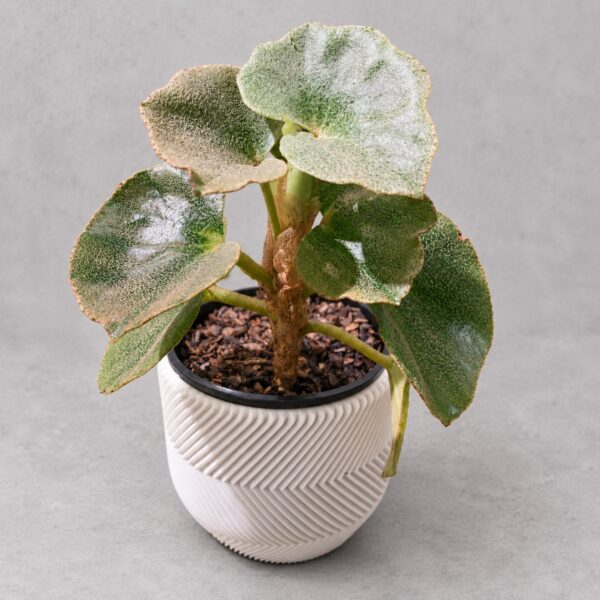
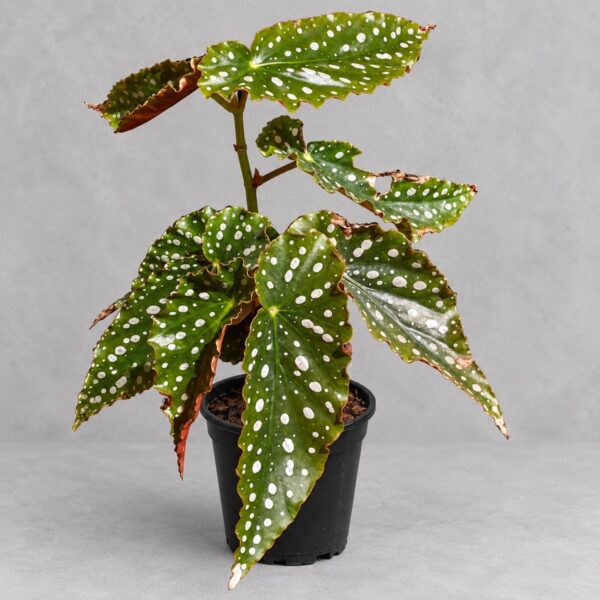
Begonias are more complex. Most have higher oxalate concentrations in roots, while leaves carry relatively lower toxicity. Since cats and dogs rarely dig up roots to eat, the risk is modest. To be safe, choose Rex begonias and place them in elevated positions. Completely avoid wax begonias (Begonia semperflorens), which carry stronger toxicity.
Other Safe Ferns
Maidenhair ferns (Adiantum spp.), sword ferns (Nephrolepis spp.), and holly ferns (Cyrtomium falcatum) are all non-toxic foliage plants, safe for worry-free coexistence with pets.
Special Note on Peace Lilies
Many readers ask: “Aren’t peace lilies toxic? Why do many websites list them as pet-friendly?”
Peace lilies (Spathiphyllum wallisii) do contain calcium oxalate crystals and are theoretically toxic to cats and dogs. However, in actual observation, peace lily leaves are thick-textured and taste unpleasant — the vast majority of cats and dogs abandon them after one nibble due to oral irritation, rarely consuming enough for serious poisoning. This falls into the “toxic but unappealing” category.
My advice: if your cat or dog has a plant-chewing habit, keep peace lilies out of reach. If your pets show no interest in plants, the actual risk is quite low.
How to Verify Plant Safety: ASPCA Database and Other Resources
The most reliable way to check cat safe plants and dog safe plants is the American Society for the Prevention of Cruelty to Animals (ASPCA) online database (aspca.org/pet-care/animal-poison-control). This database catalogues hundreds of common plants by toxicity, categorising them as “toxic” or “non-toxic” with detailed explanations of toxicity mechanisms and symptoms.
Beyond ASPCA, you can also consult:
– Pet Poison Helpline (US pet poison hotline website)
– Hong Kong Agriculture, Fisheries and Conservation Department plant toxicity information
– Your veterinarian directly
Before buying a plant, spend two minutes searching the species name plus “toxic to cats/dogs”. This small habit might save you an emergency vet visit at midnight.
Placement Strategies for Plants and Pets Coexisting
High Strategy: Use Vertical Space
Cats can jump high, but they usually show little interest in plants on high surfaces — unless leaves flutter in their jumping path. Placing plants on top of bookcases, high shelves, or hanging from ceilings is the most direct isolation method.
Hanging Strategy: Let Plants Float
Hanging baskets, macramé hangers, and magnetic wall planters are excellent ways to keep plants off the ground. String of hearts (Ceropegia woodii) and Boston ferns trailing from above are both beautiful and safe.
Zoning Strategy: Designate a “Plant Room”
If space allows, concentrate plants in one room (study or kitchen) and keep the door closed to pets. This is the most thorough solution, especially suited for collectors with extensive plant collections.
Training and Alternative Strategy
Place citrus peels around plant pots (cats hate citrus), spray pet deterrent, or grow a pot of cat grass (wheatgrass) in a corner as a “legal chewing zone” to redirect your cat’s attention.
Emergency Response for Plant Poisoning
If your pet unfortunately ingests a toxic plant, follow these steps:
Step 1: Immediately remove any plant material from the mouth, checking for lodged or embedded leaf fragments.
Step 2: Observe symptoms. Excessive drooling, vomiting, oral swelling, difficulty swallowing, breathing difficulty, lethargy — any of these warrants immediate veterinary attention.
Step 3: Photograph the chewed plant, note the species name (or photograph leaf characteristics), and bring this to the vet clinic. This helps the vet quickly identify the toxin and provide appropriate treatment.
Step 4: If you cannot reach a vet immediately, offer small amounts of water to dilute, but do not force-feed and do not induce vomiting without veterinary consultation.
Hong Kong 24-hour veterinary emergency services: SPCA, South Island Veterinary Centre, and Kowloon East Animal Hospital all provide emergency care. I recommend saving your nearest 24-hour vet’s phone number in your mobile for emergencies.
Conclusion
Plants and pets aren’t natural enemies — if we choose the right pet friendly plants, use smart placement strategies, and do basic safety homework. My home has three cats and over two hundred plants, and in seven years we’ve never had a serious poisoning incident. The key isn’t switching to “absolutely non-toxic” varieties only, but understanding risks and managing them.
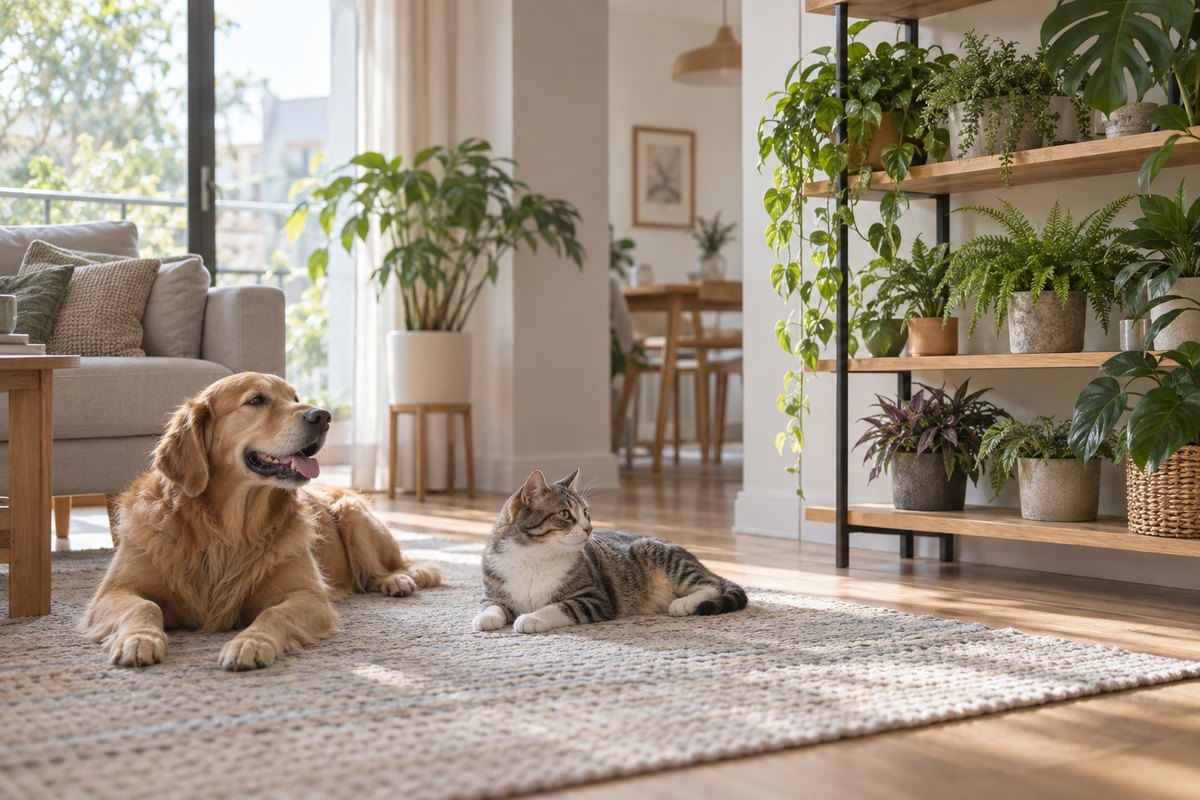
Your cat sunbathing by the window while a Boston fern sways gently nearby; your dog rolling on the living room floor while a lady palm stands quietly in the corner — this is the image I hold dear: green and furry, living in harmony.
Plantjai.com clearly marks our non-toxic foliage plants, and you’re welcome to shop online or visit our Specimen Archive at 4/F, Nam Hing Fong, 39 Yiu Wa Street, Causeway Bay. Let the curator design the safest green solution for your “plants + pets” household.
IN STORE NOW
Plants for this guide
Related plants in stock now — live prices, delivery or Causeway Bay pickup.
Asplenium nidus var plicatum
Original price was: HK$428.00.HK$180.00Current price is: HK$180.00.
In stock · store pickup
View plant
FREE PLANT ADVICE
Send us a photo before you change anything
WhatsApp a photo of the plant and your window light. Our Causeway Bay team will suggest care steps or plants that suit your space.
STORE · CAUSEWAY BAY
4/F, 39 Yiu Wa Street, Causeway Bay
Daily 12:30–8:00pm · ~3 min walk from Times Square
Map & directionsHK Plant Living


