

Beginner’s Guide: The 10 Easiest Foliage Plants to Grow in Hong Kong

5 Principles for Beginners Choosing Plants
Before the list, here are the fundamentals for selecting easy care plants:
Shade tolerance: Many Hong Kong flats have limited natural light. Choosing species that survive in medium to low light dramatically improves your success rate.
Drought tolerance: Beginners’ most common mistake is overwatering. Plants with water-storing roots or high drought tolerance offer more margin for error.
Adaptability: Some species are incredibly sensitive to temperature and humidity fluctuations, yellowing at the slightest change. Beginners should choose “hardy” varieties.
Fast growth rate: Quick growth means visible changes, which means satisfaction. It also means the plant can recover quickly from occasional mishaps.
Pest resistance: Some species are an all-you-can-eat buffet for bugs (I’m looking at you, calathea). Before learning to identify pests, choose disease-resistant varieties.
Top 10 Beginner-Friendly Foliage Plants
1. Pothos (Epipremnum aureum) — The Definition of Unkillable
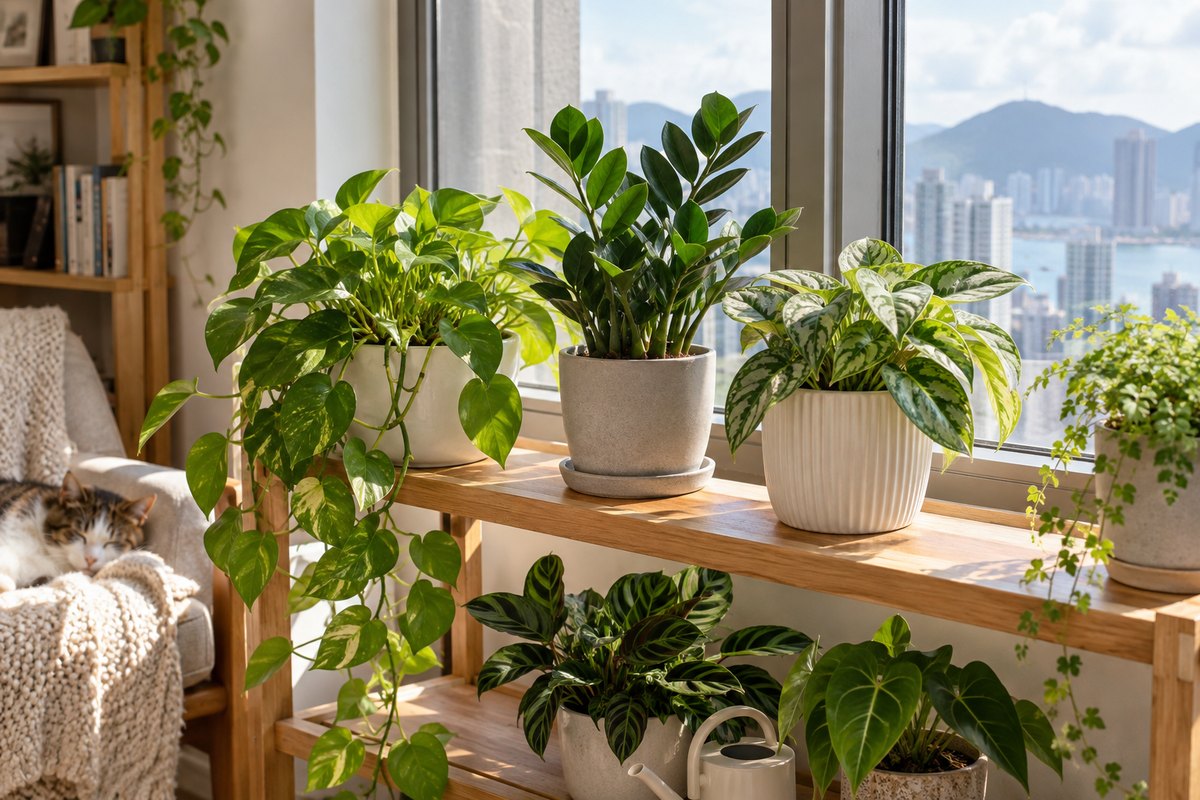
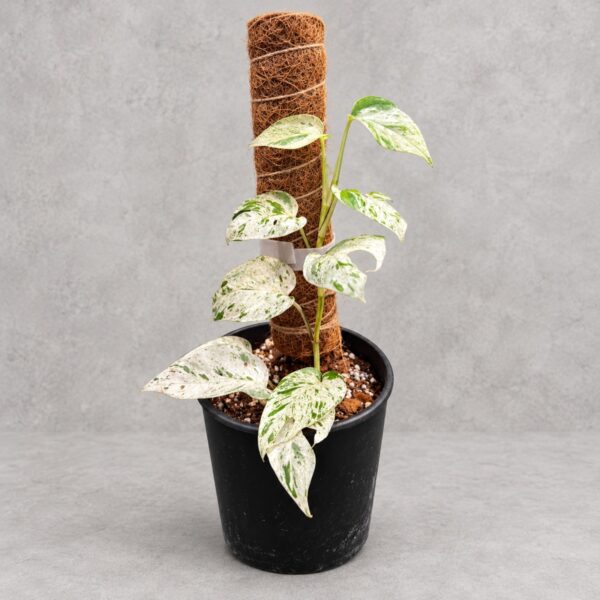
If houseplants had an Olympics, pothos would enter every event and still come home with medals. Shade-tolerant, drought-tolerant, humidity-tolerant, nutrient-tolerant, with astonishing growth speed. Thrives in water or soil, trails or climbs, drapes across desks. Its only “enemy” is root rot from overwatering. My advice: water only when dry; for water culture, change water every two weeks. Pothos has countless cultivars — Marble Queen, Snow Queen, Neon — collecting them is endlessly fun.
Care essentials: Indirect light to partial shade; water thoroughly when soil dries; monthly light feed during growing season.
2. Snake Plant (Sansevieria trifasciata) — The Lazy Person’s Choice
I have a theory: the hardest plant in the world to kill is the snake plant. It can go a month without water, survive in near-total darkness, and endure direct AC blast. It also releases oxygen at night, making it ideal for bedrooms. Varieties range from the common grey-green banded type to cylindrical “cylindrica”, dwarf “Starlight”, and dark “Black Coral”.
Care essentials: Any light condition; water only when completely dry; rarely needs fertiliser; better dry than wet.
3. Peace Lily (Spathiphyllum wallisii) — The Shade-Blooming Beauty
Peace lilies are among the few foliage plants that flower reliably in low light. The white spathe is elegant and pure. Its shade tolerance is top-tier on this list — it can flower three to four metres from a window. When it needs water, leaves droop slightly — a polite reminder from a considerate roommate.
Care essentials: Low to medium indirect light; water when surface dries; enjoys humidity, mist regularly; phosphorus-potassium fertiliser during blooming.
4. English Ivy (Hedera helix) — Trailing Poetry
English ivy’s climbing instinct makes it the best choice for creating “green curtains”. Shade-tolerant and relatively cold-hardy (compared to other tropicals), it performs well in air-conditioned rooms too. Give it something to cling to or trail from, and it rewards you with spreading stems. Note: toxic to cats and dogs — hang out of reach in pet homes.
Care essentials: Bright indirect light to partial shade; water when surface is slightly dry; rotate pot regularly for even growth; air circulation is important.
5. Rubber Plant (Ficus elastica) — Presence in a Single Plant
If you want a plant that “looks impressive” without demanding much care, choose the rubber plant. Its thick, leathery leaves have a sculptural quality, and the ‘Burgundy’ cultivar’s deep purple-red foliage is a designer favourite. Moderate growth rate, strong environmental adaptability, and it won’t complain if you occasionally forget to water.
Care essentials: Bright indirect light; water thoroughly when dry; wipe dust from leaves regularly; monthly feed during growing season.
6. Spider Plant (Chlorophytum comosum) — The Symbol of Endless Life
Spider plants produce baby plantlets at the ends of trailing stolons, hanging like a cascade of tiny green waterfalls. These babies can be snipped off and rooted directly — the satisfaction of turning one plant into ten is huge encouragement for beginners. Spider plants are also excellent air purifiers, particularly effective at absorbing formaldehyde.
Care essentials: Low to medium light; water when surface is slightly dry; stolons can be cut for propagation; avoid direct strong sunlight.
7. Arrowhead Vine (Syngonium podophyllum) — The Colour-Changing Chameleon
Arrowhead vine’s leaves transform with age — juvenile leaves are arrow-shaped, maturing into hand-like lobed forms, like a magic trick. Colours range from pure green to pink, cream, and even near-black ‘Pink Splash’. Low light requirements, fast growth, and excellent material for desktop potting.
Care essentials: Low to medium indirect light; water when surface is slightly dry; humid environments enhance leaf colour; regular pruning maintains shape.
8. Chinese Evergreen (Aglaonema spp.) — The Artist of Indoor Light
Chinese evergreens are my highly recommended newbie foliage plants. Their leaf variegation is incredibly diverse — red, pink, silver, and green interweaving like watercolour paintings. Highly shade-tolerant, they survive in offices with only artificial lighting, and pests are extremely rare. ‘Red Valentine’ and ‘Pink Beauty’ are the most popular recent cultivars.
Care essentials: Low to bright indirect light; water when surface is slightly dry; avoid cold drafts; monthly light feed during growing season.
9. Corn Plant (Dracaena fragrans) — The Large Space Anchor
The corn plant is one of the few large plants suitable for beginners. Its upright trunk topped with a rosette of long leaves evokes a tropical resort vibe. Tolerant of various light levels, drought-resistant, and slow-growing — you won’t need frequent repotting. Place it in a living room corner; one plant carries the entire space.
Care essentials: Bright indirect light to partial shade; water thoroughly when dry; watch humidity if leaf tips brown; rotate pot periodically.
10. Fiddle-Leaf Fig (Ficus lyrata) — The Advanced Beginner’s Diploma
I place fiddle-leaf fig at number ten because it’s slightly fussier than the others — it needs better light and is more particular about watering. But if you can keep the previous nine alive, the fiddle-leaf fig is your certificate of graduation from “beginner village”. Its violin-shaped leaves are design icons — the supermodel of the indoor plant world.
Care essentials: Bright indirect light (not too dim); water thoroughly when dry but never waterlogged; stable location — dislikes frequent moving; wipe leaves regularly.
5 Common Beginner Mistakes
Mistake 1: Killing with Kindness — Overwatering
Ninety percent of plant deaths relate to overwatering. Remember: most plants prefer slightly dry over soggy. The finger test is your best tool — stick two knuckles into the soil, water only if dry.
Mistake 2: Hot and Cold — Constantly Moving Plants
Plants need stability more than you realise. Frequent relocation forces constant readjustment to new light and temperature, causing stress. Choose a spot and let it settle for at least a month before considering changes.
Mistake 3: Not Knowing Soil Moisture — Judging by Surface Only
Dry surface doesn’t mean dry underneath; wet surface doesn’t mean wet underneath. Invest in a simple soil moisture meter (costs about HK$15) or develop the habit of probing with your finger.
Mistake 4: Too Much of a Good Thing — Over-fertilising
Beginners see slow growth and dump on fertiliser, achieving the opposite effect. Remember “better weak than strong” — halve the concentration on the fertiliser package for safer results.
Mistake 5: No Homework — Buying Without Checking Your Environment
Before buying, observe what kind of light each spot in your home receives. A south-facing windowsill and a west-facing one are completely different. Do your homework first rather than buying then scrambling to fix problems.
Conclusion
Keeping plants is ultimately about building a relationship. You give it light, water, and a little attention; it returns greenery, oxygen, and the joy of watching life grow. Each of these 10 Hong Kong beginner plants is a personally verified “safe bet” from the Specimen Archive curator.
Stop calling yourself a “plant killer”. Pick up a pothos or snake plant, place it by your window, and check on it weekly. Three months later, you’ll spot that newly unfurled leaf — the plant’s way of saying “thanks, I’m doing fine.”
Plantjai.com stocks a complete range of Hong Kong indoor plant recommendations, each with detailed care cards. Our Causeway Bay Specimen Archive welcomes you to feel the leaves with your own hands, check the soil moisture, and let me help you choose the perfect “first plant”.
IN STORE NOW
Plants for this guide
Related plants in stock now — live prices, delivery or Causeway Bay pickup.
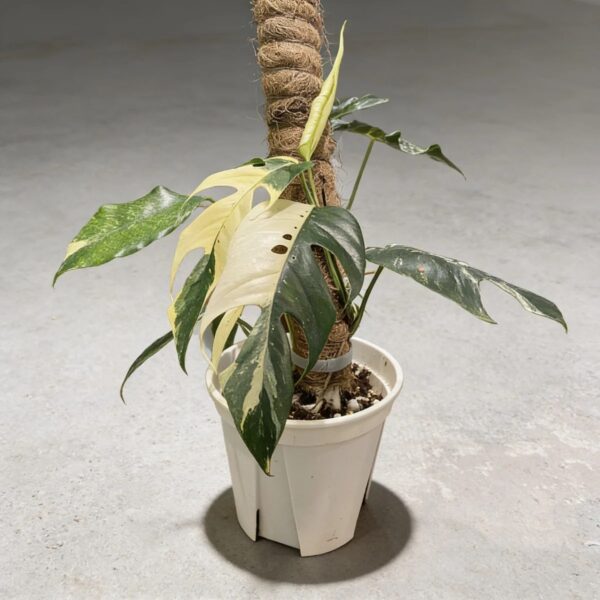
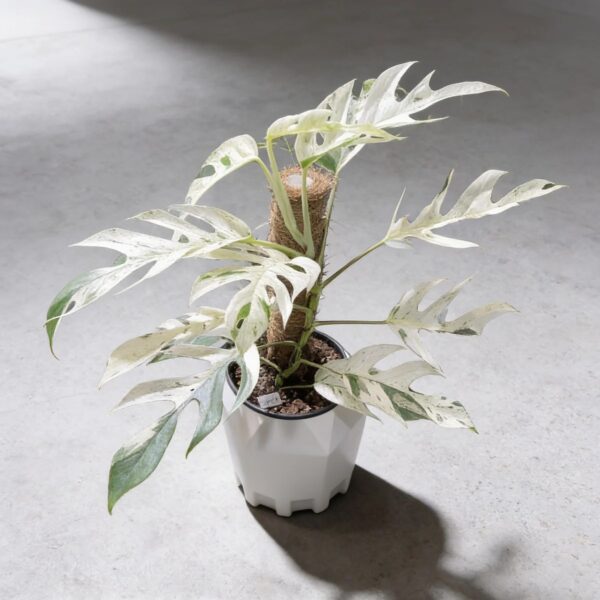
Epipremnum pinnatum variegated
Original price was: HK$2,680.00.HK$480.00Current price is: HK$480.00.
In stock · store pickup
View plant
FREE PLANT ADVICE
Send us a photo before you change anything
WhatsApp a photo of the plant and your window light. Our Causeway Bay team will suggest care steps or plants that suit your space.
STORE · CAUSEWAY BAY
4/F, 39 Yiu Wa Street, Causeway Bay
Daily 12:30–8:00pm · ~3 min walk from Times Square
Map & directionsHK Plant Living


