

AC Room Plant Survival Guide: Office and Commercial Space Greening Solutions

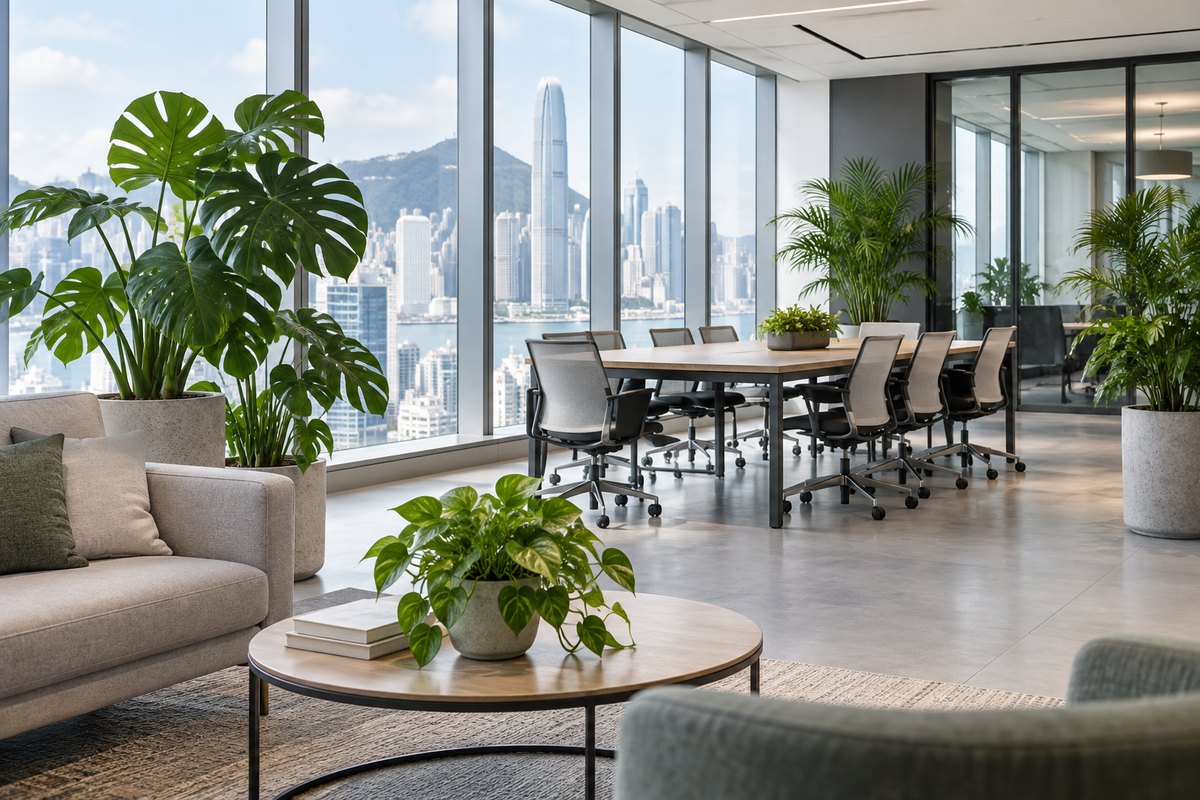
Three Plant Killers in Air-Conditioned Rooms

Killer One: Low Humidity
Air conditioners extract moisture from the air while cooling. In Hong Kong offices running summer AC, indoor humidity often drops to 25-35% — lower than the Sahara Desert’s average. For foliage plants native to tropical rainforests accustomed to 60-80% humidity, this is an extreme arid environment. Brown leaf tips, curling leaves, and stalled growth are classic signs of insufficient humidity.
Killer Two: Constant Temperature and Temperature Swings
AC rooms maintain 22-25°C, which tropical plants can handle. The problem is temperature fluctuation — when AC shuts off at night, temperatures can spike to 30°C, then plummet back to 23°C when AC fires up in the morning. These dramatic swings stress plants. Worse still is direct AC vent blasting; cold air can freeze-damage leaves within days.
Killer Three: Lack of Natural Light
Modern offices rely on artificial lighting, with many desks over ten metres from the nearest window. Standard LEDs may feel comfortable to human eyes, but lack the red and blue wavelengths plants need for photosynthesis. Prolonged “light starvation” causes plants to turn pale, grow leggy, produce smaller leaves, and eventually decline.
Desk Plants: Small but Mighty Warriors
Snake Plant (Sansevieria trifasciata) — King of the AC Room
If one plant represents the ultimate AC room plant, it’s the snake plant. Native to arid African regions, it’s naturally adapted to low humidity. Shade-tolerant, drought-tolerant, AC-blast-tolerant — it was practically made for offices. It can survive a month without water in a desk corner, and it releases oxygen at night, especially beneficial for meeting rooms with long closed-door sessions.
Peace Lily (Spathiphyllum wallisii) — The Glowing Shade-Lover
Peace lilies are among the few foliage plants that flower reliably in low light. Their shade tolerance is remarkable — they can sustain growth on desks five metres from windows. Though they prefer humidity, weekly misting and keeping soil lightly moist is enough for AC room survival. The white spathes are like little lamps in a drab office environment.
Pothos (Epipremnum aureum) — The Indestructible
If you kill a pothos, you probably need to reconsider your watering habits (usually: too much). Water-cultured pothos is particularly office-friendly — a glass jar, some clean water, and a water change every week or two is all the care needed. Low light requirements, undemanding humidity, the perfect zero-failure starter office plant.
English Ivy (Hedera helix) — Cascading Green Curtains
On a shelf or cabinet top beside your desk, let English ivy trail naturally downward for instant dimensional interest. It grows slowly but steadily in AC rooms; regular misting keeps leaves vibrant. Note: it’s toxic to cats, so skip this one if your office has bring-your-pet days.
Large Plants for Commercial Spaces
Reception and Lobby: Presence Makes the First Impression
The lobby is the face of Hong Kong office greening. This space calls for tall, impactful species that aren’t fazed by AC. Dragon trees (Dracaena marginata) in groups of three beside revolving doors are a classic choice — slender trunks with red-edged leaves, utterly modern. Rubber plants (Ficus elastica) ‘Burgundy’ with their deep purple-red leaves create striking contrast in cool-toned commercial interiors.
Meeting Rooms: Greenery That Inspires Creativity
Meeting rooms are typically sealed, run AC for hours, and have weak lighting. Suitable choices include snake plants (shade-tolerant air purifiers), peace lilies (adding softness), and small Chinese evergreens (Aglaonema spp.). Avoid strongly scented or pollen-producing plants — you don’t want sneezing fits during important presentations.
Open-Plan Offices: Green Screens That Define Space
Large plants can delineate different work zones more beautifully than partitions while improving air quality. Corn plants (Dracaena fragrens) and areca palms (Dypsis lutescens) are ideal choices. Intersperse every third or fourth green plant with a flowering peace lily for visual variety against the green backdrop.
Benefits of Plants in the Office: Beyond Good Looks
Air Purification: Natural Air Fresheners
NASA’s landmark 1989 study confirmed that numerous foliage plants effectively absorb formaldehyde, benzene, trichloroethylene, and other VOCs. In Hong Kong offices, new carpets, photocopiers, and painted walls continuously release these compounds. Snake plants, peace lilies, pothos, and rubber plants are all recognised purification powerhouses.
Stress Reduction and Improved Focus
Washington State University research found that employees in offices with plants showed approximately 12% lower stress indices and about 15% better focus test scores compared to plant-free control groups. This isn’t mysticism — green is the easiest colour for the human visual system to process, and viewing plants induces a state of “soft attention” similar to meditation.
Enhanced Corporate Image
An office with well-maintained plants communicates “we care about details, we value employee wellbeing, we have taste”. For client-facing commercial spaces, this is a soft-power investment that costs relatively little.
Practical AC Room Plant Care Tips
Positioning: At Least One Metre from AC Vents
Whatever the species, never place plants directly under AC vents. Cold air blast causes leaf dehydration and freeze damage. Ideal placement is over one metre from vents with access to indirect natural light. If your office has no windows, consider grow lights — six to eight hours daily is sufficient.
Watering: Less Is More
In AC rooms, water evaporates slowly, so plants need less frequent watering than usual. Most air-conditioned plants only need watering every seven to ten days. The finger test always applies: water only when soil is dry. Consider topping soil with perlite or sphagnum moss to slow evaporation while increasing local humidity.
Boosting Humidity: Small Tricks, Big Impact
– Place a small water dish beside plants (add pebbles to increase surface area)
– Mist with a spray bottle once or twice weekly, ideally in the morning so leaves dry before evening
– Group several plants together to create a locally humid microclimate
– If company budget allows, a small USB humidifier on the desk works best
Conclusion
An air-conditioned room isn’t a death sentence for plants — if we choose the right species, position them correctly, and adjust our care routines. A snake plant quietly growing in a desk corner may outlive and out-perform a sun-bathed fiddle-leaf fig by the window.
Commercial space plant installation isn’t mere decoration — it’s an investment in workplace quality. When you’re dizzy staring at Excel spreadsheets, look up at that vibrant green pothos on your desk — it’s there, reminding you that growth still exists in the world, and some things are worth waiting for more patiently than KPIs.
Plantjai.com offers Hong Kong office greening consultation services, with the Specimen Archive curator personally assessing your space and curating the perfect green companions for your office. Our Causeway Bay store also stocks a wide selection of plants proven to thrive in air-conditioned environments — come visit and let’s chat.
IN STORE NOW
Plants for this guide
Related plants in stock now — live prices, delivery or Causeway Bay pickup.
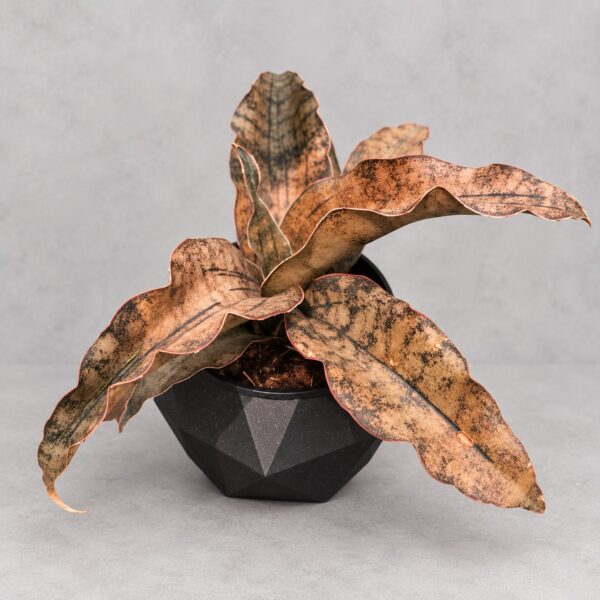
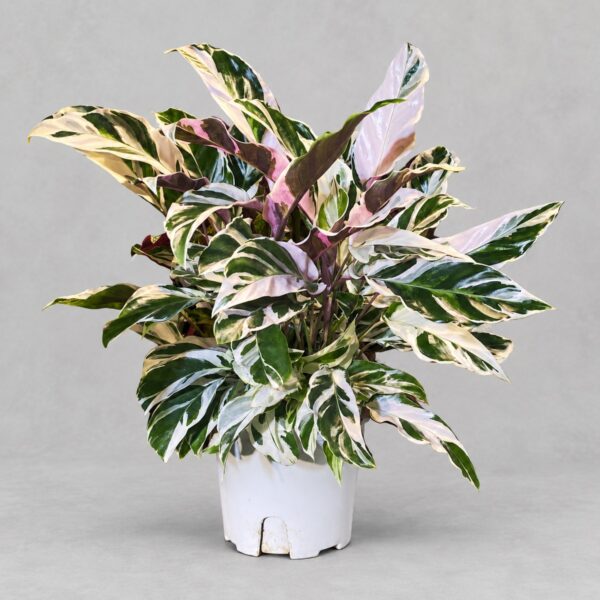
Aglaonema pictum 'Tricolor'
Aglaonema pictum 'Tricolor'
from HK$88.00
In stock · store pickup
View plant

FREE PLANT ADVICE
Send us a photo before you change anything
WhatsApp a photo of the plant and your window light. Our Causeway Bay team will suggest care steps or plants that suit your space.
STORE · CAUSEWAY BAY
4/F, 39 Yiu Wa Street, Causeway Bay
Daily 12:30–8:00pm · ~3 min walk from Times Square
Map & directionsHK Plant Living


