
Grow Light Buying and Usage Guide: How Can Artificial Light Replace Sunlight?

Introduction
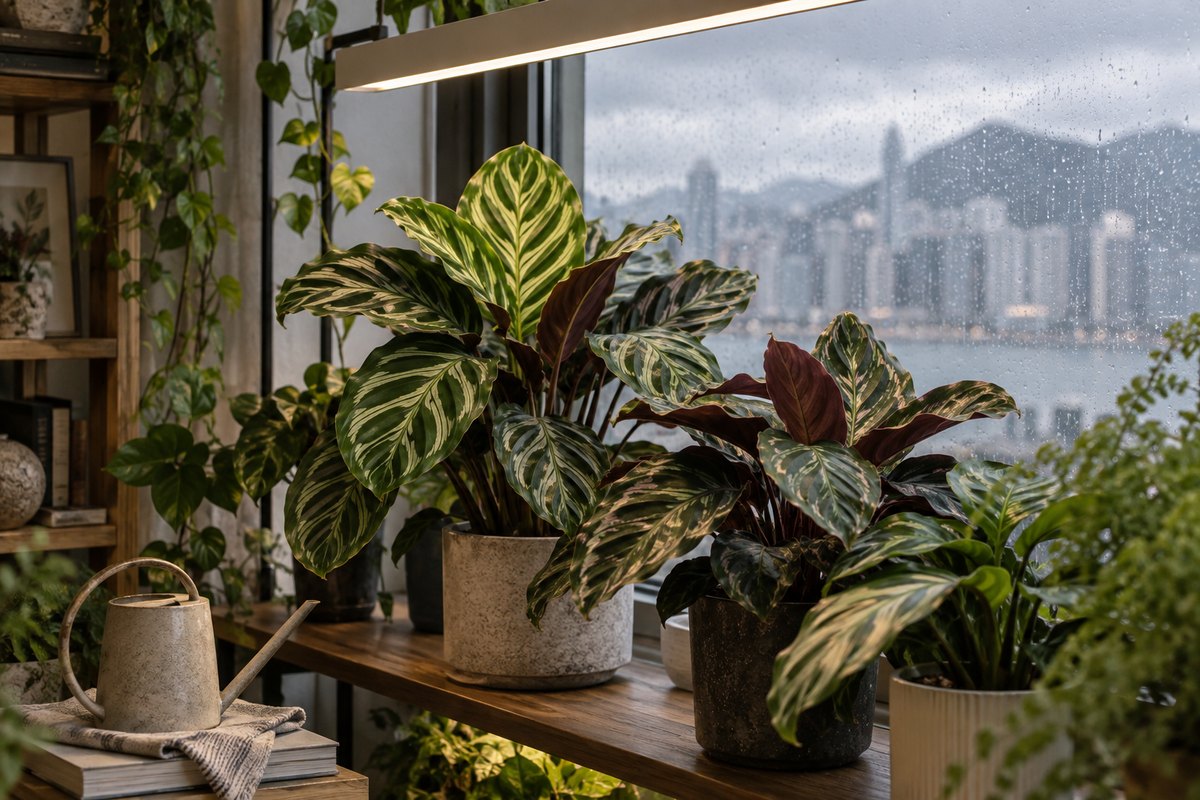
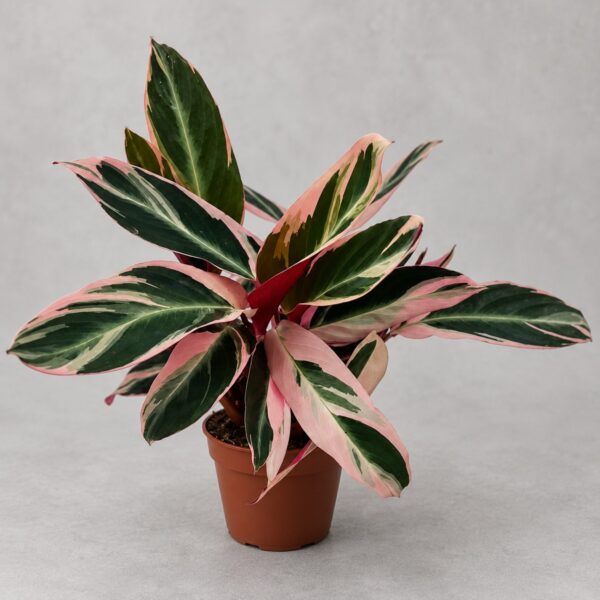
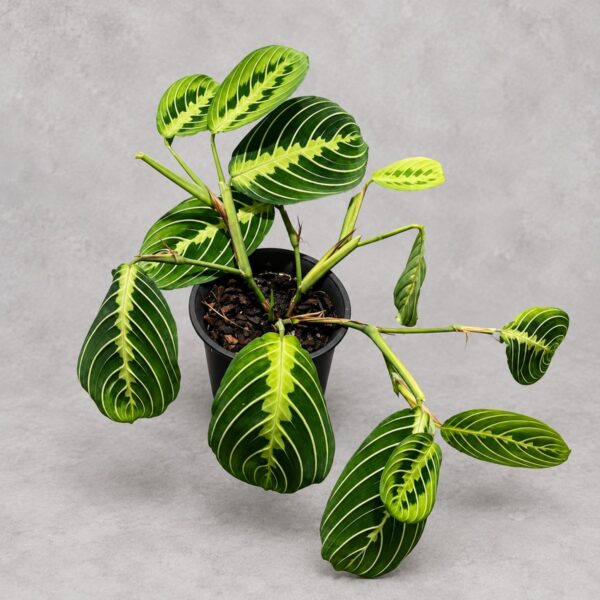
Last winter, something happened in the Archive. A row of Calathea near the window—their normally lush green leaves began developing strange patterns, and new leaves stubbornly refused to unfurl. I checked watering, humidity, fertilising—everything seemed fine. What was wrong? Finally, I looked up at the window—three consecutive weeks of overcast skies had made sunshine a scarce commodity.
This is the fate of indoor plant enthusiasts in Hong Kong: humid springs, typhoon summers, gloomy autumns and winters. Days of consistent sunlight are few and far between. In this context, grow lights cease to be optional and become essential. Yet the market is flooded with options—full spectrum, red-blue, PPFD—enough to make your head spin. Today, let’s approach this from the plant’s perspective and make sense of artificial lighting.
What Light Do Plants Need? Understanding the Spectrum
Sunlight may appear white, but it’s actually a spectrum composed of different wavelengths. Plants respond differently to each wavelength, with two bands being particularly critical:
Blue Light (400–500nm): The Leaf’s Architect
Blue light promotes chlorophyll synthesis, encouraging robust stem and leaf growth while inhibiting excessive stem elongation (what’s known as “etiolation” or legginess). Plants grown under adequate blue light develop compact form, deep green colouration, and attractive overall structure. For those of us growing foliage plants, blue light is indispensable.
Red Light (600–700nm): The Flowering and Fruiting Driver
Red light primarily drives photosynthesis and is the key wavelength for promoting flowering and fruiting. For foliage plants, red light remains important as the workhorse of photosynthesis—plants absorb red light with the highest efficiency.
Full Spectrum: The Closest Match to the Sun
A “full spectrum” grow light mimics natural sunlight’s spectral distribution, incorporating blue and red light along with intermediate wavelengths like green and yellow. For foliage plants, full spectrum is the most balanced, most natural choice, rendering true leaf colours without the strange purplish cast produced by pure red-blue lights.
Our experience at the Archive: full spectrum LED grow lights are best suited for Hong Kong indoor environments, catering to both the plants’ needs and human eyesight.
Grow Light Types Compared: LED, T5, and Traditional Bulbs
LED Grow Lights: The Clear First Choice
The maturation of LED (light-emitting diode) technology has transformed plant lighting. LED grow lights offer too many advantages: low power consumption (one-tenth to one-third of traditional bulbs at equivalent brightness), long lifespan (twenty to fifty thousand hours), minimal heat emission (can be placed close to plants without scorching leaves), compact size, and tuneable spectrum.
Many LED grow lights now employ “SMD chip-on-board” design, as thin as a panel, directly installable atop plant cabinets or beneath shelving—ideal for space-constrained Hong Kong homes.
T5 Fluorescent Tubes: A Budget-Friendly Alternative
T5 tubes were once the standard for indoor growing—inexpensive with uniform light distribution. Downsides include higher power consumption, shorter lifespan (approximately ten thousand hours), requiring dedicated fixtures, and containing trace mercury requiring proper disposal. If budget is tight, T5 remains usable, but LED proves more economical long-term.
Traditional Bulbs: Not Recommended
Standard incandescent or compact fluorescent bulbs are unsuitable as grow lights—their spectrum skews heavily toward yellow-green, which plants utilise inefficiently, while generating excessive heat and consuming more power. Don’t repurpose your desk lamp as a grow light; the results will disappoint while inflating your electricity bill.
Buying Guide: Understanding Those Numbers and Specifications
Walk into an electronics store or search online for “Hong Kong grow light” and you’ll be bombarded with specifications. These are the parameters that truly matter:
PPFD (Photosynthetic Photon Flux Density)
This is the core metric measuring a grow light’s actual effectiveness, expressed in μmol/m²/s—the number of photosynthetically active photons landing on each square metre per second. Simply put, higher PPFD means more photosynthesis the plant can perform.
Recommended PPFD ranges for foliage plants:
– Shade-tolerant plants (e.g., Calathea, Aglaonema): 50–150 μmol/m²/s
– Partial sun plants (e.g., Monstera, Philodendron): 150–300 μmol/m²/s
– Sun-loving plants (e.g., Ficus, succulents): 300–500+ μmol/m²/s
Manufacturers typically specify PPFD “at XX cm distance.” This figure is far more meaningful than wattage alone.
Coverage Area and Beam Angle
Grow light intensity disperses and weakens with distance. Consider your plant arrangement area and choose a fixture with adequate coverage. Generally, LED lights at thirty centimetres distance cover a diameter of approximately thirty to fifty centimetres, depending on fixture design.
Heat Dissipation Design
Although LEDs generate less heat than traditional lighting, high-power LED grow lights still require heat management. Choose products with aluminium heat sinks or fan cooling to extend lifespan and maintain consistent light output. We’ve learned this lesson at the Archive: a budget fixture without proper heat dissipation lost nearly half its brightness within six months.
Power Consumption (Wattage)
Wattage directly impacts your electricity bill. At Hong Kong’s electricity rate of approximately HK$1.3–1.5 per kWh, a twenty-watt LED grow light running twelve hours daily costs roughly HK$10–15 per month—less than a cup of coffee. If multiple lights are needed, consider centralising plants in a cabinet so one fixture can serve multiple specimens more economically.
Grow Light Recommendations for Hong Kong’s Compact Spaces
With Hong Kong homes measuring every square foot, not everyone has a dedicated plant room. Here are setup solutions for different spatial constraints:
Compact plant cabinet/shelving: Choose slim LED panels (twenty to forty watts), installed via magnetic attachment or hanging chains at shelf tops. The market offers LED light bars specifically designed for IKEA MILSBO or FABRIKÖR display cabinets—attachable beneath shelves, aesthetic and practical.
Single specimen supplementation: For one large plant needing light (such as a living room Ficus lyrata), consider an adjustable floor-standing grow light with a flexible gooseneck arm, positioned thirty to sixty centimetres away.
Window-side auxiliary: For window-adjacent areas with insufficient light, install an LED tube along the window as a “helper” to natural sunlight, supplementing during overcast days and early morning or evening hours.
Usage Tips: Maximising Your Grow Light’s Effectiveness
Mounting Distance
The ideal distance between LED grow lights and plant canopy is approximately twenty to forty centimetres. Too close risks light burn (yellow-brown spots on leaves); too far and PPFD becomes insufficient. Start at thirty centimetres and adjust based on plant response.
Light Duration
Foliage plants require roughly twelve to sixteen hours of light daily, simulating natural day-night cycles. Don’t leave lights on twenty-four hours—plants need “sleep” time for respiration and repair. Pair your lights with a timer for automatic on/off switching.
Timer Utilisation
Mechanical and digital timers are both available. Mechanical timers are simple, durable, and cycle automatically once set. Digital timers offer multiple on/off programmes with greater flexibility. I recommend mechanical timers—inexpensive, reliable, and less prone to failure.
Strategy for Combining with Natural Light
The optimal approach isn’t replacing sunlight entirely but “supplementing” it. Position plants where they receive partial natural light (one to two metres from windows), then use grow lights to fill the gaps. This saves electricity while providing a lighting environment closer to nature.
Common Mistakes: Don’t Let Good Intentions Cause Harm
Excessive Light Causing Leaf Scorch
Many assume “more light is better,” positioning lights extremely close or selecting fixtures far exceeding plant requirements. The result: irregular yellow-brown patches on leaves, curled and deformed new growth—light burn. Remember, different plants have different light needs; shade-loving plants suffer under intense light.
Irregular Lighting Schedules
Eight hours today, sixteen tomorrow, forgotten the day after—such irregular lighting disrupts plants’ circadian rhythms, worse than insufficient light. Plants need stable rhythms for growth; a timer is essential equipment.
Lighting Only the Top, Ignoring the Bottom
Grow light concentrates on upper leaves while lower leaves suffer from shading. Rotate pots periodically so all sides receive even exposure, and consider adding supplementary side lighting if necessary.
Conclusion
Sunlight is the best light source—this is beyond doubt. But in a city of skyscrapers and unpredictable weather like Hong Kong, indoor plant lights represent the most practical compensation we can offer our plants. With the right light and proper technique, even in the dimmest corner, your Monstera can produce healthy giant leaves, and your Calathea can maintain those breathtaking leaf patterns.
Artificial light isn’t a cheap substitute for sunshine—it’s a precision horticultural tool. You can control intensity, timing, and distance—parameters difficult to manage with natural light alone. In a sense, with grow lights, we become lighting designers for our plants.
If you’d like to select the ideal grow light for your foliage plants, or are unsure which specifications suit your needs, visit plantjai.com to explore our curated grow light products and lighting solutions. We also offer on-site consultation—bring your photos or plants to our Causeway Bay store, and we’ll assess your lighting requirements to find the perfect supplementation solution. After all, in the Archive, every plant deserves its own beam of light.
IN STORE NOW
Plants for this guide
Related plants in stock now — live prices, delivery or Causeway Bay pickup.
FREE PLANT ADVICE
Send us a photo before you change anything
WhatsApp a photo of the plant and your window light. Our Causeway Bay team will suggest care steps or plants that suit your space.
STORE · CAUSEWAY BAY
4/F, 39 Yiu Wa Street, Causeway Bay
Daily 12:30–8:00pm · ~3 min walk from Times Square
Map & directionsPlant 101