
The Physics of Watering: Why “Dry Then Soak” Is the Golden Rule


Roots Breathe: The Starting Point for Understanding Watering

Many people don’t realise that plant roots need oxygen. Root cells perform aerobic respiration, absorbing oxygen from the soil and releasing carbon dioxide. This process provides energy for roots, driving water and nutrient uptake. In other words, soil needs more than just water — it needs “air channels” for oxygen to circulate.
When you overwater and soil stays perpetually saturated, soil pores fill with water and oxygen can’t enter. Roots begin suffocating; cells die from oxygen starvation. Healthy white roots turn brown and mushy, emitting a foul odour — this is root rot. Once rot sets in, the plant’s ability to absorb water and nutrients plummets. Leaves droop and yellow, and eventually the whole plant collapses. Ironically, when people see drooping leaves, they assume “it needs water” and pour in more, accelerating the death spiral.
Why “Soak” Matters
Conversely, when we water, we should let water fully penetrate the entire root ball until excess drains from the bottom. This achieves several goals:
– Ensures all roots contact water, with no dry dead zones
– Flushes accumulated salts from the soil (minerals from tap water and fertiliser residues build up over time, damaging roots)
– Creates one complete wetting event, allowing thorough root absorption
“Soak” means watering thoroughly in one go, not sprinkling a little bit frequently. That “little and often” approach only encourages roots to grow toward the surface, staying shallow and weak, seriously undermining the plant’s resilience.
The Wet-Dry Cycle: Mimicking Nature’s Rhythm
In the wild, rainforest understory plants experience regular wet-dry cycles — wet soil during rainy seasons, drying surface soil during drier periods. This cycle is crucial for root health.
The Purpose of Dry Periods
As soil gradually dries, roots receive a signal: “Time to search deeper.” This encourages roots to grow downward, seeking water sources and developing a deeper, more robust root ball. Shallow, weak roots depend on frequent watering, while deep, strong roots access water and nutrients from a larger volume of media — and the plant grows visibly healthier.
Dry periods also serve a critical function — letting oxygen re-enter the soil. As moist soil particles dry, they develop tiny cracks and gaps that become oxygen channels. Without dry periods, soil becomes increasingly compacted and oxygen-starved.
The Science of Media Wet-Dry Cycling
The ideal plant watering rhythm should beat like a heart: one thorough soaking (wet), then let the media gradually dry (dry), then soak again. The frequency depends on plant species, season, pot size, and media composition, but the principle remains — let the top 2–3 cm of media dry completely before watering again.
Practical Techniques for Judging When to Water
The Finger Test: Simple and Reliable
Insert your index finger into the soil to about one knuckle deep (roughly 2–3 cm):
– Feels dry, no soil sticking to your finger → Time to water
– Feels slightly moist, some soil clinging → Wait another day or two
– Feels noticeably damp → Do not water
It’s unbelievably simple but remarkably accurate. The Specimen Archive team checks hundreds of plants this way every single day.
The Weight Test: An Advanced Technique
Lift the pot and feel its weight. A freshly soaked pot is heavy; as water evaporates, it becomes progressively lighter. Memorise the difference between “just watered” and “needs water” — with practice, you’ll judge by feel alone.
This works especially well for smaller pots. For large pots (over 25 cm diameter), combine it with the finger test.
Moisture Meters: Precise But Not Essential
Soil moisture meters inserted into the soil give direct percentage readings — a convenient tool. But our experience at the Specimen Archive is that for most foliage plants, the finger test suffices. Moisture meters are best for beginners developing their intuition, or for efficiently managing large collections.
The Chopstick Test: Traditional Wisdom
Insert a bamboo skewer or chopstick down to the pot’s base and pull it out to check moisture. If the tip is dry, the bottom media has dried through and it’s time to water. If still moist, wait a few more days. This is particularly valuable for deep pots, where the surface may be dry while the bottom remains wet — the finger test would mislead you into watering too early.
Different Watering Methods: Pros and Cons
Top Watering
Water evenly from above with a watering can or hose until water flows from the drainage holes. It’s the most common method — simple, fast, and it washes dust and salts from the soil surface. The downside: if poured too quickly, water may channel down the gaps between dry, shrunken soil and the pot wall without actually penetrating the root ball.
Tip: Water in 2–3 stages. First pass slightly moistens and expands the soil; second pass thoroughly soaks it through.
Bottom Watering (Soaking)
Place the pot in a shallow tray or sink filled with water, letting it absorb upward through the drainage holes until the surface moistens. The advantage is even water distribution throughout the root ball without wetting leaves — ideal for plants sensitive to leaf moisture (like African violets). The downside: it’s time-consuming, and long-term use may cause salt accumulation at the bottom since there’s no top-down flushing.
Recommendation: Occasionally alternate with top watering to flush salts.
Wick Watering
A cotton cord or specialised wick runs from the soil into a water reservoir, supplying continuous moisture through capillary action. This is a simplified automatic watering system, useful for short absences. But don’t rely on it long-term — it can’t create the essential “dry” phase of the cycle.
Water Quality: It’s Not Just H₂O
Tap Water
Hong Kong’s tap water is actually quite good, with a pH around 6.5–7.5, suitable for most plants. It contains chlorine (for disinfection) and trace minerals. For general foliage plants, using it straight is perfectly fine. If concerned, let it stand for 24 hours to allow chlorine evaporation, or use an activated carbon filter jug.
Rainwater
Rainwater is the ideal choice for plant irrigation — slightly acidic pH (around 5.6–6.5) with small amounts of dissolved nitrogen that benefit plant growth. Hong Kong receives abundant rainfall, so collecting rainwater is worthwhile if you have the means. Do note that air pollution may introduce trace contaminants, so avoid it for extremely water-sensitive species (like some carnivorous plants).
Filtered and Distilled Water
Filtered water (chlorine and some minerals removed) and distilled water (nearly pure) suit water-sensitive plants like certain orchids and carnivorous species. But for general foliage plants, long-term use of pure water can actually cause micronutrient leaching from the soil, since it contains no minerals at all.
Seasonal Adjustments: No Fixed Schedule Works Year-Round
Foliage plant watering frequency must adjust with the seasons — something many beginners overlook:
Spring/Summer (Growing Season): Plants metabolise actively, transpiration is strong, and media dries faster. Typically water every 5–10 days depending on species.
Autumn/Winter (Dormant or Semi-Dormant Period): Most foliage plants slow their growth and water needs drop significantly. Media may take 10–20 days to dry through. Overwatering is most common in winter — people maintain their summer watering schedule without realising soil dries much more slowly.
Air-Conditioned and Heated Rooms: AC removes humidity and soil dries faster; heating also dries the air, but plants need less water at lower temperatures. Both environments require adjustment.
Conclusion
Plant watering isn’t simply “giving water” — it’s about creating a living environment where roots can breathe, with rhythm and cycles. “Dry then soak” may sound like a slogan, but behind it lies the combined science of root respiration, media physics, and plant physiology.
Remember this simple mantra: “When you water, water thoroughly. When it’s dry, wait thoroughly.” Next time you pick up that watering can, pause for a moment and ask the roots by pushing your finger into the soil: “Are you ready?”
For more scientific care tips, browse [plantjai.com](https://plantjai.com) or visit us in Causeway Bay. Our team will give you practical watering advice tailored to your plant varieties and home environment.
The Specimen Curator, writing from Causeway Bay
“Watering is a science — and an intuition. The two are not contradictory.”
IN STORE NOW
Plants for this guide
Related plants in stock now — live prices, delivery or Causeway Bay pickup.
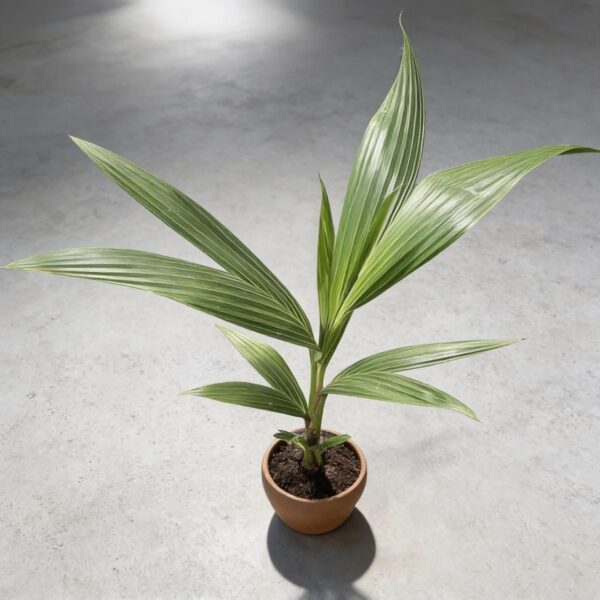
Cocos nucifera
Cocos nucifera
Original price was: HK$398.00.HK$298.00Current price is: HK$298.00.
In stock · store pickup
View plant
FREE PLANT ADVICE
Send us a photo before you change anything
WhatsApp a photo of the plant and your window light. Our Causeway Bay team will suggest care steps or plants that suit your space.
STORE · CAUSEWAY BAY
4/F, 39 Yiu Wa Street, Causeway Bay
Daily 12:30–8:00pm · ~3 min walk from Times Square
Map & directionsPlant 101