

How to Care for Philodendron Warscewiczii Aurea in Hong Kong | Plantjai

Plantjai 植仔 · Care Encyclopedia
Philodendron Warscewiczii Aurea
Philodendron warscewiczii 'Aurea Flavum' 黃金春羽
Hong Kong care guide — useful before you buy and after it arrives.
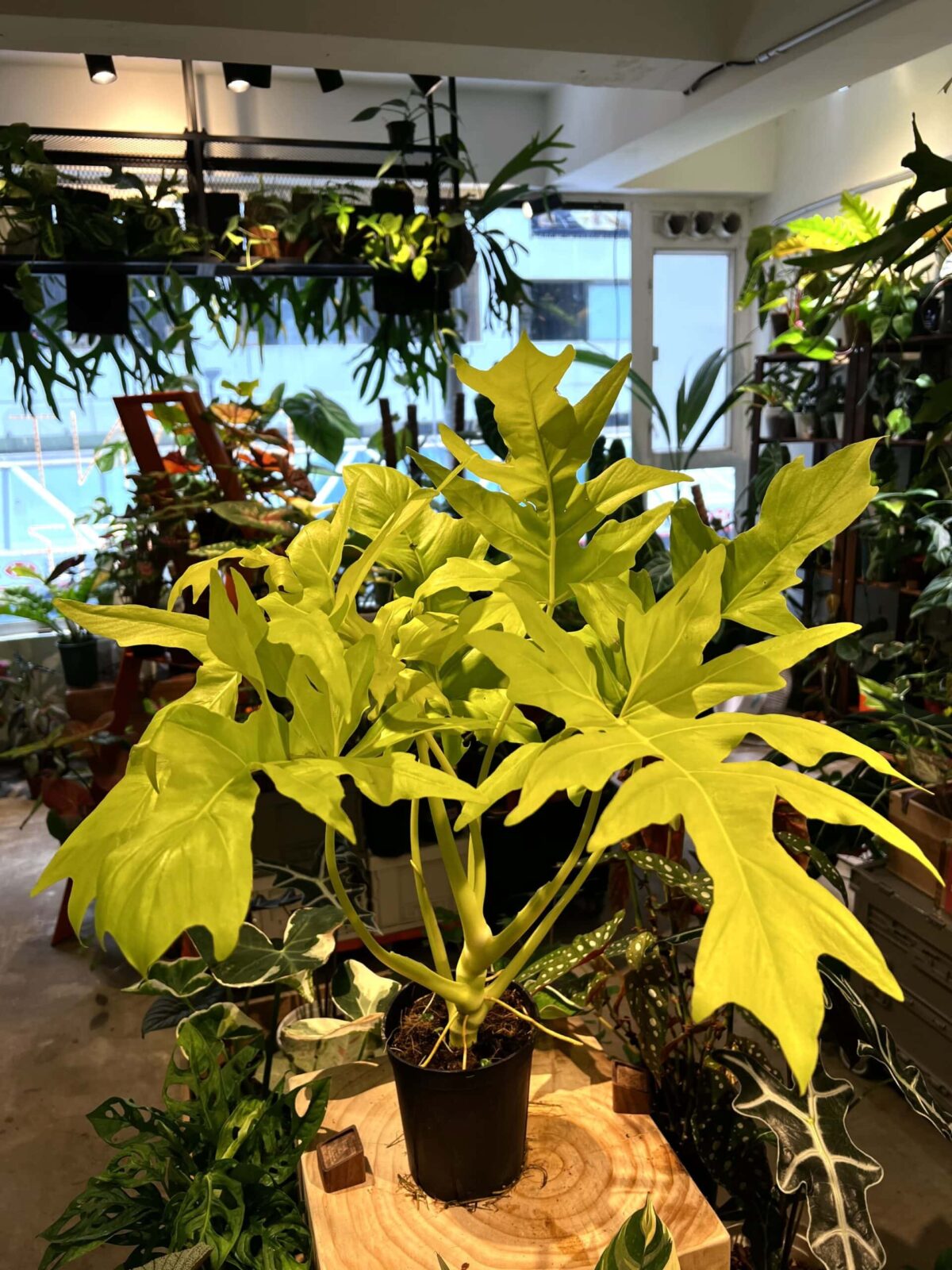
Shop this plantGolden, finger-shaped split leaves radiate a neon glow — a real focal point wherever it's placed, one of the rare large foliage plants that can make "gold" the star of the show.
Botanical name pending confirmation
Origin & characteristics
- Native range: the tropical and subtropical regions of South America (botanical name pending confirmation: some literature classifies this as Philodendron bipinnatifidum or places it in the genus Thaumatophyllum)
- Growth habit: self-heading, growing upright to form a sturdy trunk
- Leaf characteristics: large, deeply divided leaves split into finger-like segments, coloured a vivid golden-yellow to neon yellow-green, with a semi-translucent quality under light; new leaves are paler, deepening to gold as they mature
- Mature size: can reach 1.5-2.5 metres tall indoors, with a spread of 1-1.5 metres
- Growth rate: fast to moderate
- Toxicity: ⚠️ Toxic. Leaves contain calcium oxalate crystals; ingestion causes mouth burning, drooling, and vomiting — keep out of reach of children and pets
Light
- Ideal environment: bright indirect to medium light
- Placement: 1-2 metres from an east-, west-, or south-facing window, avoiding midday direct sun
- Notes:
- The golden leaves need ample light to maintain their vivid colour — too little light causes them to fade and turn green
- Intense direct sun scorches the paler leaf tissue, causing burn spots
- If leaves start turning green, it needs more light; if scorched edges appear, light is too strong
- Can tolerate lower light environments, but the golden colour will be significantly reduced
Watering
- Principle: water thoroughly once the top 2-3 inches (roughly 5-7 cm) of soil dries out
- Frequency reference:
- Spring/summer: roughly every 7-10 days
- Autumn/winter: roughly every 10-14 days, reducing watering during dormancy
- Method: water the entire root ball thoroughly, ensuring water drains from the base, then empty tray runoff after 15 minutes
- Water quality: room-temperature clean water, with tap water left standing overnight recommended; fairly sensitive to hard water — filtered water or rainwater can be used
- Key tips:
- Use an "all or nothing" approach — when you water, water thoroughly, don't just give it a little
- Empty standing water at the base after more than 15 minutes to avoid suffocating the roots
Soil & pot
- Soil recipe: a loose, breathable dedicated Araceae mix (Aroid Mix)
- Recommended ratio: 40% quality potting soil + 20% orchid bark + 20% perlite + 10% coco coir + 10% horticultural charcoal
- Key point: good drainage is essential — this cultivar is particularly sensitive to standing water
- Pot choice:
- Drainage holes are essential; a wider pot is recommended (spread greater than height)
- Terracotta or plastic pots both work, but drainage must flow freely
- Repot every 2-3 years in spring, with the new pot 5-8 cm larger in diameter
Temperature & humidity
- Ideal temperature: 18-27°C
- Minimum temperature: no lower than 10°C, with prolonged exposure below 15°C stalling growth
- Humidity: 50-70% is most ideal
- More drought-tolerant than other Philodendron species (its native range includes drier forest areas)
- Humidity too low causes leaf edges to dry and crisp
- A humidifier or pebble tray is recommended to maintain humidity
- Environmental note: keep away from AC vents and heaters, avoiding sudden temperature changes
Common problems
| Issue | Cause | Solution |
|---|---|---|
| Leaf colour turning green, losing gold | Insufficient light | Move to a brighter position |
| Scorched edges or white spots on leaves | Direct sun scorching | Move away from strong light or filter with a curtain |
| Leaf edges drying and crisping | Humidity too low or water too cold | Increase humidity, switch to room-temperature water |
| Leaves yellowing, stem soft | Overwatering / root rot | Reduce watering frequency, check root health |
| Growth stalled | Temperature too low or dormancy | Keep above 18°C, resume fertilising once warmer in spring |
| Small, dull new leaves | Insufficient nutrients | Apply diluted liquid fertiliser every 2-3 weeks during the growing season |
| Small brown spots on leaves | Mealybugs or mites | Check leaf undersides, wipe with alcohol-soaked cotton or spray with neem oil |
How to explain to customers
"What's most eye-catching about the golden Philodendron is its huge golden leaves — they almost seem to glow — placing it in the living room means you'll see it the moment you walk in, really impressive. It's a self-heading species, so it grows upright on its own without needing a pole, and the stem gets thicker over time. For watering, remember to let the soil dry out fully before watering — it's more prone to waterlogging issues, so better slightly dry than too wet. It needs plenty of light — without enough, the gold colour fades to green — but don't let it get direct sun either. Humidity of 50-60% is enough, making it easier to care for than other Philodendrons. It grows fairly quickly, so you'll need to repot once a year. Remember to keep it away from cats and dogs — it's toxic."
Fun facts
- In 'Aurea Flavum,' "Aurea" is Latin for "gold" and "Flavum" means "yellow" — a double emphasis on its golden character
- Its botanical classification remains debated in horticultural circles, with some literature placing it in the genus Thaumatophyllum (closely related to but a separate genus from Philodendron)
- Its golden leaf colour isn't albinism — it's a natural pigment variation, so it doesn't "revert" as easily as typical variegated plants
- In its native range, it can grow over 3 metres tall with a trunk diameter exceeding 30 cm — a genuine jungle giant
- Due to its pale leaf colour, its photosynthetic efficiency is relatively lower, so it needs more light than deep green species
Keywords
Golden Philodendron, Philodendron warscewiczii Aurea Flavum, golden Philodendron, neon golden Philodendron, Aurea Flavum, Araceae, self-heading Philodendron, golden leaf, bright indirect light, well-draining soil, toxic plant, calcium oxalate, foliage plant, large indoor plant, Plantjai
參考資料(想知來源可展開)
References
- Royal Botanic Gardens, Kew — Plants of the World Online: genus Philodendron, https://powo.science.kew.org/
- ASPCA — Toxic and Non-Toxic Plant List, https://www.aspca.org/pet-care/animal-poison-control/toxic-and-non-toxic-plants
⚠️ Contains calcium oxalate crystals; toxic to humans and pets if ingested. Keep out of reach of children and pets.
Plantjai · Causeway Bay collector indoor plants · WhatsApp +852 66807550

Plantjai shop · In stock online
Philodendron warscewiczii 'Aurea Flavum'
Philodendron warscewiczii 'Aurea Flavum'
HK$298.00
Hong Kong delivery · Causeway Bay pickup
For Hong Kong homes and offices. Stock and pricing follow the product page.
IN STORE NOW
Plants for this guide
Related plants in stock now — live prices, delivery or Causeway Bay pickup.
Philodendron 'Florida Ghost'
Philodendron 'Florida Ghost'
from HK$118.00
In stock · store pickup
View plantPhilodendron hederaceum 'Lemon Lime'
Philodendron hederaceum 'Lemon Lime'
HK$198.00
In stock · store pickup
View plant


FREE PLANT ADVICE
Send us a photo before you change anything
WhatsApp a photo of the plant and your window light. Our Causeway Bay team will suggest care steps or plants that suit your space.
STORE · CAUSEWAY BAY
4/F, 39 Yiu Wa Street, Causeway Bay
Daily 12:30–8:00pm · ~3 min walk from Times Square
Map & directionsPlant Care


