

How to Care for Philodendron Strawberry Shake in Hong Kong | Plantjai

Plantjai 植仔 · Care Encyclopedia
Philodendron Strawberry Shake
Philodendron erubescens 'Strawberry Shake' 士多啤梨奶昔蔓綠絨
Hong Kong care guide — useful before you buy and after it arrives.
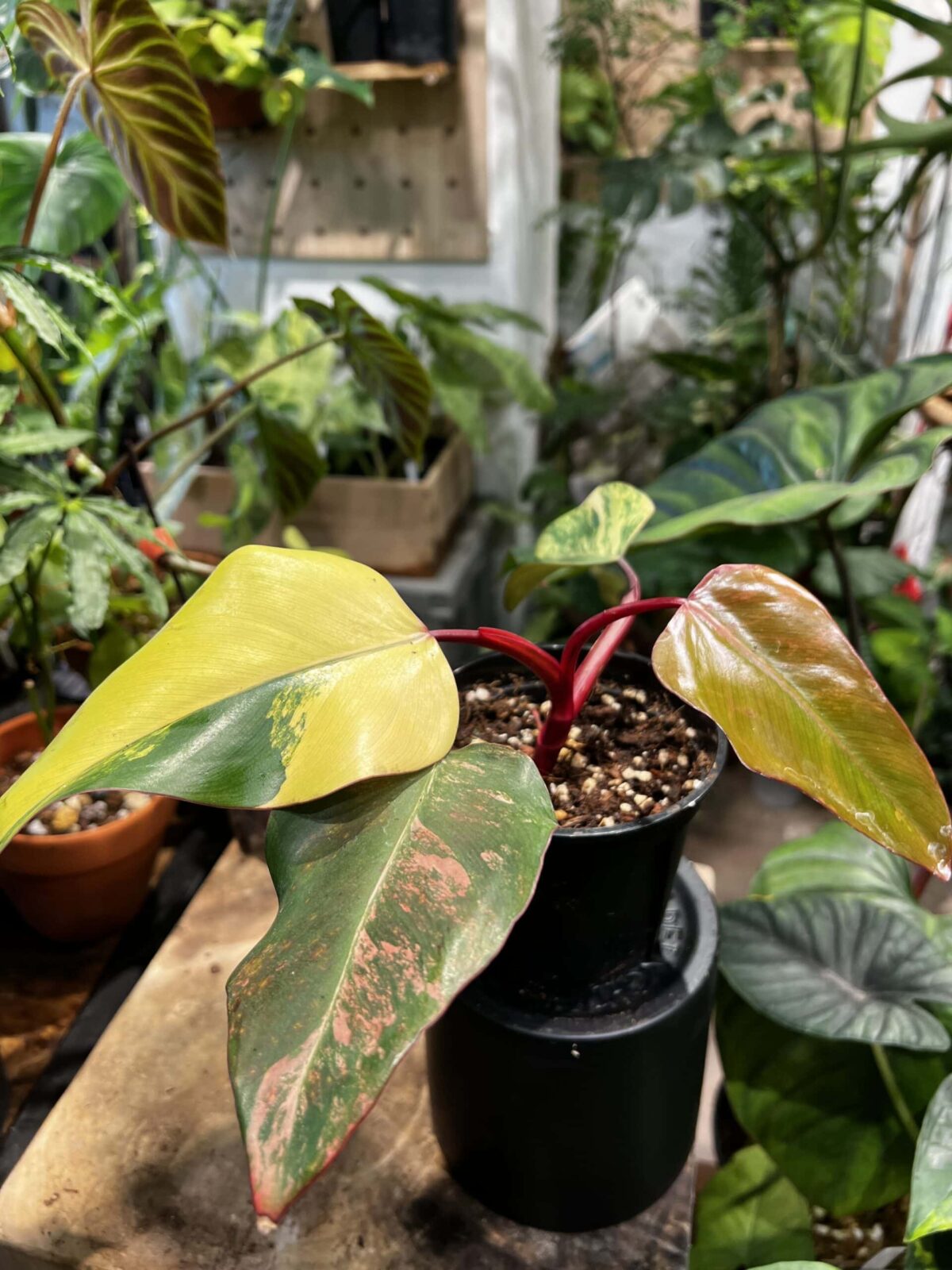
Shop this plantLeaves woven in a dreamlike blend of pink, cream-white, and green, with every leaf a one-of-a-kind work of art — one of the most sought-after variegated cultivars in the Philodendron collecting world.
Origin & characteristics
Strawberry Shake, like Painted Lady, is a horticultural cultivar of the red-stemmed Philodendron (Philodendron erubescens), with the plain species naturally distributed across higher-elevation areas of the Andes in Colombia, Central and South America. Strawberry Shake is a rising star among plant collectors in recent years, and due to its highly attractive variegated leaves, it has remained in persistent short supply on the international horticultural market, commanding relatively high prices.
This cultivar's greatest charm lies in its unstable, ever-changing variegation: the leaf base colour ranges from deep to pale green, overlaid with large areas of pink, cream-white, and pale green patterning, creating a dreamlike colour layering reminiscent of a strawberry shake. Every new leaf's variegation distribution differs, making each unfurling leaf full of surprises. New leaves typically emerge in a deeper pink-copper tone, gradually developing their full variegation as they mature. The stem also carries a pink or red tone, adding extra ornamental value.
Mature leaves are oval to elliptical, reaching 25-35 cm. It has a semi-climbing growth habit, and providing a moss pole or coco fibre pole can significantly promote larger leaves and enhanced variegation.
⚠️ Toxicity warning: Strawberry Shake contains calcium oxalate crystals and is toxic. Ingestion may cause severe burning and swelling of the mouth, tongue, and throat, drooling, difficulty swallowing, nausea, and gastrointestinal discomfort. It must be placed completely out of reach of children and pets. Wear gloves whenever pruning, repotting, or performing any operation involving contact with sap. If it accidentally contacts eyes, rinse immediately with clean water and seek medical attention; if ingested, rinse the mouth immediately and seek medical help.
Light
- Ideal light: bright indirect light to medium-intensity indirect light. An east- or north-facing windowsill is best, and it can accept gentle morning sun
- Special needs of variegated leaves: since the variegated portions lack chlorophyll, Strawberry Shake needs slightly more light than plain green cultivars to sustain growth, but the variegated tissue is also more prone to sunburn, requiring more careful light management
- Avoid: any intense direct sun, especially around midday. The variegated portions (pink and white areas) are especially prone to sunburn, developing brown scorched edges or translucent spots
- Signs of insufficient light: variegation colour becomes dull, new leaves lean towards fully green, internodes stretch and become sparse, overall growth slows
- Indoor placement suggestions: 1.5-2.5 metres from a south-facing window, within 1 metre of an east-facing window, near a north-facing window. Pairing with white walls or reflective surfaces can indirectly increase light. In persistently dim environments, consider an LED grow light, supplementing 8-12 hours daily
Watering
- Frequency: water once the top 2-3 cm of soil dries out in spring/summer, roughly every 6-8 days; wait until roughly half the soil depth dries out in autumn/winter, roughly every 10-14 days
- Method: pour room-temperature water slowly around the rim until it drains from the base, wait 10 minutes, then thoroughly empty tray runoff
- Water quality: room-temperature tap water left standing, filtered water, or rainwater is recommended. Variegated cultivars are sensitive to water quality — hard water may cause leaf-tip scorching
- Signs of overwatering: leaves yellowing (especially the variegated portions turning translucent), a soft, blackened stem base, soil giving off an odour, roots turning brown and rotten
- Signs of underwatering: drooping, limp leaves, browning curled leaf edges, stalled new growth
- Notes:
- Variegated cultivars typically have weaker root systems and are more sensitive to standing water — better slightly dry than overwatered
- Substantially reduce watering in winter, waiting for the soil to dry deeper than usual before watering again
- Extend the watering interval during high-humidity conditions (e.g. rainy season)
- Avoid prolonged standing water on the leaf surface, especially in variegated areas, which easily develop water spots
Soil & pot
- Soil recipe: needs an extremely loose, breathable, fast-draining medium while retaining adequate moisture. Recommended recipe: peat soil or coco coir 40% + perlite 25% + bark chips 20% + charcoal chips 10% + a small amount of sphagnum moss 5%
- pH: slightly acidic (5.5-6.5) is most ideal
- Pot choice: a terracotta or clay pot is strongly recommended for the best breathability, greatly helping to prevent root rot. Plastic pots retain too much moisture and are only recommended in extremely dry environments. Regardless of material, drainage holes at the base are essential
- Repotting timing: repot once every 1-2 years, ideally before the spring growing season begins. Repot when roots emerge from drainage holes, circle the pot's edge, or when growth clearly slows
- Repotting technique: the new pot should be only 3-5 cm larger in diameter — never use an oversized pot for a variegated cultivar. Gently check roots when repotting, trimming off any black or soft, rotten roots. Pause fertilising for 2-4 weeks after repotting, placing it in bright indirect light to let the plant recover
Temperature & humidity
- Ideal temperature: 20-27°C is the best growing range. Variegated cultivars are sensitive to temperature fluctuations, so try to keep the environment stable
- Minimum tolerance: shouldn't be below 15°C for extended periods; briefly below 12°C may cause cold-damage spots or stalled growth
- High temperature note: sustained temperatures above 30°C require improved ventilation and shading, as the variegated portions are more prone to sun damage at high temperatures
- Ideal humidity: 65-85% relative humidity is most ideal. Higher humidity helps maintain vivid leaf colour and promotes aerial root and climbing growth
- Managing low humidity:
- Use a humidifier to maintain stable high humidity (most recommended, especially when running heating in winter)
- Place on a tray lined with damp pebbles (pot base not touching the water surface)
- Group with other tropical plants to create a humid microclimate
- Lightly mist the leaf surface regularly (ensure good ventilation, avoiding prolonged water droplets)
- Hong Kong climate adaptability: Hong Kong's high-humidity spring and summer are very suitable for growth; actively increase humidity during the drier autumn/winter, avoiding placement near AC or heater vents
Common problems
Q: New leaves have no variegation, coming in fully green?
A: Variegation distribution is inherently unstable, and occasional fully green new leaves are normal. But if several consecutive new leaves are all fully green, it may be due to insufficient light. Appropriately increasing bright indirect light helps promote variegation. Fully green leaves can be pruned off to encourage the plant to grow new variegated shoots.
Q: Brown scorched edges appearing on the variegated portions (pink/white)?
A: This is a classic sign of excessive light or air too dry. Move the plant to a shadier position immediately, and increase surrounding air humidity. Damaged leaves can't be repaired, but new leaves will return to normal once the environment improves.
Q: Plant growth is slow, with no new leaves for a long time?
A: Possible causes include: 1) temperature too low — ensure a warm environment; 2) insufficient light — appropriately increase light; 3) lack of nutrients — begin applying diluted liquid fertiliser in spring/summer; 4) root issues — check for root rot or the need to repot.
Q: The stem is going soft and rotting from the base?
A: A serious sign of root rot from overwatering. Stop watering immediately, remove the plant from its pot, and check the roots. Trim off all rotten, brown roots and soft stem portions, and repot in fresh, dry substrate. Place somewhere well-ventilated with bright indirect light, pausing watering for a few days. In severe cases, try propagating via a healthy stem cutting.
Q: How can it be propagated?
A: Tip cuttings are the most reliable method. Cut the tip with 1-2 leaves and an aerial root about 1 cm above a node, and insert into water or slightly moist perlite. Since variegation is unstable, the propagated cutting's variegation may differ from the mother plant. Choosing a stem section with pronounced variegation for cutting increases the chance of getting variegated offspring.
Q: Why does the leaf variegation keep decreasing?
A: Variegation reduction is a common phenomenon, potentially due to unstable genetics, insufficient light, or the plant entering a decline phase. Appropriately increasing light, regularly pruning fully green branches, and maintaining a good growing environment all help slow the rate of variegation loss.
How to explain to customers
"Strawberry Shake is absolutely a dream plant in the Philodendron world! Every leaf is one-of-a-kind, with pink, cream-white, and green woven together — truly stunning. That said, do note that variegated cultivars need more careful attention — they need bright but never direct light, since the variegated portions scorch very easily. For watering, it's better to underwater than overwater — standing water at the roots easily causes rot. The higher the humidity, the better — you can use a humidifier or group it with other plants. Although it needs a bit more care, when you see a new leaf unfurl with those dreamlike colours, it's all worth it! Remember to keep it somewhere children and pets can't reach — it's toxic."
Fun facts
- Strawberry Shake shares lineage with another popular cultivar, Pink Princess — both are variegated cultivars of Philodendron erubescens. But Strawberry Shake's variegation colours are more diverse, including cream-white and pale green in addition to pink, which is why some call it an "upgraded Pink Princess."
- Variegation arises from genetic mutation at the cellular level, causing some tissue to lack chlorophyll. Since variegated tissue can't photosynthesise, an excessively high proportion of variegation makes it difficult for the plant to sustain growth, so fully variegated (entirely non-green) branches usually gradually weaken and even die.
- In horticultural trade, Strawberry Shake specimens with evenly distributed, vividly coloured variegation can command prices several times, or even ten times, higher than ordinary specimens. Every plant's variegation expression is unique, making collecting even more interesting and challenging.
- Experienced collectors pay particular attention to "half-moon" leaves — where the left and right sides of a leaf are perfectly split into fully green and fully variegated halves. Such exceptional leaves are highly collectible in the market, and sometimes a single leaf can become the focus of social media attention.
Keywords
Strawberry Shake Philodendron, Philodendron erubescens Strawberry Shake, Strawberry Shake Philodendron, variegated Philodendron, pink variegation, cream-white variegation, red-stemmed Philodendron, foliage plant collecting, rare cultivar, climbing plant, moss pole, high-humidity plant, calcium oxalate toxic, indoor foliage plant, tropical plant, Plantjai, Philodendron cultivar, variegated cultivar care
參考資料(想知來源可展開)
References
- Royal Botanic Gardens, Kew — Plants of the World Online: genus Philodendron, https://powo.science.kew.org/
- ASPCA — Toxic and Non-Toxic Plant List, https://www.aspca.org/pet-care/animal-poison-control/toxic-and-non-toxic-plants
⚠️ Contains calcium oxalate crystals; toxic to humans and pets if ingested. Keep out of reach of children and pets.
Plantjai · Causeway Bay collector indoor plants · WhatsApp +852 66807550
Plantjai shop · In stock online
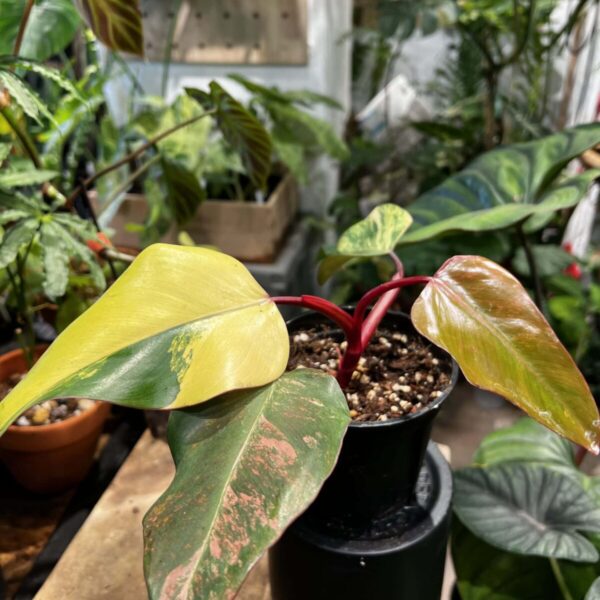
Philodendron erubescens 'Strawberry Shake'
Philodendron erubescens 'Strawberry Shake'
Original price was: HK$2,280.00.HK$680.00Current price is: HK$680.00.
Hong Kong delivery · Causeway Bay pickup
For Hong Kong homes and offices. Stock and pricing follow the product page.
IN STORE NOW
Plants for this guide
Related plants in stock now — live prices, delivery or Causeway Bay pickup.
Philodendron 'Florida Ghost'
Philodendron 'Florida Ghost'
from HK$118.00
In stock · store pickup
View plantPhilodendron hederaceum 'Lemon Lime'
Philodendron hederaceum 'Lemon Lime'
HK$198.00
In stock · store pickup
View plant


FREE PLANT ADVICE
Send us a photo before you change anything
WhatsApp a photo of the plant and your window light. Our Causeway Bay team will suggest care steps or plants that suit your space.
STORE · CAUSEWAY BAY
4/F, 39 Yiu Wa Street, Causeway Bay
Daily 12:30–8:00pm · ~3 min walk from Times Square
Map & directionsPlant Care


