

How to Care for Philodendron Pink Princess in Hong Kong | Plantjai

Plantjai 植仔 · Care Encyclopedia
Philodendron Pink Princess
Philodendron 'Pink Princess' 粉公主蔓綠絨
Hong Kong care guide — useful before you buy and after it arrives.
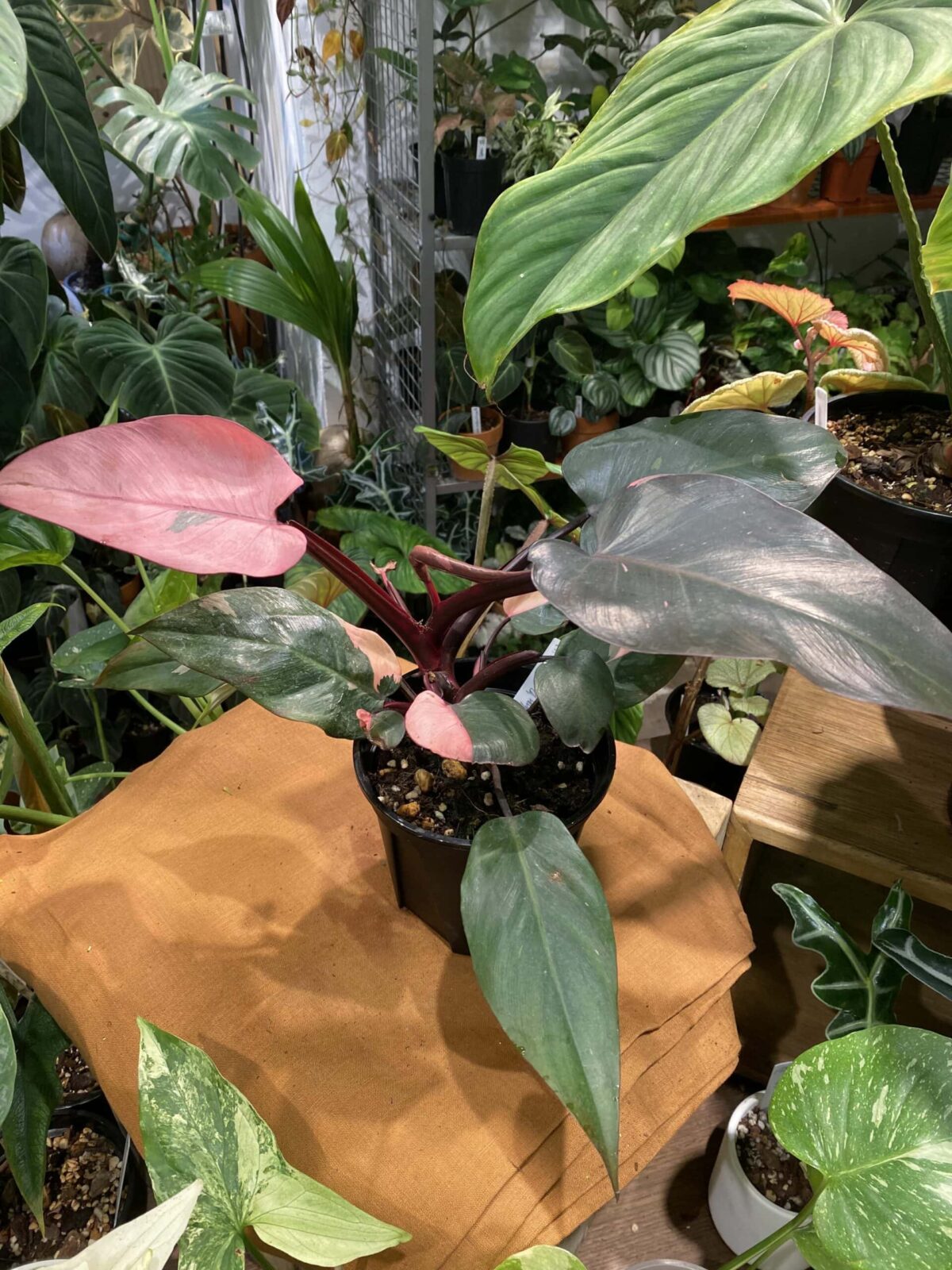
Shop this plantBold splashes of pink across a deep green leaf — the most iconic "pink lady" in the plant world, with every leaf a natural abstract painting.
⚠️ Toxicity warning: Philodendron 'Pink Princess' contains calcium oxalate crystals throughout the plant; ingestion may cause mouth pain, swelling, and gastrointestinal discomfort. Keep out of reach of children and pets, and wash your hands after handling.
Origin & characteristics
Philodendron 'Pink Princess' is a classic horticultural cultivar in the family Araceae, genus Philodendron, with its plain species, Philodendron erubescens, naturally distributed across the tropical rainforest of Central America to northern South America (mainly Colombia).
'Pink Princess' is a cultivar developed from long-term selective breeding of P. erubescens, with its greatest feature being the naturally occurring pink to magenta patterning on its leaves — this patterning is actually "mutant" tissue in the leaf mesophyll that lacks chlorophyll, appearing as irregular blocks or streaks, as if someone splashed pink paint onto a deep green canvas. Paired with red to pink stems, the whole plant exudes a captivating, romantic atmosphere.
Leaves are long-oval to heart-shaped, thick with a sheen. It's an upright to semi-climbing Philodendron with moderate growth rate, and mature plants can reach over 60 cm tall. 'Pink Princess' went viral in the social media era, becoming one of the world's most popular "influencer plants" — a genuine superstar of the foliage plant world.
Light
Philodendron 'Pink Princess' needs ample bright indirect light — light is the key factor determining how vivid the pink colour becomes.
- Ideal placement: near an east- or south-facing window (1-2 metres away), or use a full-spectrum grow light
- Daily light hours: 8-10 hours of gentle light
- The secret to pink: ample light makes the pink patterning bolder and more vivid; insufficient light causes the patterning to fade, or even leads to fully green leaves
- Avoid: summer midday direct sun scorches the pink portions (since they lack chlorophyll protection, they're more vulnerable than green portions)
- Tip: rotate the pot regularly (45 degrees every 1-2 weeks) for even light exposure and better patterning distribution
Watering
'Pink Princess' has specific water management needs — overwatering easily causes root rot, while underwatering makes leaves listless.
| Season | Frequency | Notes |
|---|---|---|
| Spring/summer (growing season) | Water once the top 2-3 cm of soil dries out | Keep lightly moist; test with your finger |
| Autumn/winter (slower growth) | Water once half to 70% of the soil has dried out | Substantially reduce watering, favouring dryness |
- Water quality: room-temperature tap water left standing, filtered water, or rainwater; avoid water high in chlorine or fluoride
- Method: water slowly around the rim until it drains from the base, empty tray runoff after 30 minutes
- Observation indicators: slightly drooping leaves signal underwatering; yellowing leaves may indicate overwatering
- Key point: better slightly dry than overwatered — 'Pink Princess' is most afraid of standing water and root rot
Soil & pot
Soil recipe
Needs a well-draining, breathable medium — the following recipe is recommended:
- Quality potting soil (or peat soil): 40%
- Perlite or pumice: 30%
- Bark (medium grade): 20%
- Coco husk fibre or charcoal: 10%
Goal: water should drain quickly after watering, giving roots ample air circulation, with absolutely no standing water.
Pot choice
- Terracotta / clay pots: the best drainage and breathability, recommended, though they dry out faster
- Plastic pots: retain moisture better, suitable for drier environments, but require more careful watering control
- Base: drainage holes are essential — never plant directly in a decorative cachepot without drainage holes
Repotting
- Repot once every 1-2 years, choosing a new pot 3-5 cm larger
- Best timing: spring (March to May, once temperatures stabilise)
- 'Pink Princess' has a fairly fine root system — handle gently during repotting
Temperature & humidity
Temperature
- Optimal range: 21-28°C
- Minimum tolerance: 16°C (long-term low temperatures stall growth and fade patterning)
- Danger zone: below 12°C may cause frost damage
- Note: keep away from window drafts and AC vents in winter; large temperature swings affect patterning quality
Humidity
- Ideal humidity: 60-80%
- Minimum requirement: above 50%
- Ways to increase humidity:
- Use a humidifier (most reliable)
- Group with other tropical plants to create a humid microclimate
- Humidity tray (pot base not touching the water)
- Tip: in high humidity, new leaves unfurl more smoothly, and the pink colour becomes more vivid and full
Common problems
| Issue | Likely cause | What to do |
|---|---|---|
| Pink patterning fading or receding | Insufficient light | Move to a brighter position, or add a grow light |
| New leaves fully green, no pink | Insufficient light / natural reversion | Increase light; some leaves naturally turning green is normal |
| Leaves yellowing (from bottom up) | Overwatering / root rot | Check roots, reduce watering frequency |
| Pink portions scorched to brown | Sun too strong | Move away from direct light — the pink portions are more delicate |
| Brown, dry leaf tips | Humidity too low / fertiliser damage | Increase humidity, dilute fertiliser to half strength |
| Growth slow | Temperature too low / insufficient light | Adjust to suitable environmental conditions |
| Pests (spider mites / scale) | Dry air / poor ventilation | Regularly check leaf undersides, spray with soapy water or insecticidal soap |
How to explain to customers
"Pink Princess is one of the most popular foliage plants in the world — you could call it the poster child of influencer plants. Its greatest feature is the natural pink patterning on the leaves — every leaf's pattern is different, truly a work of art painted by nature.
The most important thing for growing Pink Princess well is light — place it somewhere with ample indirect light, since enough light is what brings out that beautiful pink colour. But remember, never let it get direct sun, especially the pink portions, which lack chlorophyll protection and scorch very easily.
For watering, follow 'let it dry before watering again' — the biggest risk is standing water and root rot. Humidity should ideally be 60-80% — if your home is dry, run a humidifier. It grows at a moderate pace, so you'll need patience waiting for new leaves — every one is a surprise.
Most important: the whole plant is toxic, so it absolutely must be kept somewhere children and pets can't reach."
Fun facts
- The science behind the pink: Pink Princess's pink patterning is actually an expression of "chlorophyll deficiency" — certain regions of the leaf mesophyll cells can't produce chlorophyll, revealing the colour of other pigments (anthocyanins) instead. Simply put, the pink colour is a form of plant "albinism."
- Every leaf is one of a kind: since the patterning distribution is completely random, no two Pink Princess leaves in the world are exactly alike, making every plant a truly unique individual.
- A social media star: Pink Princess has millions of related hashtag posts on Instagram and is one of the main cultivars driving the "houseplant craze" of the 2020s, hailed as "the plant that got the whole world into gardening."
- The pink needs to be "grown into": Pink Princess isn't born fully pink — juvenile plants are usually mostly green, and as the plant matures and the environment supports it, the proportion of pink gradually increases — you could say it gets more beautiful the longer you grow it.
- A large Pink Princess family: numerous variants and related cultivars have developed around Pink Princess, including 'Pink Princess Galaxy', 'White Princess', 'White Knight', and 'Pink Princess Marble', forming a large "royal family."
Keywords
Pink Princess Philodendron, Philodendron Pink Princess, Philodendron erubescens Pink Princess, pink Philodendron, variegated Philodendron, Philodendron, Araceae, tropical foliage plant, indoor plant, influencer plant, foliage plant, Plantjai, foliage plant collecting, pink patterning, girly plant, popular plant, Instagram plant
參考資料(想知來源可展開)
References
- Royal Botanic Gardens, Kew — Plants of the World Online: genus Philodendron, https://powo.science.kew.org/
- ASPCA — Toxic and Non-Toxic Plant List, https://www.aspca.org/pet-care/animal-poison-control/toxic-and-non-toxic-plants
⚠️ Contains calcium oxalate crystals; toxic to humans and pets if ingested. Keep out of reach of children and pets.
Plantjai · Causeway Bay collector indoor plants · WhatsApp +852 66807550

Plantjai shop · In stock online
Philodendron 'Pink Princess'
Philodendron 'Pink Princess'
HK$180.00
Hong Kong delivery · Causeway Bay pickup
For Hong Kong homes and offices. Stock and pricing follow the product page.
IN STORE NOW
Plants for this guide
Related plants in stock now — live prices, delivery or Causeway Bay pickup.
Philodendron 'Florida Ghost'
Philodendron 'Florida Ghost'
from HK$118.00
In stock · store pickup
View plantPhilodendron hederaceum 'Lemon Lime'
Philodendron hederaceum 'Lemon Lime'
HK$198.00
In stock · store pickup
View plant


FREE PLANT ADVICE
Send us a photo before you change anything
WhatsApp a photo of the plant and your window light. Our Causeway Bay team will suggest care steps or plants that suit your space.
STORE · CAUSEWAY BAY
4/F, 39 Yiu Wa Street, Causeway Bay
Daily 12:30–8:00pm · ~3 min walk from Times Square
Map & directionsPlant Care


