

How to Care for Philodendron Pink Princess Galaxy in Hong Kong | Plantjai

Plantjai 植仔 · Care Encyclopedia
Philodendron Pink Princess Galaxy
Philodendron 'Pink Princess Galaxy' 銀河粉公主蔓綠絨
Hong Kong care guide — useful before you buy and after it arrives.
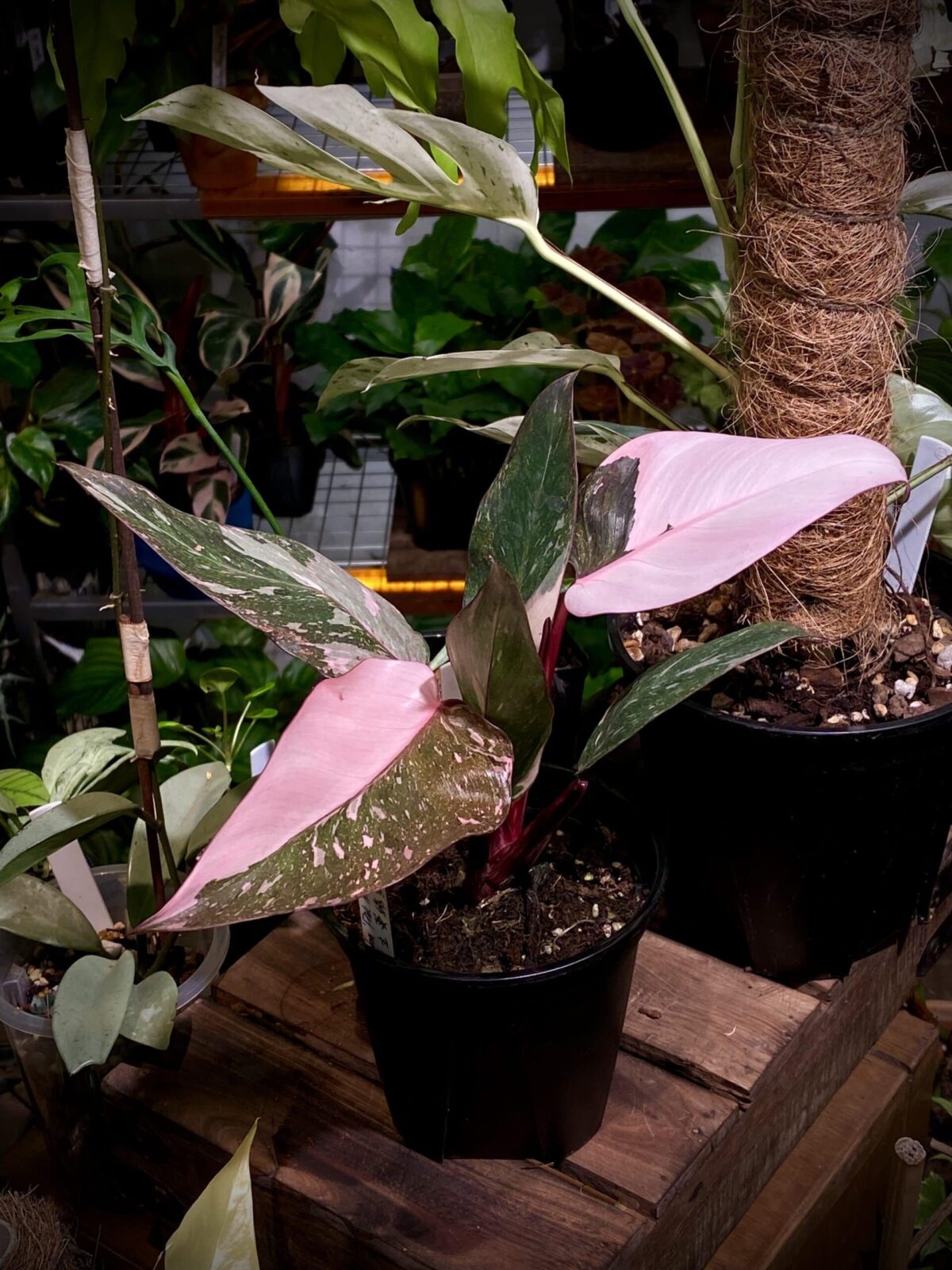
Shop this plantPink specks scattered like galaxy stardust across a deep green leaf — every leaf is your own personal mini night sky.
⚠️ Toxicity warning: Philodendron 'Pink Princess Galaxy' contains calcium oxalate crystals throughout the plant; ingestion may cause mouth pain, swelling, and gastrointestinal discomfort. Keep out of reach of children and pets, and wash your hands after handling.
📌 Botanical name pending confirmation: the exact taxonomic classification of 'Pink Princess Galaxy' has not yet been confirmed by horticultural taxonomists; it's generally believed to be a variant or specially selected strain of the popular cultivar Philodendron erubescens 'Pink Princess'.
Origin & characteristics
Philodendron 'Pink Princess Galaxy' is a horticultural cultivar in the family Araceae, genus Philodendron, generally believed to be a variant or specially selected strain of the popular cultivar Philodendron erubescens 'Pink Princess'.
The biggest difference from a typical Pink Princess lies in the patterning form: 'Galaxy's' pink specks appear finely scattered, as if galaxy stardust has been sprinkled across a deep green night-sky background, rather than large blocks of pink. This "stardust" distribution gives every leaf a unique starry-sky pattern, with extremely high ornamental value.
Leaves are long-oval to heart-shaped, with a deep green base sporting pink to magenta specks and streaks, and the stem typically carries a red or pink tinge. It's an upright to semi-climbing Philodendron with moderate growth rate and a fairly compact, elegant form. As a highly selectively bred cultivar, it has no wild distribution and relatively limited production, making it a rarer variant within the Pink Princess series, deeply beloved by collectors.
Light
Philodendron 'Pink Princess Galaxy' needs ample bright indirect light — light directly affects the vividness and distribution of the pink specks.
- Ideal placement: near an east- or south-facing window (1-2 metres away), or use a grow light
- Daily light hours: 8-10 hours of gentle light
- Key to patterning: ample light promotes more vivid, dense pink specks; too little light causes the patterning to fade or even recede
- Avoid: summer midday direct sun scorches leaves, especially the pink portions (lacking chlorophyll), which are more delicate
- Tip: rotate the pot regularly (45 degrees every 1-2 weeks) for even light exposure and better patterning distribution
Watering
This cultivar is fairly sensitive to watering rhythm — overwatering easily causes root rot, while underwatering makes leaves go soft.
| Season | Frequency | Notes |
|---|---|---|
| Spring/summer (growing season) | Water once the top 2-3 cm of soil dries out | Keep lightly moist, test with your finger |
| Autumn/winter (slower growth) | Water once half the soil has dried out | Substantially reduce watering, soil can be slightly dry |
- Water quality: room-temperature tap water left standing, filtered water, or rainwater; avoid water high in chlorine or fluoride
- Method: water slowly around the rim until it drains from the base, empty tray runoff after 30 minutes
- Observation indicators: slightly drooping leaves signal underwatering; yellowing leaves may indicate overwatering
- Key point: better slightly dry than overwatered — standing water is the most common cause of death
Soil & pot
Soil recipe
Needs a well-draining, breathable medium — the following recipe is recommended:
- Quality potting soil (or peat soil): 40%
- Perlite or pumice: 30%
- Bark (medium grade): 20%
- Coco husk fibre or charcoal: 10%
Goal: water should drain quickly after watering, giving roots ample air circulation.
Pot choice
- Terracotta / clay pots: the best drainage and breathability, recommended
- Plastic pots: usable but requires more careful watering control
- Base: drainage holes are essential — never plant directly without them
Repotting
- Repot once every 1-2 years, choosing a new pot 3-5 cm larger
- Best timing: spring (once temperatures stabilise above 20°C)
- The Pink Princess series has a fairly fine root system — handle gently during repotting
Temperature & humidity
Temperature
- Optimal range: 21-28°C
- Minimum tolerance: 16°C (long-term low temperatures stall growth)
- Danger zone: below 12°C may cause frost damage
- Note: keep away from window drafts and AC vents in winter; large temperature swings affect patterning stability
Humidity
- Ideal humidity: 60-80%
- Minimum requirement: above 50%
- Ways to increase humidity:
- Use a humidifier (recommended)
- Group with other plants
- Humidity tray (pot base not touching the water)
- Tip: in high humidity, new leaves unfurl more smoothly, and the pink patterning becomes more vivid
Common problems
| Issue | Likely cause | What to do |
|---|---|---|
| Pink specks fading or disappearing | Insufficient light | Move to a brighter position |
| Leaves yellowing (from bottom up) | Overwatering / root rot | Check roots, reduce watering |
| New leaves fully green, no pink | Light or gene expression issue | Increase light; some leaves may naturally turn green |
| Brown leaf tips | Humidity too low / fertiliser damage | Increase humidity, dilute fertiliser |
| Pink portions scorched to brown | Sun too strong | Move away from direct light |
| Growth slow | Temperature too low / insufficient light | Adjust environmental conditions |
| Pests (spider mites / scale) | Dry air | Check regularly, spray with soapy water |
How to explain to customers
"Galaxy is one of the rarer variants within the Pink Princess series — its biggest feature is that the pink specks are scattered like stars, genuinely resembling a mini night sky, with every leaf's pattern being different — really beautiful and dreamlike.
It needs to be placed somewhere with ample indirect light — enough light is what brings out that beautiful pink colour. Remember, never let it get direct sun, since the pink portions aren't as sun-tolerant as the green leaves. For watering, let the soil dry out before watering again — the biggest risk is standing water and root rot.
Humidity should ideally be 60-80% — if your home runs AC and is a bit dry, a humidifier will help. It grows at a moderate pace, so you'll need patience waiting for new leaves — every new leaf is a surprise, since you never know what pattern it'll bring.
Important reminder: the whole plant is toxic, so keep it somewhere children and pets can't reach."
Fun facts
- The secret of the starry patterning: 'Galaxy's' star-speckled pattern comes from differences in chlorophyll distribution across different regions of the leaf mesophyll — the pink regions are actually "mutant" tissue lacking chlorophyll, becoming more pronounced with ample light.
- Every leaf is a mystery box: since the patterning distribution is random, every new leaf unfurling is full of anticipation — sometimes the pink specks are as numerous as stars, sometimes sparser — this uncertainty is exactly the joy of growing 'Galaxy'.
- A member of the Pink Princess family: 'Pink Princess Galaxy' shares lineage with 'Pink Princess', 'White Princess', 'White Knight', and 'Pink Princess Marble', all part of the Philodendron erubescens selective breeding series.
- The pink needs to be "grown into": Galaxy's pink colour isn't fixed — environmental conditions (especially light) directly affect how the patterning presents — you could say "the way you grow it determines how beautiful it becomes."
Keywords
Pink Princess Galaxy Philodendron, Philodendron Pink Princess Galaxy, Pink Princess Philodendron, pink Philodendron, galaxy Philodendron, variegated Philodendron, Philodendron, Araceae, tropical foliage plant, indoor plant, foliage plant, Plantjai, rare Philodendron, pink patterning, foliage plant collecting, girly plant, dreamlike foliage plant
參考資料(想知來源可展開)
References
- Royal Botanic Gardens, Kew — Plants of the World Online: genus Philodendron, https://powo.science.kew.org/
- ASPCA — Toxic and Non-Toxic Plant List, https://www.aspca.org/pet-care/animal-poison-control/toxic-and-non-toxic-plants
⚠️ Contains calcium oxalate crystals; toxic to humans and pets if ingested. Keep out of reach of children and pets.
Plantjai · Causeway Bay collector indoor plants · WhatsApp +852 66807550

Plantjai shop · In stock online
Philodendron 'Pink Princess Galaxy'
Philodendron 'Pink Princess Galaxy'
HK$480.00
Hong Kong delivery · Causeway Bay pickup
For Hong Kong homes and offices. Stock and pricing follow the product page.
IN STORE NOW
Plants for this guide
Related plants in stock now — live prices, delivery or Causeway Bay pickup.
Philodendron 'Florida Ghost'
Philodendron 'Florida Ghost'
from HK$118.00
In stock · store pickup
View plantPhilodendron hederaceum 'Lemon Lime'
Philodendron hederaceum 'Lemon Lime'
HK$198.00
In stock · store pickup
View plant


FREE PLANT ADVICE
Send us a photo before you change anything
WhatsApp a photo of the plant and your window light. Our Causeway Bay team will suggest care steps or plants that suit your space.
STORE · CAUSEWAY BAY
4/F, 39 Yiu Wa Street, Causeway Bay
Daily 12:30–8:00pm · ~3 min walk from Times Square
Map & directionsPlant Care


