

How to Care for Philodendron Pastazanum Silver in Hong Kong | Plantjai

Plantjai 植仔 · Care Encyclopedia
Philodendron Pastazanum Silver
Philodendron pastazanum 'Silver' 銀斑帕斯塔蔓綠絨
Hong Kong care guide — useful before you buy and after it arrives.
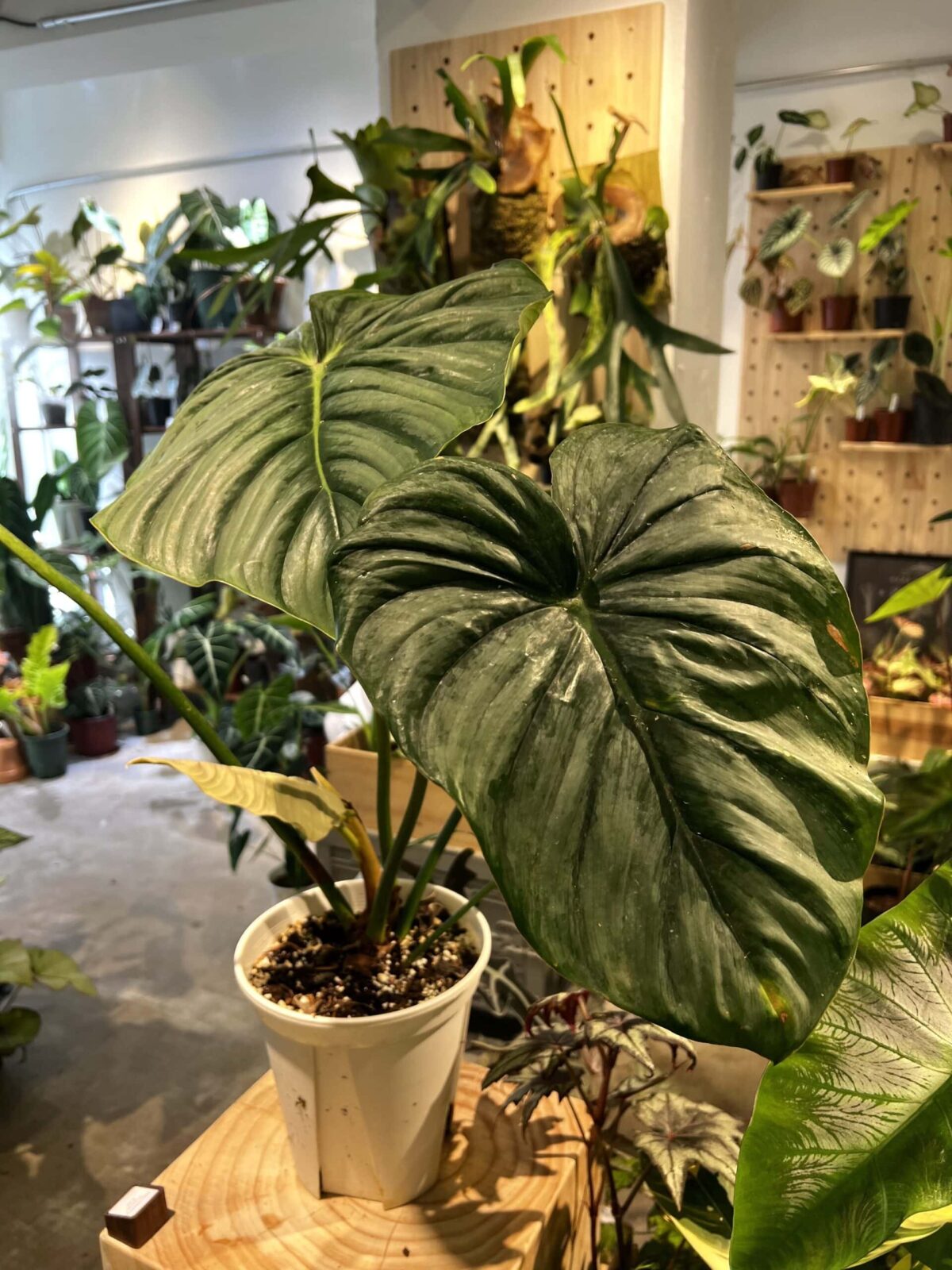
Shop this plantEnormous heart-shaped leaves flow with silvery-white cloud-like patterning; mature plants can produce leaves half a metre wide, thick and luxurious in texture — a true "silver artwork" for any space.
⚠️ A note on the name: Philodendron pastazanum 'Silver' is a horticultural cultivar name; the common name used here reflects its silver patterning as designated by Plantjai. Some sources suggest this cultivar may be closely related to Philodendron sp. 'Ecuador' or similar silver-marked Philodendron species — botanical name pending further confirmation.
Origin & characteristics
- Native range: the plain species Pastazanum is native to the tropical rainforest of the Pastaza River basin in Ecuador; 'Silver' is a horticulturally selected variegated form
- Growth habit: a semi-climbing to trailing herbaceous species; mature plants tend to sprawl horizontally, though they can also climb a support, with thick nodes
- Leaf characteristics: large heart-shaped to kidney-shaped leaves (mature leaves can reach 40-60 cm), leathery-thick in texture, with silvery-white cloud-like patterning across the deep green base — patterning becomes more pronounced as the plant matures; petioles are thick with pronounced ridges
- Growth rate: moderate, with significant leaf size increases at the mature stage
⚠️ Toxicity warning: Philodendron pastazanum 'Silver' contains calcium oxalate crystals throughout the plant; ingestion causes mouth and throat burning, swelling, drooling, and vomiting. Keep out of reach of children and pets, and wearing gloves when pruning is recommended.
Light
- Ideal light: bright indirect light to partial shade (1,000-2,500 lux), near an east-facing window or 1-2 metres from a south-facing window
- Key point: ample light helps the silver patterning become more pronounced; too little light causes the patterning to fade or even disappear
- Avoid: intense direct midday sun in summer will scorch the leaf surface, with the silver portions being especially delicate
- Signs of insufficient light: new leaves show less silver patterning, leaf colour leans deep green, internodes stretch, leaves become narrower
- Tip: mature plants have enormous leaves — reserve enough space for the leaves to spread out fully
Watering
- Frequency: water once the top 3 cm of soil dries out, roughly every 5-7 days in summer, every 7-10 days in winter
- Water quality: room-temperature standing water or filtered water, avoiding cold water shocking the roots
- Method: water slowly and thoroughly around the rim until it appears at the base, empty tray runoff after 30 minutes
- Standing water warning signs: leaves yellowing and going soft (starting from the base), soil with an unpleasant odour, stem base going soft
- Drought warning signs: leaves drooping downward, leaf surface losing sheen, edges curling slightly inward
- Special note: large leaves have high transpiration — watch for faster drying in summer, but still avoid standing water
Soil & pot
- Soil recipe: primarily coarse and breathable, recommended:
- 30% peat soil + 25% perlite + 25% coarse bark + 20% coco chunks
- Or 40% quality potting soil + 30% perlite + 30% orchid mix
- pH: 5.5-6.5
- Pot choice:
- Mature plants need more space — a pot at least 25 cm in diameter is recommended
- Terracotta or breathable material is best, helping roots breathe
- Drainage holes are essential
- Repotting timing: repot roughly once every 1-2 years, in spring; repot once roots emerge from the drainage holes
- Support suggestions: although it tends to sprawl, providing a sphagnum or coco fibre pole can further encourage larger leaves
Temperature & humidity
- Ideal temperature: 20-28°C, with an optimal growing temperature of roughly 22-26°C
- Minimum tolerance: no lower than 15°C; long-term below 15°C causes stalled growth and leaf damage
- Ideal humidity: 60-85%, with higher humidity helping the silver patterning become more vivid
- Ways to increase humidity:
- Use a humidifier, especially in air-conditioned rooms or with winter heating
- A pebble tray filled with water (pot base not touching the water)
- Group with other plants to create a humid microenvironment
- Note: avoid direct cold drafts — the giant leaves are relatively sensitive to temperature fluctuations
Common problems
| Issue | Likely cause | What to do |
|---|---|---|
| Silver patterning fading or disappearing | Insufficient light | Gradually move to a brighter position, observing new leaf changes |
| Leaves staying small, not growing larger | Insufficient space or weak light | Consider a larger pot or increase light |
| Yellow spots appearing on leaves | Overwatering or water quality issues | Check soil drainage, switch to filtered water |
| Scorched leaf edges | Humidity too low or fertiliser damage | Increase humidity, dilute fertiliser concentration |
| New leaves not unfurling fully | Humidity too low | Raise environmental humidity above 70% |
| Plant leaning and unstable | Lack of support or pot too light | Add a support pole or switch to a heavier pot for stability |
How to explain to customers
"Philodendron pastazanum 'Silver' is a dream plant for many Plantjai customers! Its biggest selling point is the sheer size of its leaves — mature plants can grow leaves as big as an umbrella, covered in silvery-white cloud-like patterning — placing it at home genuinely creates a striking presence. That said, it needs some space to grow, so don't cram it into a small corner. Let the soil dry a bit before watering — it would rather be dry than waterlogged. Keep it warm in winter, and a humidifier will make it look even better. It's toxic, so keep children and pets at a distance."
Fun facts
- The origin of Pastazanum: the species epithet pastazanum comes from Ecuador's Pastaza River (Río Pastaza), which flows through dense rainforest at the eastern foot of the Andes — precisely this plant's native home
- The secret of the silver patterning: the silver patterning on the leaf surface is actually a variation in the leaf mesophyll tissue — the cell structure in these areas scatters light, producing a distinctive silvery-white sheen. The stronger the light, the more pronounced the silver patterning's reflection
- Giant potential: under ideal conditions (high humidity, suitable temperature, ample indirect light, and a support pole), Silver Pastazanum's leaf diameter can exceed 60 cm, making it one of the top "giants" among indoor Philodendron species
Keywords
Philodendron pastazanum Silver, silver-marked Philodendron, Pastaza, large foliage plant, heart-shaped leaf, silver patterning, cloud variegation, climbing plant, tropical rainforest plant, indoor foliage plant, Plantjai, collector's plant, thick-leaf cultivar, toxic plant, giant-leaf Philodendron, botanical name pending confirmation
參考資料(想知來源可展開)
References
- Royal Botanic Gardens, Kew — Plants of the World Online: genus Philodendron, https://powo.science.kew.org/
- ASPCA — Toxic and Non-Toxic Plant List, https://www.aspca.org/pet-care/animal-poison-control/toxic-and-non-toxic-plants
⚠️ Contains calcium oxalate crystals; toxic to humans and pets if ingested. Keep out of reach of children and pets.
Plantjai · Causeway Bay collector indoor plants · WhatsApp +852 66807550

Plantjai shop · In stock online
Philodendron pastazanum 'Silver'
Philodendron pastazanum 'Silver'
Original price was: HK$2,380.00.HK$480.00Current price is: HK$480.00.
Hong Kong delivery · Causeway Bay pickup
For Hong Kong homes and offices. Stock and pricing follow the product page.
IN STORE NOW
Plants for this guide
Related plants in stock now — live prices, delivery or Causeway Bay pickup.
Philodendron 'Florida Ghost'
Philodendron 'Florida Ghost'
from HK$118.00
In stock · store pickup
View plantPhilodendron hederaceum 'Lemon Lime'
Philodendron hederaceum 'Lemon Lime'
HK$198.00
In stock · store pickup
View plant


FREE PLANT ADVICE
Send us a photo before you change anything
WhatsApp a photo of the plant and your window light. Our Causeway Bay team will suggest care steps or plants that suit your space.
STORE · CAUSEWAY BAY
4/F, 39 Yiu Wa Street, Causeway Bay
Daily 12:30–8:00pm · ~3 min walk from Times Square
Map & directionsPlant Care


