
How to Care for Philodendron Florida Beauty in Hong Kong | Plantjai

Plantjai 植仔 · Care Encyclopedia
Philodendron Florida Beauty
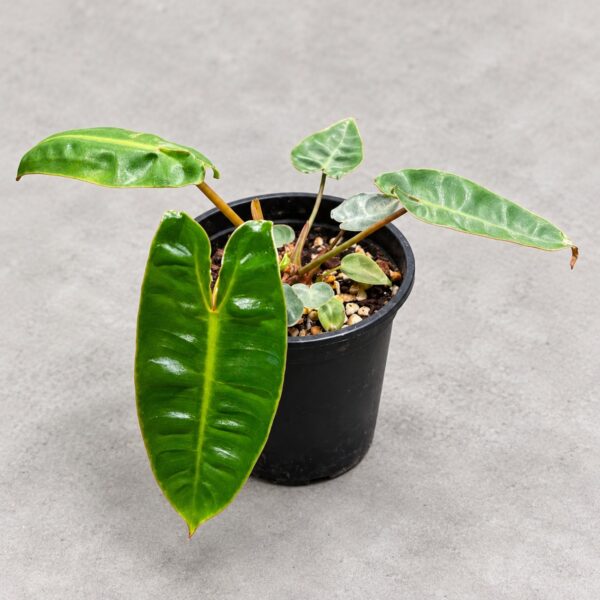
Philodendron 'Florida Beauty' 佛羅里達美人蔓綠絨
Hong Kong care guide — useful before you buy and after it arrives.
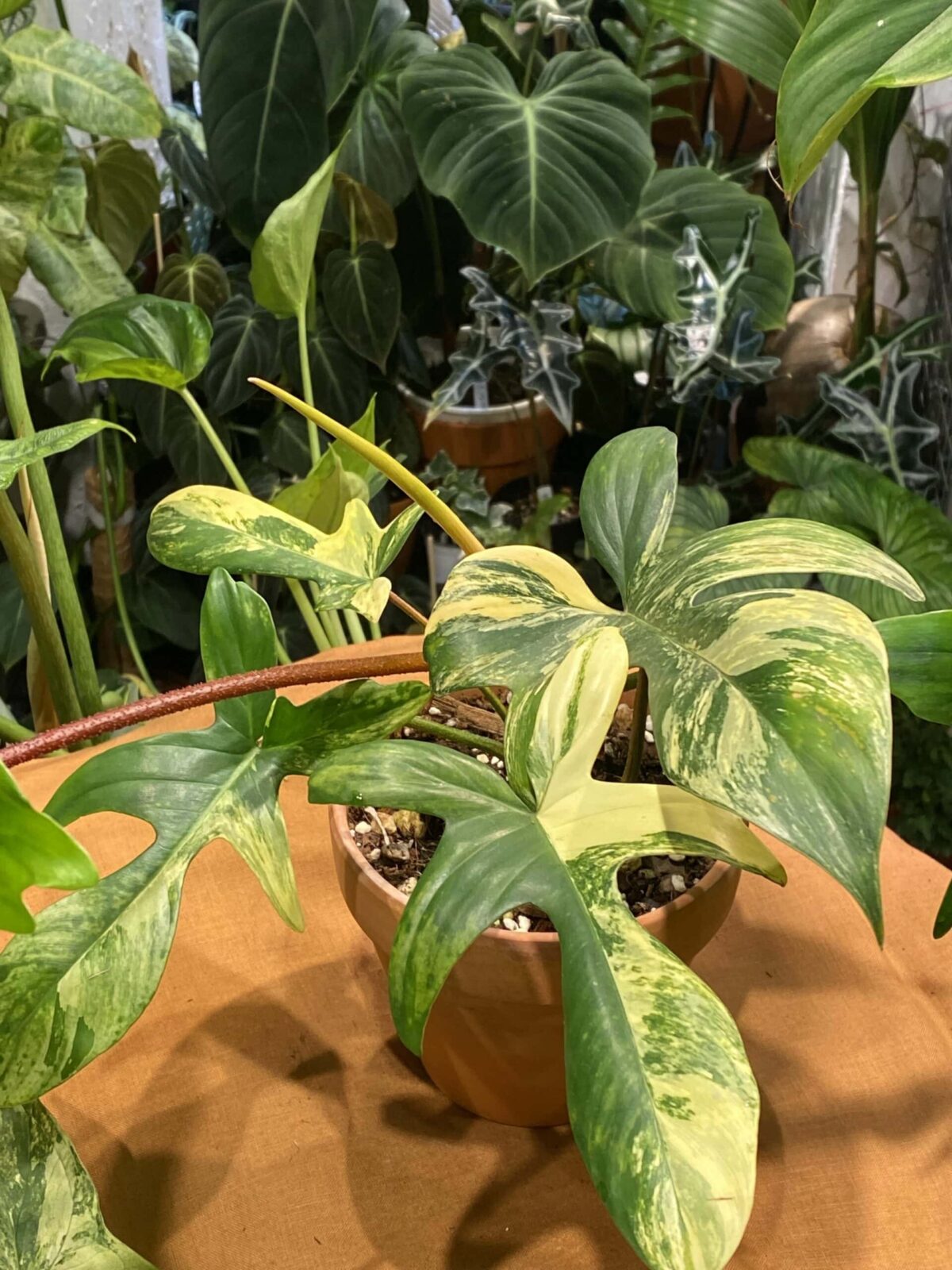
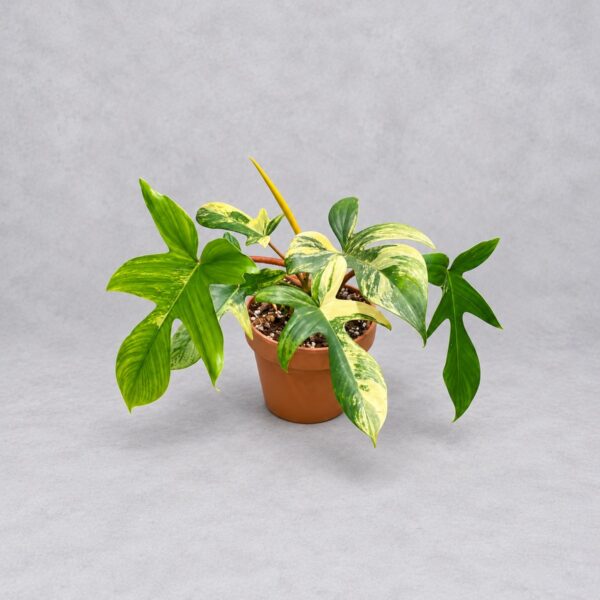
Shop this plantGreen-and-white variegated leaves paired with a distinctive split leaf shape — every leaf is a unique work of natural art, a top-tier treasure that Philodendron collectors dream of owning.
Origin & characteristics
Background: Florida Beauty is a variegated form of Philodendron 'Florida' (itself a hybrid of Philodendron pedatum and Philodendron squamiferum), developed through selective breeding by horticulturists rather than occurring in the wild.
Growth characteristics:
- A climbing Philodendron, requiring a sphagnum pole or climbing frame for support
- Leaves have a distinctive split shape (similar to an ostrich foot), with splits becoming more pronounced as the plant matures
- Its biggest feature is the green-and-white variegation, with white portions appearing as blocks, stripes, or a splashed pattern
- Every leaf's variegation pattern is different, entirely unique
- The stem carries red bristles (inherited from the squamiferum parent)
- Mature leaves can reach 25-35 cm, getting bigger as it climbs
- Growth rate is moderate, depending on the degree of variegation
Important note: since the variegated portions lack chlorophyll, fully white or highly variegated leaves have a shorter lifespan and weaker photosynthetic capacity — this is completely normal.
Light
| Item | Recommendation |
|---|---|
| Ideal light | Bright indirect light to medium-strong light (1,000-2,500 lux) |
| Placement | An east- or north-facing windowsill; a south-facing window can be filtered with a sheer curtain |
| Avoid | Harsh direct midday sun, especially in summer |
| Signs of insufficient light | Variegation turning green (reversion), leaves becoming thinner, internodes stretching |
| Tip | Ample light helps maintain vivid white variegation; too little light causes gradual fading |
Watering
| Item | Recommendation |
|---|---|
| Frequency | Water once the top 2-3 cm of soil dries out, roughly every 7-10 days |
| Method | Water slowly around the rim until it drains from the base |
| Water quality | Room-temperature tap water left standing, filtered water, or rainwater |
| Seasonal adjustment | Slightly more frequent in spring/summer growing season; reduce in autumn/winter |
| Standing water warning | Empty tray runoff promptly |
| Humidity preference | 60% or above is ideal — high humidity helps new leaves unfurl |
Soil & pot
Soil recipe:
- Needs an extremely loose and breathable medium:
- Peat soil or coco coir 30% + perlite 30% + bark 25% + charcoal 10% + sphagnum moss 5%
- Or use a ready-made aroid-specific soil mix
Pot choice:
- Terracotta or breathable plastic pots are best
- Drainage holes are essential
- Choose a pot with enough depth to accommodate a sphagnum pole
Sphagnum pole:
- Setting up a sphagnum pole or climbing frame is strongly recommended
- Leaves become noticeably larger and splits more pronounced once climbing
- Keep the pole moist so aerial roots can attach easily
- Mist the pole regularly to maintain humidity
Repotting timing:
- Roughly once every 1-2 years
- Spring (March-May) is the best repotting season
Temperature & humidity
| Item | Ideal range | Notes |
|---|---|---|
| Temperature | 18-28°C | Not below 15°C at minimum |
| Humidity | 60-80% | High humidity is critical for new leaves to unfurl properly |
| Winter care | Keep away from AC vents | Reduce watering in winter |
| Humidification methods | Humidifier, humidity tray, grouping with other plants | Avoid misting directly onto leaves |
Common problems
Q1: The white variegation is turning back to green (reverting)?
This is mainly due to insufficient light. Move to a brighter position, and new leaves may regain variegation. Leaves that have already reverted to green won't turn white again.
Q2: Fully white leaves dying off?
Fully white leaves lack chlorophyll and can't photosynthesise, so they naturally have a shorter lifespan. If the plant keeps producing fully white leaves, you may need to slightly reduce light to balance the degree of variegation.
Q3: New leaves rotting or getting stuck while unfurling?
Insufficient humidity is the main cause. Increase ambient humidity (with a humidifier or humidity tray) and ensure the sphagnum pole stays moist, which helps new leaves unfurl smoothly.
Q4: Why is growth slow?
Slower growth is normal for highly variegated cultivars. Check whether light, root space, and humidity are all adequate. Avoid over-fertilising.
Q5: How do I maintain beautiful variegation?
Stable, bright indirect light is key. Too little light causes variegation to fade; too much light may scorch the white portions. A balance needs to be struck.
How to explain to customers
"Florida Beauty is the top-tier variegated cultivar within the Florida series — every leaf's pattern is different, just like a piece of art. It needs a sphagnum pole to climb, and the higher it climbs, the bigger and more beautiful the leaves get. Most importantly, it needs enough light, or the white patterning will turn back to green. Since the white portions can't produce food through photosynthesis, growth will be a bit slower, so patience is needed. Higher humidity helps new leaves unfurl more beautifully — we'd recommend pairing it with a humidifier."
Fun facts
- The origin of "Beauty": the name Florida Beauty perfectly describes its stunning variegated appearance, earning it the reputation as the "beauty pageant winner" of the Philodendron world
- The randomness of variegation: even on the same Florida Beauty plant, leaves produced at different times will have different variegation patterns — sometimes more white, sometimes less — which is part of what makes growing it both delightful and occasionally frustrating
- Red bristle stem: inherited from its parent Philodendron squamiferum (red-bristle Philodendron), the red bristles on the stem are a key identifying feature of the Florida series
- Market value: due to the difficulty of propagation and slow growth, Florida Beauty has remained consistently high-priced in the international market — a genuinely hard-to-find plant
- A craze in Japan: Florida Beauty sparked a buying frenzy in the Japanese plant market, with premium specimens once selling for hundreds of thousands of yen
Keywords
Philodendron, Philodendron Florida Beauty, variegated Philodendron, variegated, climbing type, sphagnum pole, white variegation, foliage plant, tropical plant, indoor plant, Plantjai, collector's plant, rare plant, horticultural hybrid
參考資料(想知來源可展開)
References
- Royal Botanic Gardens, Kew — Plants of the World Online: genus Philodendron, https://powo.science.kew.org/
- ASPCA — Toxic and Non-Toxic Plant List, https://www.aspca.org/pet-care/animal-poison-control/toxic-and-non-toxic-plants
⚠️ Contains calcium oxalate crystals; ingestion may cause mouth irritation, swelling, or discomfort. Keep out of reach of children and pets.
Plantjai · Causeway Bay collector indoor plants · WhatsApp +852 66807550
Plantjai shop · In stock online
Philodendron 'Florida Beauty'
Philodendron 'Florida Beauty'
Original price was: HK$2,380.00.HK$580.00Current price is: HK$580.00.
Hong Kong delivery · Causeway Bay pickup
For Hong Kong homes and offices. Stock and pricing follow the product page.
IN STORE NOW
Plants for this guide
Related plants in stock now — live prices, delivery or Causeway Bay pickup.
Philodendron 'Florida Ghost'
Philodendron 'Florida Ghost'
from HK$118.00
In stock · store pickup
View plantPhilodendron hederaceum 'Lemon Lime'
Philodendron hederaceum 'Lemon Lime'
HK$198.00
In stock · store pickup
View plant
FREE PLANT ADVICE
Send us a photo before you change anything
WhatsApp a photo of the plant and your window light. Our Causeway Bay team will suggest care steps or plants that suit your space.
STORE · CAUSEWAY BAY
4/F, 39 Yiu Wa Street, Causeway Bay
Daily 12:30–8:00pm · ~3 min walk from Times Square
Map & directionsPlant Care