
How to Care for Philodendron Billietiae in Hong Kong | Plantjai

Plantjai 植仔 · Care Encyclopedia
Philodendron Billietiae
Hong Kong care guide — useful before you buy and after it arrives.
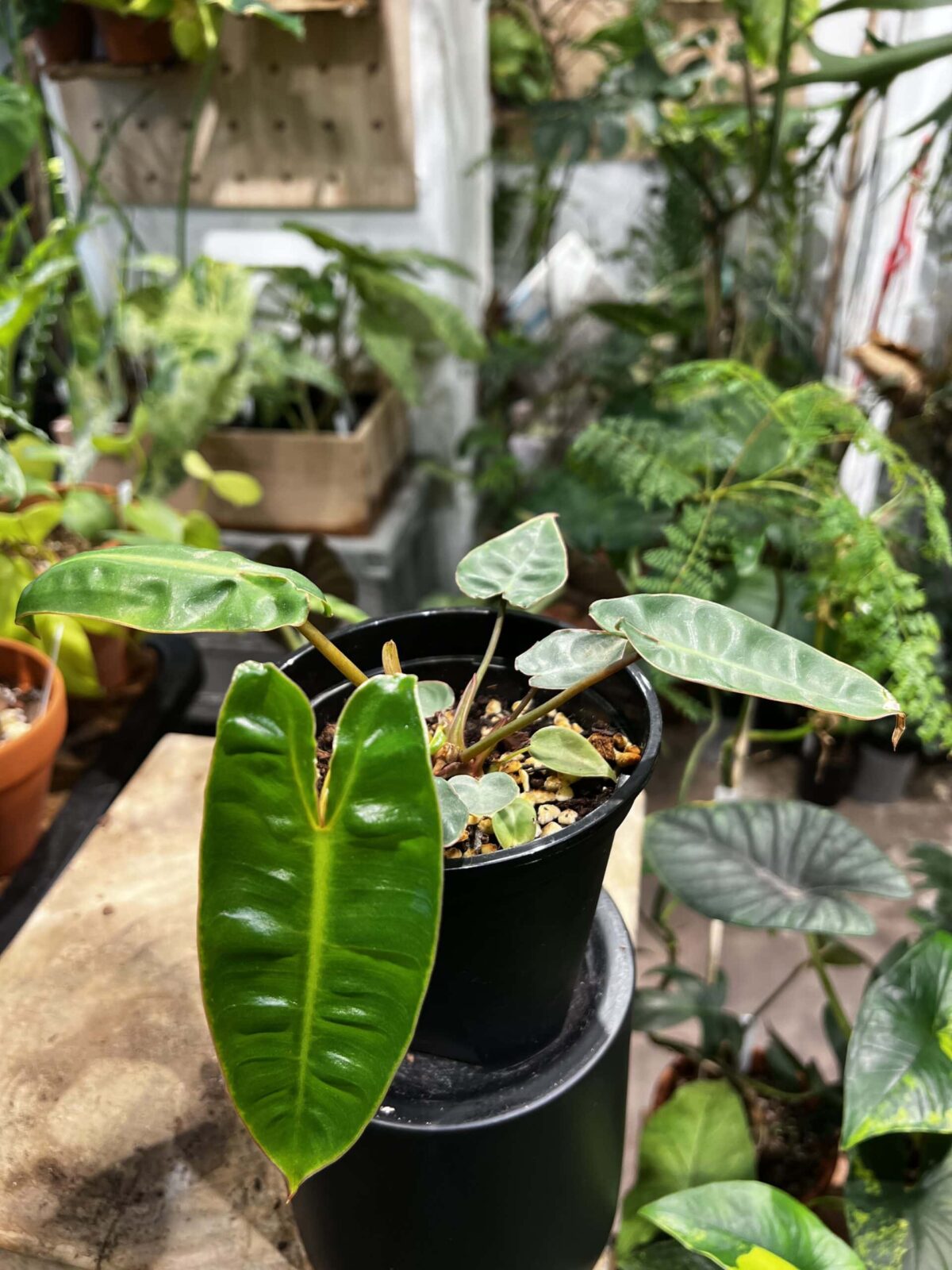
Shop this plantIts signature bright orange petiole paired with large, ruffled, wave-edged leaves makes this an instantly recognisable classic — able to grow leaves nearly a metre long even indoors, with real commanding presence.
Origin & characteristics
Philodendron billietiae is native to the tropical rainforest of Brazil, Guyana, and French Guiana in South America, a semi-epiphytic plant. It was first discovered in 1981 by botanist Frieda Billiet in the lowland tropical rainforest of French Guiana, and formally described in 1995 by American botanist Thomas B. Croat, who named it in her honour.
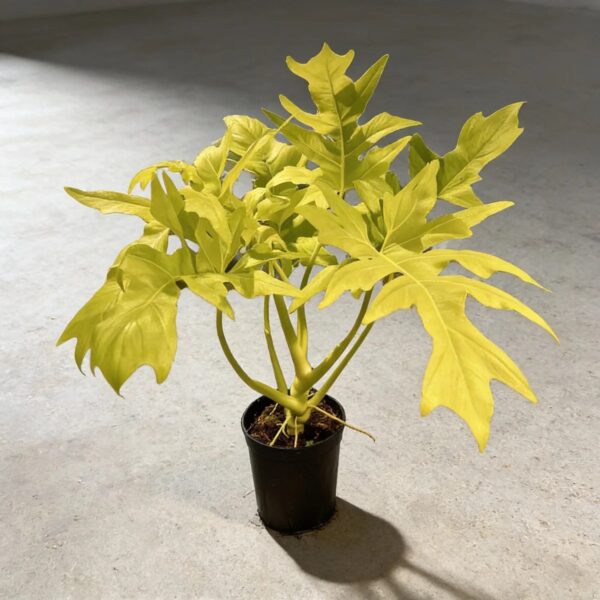
This has become an extremely popular species in recent years, a medium-to-large climbing Philodendron. Its most distinctive feature is its bright orange-yellow petiole (the section connecting the leaf blade to the stem), paired with large, long-oval leaves with wavy, ruffled edges. Mature indoor leaves can reach 60-90 cm in length, and even longer — nearly a metre — in the wild. The leaves have a thick, waxy sheen, with the deep green leaf surface set against the orange-yellow petiole creating a striking, vivid contrast.
⚠️ Toxicity warning: all Philodendron species contain calcium oxalate crystals, toxic to humans and pets. Ingestion may cause mouth burning, drooling, vomiting, and difficulty swallowing. Please be sure to keep it out of reach of children and pets.
Light
This Philodendron loves bright indirect light — ample light supports healthy leaves and encourages the development of large-sized foliage.
- Ideal placement: an east- or north-facing windowsill, 1-2 metres from the window
- 6-8 hours of bright indirect light daily supports its vigorous growth
- Avoid harsh midday direct sun, or the waxy leaf surface will develop yellow-brown scorch marks
- In winter with weaker sun, it can tolerate being closer to the window, even a small amount of direct morning sun
- Insufficient light causes smaller leaves, a fading orange petiole colour (losing its vivid brightness), and slower growth
- If indoor light is insufficient, a full-spectrum grow light for 10-12 hours daily is recommended
Watering
This Philodendron likes consistently lightly moist conditions, but is very averse to standing water — root rot is the most common cause of death.
- Active spring/summer growth: water thoroughly once the top 2-3 cm of soil dries out, roughly every 5-7 days
- Slower autumn/winter growth: water once the soil is about half dry, roughly every 7-10 days
- Water thoroughly each time, until it drains from the base, ensuring water reaches the lower root zone
- Empty tray runoff after watering to avoid prolonged root soaking
- Use room-temperature tap water left standing, or filtered water, avoiding water that's too cold
💡 Judging technique: insert a finger about two finger-widths into the soil, and water once it feels dry. Slightly drooping leaves signal thirst, but usually recover quickly after watering. If leaves stay persistently drooping while the soil is moist, it may be a sign of root rot.
Soil & pot
This Philodendron needs an extremely well-draining, breathable medium, as its roots are very sensitive to standing water.
Recommended soil ratio:
- Coco coir or peat soil: 35%
- Coco husk chips (coarse grade): 30%
- Perlite or pumice: 25%
- Bark or charcoal: 10%
This recipe emphasises a high proportion of coarse-grained material, ensuring water drains quickly while maintaining good airflow.
Pot choice:
- Must have drainage holes — drainage is an absolute requirement
- Terracotta pots are the best choice, with high breathability that helps water evaporate and reduces root rot risk
- Plastic pots can also be used, but require closer attention to watering amounts
- Fast growth rate — repot roughly every 1-2 years
Climbing support:
- This is a medium-to-large climbing species, and a sphagnum pole or coco coir pole is essential for climbing
- Plants with support develop noticeably larger leaves and more vivid petiole colouring
- A support pole also helps mimic its native environment, encouraging the plant to reach its full growth potential
Repotting timing: spring (March-May) is the best repotting period — repot when roots emerge from the drainage holes or water starts draining more slowly. Size up by only one pot size each time.
Temperature & humidity
Temperature:
- Optimal growing temperature: 20°C – 28°C
- Ideal daytime temperature: 24°C – 27°C
- Ideal nighttime temperature: 18°C – 21°C
- Minimum tolerance: 13°C (prolonged temperatures below 15°C noticeably stall growth)
- Keep room temperature above 16°C in winter
- Avoid direct AC airflow, heater vents, and environments with dramatic temperature swings
Humidity:
- Ideal humidity: 50% – 70%
- Minimum acceptable humidity: 45%
- While it adapts well to typical household humidity, maintaining above 60% is even better
- High humidity helps new leaves unfurl smoothly, reducing the chance of malformed leaves
- Ways to increase humidity: use a humidifier, place a water tray nearby, group with other plants, mist the surrounding air
Common problems
| Symptom | Likely cause | What to do |
|---|---|---|
| Yellowing, dropping leaves | Overwatering / poor drainage causing root rot | Check the roots immediately, trim rotten roots, repot in fresh well-draining soil, and control watering strictly |
| Fading petiole colour | Insufficient light / lack of nutrients | Increase light intensity, apply diluted balanced liquid fertiliser every 2-4 weeks during the growing season |
| Small, malformed new leaves | Humidity too low / lack of climbing support | Increase ambient humidity, add a sphagnum pole for climbing |
| Yellow-brown spots on leaves | Sunburn from direct sun | Move to an indirect light position, or use a curtain to filter strong light |
| Crispy, scorched leaf tips | Dry air / fertiliser too concentrated | Increase humidity, dilute fertiliser according to instructions and avoid over-fertilising |
| Growth stalled | Temperature too low / root-bound | Confirm room temperature is above 18°C, consider repotting to a larger pot in spring |
| Drooping, soft leaves | Underwatering / root rot | Check soil moisture — water thoroughly if too dry; check root health if soil is already moist |
How to explain to customers
"This is the orange-petiole Philodendron — its most eye-catching feature is that bright orange petiole, paired with a large, ruffled-edge leaf that's instantly recognisable. It was only discovered in 1981 in French Guiana, so it's actually a fairly new addition to the Philodendron family. It needs bright indirect light — avoid direct sun. Water once the top couple of centimetres of soil dry out, watering thoroughly — standing water and root rot are its biggest enemy, so the pot absolutely must have drainage holes, and the soil needs to be well-draining. Most importantly, give it a sphagnum pole to climb — with support, it develops larger leaves, and even indoors it can grow leaves nearly a metre long, really impressive. Keep it above 20°C ideally, and 50-70% humidity is enough. Remember the whole plant is toxic, so be careful about placement if you have young children or pets."
Fun facts
- Named after its discoverer: the species epithet "billietiae" honours Frieda Billiet, who first discovered this plant in 1981 in the lowland tropical rainforest of French Guiana (4°18′N, 52°10′W), and subsequently introduced live specimens to the National Botanic Garden of Belgium for cultivation.
- Not formally described until 1995: although discovered in 1981, it wasn't formally described and named by American botanist Thomas B. Croat until 1995 — a 14-year gap that shows just how rigorous plant taxonomy work can be.
- Leaves can grow nearly a metre long: in the wild, mature leaves of this Philodendron can reach nearly a metre in length; even indoors with proper light and a climbing support, it can easily reach 60-90 cm, making it a genuine "large-leaf species."
- A versatile semi-epiphyte: in the wild, this Philodendron can grow either epiphytically on trees or terrestrially in soil, giving it particularly strong adaptability.
Keywords
Orange-petiole Philodendron, Philodendron billietiae, orange-yellow petiole, wavy leaf edge, semi-epiphytic, large Philodendron, French Guiana, Brazil, bright indirect light, well-draining soil, sphagnum pole, climbing type, described 1995, Araceae, toxic Philodendron, moderate difficulty, Plantjai
參考資料(想知來源可展開)
References
- Royal Botanic Gardens, Kew — Plants of the World Online: Philodendron billietiae, https://powo.science.kew.org/
- ASPCA — Toxic and Non-Toxic Plant List, https://www.aspca.org/pet-care/animal-poison-control/toxic-and-non-toxic-plants
⚠️ Contains calcium oxalate crystals; toxic to humans and pets if ingested. Keep out of reach of children and pets.
Plantjai · Causeway Bay collector indoor plants · WhatsApp +852 66807550
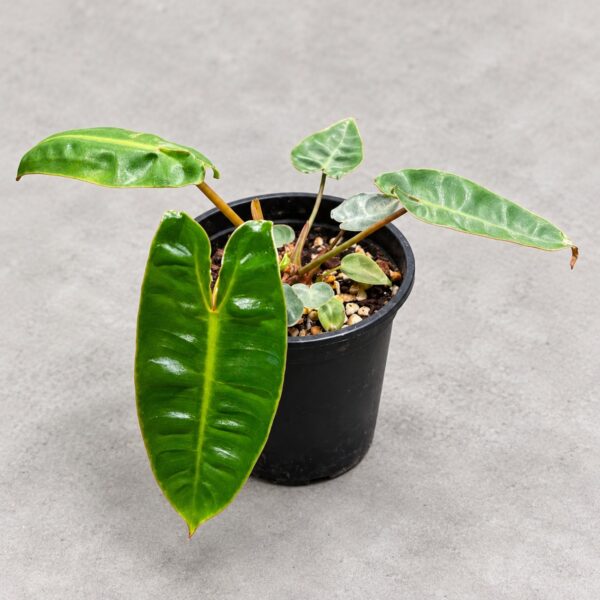
Plantjai shop · In stock online
Philodendron billietiae
Philodendron billietiae
HK$198.00
Hong Kong delivery · Causeway Bay pickup
For Hong Kong homes and offices. Stock and pricing follow the product page.
IN STORE NOW
Plants for this guide
Related plants in stock now — live prices, delivery or Causeway Bay pickup.
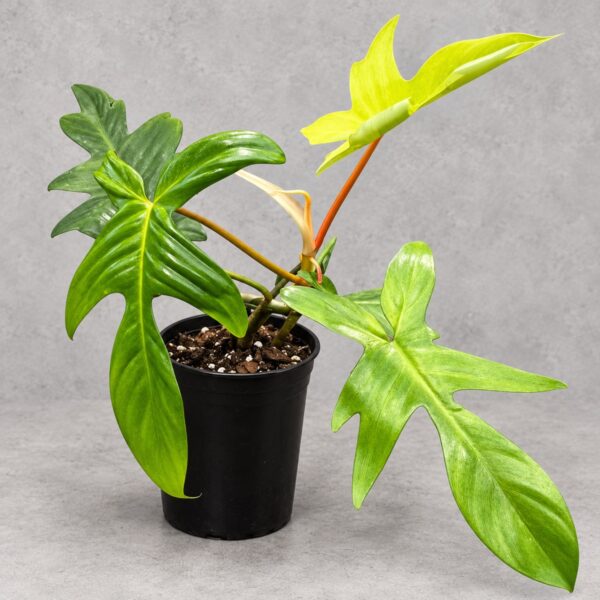
Philodendron 'Florida Ghost'
Philodendron 'Florida Ghost'
from HK$118.00
In stock · store pickup
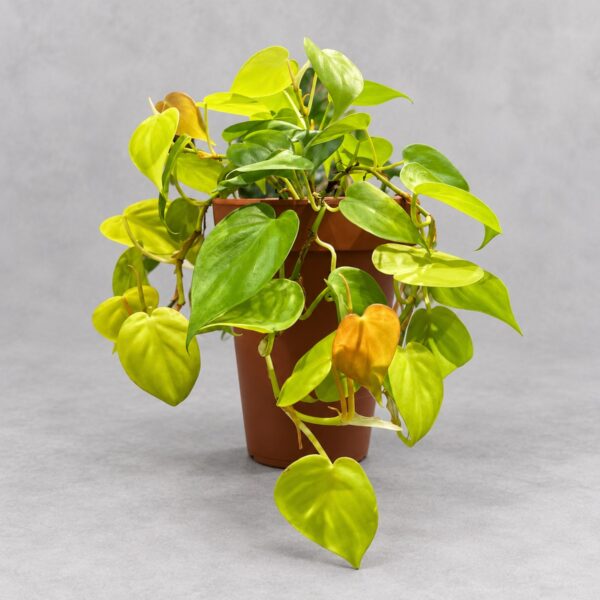
View plantPhilodendron hederaceum 'Lemon Lime'
Philodendron hederaceum 'Lemon Lime'
HK$198.00
In stock · store pickup
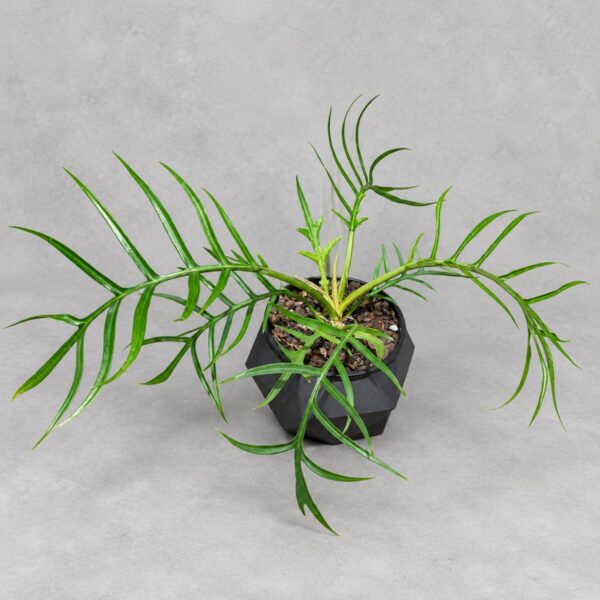
View plantPhilodendron warscewiczii 'Aurea Flavum'
Philodendron warscewiczii 'Aurea Flavum'
HK$298.00
In stock · store pickup
View plant
FREE PLANT ADVICE
Send us a photo before you change anything
WhatsApp a photo of the plant and your window light. Our Causeway Bay team will suggest care steps or plants that suit your space.
STORE · CAUSEWAY BAY
4/F, 39 Yiu Wa Street, Causeway Bay
Daily 12:30–8:00pm · ~3 min walk from Times Square
Map & directionsPlant Care