
How to Care for Monstera Standleyana Albo in Hong Kong | Plantjai

Plantjai 植仔 · Care Encyclopedia
Monstera Standleyana Albo
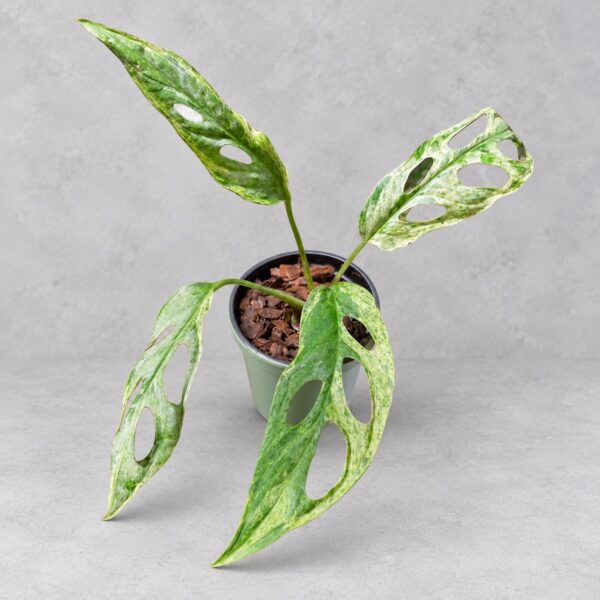
Monstera standleyana albo variegata 史丹利錦龜背竹
Hong Kong care guide — useful before you buy and after it arrives.
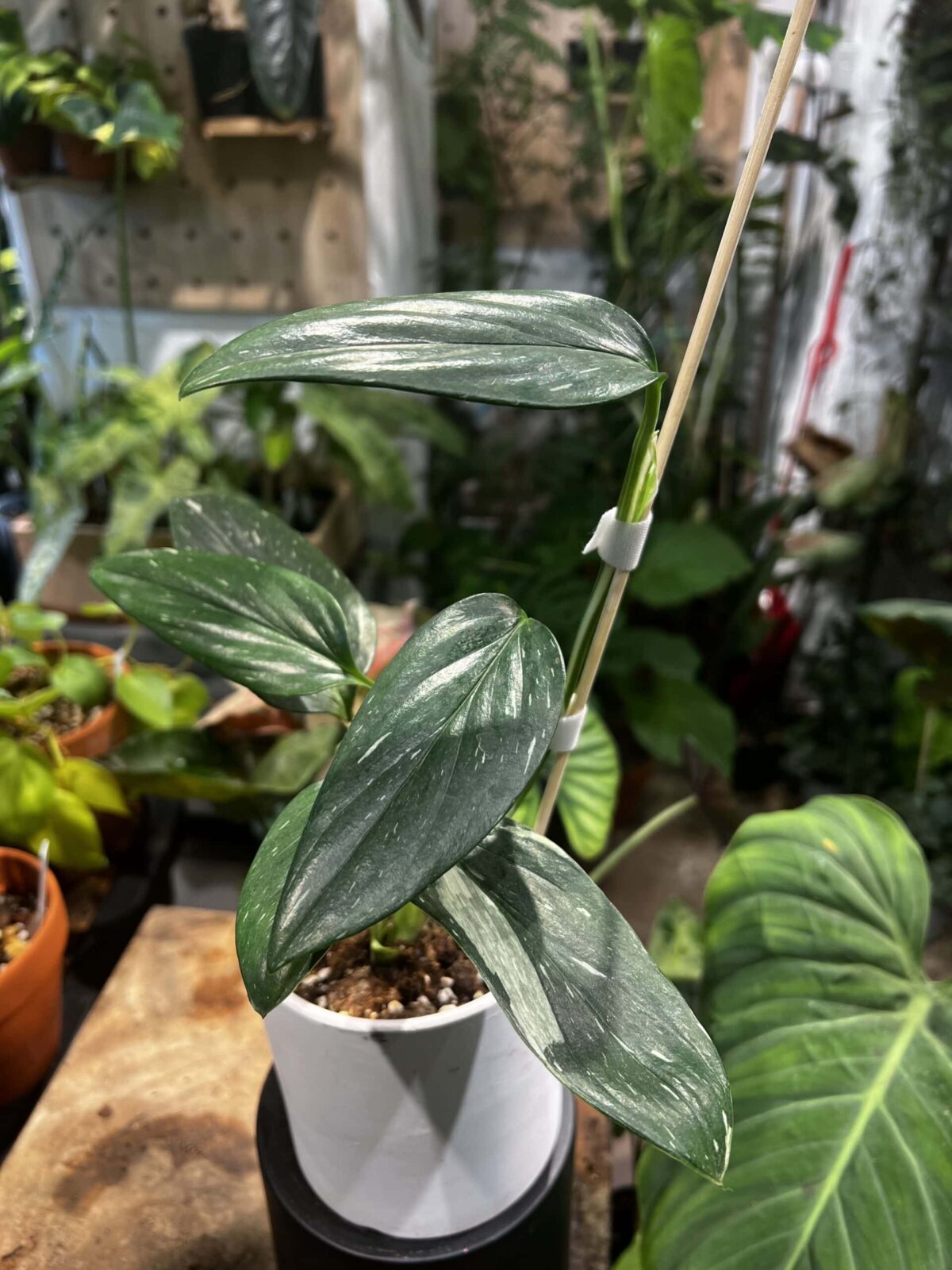
Shop this plantLong-oval leaves splashed with irregular creamy-white variegation — every unfurling new leaf is a surprise. Its variegation is stable and won't revert, making it a beginner-friendly yet highly ornamental introduction…
Origin & characteristics
Monstera standleyana is native to the tropical rainforest of Costa Rica and Panama in Central America, formally described in 1931. Its biggest difference from typical Monstera species is that it doesn't develop fenestrations — instead, it has smooth, elongated, long-oval leaves with a semi-glossy texture.
'Albo-Variegata' is its most popular variegated form, with irregular milky-white patterning caused by a stable genetic mutation (not induced by a virus or chemicals), so its variegation is consistent and won't suddenly revert to solid green.
Key characteristics:
- A semi-climbing vine, able to reach 2 metres or more indoors
- Stable variegation expression — every leaf's pattern is unique
- Moderate growth rate, producing 1-2 new leaves every 2-3 weeks in ideal conditions (spring/summer)
- Leaves collect dust easily and need regular cleaning
- Aerial roots are weaker than other Monstera species, so climbing requires manual assistance to secure the stem
⚠️ Toxicity warning: contains insoluble calcium oxalate crystals; ingestion causes mouth burning, drooling, and swelling. Keep well away from pets and children.
Light
Medium to bright indirect light, at least 6 hours of bright indirect light daily.
- Best placement: near an east- or north-facing window, or a south-/west-facing window with a sheer curtain to filter light
- Recommended light intensity: 1,500-2,500 foot-candles (measurable with a smartphone light meter app)
- The variegated (white) portions lack chlorophyll and need adequate light to support photosynthesis across the whole leaf
- Insufficient light (below 1,000 fc) causes internodes to stretch, variegation contrast to fade, and leaves to become thinner
- Avoid direct sun, especially on the white variegated portions, which scorch and brown easily
- In winter, move closer to a window or supplement with an LED grow light (20-30 watts, 12 hours daily)
Watering
Water once the top 2 inches of soil dries out — better slightly dry than overwatered.
- Insert a finger about 2 inches (5 cm) into the soil; water once it feels dry
- Spring/summer growing season: roughly every 7-12 days
- Autumn/winter: every 14-21 days, adjusted for conditions
- Water thoroughly until it drains from the base, emptying the tray within 15 minutes
- Recommend using filtered water, rainwater, or tap water left standing for 24 hours (water with TDS above 100ppm easily causes leaf-edge scorching)
- Can tolerate brief dry spells, even the soil drying out completely for a few days, but shouldn't be a habit
- Overwatering is the biggest enemy — prolonged standing water easily leads to root rot
Soil & pot
A well-draining, breathable, lightweight soil rich in organic matter.
Recommended recipe (by volume):
- Quality indoor potting mix (coco coir-based, containing mycorrhizal fungi): 3 parts
- Orchid bark (1/4-1/2 inch grade): 2 parts
- Horticultural charcoal: 1 part
- Worm castings: 0.5 part
Pot choice:
- Drainage holes are essential
- Repot once every 18-24 months, in spring
- Size up by only one pot size each time (e.g. 5 inch to 6 inch) — don't skip sizes
- The plant grows best once its roots fill the pot; being slightly root-bound actually favours healthy growth
Temperature & humidity
| Condition | Ideal range | Notes |
|---|---|---|
| Temperature | 18-27°C (64-80°F) | Growth continues year-round above 18°C; damage occurs below 10°C |
| Humidity | 50-70% | Typical household humidity is generally acceptable; growth improves above 50% |
- Humidity too low (below 40%) makes the white variegated portions prone to brown spotting
- Regular misting isn't necessary — the effect is brief and encourages fungal growth
- If additional humidity is needed, use a humidifier or group with other plants
- Avoid placing near AC vents or heaters
- May grow year-round in warm environments; goes semi-dormant in autumn/winter in cooler conditions
Common problems
| Symptom | Likely cause | What to do |
|---|---|---|
| White variegated portions turning brown | Common with white-variegated plants — white tissue lacks chlorophyll, and the plant gradually withdraws resources from these "unproductive" areas | Raise humidity above 60% and avoid direct strong light on the white portions; this can't be entirely prevented |
| Elongated internodes, sparse leaves ("runners") | Classic sign of insufficient light — the plant stretches its stems searching for light | Move closer to a window or add a grow light |
| Yellowing leaves | Lower older leaves: normal ageing. Multiple leaves at once: check for overwatering, insufficient light, or pests (thrips, spider mites). New leaves: possible nutrient deficiency or low temperature | Address the specific cause identified |
| Difficulty propagating | Cuttings without a node won't root | Take a stem section with at least one node and one healthy leaf, propagate in water (2-4 weeks) or moist sphagnum/perlite |
Why is it called "Cobra"? Its slender leaves and trailing posture evoke a cobra, giving it the nickname "Cobra Monstera." It's sometimes mislabelled as "Philodendron Cobra," but botanically it is genuinely a Monstera.
How to explain to customers
"This variegated Monstera standleyana is a great entry point into variegated plants! Its variegation is very stable, unlike some cultivars that suddenly revert to solid green — every leaf's pattern is unique, and unfurling a new leaf is always a surprise. It's fairly easy to care for too: give it ample light but avoid direct sun, and water once the top inch or two of soil dries out — better a bit dry than too wet. Humidity above 50% is ideal, giving the white portions a nicer look with fewer scorched edges. Remember to wipe the leaves regularly, as they collect dust easily. If you want it to climb nicely, secure it to a sphagnum pole with string or clips — its aerial roots are a bit weaker and don't attach as firmly on their own."
Fun facts
- Stable variegation is rare: most white variegated Monstera (like Monstera deliciosa 'Albo') are chimeras, prone to reverting or producing all-white leaves; but standleyana 'Albo' variegation comes from a somatic cell mutation, which is genetically stable and preserved even through cuttings
- Never fenestrates: unlike most Monstera species, standleyana never develops fenestrations or splits no matter how mature it becomes — its leaves always stay a complete long-oval shape
- A golden version exists too: besides 'Albo-Variegata' (white), there's also an 'Aurea-Variegata' (golden) version with equally beautiful golden-yellow variegation
- Weaker aerial roots: compared to the sturdy aerial roots of other Monstera species, standleyana's are weaker, and some nodes don't produce aerial roots at all, so it needs help from its owner (string or clips) while climbing
- Will "run" for light: in insufficient light, it produces leafless bare stems (runners) as a survival strategy to search for light — a sign to reposition it
Keywords
Plantjai, Monstera standleyana, Albo-Variegata, white variegation, Cobra Monstera, Monstera, Araceae, variegated plant, climbing plant, vining plant, indoor foliage plant, beginner-friendly, stable variegation, tropical plant, toxic plant, pet safety
參考資料(想知來源可展開)
References
- Royal Botanic Gardens, Kew — Plants of the World Online: Monstera standleyana, https://powo.science.kew.org/
- ASPCA — Toxic and Non-Toxic Plant List, https://www.aspca.org/pet-care/animal-poison-control/toxic-and-non-toxic-plants
⚠️ Contains insoluble calcium oxalate crystals; toxic to humans and pets if ingested. Keep out of reach of children and pets.
Plantjai · Causeway Bay collector indoor plants · WhatsApp +852 66807550
Plantjai shop · In stock online
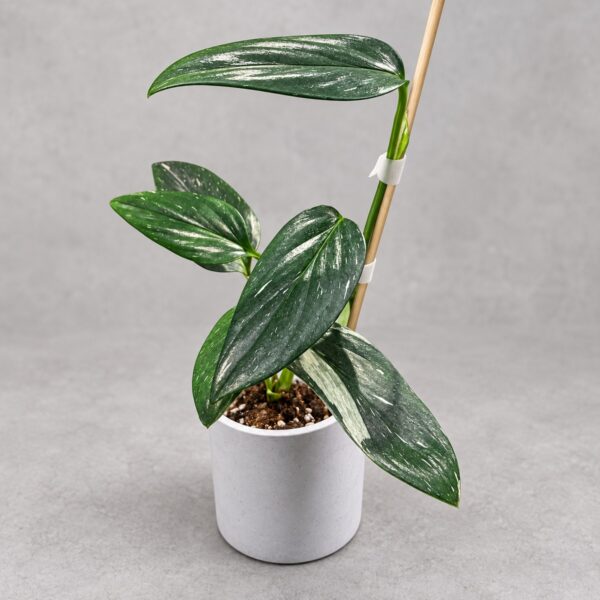
Monstera standleyana albo variegata
HK$688.00
Hong Kong delivery · Causeway Bay pickup
For Hong Kong homes and offices. Stock and pricing follow the product page.
IN STORE NOW
Plants for this guide
Related plants in stock now — live prices, delivery or Causeway Bay pickup.
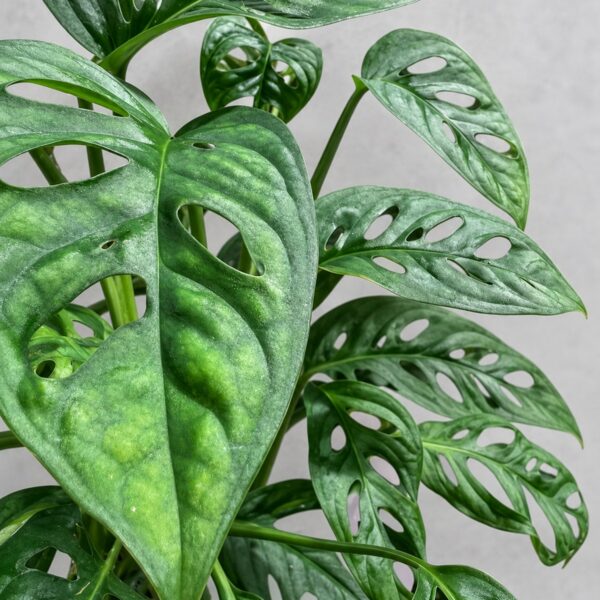
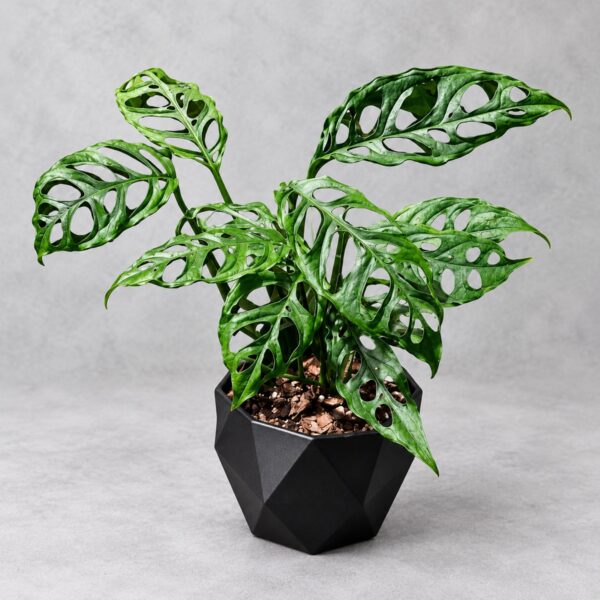
Monstera obliqua Peru
Original price was: HK$480.00.HK$280.00Current price is: HK$280.00.
In stock · store pickup
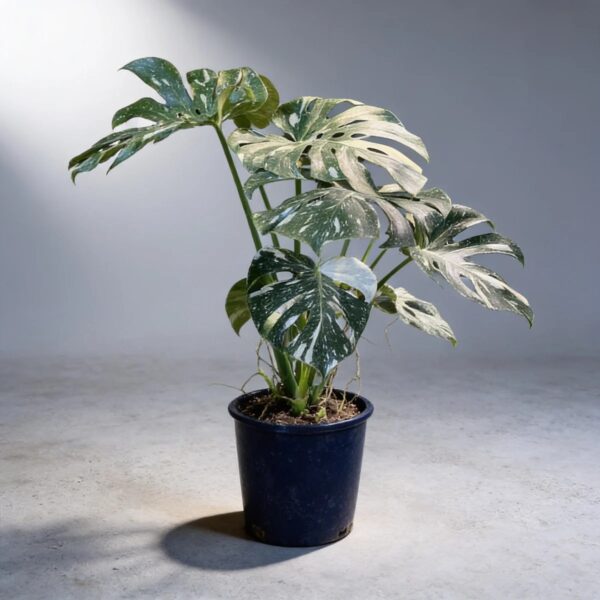
View plantMonstera 'Thai Constellation'
Monstera 'Thai Constellation'
from HK$280.00
In stock · store pickup
View plant
FREE PLANT ADVICE
Send us a photo before you change anything
WhatsApp a photo of the plant and your window light. Our Causeway Bay team will suggest care steps or plants that suit your space.
STORE · CAUSEWAY BAY
4/F, 39 Yiu Wa Street, Causeway Bay
Daily 12:30–8:00pm · ~3 min walk from Times Square
Map & directionsPlant Care