
How to Care for Monstera Spruceana in Hong Kong | Plantjai

Plantjai 植仔 · Care Encyclopedia
Monstera Spruceana
Hong Kong care guide — useful before you buy and after it arrives.
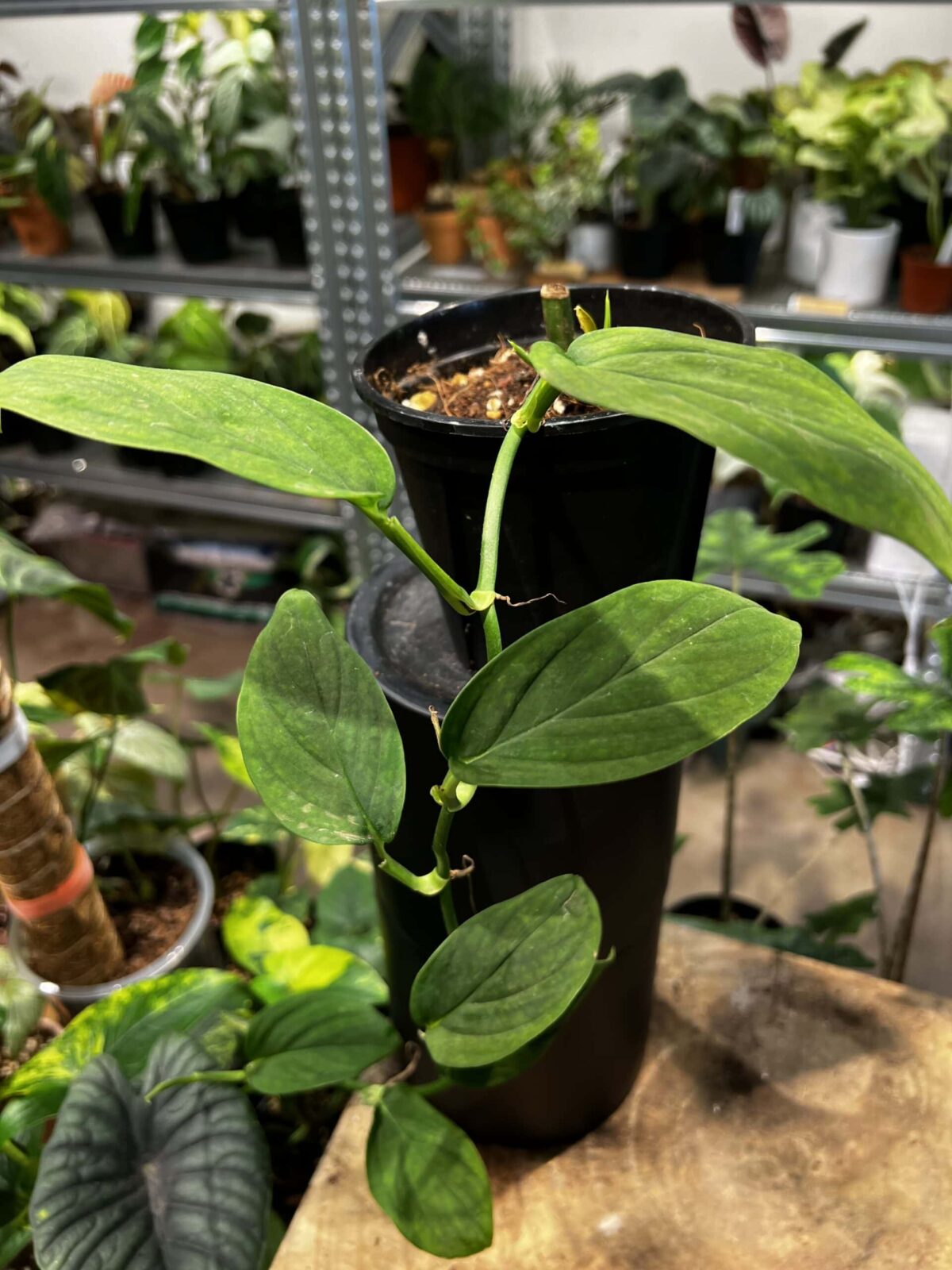
Shop this plantJuvenile leaves grow flat against their support in a distinctive "shingling" pattern with a metallic blue-green sheen; mature leaves unfurl into a three-dimensional, rippled texture like a sculpted work of art — one o…
Origin & characteristics
Monstera spruceana is native to the tropical rainforest of Central and South America, an epiphytic or semi-epiphytic member of the Araceae family. What makes it especially unusual is how dramatically its form changes throughout its growth: juvenile leaves are small and long-oval, lying flat against their support in an overlapping, scale-like pattern; as it climbs and matures, the leaves gradually enlarge, developing a distinctive rippled texture and metallic sheen.
Key characteristics:
- A climbing plant, reaching 1.5-3 metres indoors with support
- The juvenile shingling form requires high humidity and a consistently moist support to be maintained
- Distinctive leaf texture with a metallic blue-green sheen
- Moderate growth rate; patience is needed to observe the transformation in form
⚠️ Toxicity warning: contains insoluble calcium oxalate crystals; ingestion causes mouth burning, drooling, and vomiting. Listed as toxic to cats and dogs by the ASPCA — households with pets should place it out of reach.
Light
Bright indirect light, with an ideal range of 1,500-3,000 lux.
- Best placement: a short distance from a south- or east-facing window, where it's bright but the sun doesn't fall directly on the leaves
- A small amount of gentle morning or evening direct sun is acceptable
- Insufficient light causes internodes to stretch and leaves to become sparse, hindering the transition from juvenile to mature leaf form
- Avoid harsh midday direct sun, as the thin leaves scorch easily
- In winter, consider supplementing with a full-spectrum LED light for 12-14 hours daily
Watering
Water once the top 2-3 cm of soil dries out, keeping conditions lightly moist but never waterlogged.
- Finger test: insert a finger 2-3 cm into the soil, and water once it feels dry
- Growing season (spring/summer): roughly every 5-9 days, with actual frequency depending on pot size, light, and season
- Autumn/winter: reduce frequency, letting the topsoil dry out a bit more before watering
- Water thoroughly until it drains from the base, then empty the tray of standing water
- The juvenile shingling form depends on a moist support (a sphagnum pole or board) to attach properly — remember to mist the support surface regularly
- Never let the pot base sit in standing water for extended periods — root rot is the most common cause of death
Soil & pot
A coarse-grained, highly breathable mix designed for aroids.
Recommended recipe (by volume):
- Orchid bark (coarse grade): 40%
- Perlite or pumice: 30%
- Coco coir or peat: 20%
- Horticultural charcoal: 10%
Pot choice:
- Drainage holes are essential; a terracotta or unglazed ceramic pot is recommended
- Choose a taller pot to leave room for inserting a sphagnum pole or board
- Size up by only one pot size when repotting, roughly every 12-18 months
- If you prefer a decorative pot, use the "pot-in-pot" method — an inner pot with drainage holes for planting, and an outer pot purely for decoration
Temperature & humidity
| Condition | Ideal range | Notes |
|---|---|---|
| Temperature | 18-28°C (65-82°F) | Minimum tolerance around 10°C, avoid going below 15°C |
| Humidity | 60-80% | Below 50%, juvenile leaves pull away from their support and edges turn brown |
- High humidity is critical for maintaining the juvenile shingling form — insufficient humidity means juvenile leaves can't attach properly to their support
- A humidifier, a glass display cabinet, or grouping with other tropical plants are all recommended
- Avoid placing near AC vents, heaters, or drafty spots
- Misting can help with humidity, but ensure good air circulation to avoid fungal growth
Common problems
| Symptom | Likely cause | What to do |
|---|---|---|
| Juvenile leaves pulling away from the support, curling upward | Humidity too low, or the support has dried out | Raise humidity above 60%, and regularly mist the sphagnum pole or board so climbing roots can attach |
| Only ever producing small shingled leaves, no mature leaves appearing | Insufficient light, or insufficient vertical support | Move closer to a window; provide a tall sphagnum pole to let it continue climbing — mature leaves typically appear higher up |
| Leaf edges drying out and turning brown | Air too dry, or irregular watering | Stabilise humidity above 60% first, then check watering consistency |
| Yellowing leaves, soft mushy stem, foul-smelling soil | Root rot | Remove from the pot promptly, trim all brown/black rotten roots, soak in a 1:9 hydrogen peroxide solution for 5 minutes, repot in fresh dry soil, and withhold water for 7-10 days |
Propagation: in spring or summer, cut a stem section with a node and aerial root, insert into moist sphagnum moss or perlite, and maintain high humidity — roots typically form in 2-4 weeks.
How to explain to customers
"What's so fascinating about Monstera spruceana is that it transforms! The juvenile leaves are small, lying flat against the pole like fish scales — really distinctive. As it climbs higher over time, the leaves get bigger and develop rippled texture with a bit of a metallic sheen. For care, remember humidity needs to be high, especially if you want to see that shingling effect — keep the sphagnum pole consistently moist. Water once the top inch or two of soil dries out, and make sure the soil drains well and never sits waterlogged. It's a bit of a niche species, but customers who appreciate it find it incredibly rewarding to grow!"
Fun facts
- Where the name comes from: the species epithet "spruceana" honours 19th-century British botanist Richard Spruce, who conducted extensive plant collecting expeditions deep in the Amazon basin
- Also known as the Shingle Monstera: "shingle" refers to overlapping roof tiles, a perfect description of how juvenile leaves grow flat against their support
- The mystery of the metallic sheen: the blue-green iridescence on the leaf surface is a structural colour, created by the special arrangement of epidermal cells rather than pigment
- A dramatic transformation: the juvenile and mature leaves of the same plant look almost like two different species — this dramatic form change (called heteroblasty) is particularly striking within the genus Monstera
- Mature leaves can reach a foot long: though rarely seen indoors, in ideal conditions mature leaves including the petiole can exceed 30 cm, with an intensely three-dimensional rippled texture
Keywords
Plantjai, Monstera spruceana, Monstera, Araceae, shingling Monstera, Shingle Monstera, climbing plant, sphagnum pole, high-humidity plant, metallic sheen leaves, indoor foliage plant, rare cultivar, tropical plant, toxic plant, pet safety, heteroblasty
參考資料(想知來源可展開)
References
- Royal Botanic Gardens, Kew — Plants of the World Online: genus Monstera, https://powo.science.kew.org/
- ASPCA — Toxic and Non-Toxic Plant List, https://www.aspca.org/pet-care/animal-poison-control/toxic-and-non-toxic-plants
⚠️ Contains insoluble calcium oxalate crystals; toxic to cats and dogs (per ASPCA) and toxic to humans if ingested. Keep out of reach of children and pets.
Plantjai · Causeway Bay collector indoor plants · WhatsApp +852 66807550
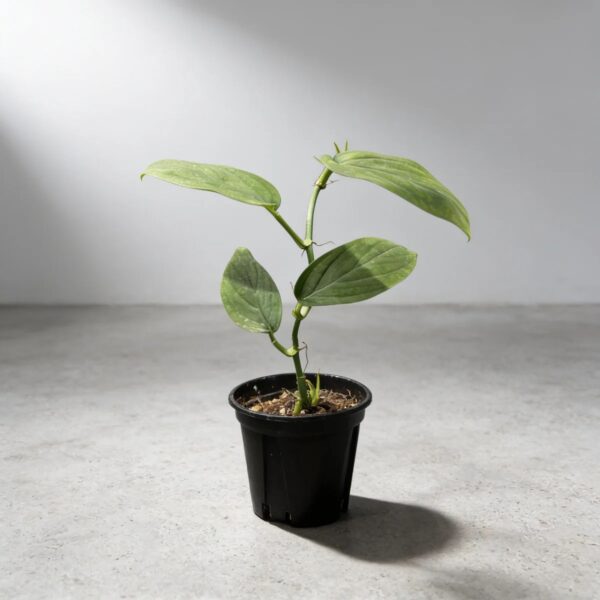
Plantjai shop · In stock online
Monstera spruceana
Monstera spruceana
HK$328.00
Hong Kong delivery · Causeway Bay pickup
For Hong Kong homes and offices. Stock and pricing follow the product page.
IN STORE NOW
Plants for this guide
Related plants in stock now — live prices, delivery or Causeway Bay pickup.
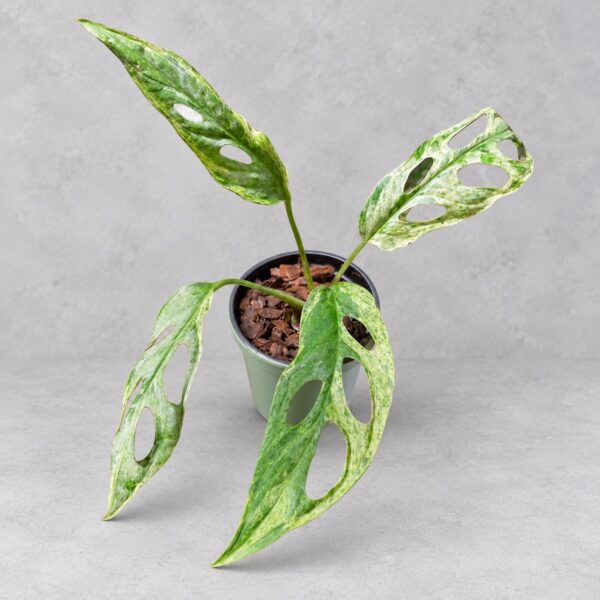
Monstera obliqua Peru
Original price was: HK$480.00.HK$280.00Current price is: HK$280.00.
In stock · store pickup
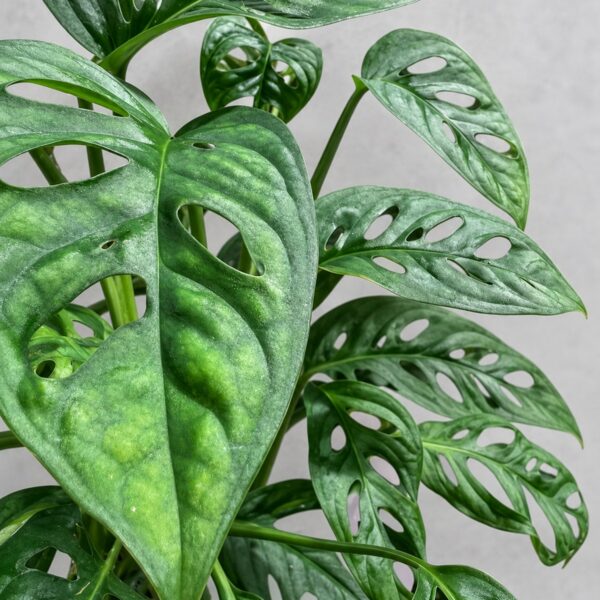
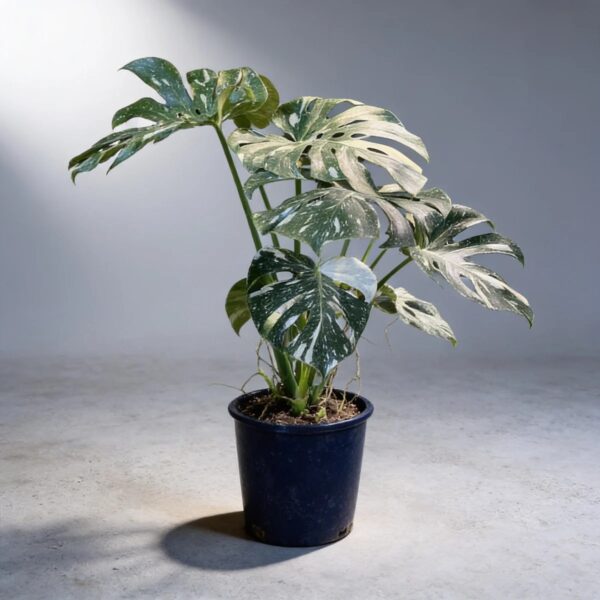
View plantMonstera 'Thai Constellation'
Monstera 'Thai Constellation'
from HK$280.00
In stock · store pickup
View plant
FREE PLANT ADVICE
Send us a photo before you change anything
WhatsApp a photo of the plant and your window light. Our Causeway Bay team will suggest care steps or plants that suit your space.
STORE · CAUSEWAY BAY
4/F, 39 Yiu Wa Street, Causeway Bay
Daily 12:30–8:00pm · ~3 min walk from Times Square
Map & directionsPlant Care