
How to Care for Monstera Obliqua Peru in Hong Kong | Plantjai

Plantjai 植仔 · Care Encyclopedia
Monstera Obliqua Peru
Hong Kong care guide — useful before you buy and after it arrives.
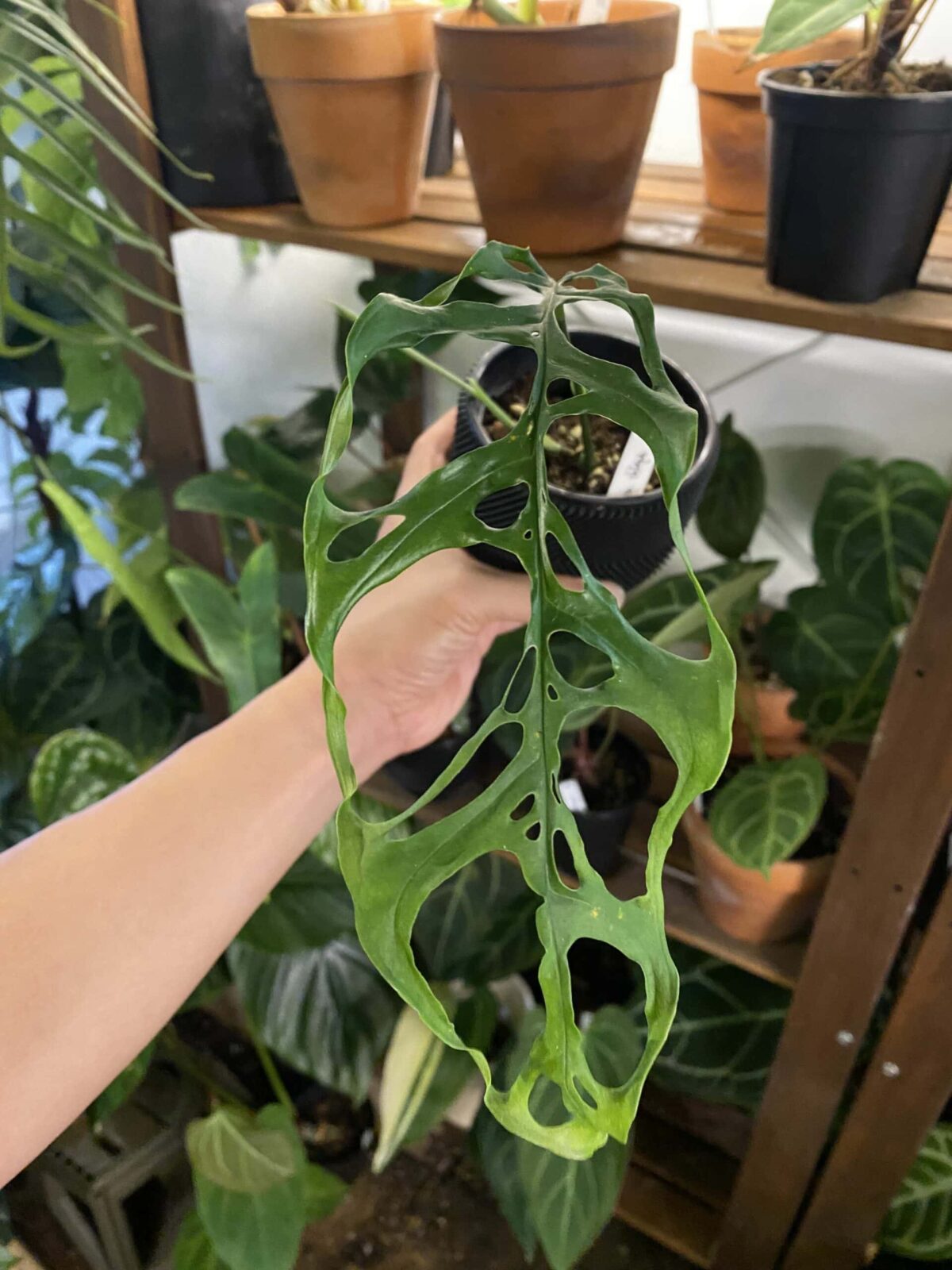
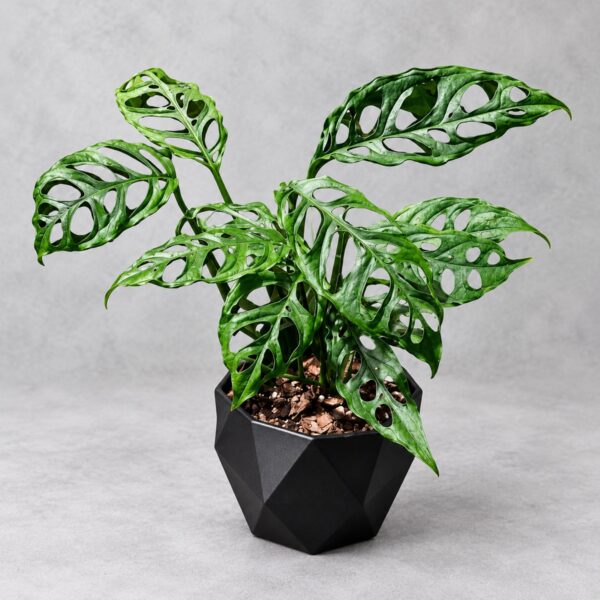
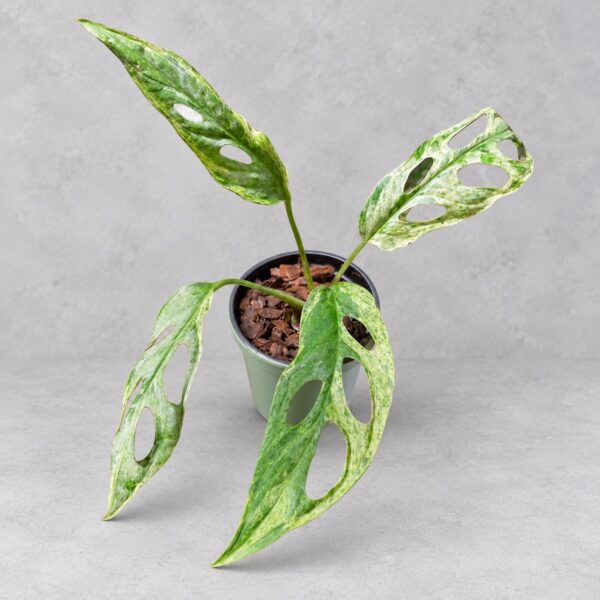
Shop this plantLeaves as thin as cicada wings, with a fenestration rate exceeding 90% — the most ethereal, dreamlike species in the entire Monstera family, often called the "lace queen of the tropical rainforest."
Botanical name pending confirmation
Origin & characteristics
A note on the botanical name: the plant marketed as "Monstera obliqua Peru" has genuinely disputed taxonomic status. Some botanists believe it may actually be Monstera epipremnoides, while others consider it a geographic variant of true Monstera obliqua. Until a more precise classification is confirmed, Plantjai lists this as "botanical name pending confirmation."
This Peruvian trailing Monstera is native to the tropical rainforest of Central and South America, primarily distributed across the lowland rainforest of Peru and neighbouring countries. It grows in the forest understory, climbing tree trunks upward.
Key characteristics:
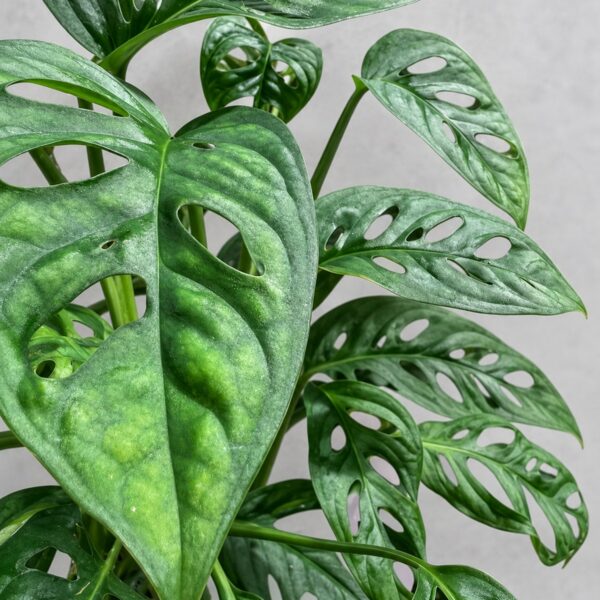
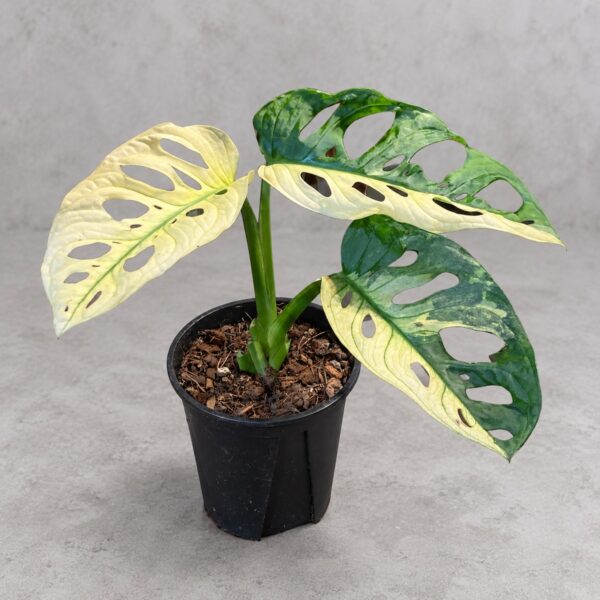
- Extremely thin leaves with a paper-like or gauze-like texture, in stark contrast to the thick leaves of common Monstera species
- Extraordinarily high fenestration rate — mature leaves can have over 90% of their surface area as holes, leaving only a network of veins
- Slender leaf shape with distinct, raised venation, giving it a strong sense of depth
- Slow growing, especially at the seedling stage
- Well-developed aerial roots requiring climbing support
Light
This Peruvian trailing Monstera needs bright indirect light, but must absolutely never be exposed to direct sun. Native to the rainforest understory, it's extremely sensitive to strong light.
Recommended placement:
- Near a window with a sheer curtain
- 2-3 metres from a south-facing window, or 1-2 metres from an east-facing window
- A well-lit bathroom (humidity is equally important there)
- LED grow lights can be used for supplemental lighting
Warning: the leaves are extremely thin, and sunburn causes rapid yellowing and irreversible scorched edges. It's better to err on the side of too little light than to risk sunburn.
Watering
Follow the principle of "keep lightly moist." This Peruvian trailing Monstera is very sensitive to drought, and the soil should never dry out completely.
Seasonal guidance:
- Spring/summer (active growing season): check roughly every 4-6 days, watering once the top of the soil feels slightly dry
- Autumn/winter (slower growth): water roughly every 7-10 days, slightly extending the interval
Notes:
- Use room-temperature water, avoiding cold water that shocks the root system
- Ensure the pot has drainage holes, and let excess water drain away after watering
- If ambient humidity is low, increase misting frequency (though misting doesn't replace watering)
- Rainwater or tap water left standing is ideal for water quality
Soil & pot
Recommended soil mix:
This species needs an extremely well-draining, breathable medium, as the root system requires abundant oxygen:
- Coco husk chips or pine bark: 40%
- Perlite or volcanic rock: 30%
- Potting soil or coco coir: 20%
- Sphagnum moss: 10%
Pot choice:
- An orchid pot (with side ventilation holes) or a mesh pot is recommended
- Terracotta pots are also a good choice
- Avoid ceramic pots without drainage holes
Special note: this Peruvian trailing Monstera's root system needs substantial airflow, and overly dense substrate easily leads to root rot. A sphagnum pole is an essential setup for this species — not just for climbing support, but crucially for maintaining aerial root humidity.
Temperature & humidity
Ideal temperature: 22-28°C, never below 18°C.
This Peruvian trailing Monstera is very sensitive to cold — in Hong Kong winters, if temperatures drop below 15°C, the plant may enter dormancy or even suffer cold damage.
Humidity requirement: 80% or above is most ideal — this is the key to growing it successfully!
Ordinary household humidity (50-60%) is insufficient for this species. Recommendations:
- A humidifier is essential, especially during AC or heating season
- Place it somewhere with naturally high humidity, such as a bathroom (provided it has a window for light)
- Use a large clear plastic container or a greenhouse cabinet to create a high-humidity environment
- Group with other plants to raise ambient humidity
Tip: if leaf edges start turning yellow or curling, it's usually a sign of insufficient humidity. This species grows noticeably faster in a high-humidity environment.
Common problems
| Symptom | Likely cause | What to do |
|---|---|---|
| Leaves getting smaller with fewer holes | Insufficient light, humidity too low (most common cause), or no climbing support | Move to a brighter spot, raise humidity, and add a sphagnum pole |
| Leaves suddenly turning yellow and dropping | Yellowing from the bottom up usually indicates overwatering and root rot; yellow, scorched tips usually indicate low humidity or sunburn | Check soil moisture and roots for the former; adjust humidity and light exposure for the latter |
| Aerial roots drying out and shrivelling | Insufficient air humidity | Guide aerial roots onto a sphagnum pole, or mist regularly to keep them moist; healthy aerial roots should appear green or white and plump |
| Very slow growth | This species is inherently slow-growing, especially at the seedling stage | Patience is essential — with the right conditions (high humidity, ample indirect light, warmth) it will gradually grow |
Propagation: possible via stem cuttings — choose a stem section with an aerial root, place it in moist sphagnum moss, and keep it warm and humid; roots typically form in 4-8 weeks. This is a fairly difficult species to propagate, so beginners should build experience with easier plants first.
How to explain to customers
"This Peruvian trailing Monstera is the most dreamlike, ethereal species in the whole Monstera family — the leaves are as thin as paper, with holes so extensive that only the vein network remains, and it photographs absolutely beautifully. To care for it well, there are two key things: first, humidity needs to be high, ideally above 80% — running a humidifier at home or keeping it in a greenhouse cabinet works best; second, give it a sphagnum pole to climb, since its aerial roots need that moisture. This species grows fairly slowly, so patience is needed. And remember, Monstera species are toxic, so please keep it somewhere children and pets can't reach!"
Fun facts
- True Monstera obliqua is extremely rare in the wild, with only a handful of confirmed field collection records in botanical history
- The fenestration rate of this Peruvian trailing Monstera exceeds 90%, making it the "most transparent" species in the whole genus — this trait is thought to help channel heavy rainfall and reduce wind resistance in the rainforest
- Its thin leaves are actually an adaptive mechanism — growing in the extremely shaded, humid forest understory, thick leaves would simply be a waste of resources
- On social media, this Peruvian trailing Monstera is nicknamed "Swiss Cheese Plant 2.0," since its holes are even more dramatic and refined than the common Swiss Cheese Plant (Monstera deliciosa)
Keywords
Peruvian trailing Monstera, Monstera obliqua Peru, obliqua Monstera, Monstera epipremnoides, high-humidity plant, fenestrated Monstera, thin-leaf Monstera, rainforest plant, climbing plant, sphagnum pole growing, Monstera care, rare foliage plant, indoor plant, Plantjai
參考資料(想知來源可展開)
References
- Royal Botanic Gardens, Kew — Plants of the World Online: genus Monstera, https://powo.science.kew.org/
- ASPCA — Toxic and Non-Toxic Plant List, https://www.aspca.org/pet-care/animal-poison-control/toxic-and-non-toxic-plants
⚠️ Contains calcium oxalate crystals; ingestion may cause mouth burning and swelling. Keep out of reach of infants, young children, and pets.
Plantjai · Causeway Bay collector indoor plants · WhatsApp +852 66807550
Plantjai shop · In stock online
Monstera obliqua Peru
Original price was: HK$480.00.HK$280.00Current price is: HK$280.00.
Hong Kong delivery · Causeway Bay pickup
For Hong Kong homes and offices. Stock and pricing follow the product page.
IN STORE NOW
Plants for this guide
Related plants in stock now — live prices, delivery or Causeway Bay pickup.
Monstera obliqua Peru
Original price was: HK$480.00.HK$280.00Current price is: HK$280.00.
In stock · store pickup
View plant
FREE PLANT ADVICE
Send us a photo before you change anything
WhatsApp a photo of the plant and your window light. Our Causeway Bay team will suggest care steps or plants that suit your space.
STORE · CAUSEWAY BAY
4/F, 39 Yiu Wa Street, Causeway Bay
Daily 12:30–8:00pm · ~3 min walk from Times Square
Map & directionsPlant Care