
How to Care for Monstera Esqueleto in Hong Kong | Plantjai

Hong Kong care guide for Monstera Esqueleto.
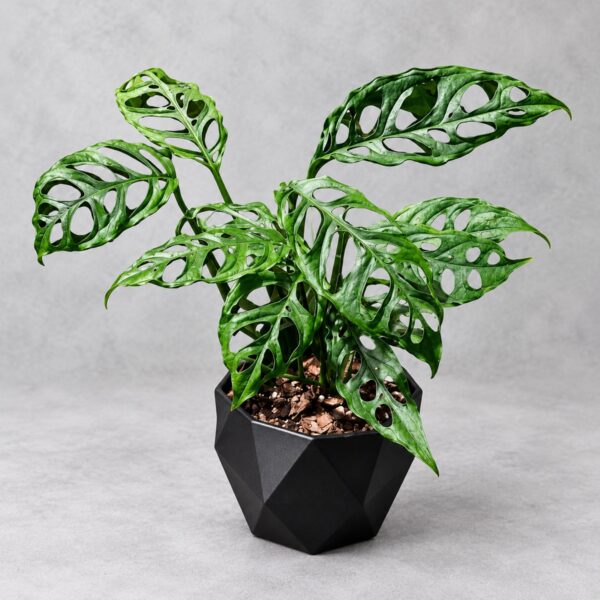
Leaves that look like exquisite openwork lace, with deep, elegant splits — the most architecturally beautiful species in the entire Monstera family. "Esqueleto" is Spanish for "skeleton," a perfect description of its…
Origin & characteristics
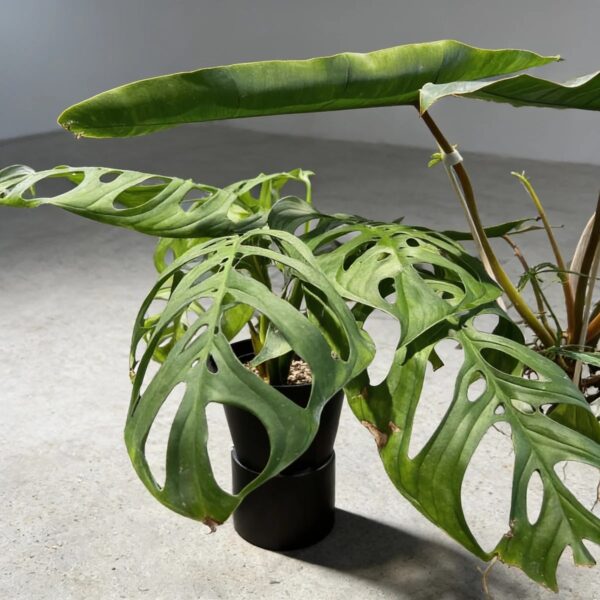
Monstera esqueleto is native to the high-altitude cloud forests of Costa Rica and Panama, and was only formally classified as its own species in 2021. It differs quite a lot from the typical Monstera — rather than round holes, its leaves display deep, evenly spaced parallel splits, with mature leaves reaching 45-60 cm in length and a thick, glossy texture.
Key characteristics:
- A climbing member of the Araceae family, requiring a support pole to develop into its mature form
- Slower growing, typically producing 1-3 new leaves a month during the growing season
- Full fenestration develops gradually as the leaf matures
- Fairly sensitive to environmental changes — not the best choice for absolute beginners
⚠️ Toxicity warning: contains insoluble calcium oxalate crystals; ingestion causes mouth burning, drooling, and vomiting. Keep well away from pets and children.
Light
Bright indirect light, with a light intensity of at least 1,500 lux.
- Ideal placement: 2-4 feet from an east- or north-facing window, or 4-6 feet from a south- or west-facing window with a sheer curtain to filter light
- 6-8 hours of bright indirect light daily is recommended
- Insufficient light (below 1,000 lux) causes internodes to stretch, leaves to become thinner, and fenestrations to diminish or disappear entirely
- Avoid direct sun, especially harsh midday light, which scorches leaf edges
- In winter when daylight is shorter, move the plant 12-18 inches closer to the window, or consider supplementing with a full-spectrum LED grow light (20-30 watts, 12 hours daily, positioned 12 inches from the leaves)
Watering
Water once the top 2-3 inches of soil dries out, keeping conditions evenly moist but never waterlogged.
- Test with a finger or wooden chopstick inserted 2-3 inches into the soil — water once it feels dry
- Cross-check: a moisture meter reading of 3-4 (on a 1-10 scale) is ideal
- Active growing season (spring/summer): roughly every 7-10 days (adjust based on conditions)
- Slow growth period (autumn/winter): reduce frequency, waiting until the top 3 inches of soil dries out
- Water slowly and evenly until it drains from the base, and empty the tray of standing water within 15 minutes
- Water temperature: room temperature is best; tap water should be left standing for 24 hours, or use filtered water/rainwater
- Never let the pot base sit in standing water for extended periods, as this leads to root rot
Soil & pot
Drainage and aeration are king — regular potting soil simply won't do.
Recommended homemade mix (by volume):
- Orchid bark (1/4-1/2 inch grade): 40% — provides structure and aeration
- Coarse coco coir: 30% — retains moisture without compacting
- Perlite or pumice: 20% — enhances drainage
- Worm castings: 10% — provides gentle nutrients
Pot choice:
- Drainage holes are essential; a terracotta or unglazed ceramic pot is recommended
- When repotting, size up by only 1-2 inches — don't jump to a much larger pot at once
- Repot every 18-24 months, ideally in spring
Temperature & humidity
Its cloud forest origins mean it demands very high humidity.
| Condition | Ideal range | Notes |
|---|---|---|
| Temperature | 18-29°C (65-85°F) | Growth stalls below 15°C, damage possible below 12°C |
| Humidity | 60% or above (75-90% is ideal) | Leaf edges curl and brown within 72 hours if humidity drops below 50% |
- Avoid placing near AC vents, heaters, or drafty spots
- The best humidity solution is a humidifier (positioned 3-4 feet from the plant); grouping several tropical plants together to create a microclimate also helps
- Misting is not recommended as a primary solution — the effect only lasts 5-10 minutes, and prolonged leaf-surface moisture actually invites fungal issues
Common problems
| Symptom | Likely cause | What to do |
|---|---|---|
| New leaves are small with no fenestrations | Insufficient light, an immature plant (fenestrations typically only appear after the 6th-8th leaf), or no support pole | Move closer to a window or add a grow light; provide a climbing pole to redirect energy from horizontal growth |
| Leaf edges turn brown and curl | Almost certainly humidity too low (below 50%) or irregular watering | Check a hygrometer and maintain humidity consistently above 60% |
| One or two older lower leaves yellow | Normal ageing | No cause for concern |
| Multiple leaves yellowing simultaneously | Sign of overwatering and root rot | Check soil moisture and drainage |
| New leaves yellowing | Possible nutrient deficiency or temperature too low | Adjust feeding schedule and check temperature |
How slow is normal growth? 1-3 new leaves a month during the growing season (spring/summer) is normal — this species is inherently slower-growing, so don't compare it directly to the common Monstera deliciosa.
Is a support pole necessary? A sphagnum pole or a coarse-textured trellis is strongly recommended. Without support, leaves become smaller with fewer fenestrations, and internodes stretch, reducing overall display value.
How to explain to customers
"Esqueleto is one of the most beautiful and refined species in the whole Monstera family — the leaves look almost like lace trim, though it does require slightly more attentive care. The most important thing is high humidity, ideally above 60%, so running a humidifier in the living room really helps. For watering, let the top inch or two of soil dry out before watering again — don't overdo it, or you risk root rot. Make sure to give it a sphagnum pole or trellis to climb, otherwise the leaves will stay small and won't develop those beautiful splits. It grows a bit more slowly, but every new leaf is well worth the wait!"
Fun facts
- What does the name mean? "Esqueleto" is Spanish for "skeleton," describing its raised leaf veins and thin, skeletal-looking leaf structure
- A very recent classification: although it had been known for some time, it wasn't formally confirmed as a distinct species through genetic analysis until 2021 — before that, it was often mislabelled as Monstera pinnatipartita or Monstera dubia
- Born of the cloud forest: its native habitat maintains 75-90% humidity year-round with minimal temperature fluctuation, which is why it's so sensitive to sudden environmental changes
- A "non-round-hole" Monstera: unlike the typical Monstera with round fenestrations, esqueleto's splits are parallel, slender, and elegant, giving it real architectural beauty
- Slow but refined growth: it invests its energy into leaf structure rather than stem elongation, which is why every leaf is a work of art
Keywords
Plantjai, Monstera esqueleto, Monstera, Araceae, fenestrated plant, cloud forest plant, climbing plant, sphagnum pole, high-humidity plant, indoor foliage plant, rare plant, lace-leaf plant, tropical plant, toxic plant, pet safety
參考資料(想知來源可展開)
References
- Royal Botanic Gardens, Kew — Plants of the World Online: genus Monstera, https://powo.science.kew.org/
- ASPCA — Toxic and Non-Toxic Plant List, https://www.aspca.org/pet-care/animal-poison-control/toxic-and-non-toxic-plants
⚠️ Contains insoluble calcium oxalate crystals; toxic to humans and pets if ingested. Keep out of reach of children and pets.
Plantjai · Causeway Bay collector indoor plants · WhatsApp +852 66807550
Plantjai shop · In stock online
Monstera esqueleto
Monstera esqueleto
Original price was: HK$1,680.00.HK$680.00Current price is: HK$680.00.
Hong Kong delivery · Causeway Bay pickup
For Hong Kong homes and offices. Stock and pricing follow the product page.
IN STORE NOW
Plants for this guide
Related plants in stock now — live prices, delivery or Causeway Bay pickup.
Monstera obliqua Peru
Original price was: HK$480.00.HK$280.00Current price is: HK$280.00.
In stock · store pickup
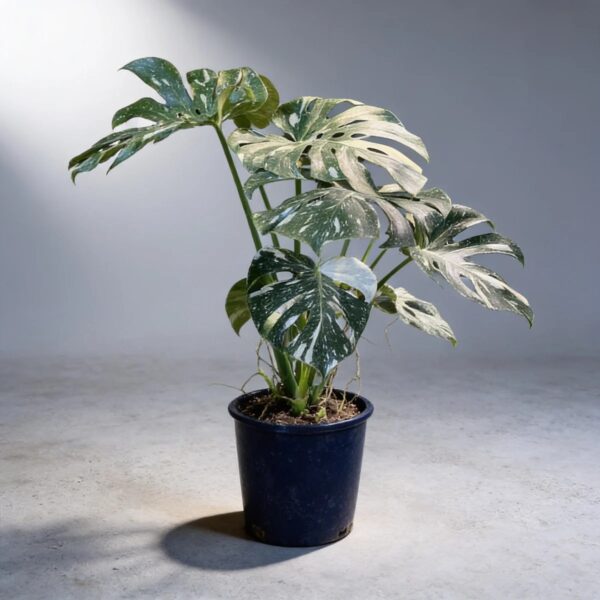
View plantMonstera 'Thai Constellation'
Monstera 'Thai Constellation'
from HK$280.00
In stock · store pickup
View plant
FREE PLANT ADVICE
Send us a photo before you change anything
WhatsApp a photo of the plant and your window light. Our Causeway Bay team will suggest care steps or plants that suit your space.
STORE · CAUSEWAY BAY
4/F, 39 Yiu Wa Street, Causeway Bay
Daily 12:30–8:00pm · ~3 min walk from Times Square
Map & directionsPlant Care