How to Care for Monstera Dubia in Hong Kong | Plantjai

Hong Kong care guide for Monstera Dubia.
Juvenile leaves covered in mesmerising silver-green marbled patterning; as it climbs, the leaves overlap like scales in a spectacular shingled display — a true character actor among the Monstera family.
Origin & characteristics
- Native range: tropical rainforest from Central America to South America (Mexico to Colombia)
- Family/genus: Araceae, genus Monstera
- Growth habit: a small, shingling climbing vine, growing flat against tree trunks or rock surfaces in the wild
- Leaf characteristics:
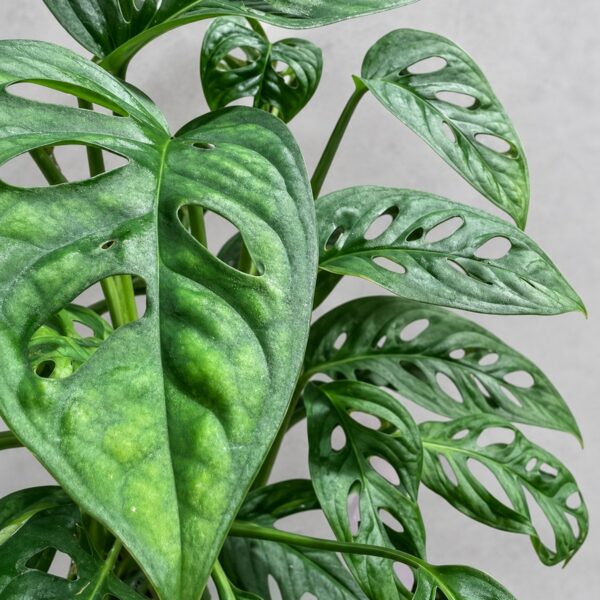
- Juvenile stage: small heart-shaped leaves, 5-10 cm long, covered in a captivating pattern of silvery-white, grey-green, and deep green, with a velvety or leathery texture
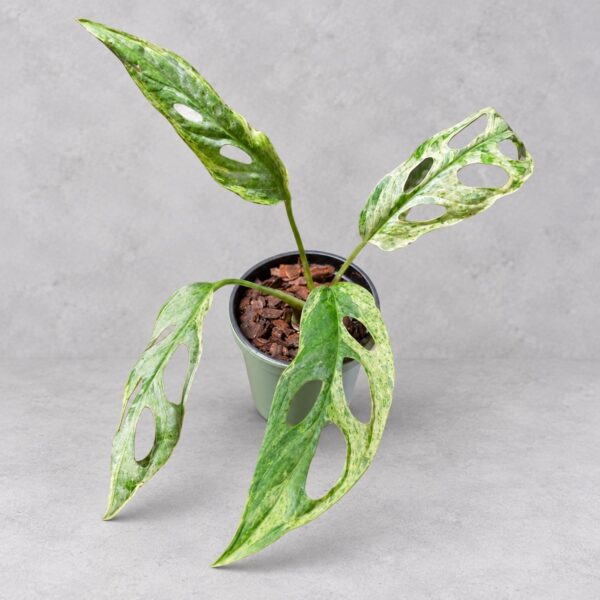
- Mature stage: once it climbs to a certain height, the leaf form transforms — becoming larger and developing the classic Monstera-style fenestrations, while the patterning gradually fades to a purer green
- Uniqueness: the same plant can display two completely different leaf forms — juvenile and mature — giving it a uniquely captivating display value
- Growth habit: a shingling climber that grows flat against a support, creating a spectacular layered, scale-like visual effect
- Growth rate: moderate
- Mature size: in a potted environment, mature leaves can reach 15-30 cm, with vines extending 2-3 metres
- Display value: the juvenile-stage patterning is extremely captivating, a must-have for Monstera enthusiasts; well-suited to wall greening or pole-climbing displays
⚠️ Toxicity warning: Monstera species contain calcium oxalate crystals, and the sap is toxic — ingestion may cause mouth burning and vomiting. Sap contact with skin may cause redness and itching in sensitive individuals. Wear gloves when pruning, and place it out of reach of children and pets.
Light
- Ideal light: bright indirect light (an east-facing windowsill, or 1-2 metres from a south-facing window)
- Light requirement level: medium (slightly higher than typical Monstera species)
- Details:
- Monstera dubia needs stable, moderate light to maintain its leaf patterning
- 5-7 hours of bright indirect light daily is recommended
- The patterned portions are fairly delicate — avoid intense direct sun, which scorches and browns them easily
- Insufficient light will cause patterning to fade and new leaves to appear more plain green
- Placement suggestions: near a window with a sheer curtain, a bright living room, a study desk, or a shelf (paired with a climbing board)
- Signs of insufficient light: new leaf patterning fades and diminishes, leaves become thinner and elongated, internode spacing stretches (legginess)
- Signs of excessive light: brown spots appear on the silvery patterned areas, leaf edges scorch and dry out, leaves curl
Watering
- Frequency: every 5-7 days in spring/summer; every 10-14 days in autumn/winter
- Principle: "wet-dry cycling" — water once the top 2-3 cm of soil dries out
- Details:
- Monstera dubia prefers consistently moist soil, but never waterlogged
- Keep soil lightly moist during the active spring/summer growing season
- Extend the watering interval as growth slows in autumn/winter
- Water thoroughly each time, letting excess drain from the base
- Never let the tray sit with standing water for long periods
- Water quality: room-temperature tap water is fine; filtered water or rainwater is even better if convenient
- Humidity pairing: in a higher-humidity environment (60%+), leaf patterning becomes noticeably more vivid and attractive
- Signs of overwatering: leaves turn yellow, roots rot, stems become soft, soil develops a foul smell
- Signs of underwatering: leaves droop and curl, leaf edges dry out and turn brown, growth stalls
Soil & pot
Soil recipe
- Core requirement: loose and breathable, well-draining, moderate moisture retention, rich in organic matter
- Recommended ratio:
- Quality indoor plant potting soil 50%
- Perlite or volcanic rock 20% (improves aeration and drainage)
- Coco coir or sphagnum moss 20% (retains moisture, mimics native conditions)
- Bark or charcoal 10% (mimics rainforest conditions)
- pH: slightly acidic to neutral (5.5-6.5)
Pot choice
- Material: terracotta or plastic pots both work; a shallow or hanging pot can be used when paired with a climbing board
- Drainage: drainage holes are essential
- Size: 12-18 cm in diameter is sufficient — Monstera dubia doesn't have a particularly large root system
- Repotting timing: repot every 1-2 years in spring, or when roots emerge from the drainage holes
Climbing setup (important!)
- Climbing support is essential: Monstera dubia is a shingling climber that requires a vertical support
- Recommended options:
- A sphagnum moss or coco coir board (most recommended, closest to its native environment)
- A sphagnum or coco coir pole
- A bark board or wooden post
- A trellis or plant stand
- Setup method: gently secure young stem nodes onto the climbing board, and it will naturally attach itself; mist regularly to keep the sphagnum moss moist, which helps aerial roots attach
Feeding
- Growing season (March-September): apply diluted liquid fertiliser (balanced NPK) every 2-3 weeks
- Dormant season (October-February): very diluted liquid fertiliser once a month, or stop entirely
- Note: excess nitrogen fertiliser may cause leaves to turn excessively green and lose their patterning
Temperature & humidity
Temperature
- Optimal temperature: 20-28°C
- Acceptable range: 15-30°C
- Minimum tolerance: 12°C (briefly), prolonged temperatures below 15°C stall growth
- Hong Kong care: suitable for most typical indoor environments; avoid placing on an unsheltered balcony or in a direct AC air stream during winter
Humidity
- Ideal humidity: 60-80%
- Minimum requirement: 50% or above
- Humidification methods:
- Use a humidifier (most recommended)
- Place on a pebble tray
- Mist the leaf surface and climbing board regularly (in the morning, so it dries before nightfall)
- Group with other plants to increase local humidity
- Signs of insufficient humidity: leaf tips dry out and turn brown, silvery patterning becomes dull, new leaves unfurl slowly or incompletely
Common problems
Q1: Why did my new leaves lose their silvery patterning?
Three possibilities: 1) insufficient light — increase bright indirect light; 2) the plant is beginning to mature and naturally transitioning form (mature leaves naturally turn green and split); 3) excess nitrogen fertiliser — reduce feeding or switch to a lower-nitrogen formula.
Q2: How do I attach it to a climbing board?
Use a soft plant tie, velcro strip, or fishing line to gently secure the stem nodes — don't tie too tightly, as this can strangle the stem. Aerial roots will naturally attach over time, after which you can remove the ties.
Q3: Is it normal for mature leaves to become larger and greener?
Completely normal! Monstera dubia's most distinctive trait is transforming its leaf form as it grows. Small, patterned juvenile leaves transitioning to large, fenestrated green leaves is simply its natural life cycle.
Q4: Can it be propagated?
Yes, via stem cuttings. Choose a stem section with 1-2 nodes and an aerial root, let the cut end air-dry, then insert into loose substrate or clean water, keeping it warm and moist — roots typically form in 3-6 weeks.
Q5: The leaves have started drooping?
First check soil moisture — both too dry and too wet cause drooping. Next check whether humidity is too low. Finally, consider whether it recently moved to a new environment and simply needs time to adjust.
Q6: Why is it called "dubia"?
The species name dubia comes from the Latin for "doubtful," because early botanists were uncertain about its taxonomic placement — it was later confirmed as an official member of the genus Monstera.
Q7: What if the climbing board develops mould?
Sphagnum or coco coir boards can develop mould if kept persistently damp. For mild mould, spray with diluted hydrogen peroxide or white vinegar solution and improve ventilation. Severe mould requires replacing the board.
How to explain to customers
"This is Monstera dubia, a really special member of the Monstera family! Look at these juvenile leaves — the silvery-green patterning is gorgeous, and they even have a velvety texture, which gives it real character in a home. It needs a climbing board or pole since it's a shingling climber, growing flat against its support and creating a really spectacular layered effect. For watering, just follow the wet-dry cycle — don't let the roots sit in water. A windowsill with indirect light suits it best. One reminder: the sap is toxic, so it's best to wear gloves when pruning, and keep it somewhere children and pets can't reach. It also likes a more humid environment, so an occasional misting will make the leaves look even better. The most interesting thing about it is that it transforms — the juvenile leaves are small and beautifully patterned, and as it matures it develops large, fenestrated leaves; you get to see two completely different forms on the same plant, which is really fascinating for any plant lover. The key to caring for it is giving it a climbing board and keeping the humidity up — otherwise it's fairly easy-going. Many customers say it grows at a good pace, covering the whole board before long, which feels really rewarding!"
Fun facts
- A plant that transforms: Monstera dubia is one of the few plants that dramatically changes leaf shape across its growth stages. Juvenile leaves are small and patterned, growing flat against a tree trunk (like camouflage), while mature leaves become large and fenestrated, extending outward away from the trunk — a perfect adaptation to the different light conditions found at each layer of the rainforest.
- The story behind the name: dubia means "doubtful," because when 19th-century botanists first discovered it, there was significant debate about which genus it belonged to — the juvenile and mature leaves are so different that early scholars even thought they were two separate species!
- A spectacular scale-like display: when grown on a climbing board, the leaves overlap tightly one over another, resembling fish scales or a shield wall from a distance — a favourite on social media for its striking photographic effect.
- A skilled natural climber: in the wild, Monstera dubia starts from the ground and climbs steadily up tree trunks; its juvenile leaves growing flat against the bark allow it to capture enough light even in low-light conditions.
- How it differs from other Monstera species: compared to golden or white variegated Monstera (where variegation is a genetic mutation), Monstera dubia's patterning is an inherent trait of the species — more stable and less prone to "reverting." With proper care, every new leaf will display beautiful silvery patterning.
Keywords
Plantjai, Monstera dubia, silver-patterned Monstera, Monstera, foliage plant, indoor plant, tropical plant, Araceae, plant care, Hong Kong plants, plant retail, climbing plant, board-mounted plant, variegated-pattern plant, medium-sized indoor plant, aerial roots, sphagnum board, living plant wall, low-to-moderate maintenance
參考資料(想知來源可展開)
References
- Royal Botanic Gardens, Kew — Plants of the World Online: Monstera dubia, https://powo.science.kew.org/
- ASPCA — Toxic and Non-Toxic Plant List, https://www.aspca.org/pet-care/animal-poison-control/toxic-and-non-toxic-plants
⚠️ Contains calcium oxalate crystals; sap is toxic to humans and pets if ingested. Keep out of reach of children and pets.
Plantjai · Causeway Bay collector indoor plants · WhatsApp +852 66807550
For Hong Kong homes and offices. Stock and pricing follow the product page.
IN STORE NOW
Plants for this guide
Related plants in stock now — live prices, delivery or Causeway Bay pickup.
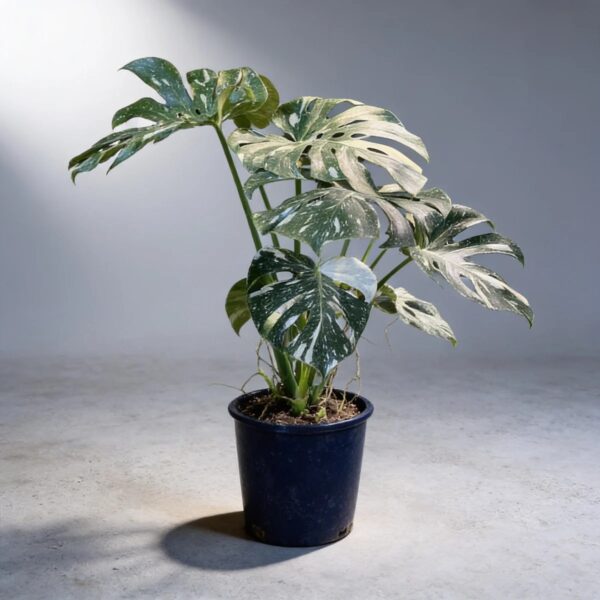
Monstera 'Thai Constellation'
Monstera 'Thai Constellation'
from HK$280.00
In stock · store pickup
View plant
FREE PLANT ADVICE
Send us a photo before you change anything
WhatsApp a photo of the plant and your window light. Our Causeway Bay team will suggest care steps or plants that suit your space.
STORE · CAUSEWAY BAY
4/F, 39 Yiu Wa Street, Causeway Bay
Daily 12:30–8:00pm · ~3 min walk from Times Square
Map & directionsPlant Care