
How to Care for Monstera Deliciosa in Hong Kong | Plantjai

Hong Kong care guide for Monstera Deliciosa.
A classic, always-in-style indoor green giant — its hole-riddled, split leaves radiate tropical flair, and a single plant is enough to fill any room with lush greenery and style.
Origin & characteristics
- Native range: Central American tropical rainforest (southern Mexico to Panama)
- Family/genus: Araceae, genus Monstera
- Growth habit: a large climbing vine, able to climb up to 20 metres up trees in the wild
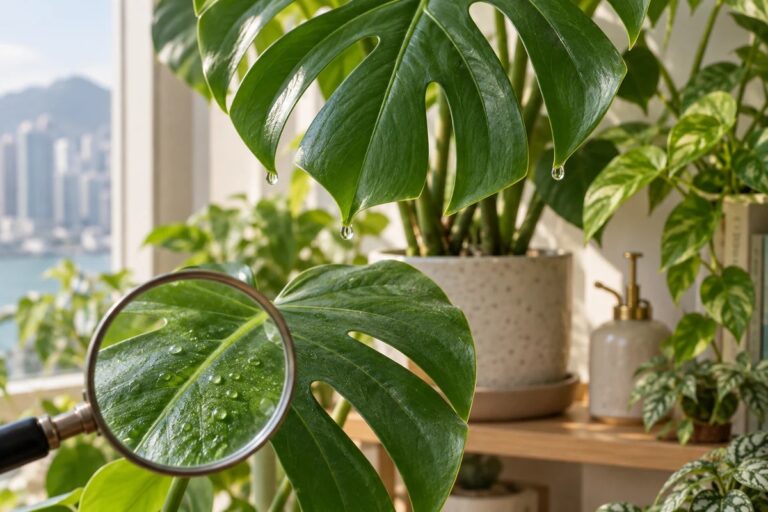
- Leaf characteristics: juvenile leaves are heart-shaped and unsplit, while mature leaves are enormous (reaching over 90 cm), developing deep splits and oval fenestrations — this is the most iconic species in the genus Monstera
- Fruit characteristics: after flowering, it produces a fruit resembling a baby corn cob; once fully ripe, it gives off a tropical fruit fragrance and is edible (said to taste like a mix of banana, mango, and pineapple — hence the name "deliciosa")
- Growth rate: moderate to fast; under favourable conditions it can produce several new leaves each year
- Mature size: indoor potted leaves can reach 50-80 cm, with plant height up to 2-3 metres
- Air purification: effectively absorbs volatile organic compounds like formaldehyde, and is one of NASA's certified air-purifying plants
- Feng shui symbolism: its broad, hand-like leaves are said to represent "welcoming wealth and blessings," and its perforated design is said to "dissolve negative energy" — a common feng shui plant for homes and offices
⚠️ Toxicity warning: the entire Monstera deliciosa plant contains calcium oxalate crystals, and the sap is toxic — ingestion causes mouth and tongue burning, drooling, and vomiting, while sap contact with skin may cause redness, itching, or an allergic reaction in sensitive individuals. Wear gloves when pruning, and place it out of reach of children and pets. Unripe fruit is toxic and must not be eaten until it is fully ripe.
Light
- Ideal light: bright indirect light (an east- or north-facing windowsill, or 1-3 metres from a south-facing window)
- Light requirement level: medium
- Details:
- Monstera deliciosa is highly adaptable and can tolerate a fairly wide range of light conditions
- 4-6 hours of bright indirect light daily is sufficient for healthy growth
- Brief, gentle direct morning or evening sun is acceptable
- Prolonged intense direct sun will cause sunburn and scorched patches
- Placement suggestions:
- A corner of the living room near a window
- An office space with a window or ample lighting
- Semi-indoor spaces such as restaurants or hotel lobbies
- Signs of insufficient light: new leaves are smaller and unsplit, leaf colour fades, internodes stretch and the plant becomes sparse, overall growth slows
- Signs of excessive light: yellow-brown scorch marks appear on leaves, leaf edges curl and dry out, overall leaf colour turns yellowish
Watering
- Frequency: every 7-10 days in spring/summer; every 10-14 days in autumn/winter
- Principle: "better dry than wet" — water once the top 3-5 cm of soil dries out
- Details:
- Monstera deliciosa has some drought tolerance, and brief dry spells don't significantly impact the roots
- Keep soil lightly moist during the spring/summer growing season
- Substantially reduce watering in autumn/winter, watering only once soil is fully dry
- Water thoroughly each time, letting excess drain from the base
- Always empty the tray of standing water to avoid prolonged root soaking
- Water quality: room-temperature tap water is fine; water left standing overnight or filtered water is even better if convenient
- Signs of overwatering: lower leaves yellow and drop, roots rot and smell foul, soil stays persistently wet and sticky, stems become soft
- Signs of underwatering: leaves droop slightly, leaf edges dry out and turn brown, soil becomes completely dry and cracked
Soil & pot
Soil recipe
- Core requirement: loose and breathable, well-draining, rich in organic matter
- Recommended ratio:
- Quality indoor plant potting soil 60%
- Perlite or coarse sand 20% (improves aeration and drainage)
- Coco coir or leaf mould 20% (retains moisture and nutrients)
- Simple recipe: quality indoor plant soil with a bit of added perlite works fine too
- pH: slightly acidic to neutral (5.5-7.0)
Pot choice
- Material: terracotta, cement, or plastic pots all work; a heavier pot is recommended for larger specimens for stability
- Drainage: drainage holes are essential
- Size: choose based on plant size, typically 20-35 cm in diameter; size up every 1-2 years
- Repotting timing: spring is best; repot when roots emerge from the drainage holes, or when soil dries unusually fast
Support structure
- Monstera deliciosa is a climbing plant — providing a sphagnum pole, coco coir pole, or bamboo stake will result in bigger, more attractive leaves
- Without support, it grows sideways and becomes untidy
Feeding
- Growing season (March-September): apply diluted liquid fertiliser (balanced NPK 20-20-20) every 2-4 weeks
- Dormant season (October-February): very diluted liquid fertiliser once a month, or stop entirely
- During periods of vigorous growth, slow-release fertiliser granules can be added as a base feed
Temperature & humidity
Temperature
- Optimal temperature: 18-27°C
- Acceptable range: 10-35°C
- Minimum tolerance: 5°C (briefly), prolonged temperatures below 10°C cause damage
- Hong Kong care: most indoor environments are suitable; avoid placing it on an unheated balcony or in direct window drafts during winter
- Note: low sensitivity to AC — it grows fine in a typical office AC environment
Humidity
- Ideal humidity: 50-70%
- Minimum requirement: 40% or above
- Humidification methods:
- Occasionally mist the leaf surface (in the morning)
- Place on a pebble tray
- Group with other plants
- Effect of low humidity: Monstera deliciosa is highly adaptable, and typical Hong Kong indoor humidity is usually sufficient; if running AC/heating causes especially dry air, leaf tips may become slightly crispy
Common problems
Q1: Why don't my new leaves have splits?
Three reasons: 1) the plant is still too young — it typically needs to grow 4-6 leaves before splitting begins; 2) insufficient light — increasing indirect light promotes splitting; 3) lack of climbing support — giving it a pole to climb stimulates larger, more split leaf growth.
Q2: What should I do about yellowing leaves?
A single yellowing lower leaf is usually natural ageing — just trim it off. If multiple leaves yellow simultaneously, it may be overwatering causing root rot, requiring a check of soil moisture and root health. Yellowing upper leaves may indicate a nutrient deficiency or water quality issue.
Q3: Can I propagate it from cuttings?
Very easy to propagate! Cut below an aerial root node on the stem, and insert into either water or soil. Water propagation typically roots within 2-4 weeks; once roots reach 5 cm or more, transfer to soil.
Q4: How do I clean dust off the leaves?
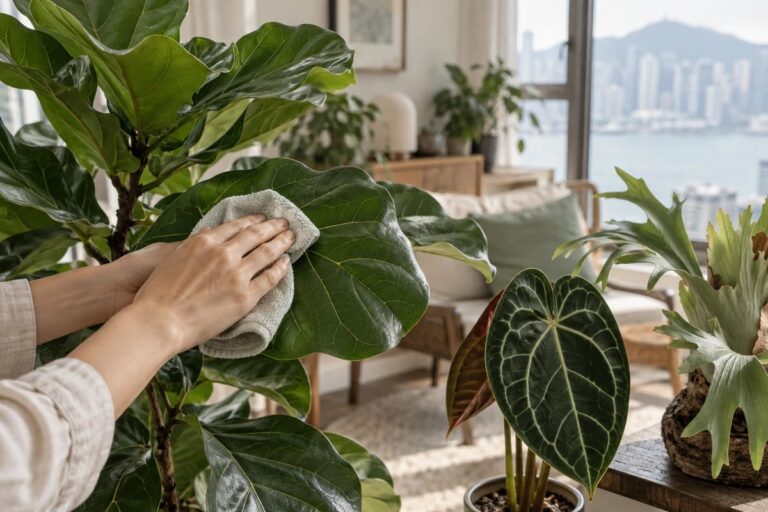
Monstera deliciosa's large leaves collect dust easily. Gently wipe the leaf surface with a slightly damp soft cloth, or use diluted beer water (1:10) to wipe — this makes the leaves shine and helps them breathe.
Q5: Why won't it flower or fruit?
Flowering and fruiting is generally difficult in an indoor environment, requiring ample light, space, and a mature plant (usually 2-3 years or older). Even if it flowers, achieving proper pollination is difficult.
Q6: The aerial roots keep getting longer — should I trim them?
No need! Aerial roots are a natural feature — you can guide them into the soil to absorb more nutrients, or let them wrap around a support pole, which benefits the plant.
Q7: The leaves are drooping and look lifeless?
This is usually a watering issue. Check the soil: if too dry, water thoroughly; if too wet, stop watering and let it dry out. Low temperature or a recent move to a new environment can also cause temporary drooping, which usually resolves once the plant acclimates.
Q8: What's the difference between Monstera deliciosa and Monstera borsigiana?
Monstera deliciosa (M. deliciosa) has larger, thicker leaves with deeper, more pronounced splits and sturdier growth; borsigiana has relatively thinner, smaller leaves with shallower splits and longer, more slender internodes. Care requirements for both are similar.
How to explain to customers
"Monstera deliciosa is one of the most classic indoor plants — you'll see it in so many designer hotels and cafés! The split, hole-riddled leaves have real tropical flair, and just one plant instantly elevates the style of a room. It's a fairly tough plant that doesn't need fussy care — remember not to water too frequently, letting the soil dry out before watering again; it's better to err on the dry side than to drown the roots. A windowsill with indirect light is ideal, and it works well in a living room, study, or office. One reminder: the sap is toxic, so it's best to wear gloves when pruning, and keep it away from young children and pets who might chew on it — but for normal display purposes, it's completely safe as long as no one eats it! It's a great beginner-friendly plant — many customers say it's easy to grow and grows quickly, with new leaves appearing regularly, which is really satisfying. Plus, it purifies the air, making it perfect for an office too. In the first week after bringing it home, it may drop a leaf or two as it adjusts to its new environment — that's completely normal, so don't worry. Feel free to WhatsApp us anytime if you have questions!"
Fun facts
- What does the name mean? Monstera comes from the Latin "monstrum" (monster), describing its enormous and unusual leaf shape; "deliciosa" refers to its delicious-tasting fruit — together meaning "delicious monster"!
- It really is edible: the ripe fruit of Monstera deliciosa (sometimes called the "fruit salad plant" or Mexican breadfruit) tastes like a mix of banana, mango, and pineapple, and is a traditional fruit in Central America. But unripe fruit contains calcium oxalate, which causes a needle-like prickling sensation on the tongue if eaten.
- The real function of the holes: scientists believe the holes and splits in the leaves are an adaptation to the tropical rainforest environment — allowing strong winds to pass through the leaf without tearing it, while letting light reach the leaves below, improving overall photosynthetic efficiency.
- The king of indoor greenery: Monstera deliciosa is one of the most popular indoor plants worldwide, with over ten million related posts on Instagram, making it a genuine social-media celebrity plant.
- Over 50 species in the genus: besides the common Monstera deliciosa, the genus also includes the golden variegated Monstera, the white variegated Monstera, Monstera dubia, and Monstera siltepecana, forming a huge plant family.
Keywords
Plantjai, Monstera deliciosa, split-leaf philodendron, fenestrated leaves, indoor plant, foliage plant, tropical plant, Araceae, plant care, Hong Kong plants, plant retail, air-purifying plant, feng shui plant, beginner plant, low maintenance, climbing plant, green plant, large indoor plant, aerial roots, plant pole
參考資料(想知來源可展開)
References
- Royal Botanic Gardens, Kew — Plants of the World Online: Monstera deliciosa, https://powo.science.kew.org/
- Missouri Botanical Garden — Plant Finder: Monstera deliciosa, https://www.missouribotanicalgarden.org/PlantFinder/PlantFinderDetails.aspx?kempercode=282792
- ASPCA — Toxic and Non-Toxic Plant List, https://www.aspca.org/pet-care/animal-poison-control/toxic-and-non-toxic-plants
⚠️ Contains calcium oxalate crystals; sap is toxic to humans and pets if ingested. Unripe fruit is toxic. Keep out of reach of children and pets.
Plantjai · Causeway Bay collector indoor plants · WhatsApp +852 66807550
For Hong Kong homes and offices. Stock and pricing follow the product page.
IN STORE NOW
Plants for this guide
Related plants in stock now — live prices, delivery or Causeway Bay pickup.
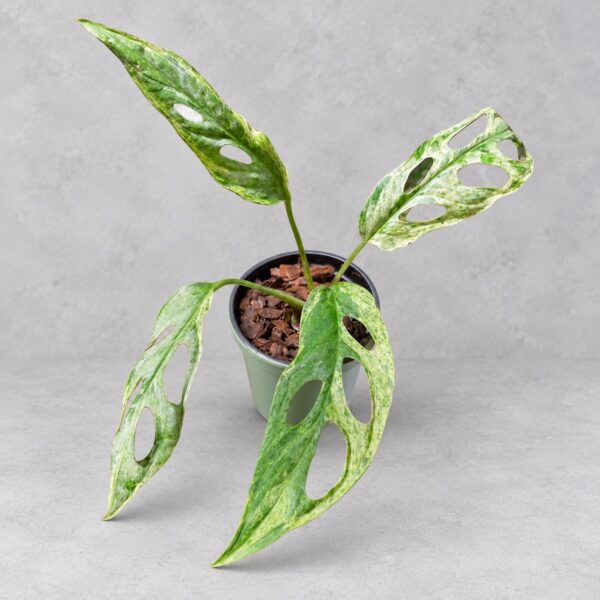
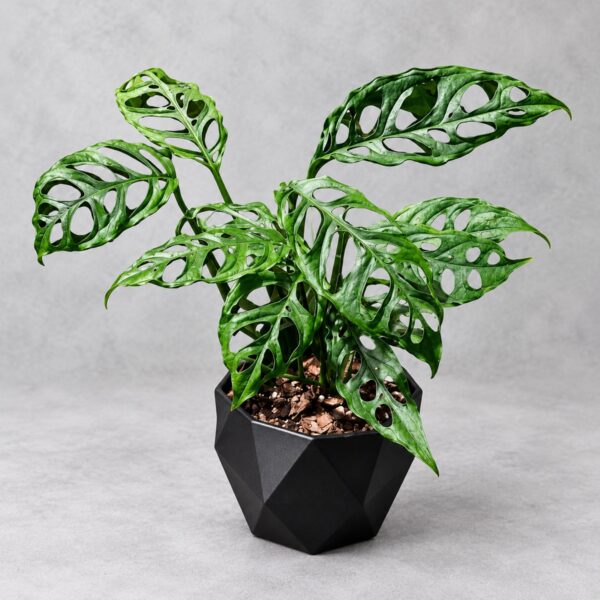
Monstera obliqua Peru
Original price was: HK$480.00.HK$280.00Current price is: HK$280.00.
In stock · store pickup
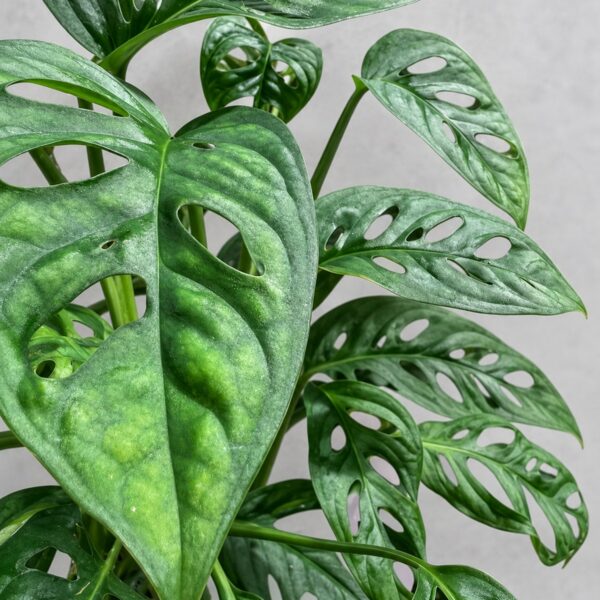
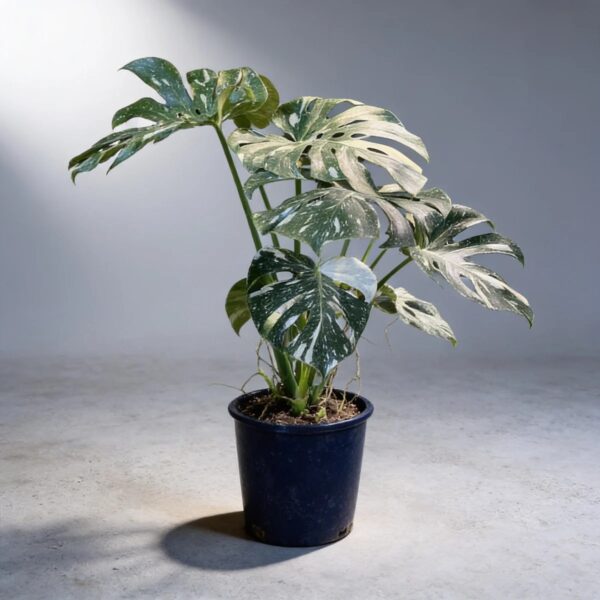
View plantMonstera 'Thai Constellation'
Monstera 'Thai Constellation'
from HK$280.00
In stock · store pickup
View plant
FREE PLANT ADVICE
Send us a photo before you change anything
WhatsApp a photo of the plant and your window light. Our Causeway Bay team will suggest care steps or plants that suit your space.
STORE · CAUSEWAY BAY
4/F, 39 Yiu Wa Street, Causeway Bay
Daily 12:30–8:00pm · ~3 min walk from Times Square
Map & directionsPlant Care