
How to Care for Monstera Borsigiana Albo in Hong Kong | Plantjai

Hong Kong care guide for Monstera Borsigiana Albo.
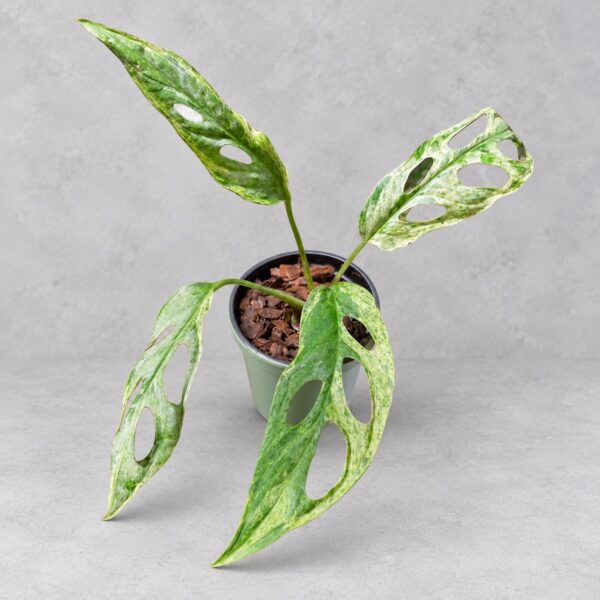
A dream specimen in the Monstera world — enormous split leaves paired with cloud-like snow-white variegation; a single plant becomes the centrepiece of any room, combining collector value with striking display appeal.
Botanical name pending confirmation
Origin & characteristics
A note on the botanical name: in horticultural trade, Monstera borsigiana is commonly used to distinguish a form with narrower, more elongated leaves and faster growth from typical Monstera deliciosa, but the taxonomic relationship between M. borsigiana and M. deliciosa remains disputed among botanists — most consider borsigiana to possibly be a synonym or lower-ranked classification of M. deliciosa rather than a distinct species. This guide therefore uses the trade name commonly circulated in the industry, with the botanical name noted as "pending confirmation."
Regardless of classification, this cultivar originates from the tropical rainforest spanning Mexico to Panama. The 'albo variegata' form is a naturally occurring white chimeric variegation, forming pure white to cream-coloured patterning on the emerald leaf surface due to a lack of chlorophyll.
Characteristics at a glance:
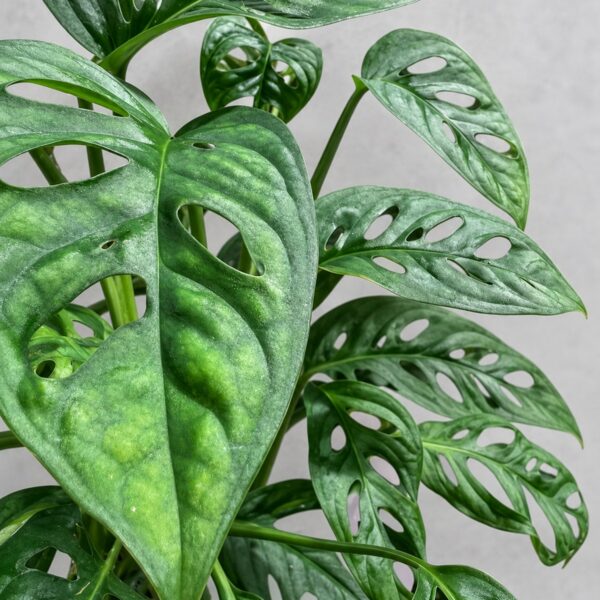
- Leaf shape: large heart-shaped to oval, with deep splits and fenestrations developing in mature leaves
- Variegation pattern: white to milky-white patterning, taking many forms — half-moon, sectoral blocks, or a snowflake-like scatter — every leaf is unique
- Growth habit: climbing, with mature specimens reaching substantial size, requiring a sphagnum pole or support structure
- Growth rate: moderate to fast (relative to other variegated Monstera types), though individuals with an extremely high variegation ratio grow more slowly
- Mature size: indoor leaves can reach 40-70 cm, potentially larger in outdoor tropical conditions
- Collector value: highly variegated specimens command significant prices in the international market and are considered a dream cultivar among tropical plant collectors
⚠️ Toxicity warning: Monstera species contain calcium oxalate crystals; ingestion causes mouth burning, throat swelling, nausea, and diarrhoea, and sap contact with skin may cause irritation in sensitive individuals. Please place it out of reach of children and pets, and wash your hands thoroughly after pruning.
Light
This variegated Monstera needs abundant indirect light to sustain growth and variegation expression, but the white portions scorch very easily — light management is the key to successful care.
- Ideal light: bright indirect light, an east-facing windowsill is best; 1.5-3 metres from a south-facing window
- Acceptable range: south light filtered through a sheer curtain, or a north-facing windowsill (ensure sufficient brightness)
- Signs of insufficient light: new leaves become smaller, fail to split, variegation turns green (reversion), internodes stretch, and overall growth becomes sparse
- Signs of excessive light: yellow-brown scorch marks appear on white variegated areas, leaf edges curl and dry out, growth stalls
- Tip: after repositioning or repotting, observe for 1-2 weeks before judging whether the light is appropriate — this variegated Monstera is fairly sensitive to environmental changes
Watering
Its rainforest origins mean it prefers consistently moist but extremely well-draining soil.
- Frequency: water once the top 3-5 cm of soil dries out in spring/summer, roughly every 5-7 days; roughly every 7-14 days in autumn/winter
- Water quality: room-temperature tap water left standing, filtered water, or rainwater — moderately sensitive to water quality
- Method: water slowly around the rim until it drains from the base, discarding tray runoff after 30 minutes
- Signs of overwatering: leaves turn yellow (starting with lower leaves), roots turn black and rot, soil stays persistently wet with a sour smell
- Signs of underwatering: leaves droop and go limp, leaf edges curl downward, growth stalls
- Tip: if using a sphagnum pole, keep it consistently moist — aerial roots absorbing that moisture is critical for leaf development. Reduce watering frequency in winter, erring on the side of slightly dry rather than waterlogged
Soil & pot
- Recommended soil ratio:
- Quality potting soil 35% + perlite/pumice 30% + coco husk chips/pine bark 25% + sphagnum moss/coco coir 10%
- Key requirement: extremely loose and breathable with fast drainage — never allow standing water
- pH: slightly acidic to neutral (5.5-7.0)
- Pot choice:
- Terracotta/clay pots: best breathability and drainage, strongly recommended
- Plastic pots: acceptable, but watering must be more carefully controlled
- Drainage holes are essential: never use a pot without them
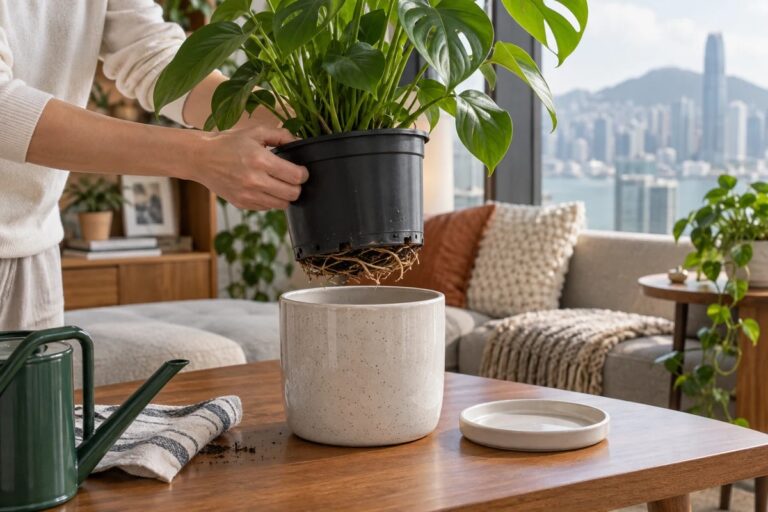
- Repotting timing: when roots emerge from the drainage holes, growth noticeably slows, or as an annual spring check
- Pot size: increase by only one size at a time — this variegated Monstera has a fairly sensitive root system, and an oversized pot easily leads to stuffy, rotting roots
- Tip: variegated specimens typically have weaker root systems, so pay special attention to soil aeration; adding a moderate amount of activated charcoal can support root health
Temperature & humidity
- Ideal temperature: 20-28°C
- Acceptable range: 15-30°C
- Minimum temperature warning: growth stalls below 12°C, risk of cold damage below 8°C. In Hong Kong winters, keep away from window drafts and AC vents at workstations
- Humidity requirement: 60% or above, with 70-80% most ideal
- Signs of insufficient humidity: leaf tips turn brown and crispy, new leaves struggle to unfurl, aerial roots dry out, overall growth slows
- Ways to increase humidity:
- Humidifier (the most direct and effective, especially when running AC in autumn/winter)
- Group with other plants to create a humid microclimate
- Pebble tray method (ensure the pot base doesn't directly touch the water)
- Mist the leaf surface regularly (in the morning, ensuring good ventilation and leaves dry before sunset)
- Tip: the white variegated tissue is thinner, making it especially prone to leaf-tip browning in dry conditions — humidity management should not be overlooked
Common problems
| Symptom | Likely cause | What to do |
|---|---|---|
| New leaves have no splits or holes | Not yet mature (usually needs several juvenile leaves first), insufficient light, or no climbing support | Provide a sphagnum pole and ample indirect light — the signature splits and holes appear naturally once mature |
| Half-white, half-green "half-moon" leaves | This is the most sought-after variegation pattern, purely random and cannot be artificially controlled | A stable care environment (ample indirect light, appropriate humidity, stable temperature) helps sustain overall variegation, but each new leaf's pattern is nature's surprise |
| Consecutive fully white leaves, then wilting | The stem tip has become over-variegated | Trim back to the nearest node with green tissue, allowing it to regrow a balanced branch |
| Variegation gradually turning back to green | "Reversion" — usually from insufficient light or plant stress | Move to a brighter spot and improve care conditions to slow this; reverted variegation won't turn white again |
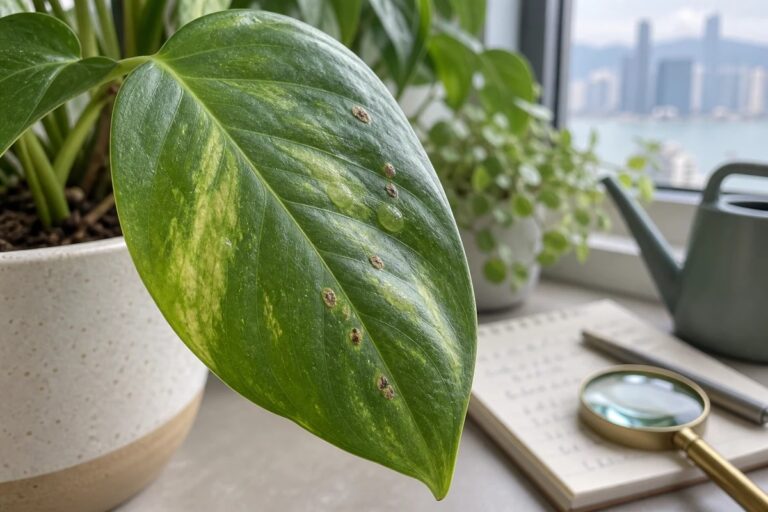
| Brown spots on the leaf surface | Concentrated on white areas: usually sunburn; spreading spots with a yellow halo: possibly fungal infection | Move away from strong light for sunburn; improve ventilation and reduce leaf-surface moisture for fungal issues, using fungicide if severe |
| Spider mites on leaf undersides | Dry environments encourage spider mites | Isolate immediately, spray with soapy water or a dedicated pesticide every 3 days for 2-3 weeks, and increase surrounding humidity |
Propagation: stem cuttings are the most common method. Cut below a node, ensuring an aerial root point is included, then insert into sphagnum moss or loose soil, keeping it warm (22-26°C) and humid; roots typically form in 2-6 weeks. Note that offspring variegation will vary and cannot 100% replicate the mother plant.
How to explain to customers
"This is the legendary variegated Monstera, also known as 'albo' — one of the most popular and dreamy cultivars in the whole Monstera family. Look at the leaves — the white variegation woven through the green creates a completely unique pattern on every single one, some almost look like a painting. It'll keep growing bigger, and once mature, the leaves develop those signature splits and holes, giving it real presence. The most important thing for care is light — it needs bright indirect light, and please don't let direct sun hit the leaves, especially the white variegated areas, which scorch very easily. For watering, let the soil dry out first before watering again, water thoroughly, but never let water sit in the tray. Humidity matters too — it'll get crispy leaf tips in dry conditions. One last reminder: Monstera species are toxic, so if you have young children or pets, please keep it up high, out of their reach."
Fun facts
- Monstera species actually have culinary value in Mexico and Central America — the ripe fruit is called "Mexican breadfruit," said to taste like a mix of pineapple and banana. Note: unripe fruit and all other plant parts contain irritating calcium oxalate and must never be eaten
- The species epithet "deliciosa" comes from the deliciousness of this fruit, though indoor-grown specimens rarely flower and fruit
- The splits and holes in Monstera leaves are botanically termed "fenestration," meaning "windowing" — in the rainforest, this lets strong wind and heavy rain pass through mature leaves, reducing physical damage to the plant
- The trade name "borsigiana" actually originates from the greenhouses of the Borsig family in Berlin, Germany — the Monstera grown in their greenhouse reportedly had narrower leaves, and the name stuck as a way to distinguish this form
- Variegated Monstera has sold for several thousand to over ten thousand US dollars per plant on the international market (depending on variegation quality); while increased supply has brought prices down, top-tier half-moon specimens remain highly valuable
Keywords
variegated Monstera borsigiana, Monstera borsigiana albo variegata, botanical name pending confirmation, Monstera deliciosa albo, albo Monstera, half-moon variegation, Monstera, split-leaf Monstera, Swiss Cheese Plant, chimeric variegation, climbing foliage plant, sphagnum pole, aerial root plant, rainforest plant, large indoor plant, foliage plant, Hong Kong plant shop, Plantjai, Monstera care, variegated plant, calcium oxalate toxic, rare cultivar, tropical plant, tropical plant collecting, vining plant
參考資料(想知來源可展開)
References
- Royal Botanic Gardens, Kew — Plants of the World Online: genus Monstera, https://powo.science.kew.org/
- ASPCA — Toxic and Non-Toxic Plant List, https://www.aspca.org/pet-care/animal-poison-control/toxic-and-non-toxic-plants
⚠️ Contains calcium oxalate crystals; toxic to humans and pets if ingested. Keep out of reach of children and pets.
Plantjai · Causeway Bay collector indoor plants · WhatsApp +852 66807550
For Hong Kong homes and offices. Stock and pricing follow the product page.
IN STORE NOW
Plants for this guide
Related plants in stock now — live prices, delivery or Causeway Bay pickup.
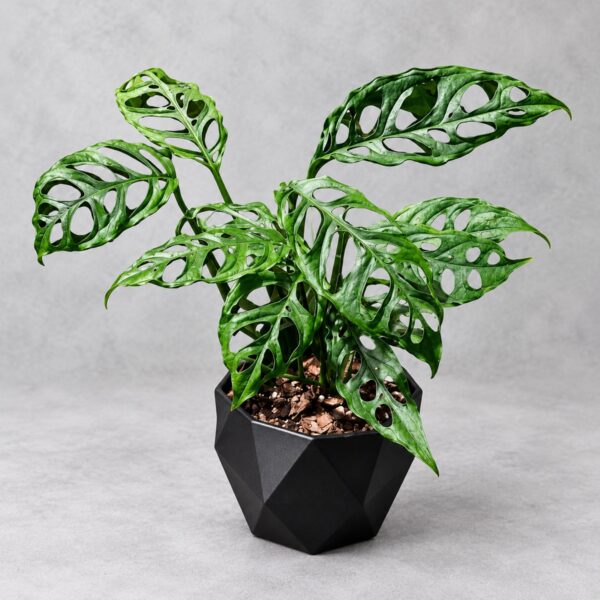
Monstera obliqua Peru
Original price was: HK$480.00.HK$280.00Current price is: HK$280.00.
In stock · store pickup
View plantMonstera 'Thai Constellation'
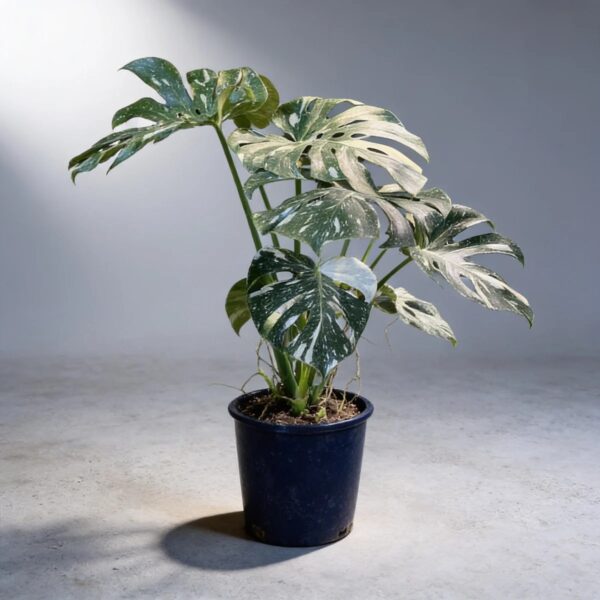
Monstera 'Thai Constellation'
from HK$280.00
In stock · store pickup
View plant
FREE PLANT ADVICE
Send us a photo before you change anything
WhatsApp a photo of the plant and your window light. Our Causeway Bay team will suggest care steps or plants that suit your space.
STORE · CAUSEWAY BAY
4/F, 39 Yiu Wa Street, Causeway Bay
Daily 12:30–8:00pm · ~3 min walk from Times Square
Map & directionsPlant Care