
How to Care for Monstera Adansonii Albo in Hong Kong | Plantjai


Plantjai 植仔 · Care Encyclopedia
Monstera Adansonii Albo
Monstera adensonii albo variegata 錦葉仙洞龜背竹
Hong Kong care guide — useful before you buy and after it arrives.
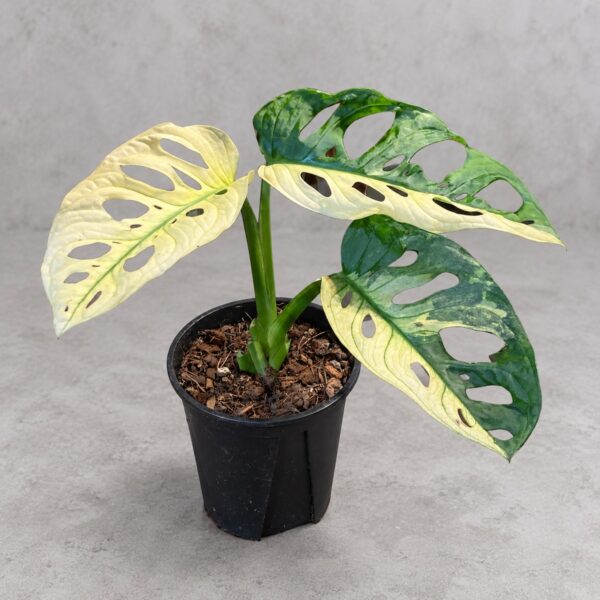
Shop this plantThe classic hole-riddled Swiss Cheese Plant meets snow-white variegation — where emerald green weaves with pure white to create an exquisite leaf-surface artwork, with every new leaf a unique gift from nature.
Origin & characteristics
Monstera adansonii is native to the tropical rainforest of Central America through to northern South America, distributed across Mexico, Panama, Colombia, and other regions, growing in the humid, shaded understory and habitually climbing tree trunks upward. The 'albo variegata' form is a naturally occurring white variegation resulting from genetic chimerism, producing white patches that lack chlorophyll.
Characteristics at a glance:
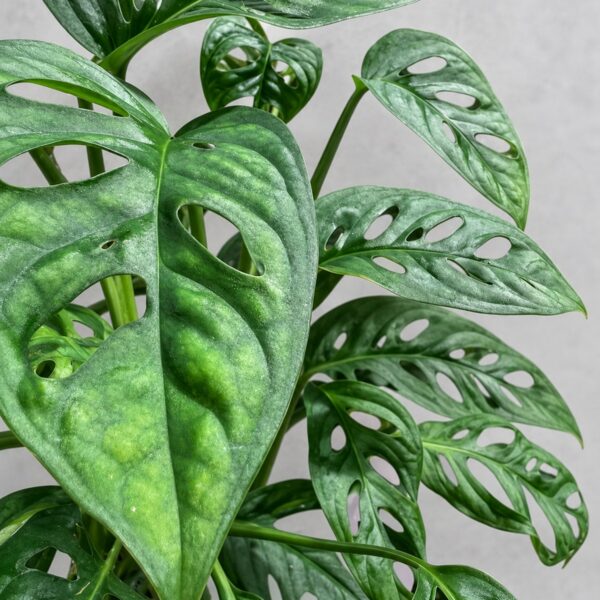
- Leaf shape: heart-shaped to long-oval, the surface covered in irregular oval fenestrations (young leaves may not yet have holes)
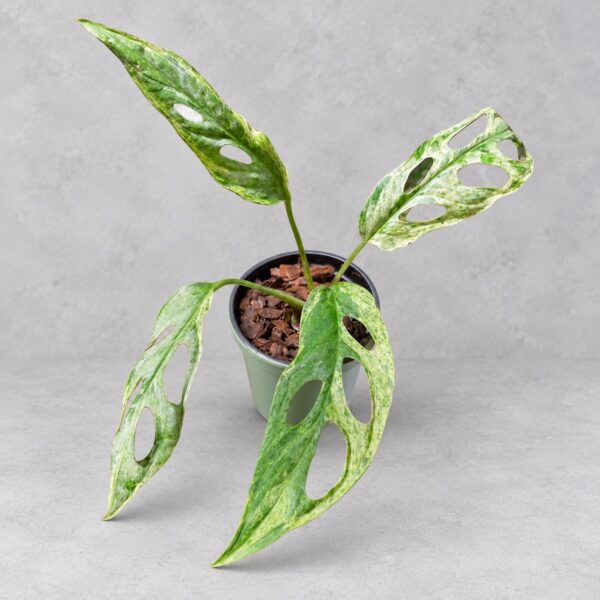
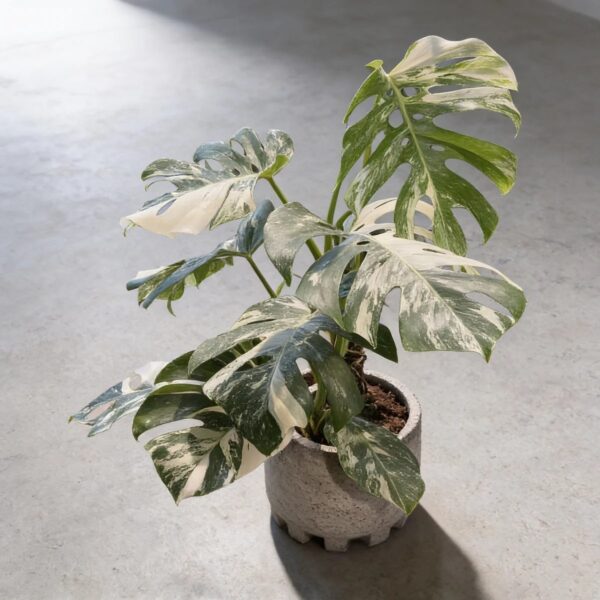
- Variegation pattern: white to milky-white patterning, appearing either as sectoral blocks or a mosaic pattern — every leaf is unique
- Growth habit: a climbing vine with well-developed aerial roots, suited to climbing a sphagnum pole or trellis
- Growth rate: moderate; individuals with a high proportion of pure white leaf are slower growing (due to the lack of chlorophyll for photosynthesis)
- Mature size: indoor leaves can reach 20-40 cm, with even larger mature leaves possible when given climbing support
⚠️ Toxicity warning: Monstera species contain calcium oxalate crystals; ingestion causes mouth burning, throat swelling, nausea, and diarrhoea. Please place it out of reach of children and pets, and wash your hands thoroughly after pruning.
Light
Because the white portions lack chlorophyll, this variegated form has higher light requirements than the plain green species — but light must not be so strong that it scorches the delicate variegated tissue.
- Ideal light: bright indirect light, near an east-facing windowsill or 1-2 metres from a south-facing window
- Acceptable range: a north-facing windowsill (usually sufficient in Hong Kong's climate) or south light filtered through a sheer curtain
- Signs of insufficient light: new leaves become smaller, variegation gradually turns green (reversion), stem internodes stretch and become sparse, fewer holes
- Signs of excessive light: yellow-brown scorch marks appear on the white variegated areas, leaf edges curl and dry out
- Tip: the white variegated portions scorch most easily — be sure to avoid direct midday summer sun. If new leaves show an excessively high proportion of white (near-fully white), the plant needs more light to sustain growth
Watering
Native to the rainforest floor, it prefers consistently moist but well-draining conditions.
- Frequency: water once the top 2-3 cm of soil dries out in spring/summer, roughly every 5-7 days; roughly every 7-14 days in autumn/winter, adjusted for ambient humidity
- Water quality: room-temperature tap water left standing, filtered water, or rainwater all work; avoid water that's too cold
- Method: water slowly around the rim until it drains from the base, discarding runoff from the tray after 30 minutes
- Signs of overwatering: lower leaves yellow and drop, roots turn black and rot, soil stays wet with a musty smell
- Signs of underwatering: leaves droop and go limp, leaf edges curl, new growth stalls
- Tip: if using a sphagnum pole, keep it consistently moist — aerial roots absorbing moisture from it helps leaves develop larger and stronger
Soil & pot
- Recommended soil ratio:
- Quality soilless potting mix 40% + perlite or pumice 30% + coco husk chips/bark 20% + sphagnum moss or coco coir 10%
- The key is loose, breathable, fast-draining soil
- pH: slightly acidic (5.5-6.5) is most ideal
- Pot choice:
- Terracotta/clay pots: best breathability and drainage, recommended for beginners
- Plastic pots: retain moisture better, suitable for drier environments or more experienced growers
- Drainage holes are essential: never use a decorative pot without drainage holes
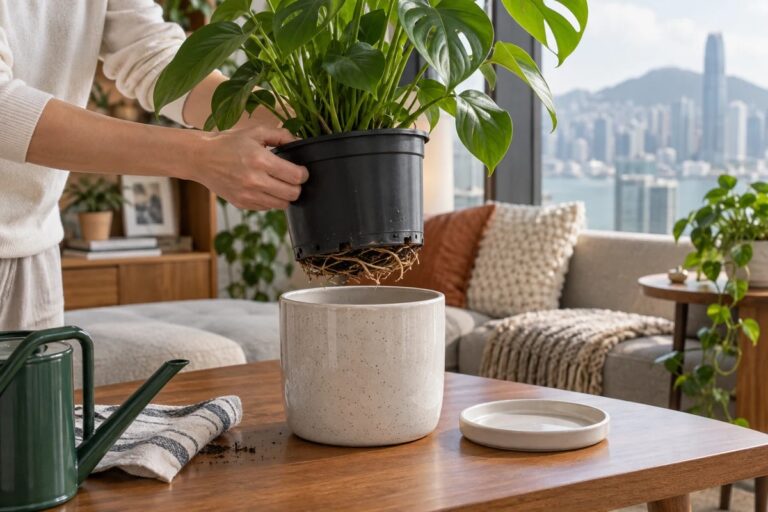
- Repotting timing: when roots emerge from the drainage holes, growth noticeably slows, or as an annual spring check
- Pot size: increase by only one size at a time — an oversized pot easily leads to standing water and root rot
- Tip: albo variegated specimens typically have weaker root systems, so the soil must never be too compacted — looseness is key
Temperature & humidity
- Ideal temperature: 20-28°C
- Acceptable range: 15-30°C
- Minimum temperature warning: growth stalls below 12°C, risk of cold damage below 8°C; keep away from AC vents and drafty windows in winter
- Humidity requirement: 60-80% is most ideal
- Signs of insufficient humidity: leaf tips turn brown and crispy, new leaves struggle to unfurl, aerial roots shrivel
- Ways to increase humidity:
- Use a humidifier (the most direct and effective method)
- Group with other plants to create a humid microclimate
- Pebble tray method (ensuring the pot base doesn't directly touch the water)
- Mist the leaf surface regularly (ensure good ventilation)
- Tip: Hong Kong's spring and summer humidity is usually sufficient; pay special attention to humidification during dry autumn/winter or when the AC runs constantly
Common problems
| Symptom | Likely cause | What to do |
|---|---|---|
| New leaves emerge completely white, then wilt | Fully white leaves have no chlorophyll to produce energy | Trim back to the nearest node with green leaf, otherwise it drags down the whole plant |
| Variegation gradually turning back to green | "Reversion" — usually from insufficient light | Move to a brighter position; note that reverted variegation won't turn white again |
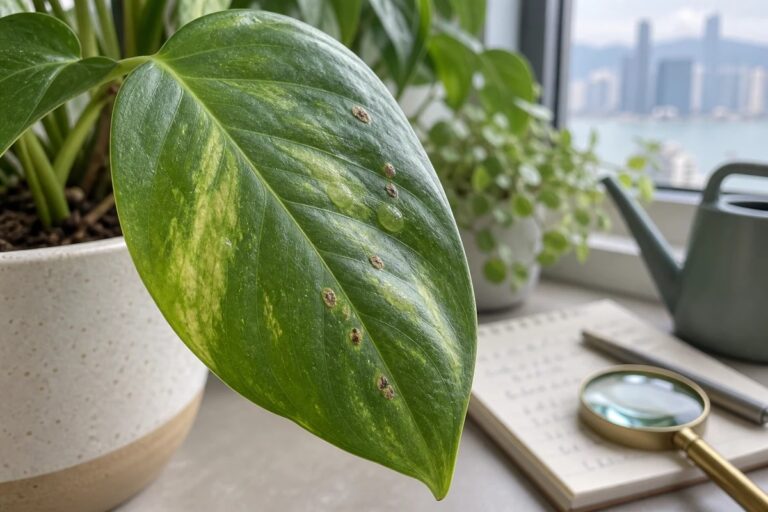
| Brown spots appearing on the white portions | Sunburn or fungal infection | Check for direct strong light exposure first; if ruled out, improve ventilation and avoid prolonged moisture on the leaf surface |
| Scale insects (small brown shell-like bumps) | Common pest on Monstera | Wipe off individually with alcohol-soaked cotton swabs; for heavy infestations use neem oil or insecticidal soap weekly for 3 weeks |
Maintaining a high variegation ratio: stable bright indirect light is key. Too little light causes reversion; too much causes sunburn. Stable temperature also matters — stress (such as underwatering or a change of environment) can trigger the plant to produce more chlorophyll.
Propagation: stem cuttings are the most common method, though variegation expression may vary and can't be 100% guaranteed. Choose a cutting with evenly distributed variegation for better success, and keep the propagation environment warm (22-26°C) with high humidity.
How to explain to customers
"This is our Monstera adansonii 'albo variegata' — a hugely popular white variegated form. Look at the white patterning on the leaves; every single leaf pattern is different, making each one truly one of a kind. It's a climbing plant, so we'd suggest giving it a sphagnum pole to climb — it'll grow upward and the leaves will get bigger and more beautiful over time. It's not too difficult to care for, just remember to keep it in a bright spot with indirect light and avoid direct sun, especially on the white variegated areas, which scorch very easily. Water once the soil surface dries out, and always water thoroughly but never let water sit in the tray. Most importantly: Monstera species are toxic, so if you have young children or cats and dogs at home, please keep it somewhere they can't reach or chew on it."
Fun facts
- Monstera adansonii's species name honours French botanist Michel Adanson (1727-1806), the first scholar to thoroughly document this plant
- White variegation is actually a form of "chimerism" — essentially, the plant contains two genetically distinct tissue types coexisting within it, which is what creates the green-and-white effect
- The holes on Swiss Cheese Plant leaves are called "fenestrations" in botany; mature leaves develop larger, more numerous holes, now widely believed to be an adaptation to the rainforest environment that lets strong wind and heavy rain pass through the leaf, reducing damage to the plant
- In the online plant community, Monstera adansonii albo variegata is sometimes abbreviated as "AAV" (Adansonii Albo Variegata), a term widely used among tropical plant enthusiasts
Keywords
Monstera adansonii albo variegata, white variegated Monstera adansonii, albo, Swiss Cheese Plant, variegated Monstera, chimerism, climbing foliage plant, sphagnum pole, aerial root plant, rainforest plant, indoor plant, foliage plant, Hong Kong plant shop, Plantjai, Monstera care, variegated plant, calcium oxalate toxic, rare cultivar, tropical plant, vining plant
參考資料(想知來源可展開)
References
- Royal Botanic Gardens, Kew — Plants of the World Online: Monstera adansonii, https://powo.science.kew.org/
- ASPCA — Toxic and Non-Toxic Plant List, https://www.aspca.org/pet-care/animal-poison-control/toxic-and-non-toxic-plants
⚠️ Contains calcium oxalate crystals; toxic to humans and pets if ingested. Keep out of reach of children and pets.
Plantjai · Causeway Bay collector indoor plants · WhatsApp +852 66807550
Plantjai shop · In stock online
Monstera adensonii albo variegata
from HK$198.00
Hong Kong delivery · Causeway Bay pickup
For Hong Kong homes and offices. Stock and pricing follow the product page.
IN STORE NOW
Plants for this guide
Related plants in stock now — live prices, delivery or Causeway Bay pickup.
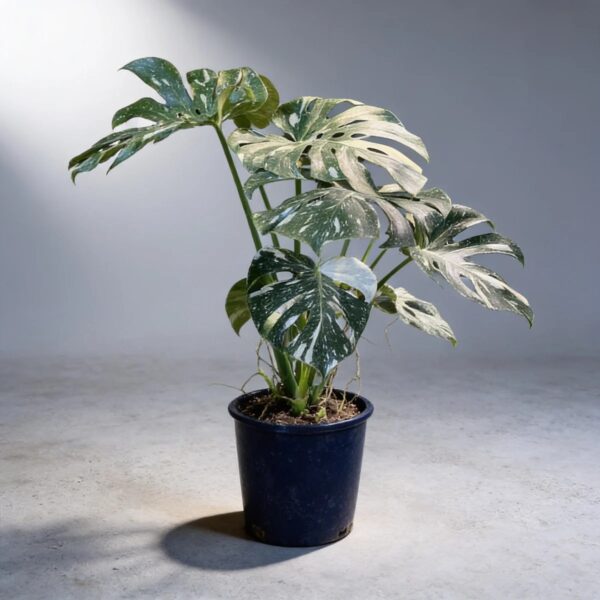
Monstera 'Thai Constellation'
Monstera 'Thai Constellation'
from HK$280.00
In stock · store pickup
View plant
FREE PLANT ADVICE
Send us a photo before you change anything
WhatsApp a photo of the plant and your window light. Our Causeway Bay team will suggest care steps or plants that suit your space.
STORE · CAUSEWAY BAY
4/F, 39 Yiu Wa Street, Causeway Bay
Daily 12:30–8:00pm · ~3 min walk from Times Square
Map & directionsPlant Care