
How to Care for Marcgravia Sp in Hong Kong | Plantjai

Plantjai 植仔 · Care Encyclopedia
Marcgravia Sp
Hong Kong care guide — useful before you buy and after it arrives.
Shop this plant"A rainforest climbing marvel, round plump leaves paired with a golden nectar disc — an instantly recognisable rarity for the true collector!"
Botanical name pending confirmation
Origin & characteristics
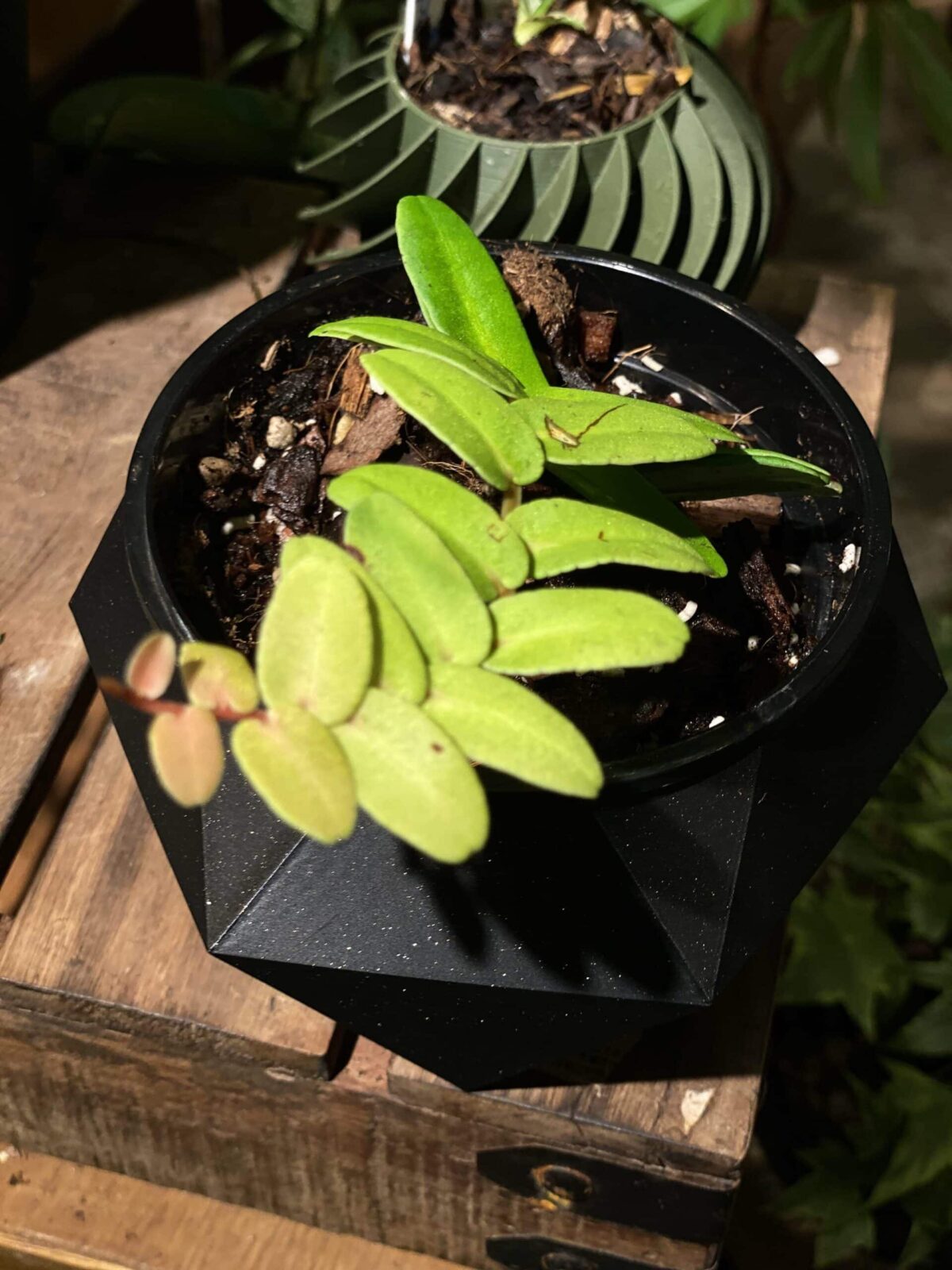
Marcgravia sp. is native to the Caribbean and the tropical rainforests of Central and South America, primarily distributed across the humid woodlands of Cuba, Jamaica, Puerto Rico, and neighbouring islands. It belongs to the family Marcgraviaceae and is a perennial climbing shrub, with its most distinctive feature being its nectar disc inflorescence — a round or near-round, fleshy flower disc containing numerous small flowers, surrounded by vividly coloured bracts, resembling a miniature golden shield from a distance.
In terms of foliage, the larger-leaved forms have broad, oval to elongated-oval leaves, deep green and glossy, with a thick texture and prominent, distinct venation, reaching 15-25 cm at maturity. New leaves are typically reddish-brown or copper-coloured, turning deep green as they mature. It uses aerial roots to climb trees or rock surfaces, reaching 3-5 metres in the wild, though indoor specimens are typically kept at 60-120 cm for display purposes.
⚠️ Toxicity warning: the entire Marcgravia plant contains saponins and alkaloid compounds, toxic to both humans and pets. Ingestion may cause mouth irritation, vomiting, and diarrhoea. Wash your hands after handling, and keep it away from children and pets.
Light
| Item | Recommendation |
|---|---|
| Ideal light | Bright indirect light (10,000-20,000 lux) |
| Placement | A north- or east-facing windowsill, 1-2 metres from the window; or use a shade net to filter direct sun |
| Avoid | Harsh midday direct sun, which scorches leaf edges |
| Acceptable | Artificial grow lights (full-spectrum LED, 10-12 hours daily) |
Marcgravia sp. is native to the rainforest understory, accustomed to dappled light filtering through the canopy. Light that's too weak causes leaves to become smaller, internodes to stretch, and flowering to decrease; light that's too strong causes scorched, dried leaf edges and yellow spots on the leaf surface.
💡 Diagnostic tip: if new leaves are smaller than old leaves, light is insufficient; if the leaf surface develops dry brown patches, it may be getting too much sun.
Watering
| Item | Recommendation |
|---|---|
| Frequency | Every 3-4 days in spring/summer; every 5-7 days in autumn/winter |
| Principle | Water once the top 2-3 cm of soil dries out, avoiding standing water and root rot |
| Water quality | Room-temperature tap water left standing, filtered water, or rainwater all work |
| Method | Water slowly around the rim until it drains from the base, discarding runoff after 15 minutes |
| Humidity supplement | Mist the leaf surface 1-2 times daily, or use a humidifier to maintain ambient humidity |
Marcgravia sp. is sensitive to water quality — avoid using ice-cold water or fresh tap water with high chlorine content directly. If leaf tips turn yellow, it's usually due to water that's too hard or standing water.
⚠️ Standing water warning: if leaves suddenly become soft and droopy while the soil remains consistently moist, root rot may have already occurred, and the root system needs immediate inspection.
Soil & pot
Recommended soil ratio
| Material | Ratio | Function |
|---|---|---|
| Quality peat soil | 40% | Retains moisture and nutrients |
| Perlite | 25% | Improves aeration, prevents compaction |
| Pine bark (medium grade) | 20% | Mimics rainforest leaf litter, gives roots something to grip |
| Coco coir | 15% | Lightweight and breathable, aids drainage |
Pot choice
- First choice: terracotta or unglazed clay pots, with good breathability that supports root respiration
- Usable: plastic pots (lightweight, but watch drainage more carefully)
- Advanced option: a sphagnum pole or bark mounting board (mimicking its native climbing environment, favourable for aerial root growth)
- Drainage: drainage holes at the base are essential; broken pottery shards or a drainage mesh can be layered in to prevent soil loss
Repotting timing: once a year in spring, when roots begin emerging from the drainage holes. After repotting, keep the plant in a shaded spot to recover for 3-5 days.
Temperature & humidity
| Item | Range |
|---|---|
| Ideal growing temperature | 20-28°C |
| Acceptable range | 15-32°C |
| Minimum tolerance | 12°C (briefly), prolonged temperatures below 15°C stall growth |
| Ideal air humidity | 60-85% |
| Minimum humidity | 50% (leaf edges easily scorch below this) |
Hong Kong's spring and summer are usually fine; pay special attention to humidity when running the AC or during dry autumn/winter conditions. Here are some practical humidification methods:
- Humidifier: place in the centre of a group of plants, set to 65-75% humidity
- Pebble tray method: place damp pebbles at the pot base, ensuring the pot base doesn't directly touch the water surface
- Grouping method: cluster multiple potted plants together to create a micro-humid climate
- Bathroom growing: a bathroom with a window is often an ideal environment (sufficient light + naturally high humidity)
⚠️ Temperature warning: below 10°C may cause cold damage, with water-soaked black spots appearing on leaves; above 35°C requires improved ventilation and misting to cool the plant.
Common problems
Q1: What if the leaves turn yellow?
| Symptom | Cause | Solution |
|---|---|---|
| Yellowing progressing leaf by leaf from the bottom up | Overwatering / root rot | Stop watering, check roots, trim rot and repot in fresh soil |
| Leaf tips yellowing first, gradually spreading | Humidity too low / water too hard | Increase misting, switch to filtered water |
| Entire leaf turning uniformly yellow | Nitrogen deficiency / natural ageing | Apply balanced liquid fertiliser, or it may just be normal leaf turnover |
| Yellow spots on leaf surface | Sunburn | Move away from strong light |
Q2: Why won't it flower?
Getting Marcgravia sp. to flower indoors requires three conditions working together: ample indirect light (at least 6 hours of bright light daily), stable high humidity (70%+), and appropriate temperature differential (3-5°C day-night swing). Missing any one of these reduces the chances of flowering.
Q3: The aerial roots keep growing longer — should I cut them?
No need to cut them! Aerial roots are its survival tool, absorbing moisture and nutrients from the air. If you find them unsightly, you can guide the aerial roots into the soil or a sphagnum pole and let them continue growing.
Q4: How do I propagate it?
The most common method is tip cuttings:
- In spring, select a healthy tip cutting with 2-3 leaves
- Apply rooting hormone to the cut end
- Insert into a pre-moistened perlite and coco coir mix
- Keep in a clear plastic bag or propagation box to maintain humidity
- Roots typically form after 3-5 weeks; pot up once roots reach 5 cm
Q5: What if there's white powdery substance on the leaves?
This may be mealybugs. Gently wipe the affected areas with a cotton swab dipped in 75% alcohol; for severe infestations, spray with neem oil diluted 1:100, once every 3 days for 2-3 consecutive weeks.
How to explain to customers
"This Marcgravia sp. is a rare rainforest species — the round, plump leaves paired with that golden nectar disc instantly elevate any home's style. It likes a humid, cool environment, so remember not to place it in direct sun, and it'll be happy with a daily misting. Please note the whole plant is toxic, so households with children or pets should place it up high, out of their reach. Once it flowers, that nectar disc is absolutely stunning — a must-buy for anyone who knows plants!"
Fun facts
- What is the nectar disc's "golden shield"? That round flower disc is actually a nectar disc formed from modified petals and sepals, specially designed to attract hummingbirds and bats for pollination — a highly specialised evolutionary structure.
- A skilled climber: in the wild, Marcgravia climbs steadily up tree trunks, with aerial roots extending several metres and gripping firmly into bark crevices, earning it the nickname "rainforest ivy."
- A small Marcgravia family: the entire Marcgraviaceae family has only about 130 species, all distributed across Central and South America and the Caribbean, making it a fairly small plant family.
- New leaf colour change: Marcgravia sp.'s new leaves typically emerge in a reddish-copper colour, gradually turning deep green as they mature — a colour transition that becomes even more striking with ample light.
- Can even grow underwater: advanced hobbyists have grown Marcgravia in the land portion of a paludarium, where growth speeds up noticeably in the high-humidity environment.
Keywords
Marcgravia sp., nectar disc flower, rainforest plant, climbing plant, foliage plant, rare plant, collector's item, tropical plant, high-humidity plant, aerial root plant, flowering foliage plant, toxic plant, indoor greenery, Hong Kong growing, Plantjai
參考資料(想知來源可展開)
References
- Royal Botanic Gardens, Kew — Plants of the World Online: genus Marcgravia, https://powo.science.kew.org/
- ASPCA — Toxic and Non-Toxic Plant List, https://www.aspca.org/pet-care/animal-poison-control/toxic-and-non-toxic-plants
⚠️ Contains saponins and alkaloids; toxic to humans and pets if ingested. Keep out of reach of children and pets.
Plantjai · Causeway Bay collector indoor plants · WhatsApp +852 66807550
Plantjai shop · In stock online
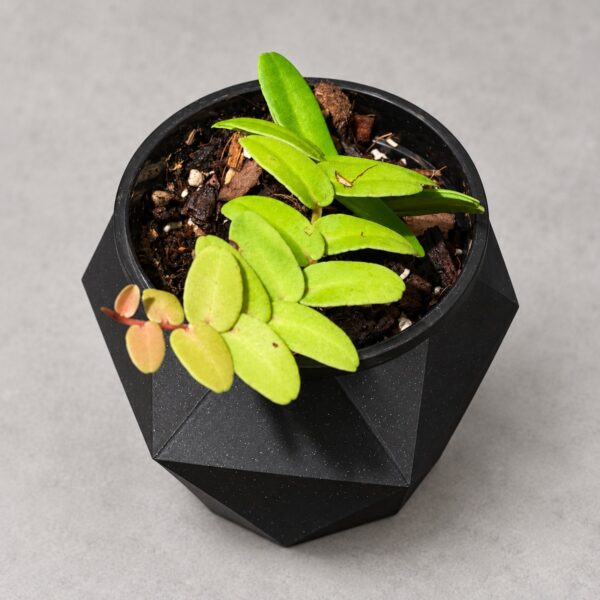
Marcgravia sp.
Marcgravia sp.
HK$268.00
Hong Kong delivery · Causeway Bay pickup
For Hong Kong homes and offices. Stock and pricing follow the product page.
IN STORE NOW
Plants for this guide
Related plants in stock now — live prices, delivery or Causeway Bay pickup.
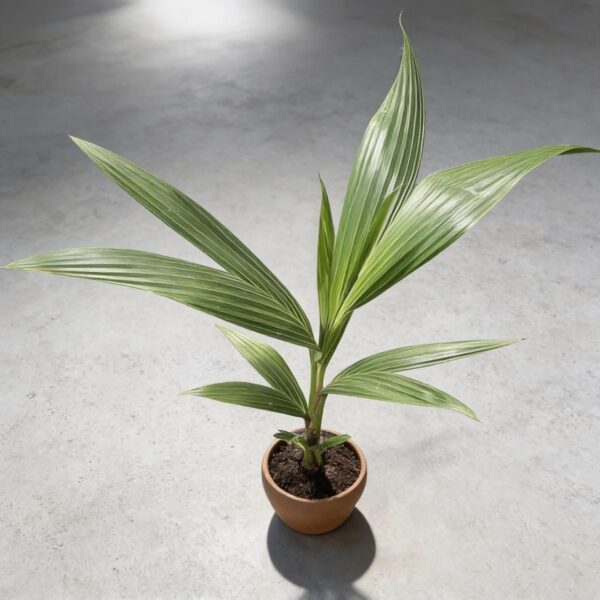
Cocos nucifera
Cocos nucifera
Original price was: HK$398.00.HK$298.00Current price is: HK$298.00.
In stock · store pickup
View plant
FREE PLANT ADVICE
Send us a photo before you change anything
WhatsApp a photo of the plant and your window light. Our Causeway Bay team will suggest care steps or plants that suit your space.
STORE · CAUSEWAY BAY
4/F, 39 Yiu Wa Street, Causeway Bay
Daily 12:30–8:00pm · ~3 min walk from Times Square
Map & directionsPlant Care