
Blog
How to Care for Maranta Lemon Lime in Hong Kong | Plantjai
Plantjai 植仔 · Care Encyclopedia
Maranta Lemon Lime
Hong Kong care guide — useful before you buy and after it arrives.
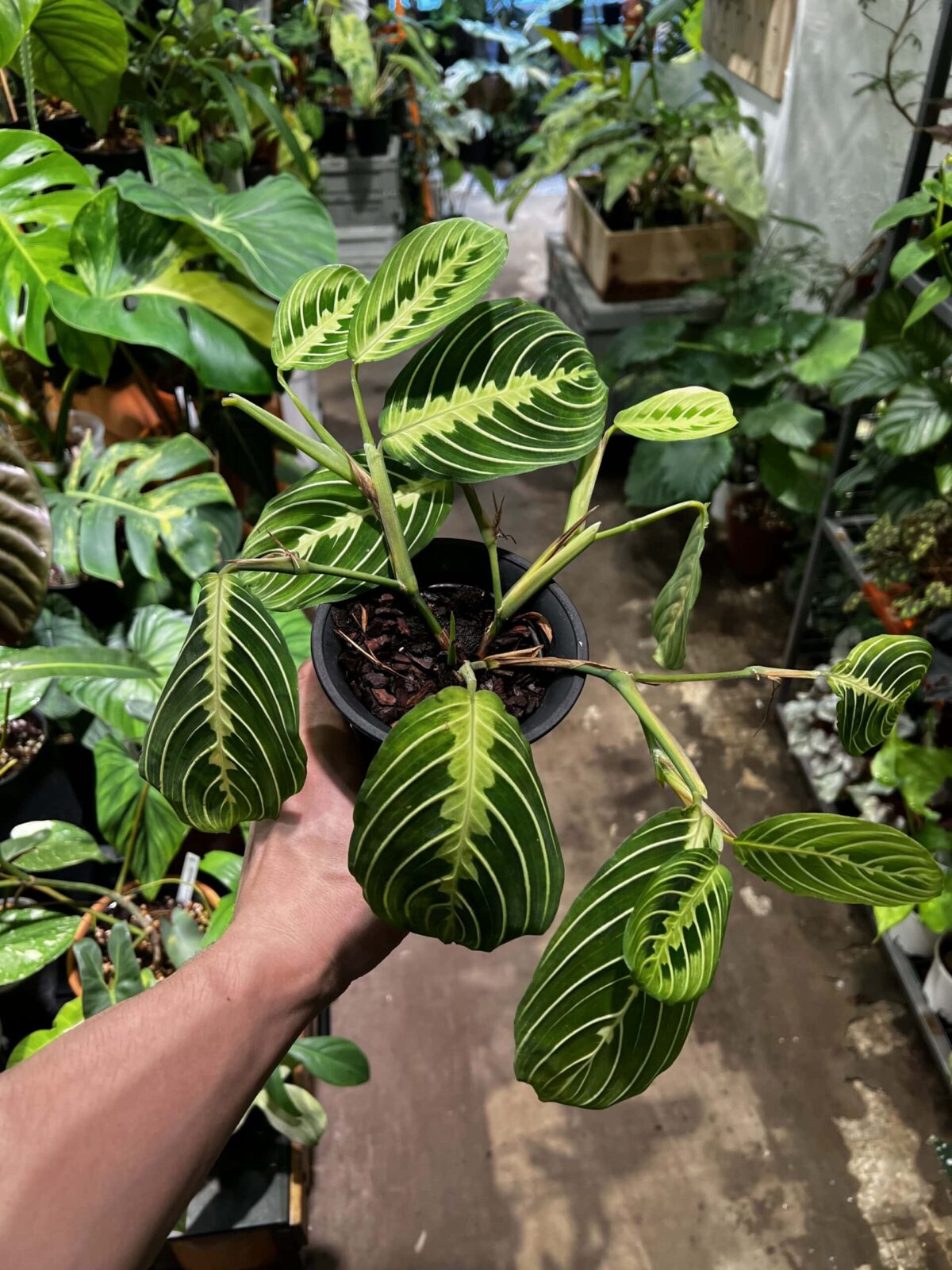
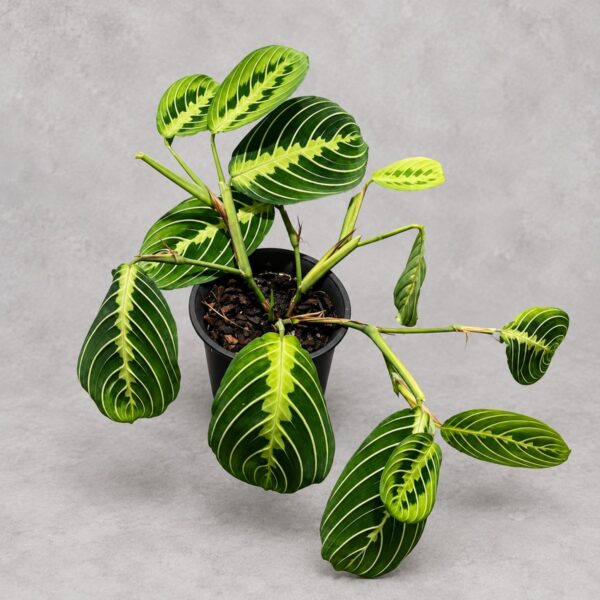
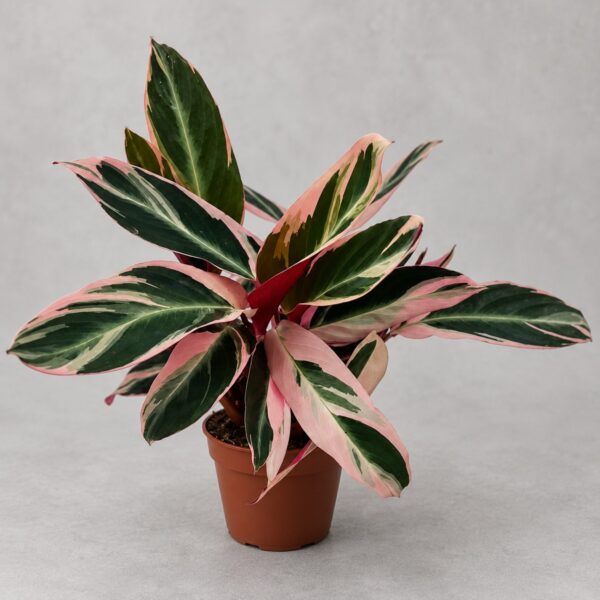
Shop this plantLemon yellow-green veins against a deep green leaf surface create a fresh, eye-catching contrast; leaves move in a prayer-like rhythm through day and night, a lively little sprite for your desktop.
Origin & characteristics
- Native range: the understory of Brazilian tropical rainforest
- Family/genus: Marantaceae, genus Maranta
- Growth habit: a perennial herbaceous plant with a low, spreading growth habit, roughly 15-30 cm tall, expanding outward horizontally
- Leaf characteristics: long-oval leaves, with a deep green base and lemon-yellow to pale green feather-like veining, while the leaf underside is usually purplish-red or grey-green
- Prayer movement: the leaves exhibit nyctinastic movement, lying flat during the day for photosynthesis and standing upright at night like praying hands — a wonderfully entertaining feature
- Flowering: with proper care, it produces small pale purple or white flowers in spring and summer, small but elegant
- Growth rate: moderate
- Toxicity: non-toxic, safe for pets and children
Light
- Medium to bright indirect light, an east- or north-facing windowsill is most ideal
- Avoid harsh direct sun, as direct exposure causes leaf fading and brown sun-scorch spots
- It can tolerate lower light conditions, though the leaf colour will be duller and growth slower
- In bright conditions, the lemon yellow-green veining becomes more vivid and eye-catching
Watering
- Keep the soil lightly moist, watering once the top 2-3 cm of soil dries out — avoid standing water
- Frequency reference: roughly once every 7-10 days, adjusted for season and environment
- Water quality requirement: fairly sensitive to water quality, recommend using:
- Filtered water
- Tap water left standing overnight (to let chlorine dissipate)
- Rainwater
- Water temperature: use room-temperature water, avoiding cold water that shocks the roots
- Notes:
- Better slightly moist than dry, while also guarding against standing water and root rot
- Watering can be extended to every 10-14 days when growth slows in winter
- A thin layer of sphagnum moss on the soil surface can help gauge moisture and maintain slight dampness
Soil & pot
- Soil recipe: a slightly acidic, well-draining mix rich in organic matter, try quality potting soil + perlite + coco coir (roughly 3:1:1)
- pH: slightly acidic (5.5-6.5) is ideal
- Pot choice:
- A terracotta or plastic pot with drainage holes is recommended
- Since Marantas grow horizontally and spread out, a very deep pot isn't necessary — a shallow, wide pot suits it better
- Repotting: repot once a year or every two years in spring, or when roots emerge from the base
Temperature & humidity
- Ideal temperature: 18-27°C, with the optimal range around 20-25°C
- Minimum temperature: shouldn't go below 15°C, since cold temperatures cause stalled growth and leaf damage
- Winter care: move indoors in winter, away from AC vents, door/window drafts, and heater outlets
- Humidity requirement: a high-humidity environment (50% or above) is most favourable for growth
- Lightly mist the leaf surface each morning (ensuring leaves dry during the day to prevent fungus)
- Using a humidifier is even more effective
- Place on a pebble tray
- A kitchen or bathroom (with sufficient light) is an ideal placement
- Ventilation: high humidity must be paired with good ventilation, to avoid fungal issues or root rot from stuffy conditions
Common problems
| Symptom | Likely cause | What to do |
|---|---|---|
| Curling leaves, browning leaf tips | Humidity too low | Increase misting, use a humidifier, or move to a higher-humidity spot |
| Faded leaf colour, brown spots | Excessive sun exposure | Move to an indirect light position |
| Yellowing leaves, soft rotting stem | Overwatering / root rot | Reduce watering, check root health |
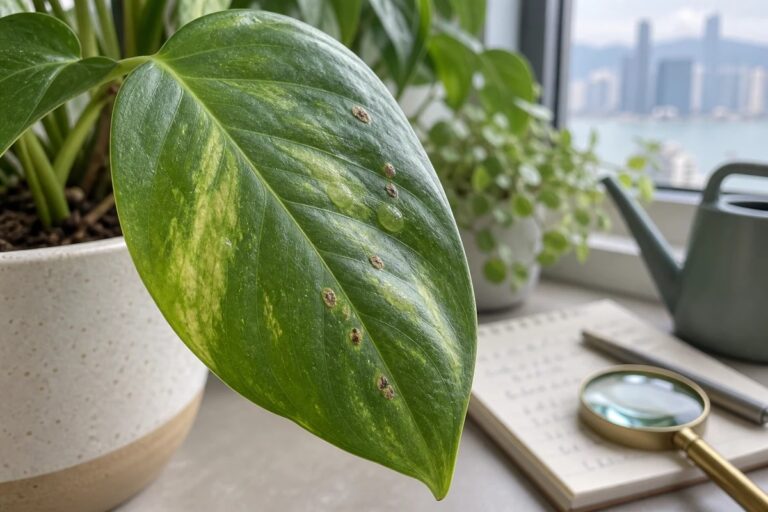
| Small brown spots on leaf surface | Fungal infection (humidity too high with poor ventilation) | Improve ventilation, reduce leaf-surface moisture, use fungicide if necessary |
| Thinner leaves, dull colour | Insufficient light | Move to a brighter position |
| Loss of "prayer" movement | Sudden environmental change / stress | Check whether temperature, humidity, and light are stable, allow the plant time to acclimate |
| Scorched leaf tips | Water too hard / fertiliser too concentrated | Switch to filtered water, dilute fertiliser to half strength |
Common pests: spider mites (more likely in dry conditions), whitefly, aphids. Maintaining appropriate humidity is the best prevention method.
How to explain to customers
"Maranta 'Lemon Lime' is a super charming small variety! What's most special about it is how the leaves move — lying flat to catch the sun during the day, and standing upright like praying hands at night, which is why it's also called the Prayer Plant. The lemon yellow-green veining against the deep green base looks lovely on a desk or windowsill. It likes moist conditions and high humidity, so remember never to let the soil dry out completely — a light morning mist on the leaves helps. Don't place it in direct sun — indirect light is enough. Most importantly, it's completely non-toxic, so no worries at all for households with pets or children!"
Fun facts
- The "prayer movement" of Maranta leaves is called nyctinastic movement, a natural response to changes in light and darkness — leaves open during the day to absorb sunlight and rise at night to reduce water loss
- The genus name Maranta honours 16th-century Italian botanist Bartolomeo Maranta
- Plants in the Marantaceae family produce rosmarinic acid, one of the active compounds also found in rosemary
- 'Lemon Lime' is a horticultural cultivar prized for the striking contrast between its vivid lemon yellow-green veining and deep green base
- In its native habitat, Maranta grows in the dense understory of rainforest, which is why it has evolved such strong adaptability to low-light conditions
Keywords
Maranta leuconeura, Lemon Lime, Prayer Plant, Marantaceae, nyctinastic movement, lemon yellow-green veining, non-toxic, pet-safe, high humidity, indirect light, indoor plant, desktop plant, Brazilian rainforest, easy to care for, small to medium plant, moist soil
參考資料(想知來源可展開)
References
- Missouri Botanical Garden — Plant Finder: Maranta leuconeura, https://www.missouribotanicalgarden.org/PlantFinder/PlantFinderDetails.aspx?kempercode=j220
- ASPCA — Toxic and Non-Toxic Plant List, https://www.aspca.org/pet-care/animal-poison-control/toxic-and-non-toxic-plants
⚠️ Non-toxic, safe for pets and children.
Plantjai · Causeway Bay collector indoor plants · WhatsApp +852 66807550
Plantjai shop · In stock online
Maranta 'Lemon Lime'
HK$248.00
Hong Kong delivery · Causeway Bay pickup
For Hong Kong homes and offices. Stock and pricing follow the product page.